“Irreconcilable differences?” Sharlene Mollett’s Gender, Place and Culture Jan Monk Distinguished Annual Lecture

The latest issue of Gender, Place and Culture, and first of 2017, is online. It has Sharlene Mollett’s  Jan Monk Distinguished Lecture,as well as a themed section on ‘Sexual and Gender Minorities in Disaster’. There’s also an article on ‘crazy cat ladies‘ (there is, honest).

Here’s Mollett’s abstract:

Irreconcilable differences? A postcolonial intersectional reading of gender, development and Human Rights in Latin America

In 2015, the United Nations set in motion the International Decade for People of African Descent (2015–2024). While this mandate provides much to celebrate, its reliance on universal and human rights narratives collides against the reality of a persistent inferiorization of Afro-descendant communities as less–than–human. The paradoxical nature of human rights discourses notwithstanding, Afro-descendant women (ADW) leaders in Latin America embrace the opportunity provided by the UN Decade, to rethink human rights discourses and Afro-descendant inclusion in development practice. I draw insight in this article from black feminist and postcolonial thinking to contribute to a growing engagement with the concept of intersectionality in the subfield of feminist political ecology. Employing the concept of postcolonial intersectionality, I reflect on how ADW operationalize particular knowledges and their racialized gendered subjectivities to challenge regional imaginaries that limit livelihoods, access to natural resources and that cast Afro-descendants outside humanity. I connect such organized activism to that of quiet, every day and largely unrecognized acts of resistance among Afro-Antillean women situated in the growing residential tourism enclave along Panama’s Atlantic coast, in a place known as ‘Bocas’. This article draws from ethnographic and historical data collection and is supplemented with news articles, activist scholarship, government documents and secondary resources. Together, I center the intersectional logics of power in Bocas and argue that ADW lead a material and symbolic process of place-making, one that prioritizes life while struggling over carnal, gendered and racialized dispossession and the right to be recognized as human.


Reblog> Archiving the City/ The City as Archive

Via .

Archiving the City/ The City as Archive

Registration is now open for this event in the UK, co-organised by Gareth Millington (University of York) who is also an assistant editor of JUCS:

Archiving the City/ The City as Archive

Thursday 16 March 2017, University of York, UK 10.00am-6.00pm

Confirmed keynote speakers: Sharon Macdonald (Humboldt), Paul Jones (Liverpool), Rebecca Madgin (Glasgow) and Graeme Gilloch (Lancaster).

This event, hosted by the Centre for Modern Studies and supported by the Department of History and Department of Sociology at University of York, considers the cultural forms through which the modern city is archived. It critically examines the different ways–via institutions, public art, collective practice, and more–in which urban history and memory are organised and presented in contemporary culture. It also engages with how the spaces and architecture of the city may themselves present as an archive, offering up reminders of social and cultural processes, imaginaries, struggles and events.

The symposium engages with Henri Lefebvre’s (2014) argument that the reign of the city is ending; that the city now only exists as an image and an idea. In addition, the importance of heritage in gentrification processes and the museification of the historic urban core reveals, at least in part, the sense of loss through which that the modern metropolis is remembered. This connects more broadly with Derrida’s (1996) notion of ‘archive fever’, which, he understands, is part of a compulsive, repetitive culture; a ‘homesickness’ born of a ‘nostalgic desire to return to the origin’ (ibid: 167). Through keynote speakers and panels the symposium will explore perspectives that make links between contemporary archiving processes, city museums, visual culture, heritage urbanism, ‘authenticity’ and the cultural regeneration of historic urban spaces.

Registration costs £10.00. You can book your place here: http://store.york.ac.uk/product-catalogue/centre-for-modern-studies/conferences

Reblog> International conference on Human Geography and the Pragmatic Tradition – QMUL 27 May

Owain Jones blogs about an interesting conference at QMUL in May…

International conference on Human Geography and the Pragmatic Tradition. Queen Mary, University of London; May 23-24 2017

I very pleased to say I am to present a paper at this conference as an invited speaker

Queen Mary, University of London is pleased to be hosting an international conference on Human Geography and the Pragmatic Tradition: May 23 and 24 2017

This international conference examines the potential for philosophical pragmatism to augment scholarship in the discipline of human geography. It is some time since geographers created the space needed to foster collective reflection about the potential contribution of this tradition of thought for the discipline. Previous efforts to do this have generated a strong legacy for renewing debate (see, e.g., the special issue of Geoforum, edited by Smith and Wood, 2008). We seek to move this conversation forward through an incisive engagement with pragmatist understandings and their application in the discipline of human geography today. The first day will end with a public lecture, given by QMUL’s Distinguished Visiting Fellow, Professor Robert Lake (Rutgers University, USA) on the theme of Hope for democracy: Pragmatism Between Populism and Expertise.

The preliminary schedule is here.  Spaces are limited and need to be booked via Eventbrite here: https://www.eventbrite.co.uk/e/human-geography-and-the-pragmatic-tradition-tickets-7469029067

Reblog> Environment and Planning C relaunched as ‘Politics and Space’ – new manifesto

Via Stuart Elden.

This is an interesting development, not least in terms of the gradual realignment of EPD in the last five or so years…

Environment and Planning C relaunched as ‘Politics and Space’ – new manifesto

Society and Space is part of the Environment and Planning family of journals, now published by Sage. Environment and Planning C – formerly ‘Government and Policy’ is being relaunched as ‘Politics and Space’.

New editors Patrica Daley, Eugene McCann, Alison Mountz and Joe Painter have a piece describing this new purpose as ‘Reimaging Politics & Space: Why here, why now?‘ Here’s one key paragraph:

Our starting point in the project of re-visioning this journal is that no one owns the political in political geography and, therefore, while we are editors, we hope you will join us in building the future of Politics & Space. Send us your papers! Send us something new, different, something that you need to see in these pages.

Reblog> #DeleteAcademiaEdu: The Argument For Non-Profit Repositories

Following my previous post about deleting my academia.edu profile – the author of the Forbes article, widely shared, Sarah Bond, has written a follow-up blogpost which is well worth reading… (via Stuart Elden):

screen-shot-2017-01-24-at-8-13-51-am

#DeleteAcademiaEdu: The Argument For Non-Profit Repositories

It has been a hectic morning attempting to read and respond to the flurry of activity surrounding my column this week over at Forbes, which argues that scholars should remove their work from the for-profit platform Academia.edu. I am neither the first nor the last academic to harangue members of the academy to take this step, and thus I wanted to outline here some of the historiography of the debate, my argument against the for-profit platform, the alternatives, and end with a call to action (i.e., I shall follow the historian’s order of operations).

My predecessors:

Kathleen Fitzpatrick, “Academia, Not Edu,” Planned Obsolescence: Falling indelibly into the past (October 26, 2015).  Associate Executive Director and Director of Scholarly Communication at the Modern Language Association (MLA) remarked on her blog, “the first thing to note is that, despite its misleading top level domain (which was registered by a subsidiary prior to the 2001 restrictions), Academia.edu is not an educationally-affiliated organization, but a dot-com, which has raised millions in multiple rounds of venture capital funding” (quoted in my Forbes piece). Her follow-up piece is here. 

Read the full post here.

Delete your academia.edu account please

Following posts on Twitter by lots of colleagues and a post from Stuart Elden I’ve deleted my academia.edu account. I suggest you do the same – here’s why:

As privatized platforms like Academia.edu look to monetize scholarly writing even further, researchers, scientists and academics across the globe must now consider alternatives to proprietary companies that aim to profit from our writing and offer little transparency as to how our work will be used in the future.

From: Dear Scholars, Delete Your Account At Academia.Edu by Sarah Bond.

I haven’t deleted ResearchGate or removed my page from Google Scholar – I need to look into those contexts too. Better to upload to non-profit sharing services or your own website and use open access where possible. I’m hoping that ORCID will be positive too in some way…

If anyone actually gives two hoots about finding my publications, such as they are, they’re on this very website!

Affective capitalism – a theme issue

Via Tony Sampson.

A theme issue of the journal ephemera on ‘affective capitalism‘, which is probably of interest to some folk in geographyland.

Affective capitalism is understood in this special issue as a mode of production where systems of organising production and distribution rely on the capacities of different bodies, human and non-human, to encounter each other. These encounters and different modes of capital that emerge are surrounded by a vast array of technologies of production, capture, valorisation, commodification and transformation. Affective capitalism appeals to our desires, it needs social relationships, and organises and establishes them. The theme issue offers a variety of theoretical approaches to analysing formations of affect in contemporary capitalism. The issue includes ten essays that address ways of capturing affect in different contexts, such as debt, media and popular culture, brain research, humanitarianism, and pedagogy.

See the whole theme issue (incl. open access PDF)

CFP> Journal of Peer Production Special Issue #11: CITY – Abstracts due 31 Jan 2017

CFP JOPP Special Issue #11: CITY – Abstracts due 31 Jan 2017

Editors: Penny Travlou, Nicholas Anastasopoulos, Panayotis Antoniadis

Call for papers

One of the welfare state’s key jurisdictions was to tend to housing and public space in benevolent ways. However, under the neoliberal dogma, commodification and gentrification threatens both the right to housing and the right to the city while in recent years, cities have become increasingly militarized and surveyed, resembling battlegrounds where freedom and democracy are under attack. At the same time, recent economic, political, and social crises have activated many counter-forces of resistance and creative alternatives for the grassroots production of food, health services, housing, networking infrastructures, and more.

The role of technology has been contradictory as well. On the one hand, the Internet has enabled some of the most remarkable peer production success stories at a global scale, such as Wikipedia and Free and Open Source Software, among many others. On the other hand, it has empowered huge corporations like Facebook and Google to fully observe and manipulate our everyday activities, and oppressive governments to censor and surveil their citizens.

At the city scale, technology offers opportunities for self-organization, like wireless community networks and numerous bottom-up techno-social initiatives, but also animates the top-down narrative of the “smart city” and the commodification of the “sharing economy as a service” provided by globally active platforms such as Airbnb and Uber. In this situation, peer production in space emerges as a vital bottom-up practice reclaiming citizen participation, and inventing new forms of community.

In this context, some core challenges arise:
– If we choose not tο rely on global players to provide peer production support at a local scale, how could different areas of peer production in the city, digital and physical, interact and support each other?
– What types of governance models can adequately support peer production in the city?

To address those challenges one needs to take into consideration the following:
– Lessons learned from the Internet and how they may be incorporated in the context-specific realities of the city.
– Knowledge-transfer methodologies across different localities.
– Interdisciplinary and transdisciplinary collaborations (urban studies, media studies, sociology, architecture, cultural geography, informatics etc.).
– Possible collaborations and synergies between activists that fight for the “right to the city” and those that fight for the “right to the Internet”.
-Knowedge/experience transfer between non-urban settings (i.e. intentional communities, ecocommunities, the Transition movement, etc.) and the urban movements.
– Inquiry into research methods and methodologies to be developed and used for analysing ICT-mediated peer production in urban space.

This special issue aims to explore a wide variety of alternative and innovative peer practices, like urban agriculture, food sustainability, solidarity economy, right to the city movements, cooperative housing, community networks, P2P urbanism tactics, co-design practices and more, that are directly reflected in the production of urban space. We are particularly interested in novel combinations of theory, methodologies, and practices that can contribute to peer production in the city and enable new synergies between projects and communities.

Topics may include, but are not limited to:
– Urban commons and peer production
– Case studies of innovative peer practices approached from different perspectives
– Comparative case studies on patterns of commoning and think-global / act-local methodologies
– The regional dimension: examples from the Americas, Europe, Asia, Africa, Australasia
– Political issues of autonomy, hegemony, labour, gender, geopolitical and post-colonial perspectives
– Alternative forms of education and learning tools for promoting self-organization and community
– Innovative governance tools for peer production in the city
– Interdisciplinary and transdisciplinary methodological approaches
– Urban studies and the right to the (hybrid) city
– Open source urbanism/architecture
– Recycling/upcycling vs buying: making, consuming or prosuming the city?

Important dates
Abstract submission: 31 January 2017
Notification to authors: 15 February 2017
Submission of full paper: 15 May 2017
Reviews to authors: 15 July 2017
Revised papers: 15 September 2017
Signals due: 10 October 2017
Issue release: October/November 2017

Submission guidelines
Abstracts of 300-500 words are due by January 31, 2017 and should be sent to city@peerproduction.net>. All peer reviewed papers will be reviewed according to Journal of Peer Production guidelines. See http://peerproduction.net/peer-review/process/. Full papers and materials are due by May 15, 2017 for review. Peer reviewed papers should be around 8,000 words. We also welcome experimental, alternative contributions, like testimonies, interviews and artistic treatments, whose format will be discussed case by case with the editors.

*This special issue was initiated during the Hybrid City III (Athens) conference and developed further during the IASC Urban Commons (Bologna) and Habitat III (Quito) conferences.

Open Access book: The Philosophical Salon from @openhumanities

Worth a read I think… There’s a free PDF, follow the link to Open Humanities Press website.

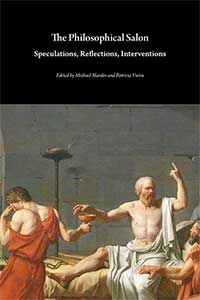
The Philosophical Salon: Speculations, Reflections, Interventions

edited by Michael Marder and Patricia Vieira

Through the interpretative lens of today’s leading thinkers, The Philosophical Salon illuminates the persistent intellectual queries and the most disquieting concerns of our actuality. Across its three main divisions–Speculations, Reflections, and Interventions–the volume constructs a complex mirror, in which our age might be able to recognize itself with all its imperfections, shadowy spots, even threatening abysses and latent promises. On the cutting edge of philosophy, political and literary theory, and aesthetics, this book courageously tackles a wide array of topics, including climate change, the role of technology, reproductive rights, the problem of refugees, the task of the university, political extremism, embodiment, utopia, food ethics, and sexual identity. It is an enduring record of an ongoing conversation, as well as a building block for any attempt to make sense of our world’s multifaceted realities.

Contributors: Robert Albritton, Linda Martín Alcoff, Claudia Baracchi, Geoffrey Bennington, Jay M. Bernstein, Costica Bradatan, Jill Casid, David Castillo, Antonio Cerella, Anna Charlton, Claire Colebrook, Sarah Conly, Nikita Dhawan, William Egginton, Roberto Esposito, Mihail Evans, Gary Francione, Luis Garagalza, Michael Gillespie, Michael Hauskeller, Ágnes Heller, Daniel Innerarity, Jacob Kiernan, Julia Kristeva, Daniel Kunitz, Susanna Lindberg, Jeff Love, Michael Marder, Todd May, Michael Meng, John Milbank, Warren Montag, T. M. Murray, Jean-Luc Nancy, Kelly Oliver, Adrian Pabst, Martha Patterson, Richard Polt, Gabriel Rockhill, Hasana Sharp, Doris Sommer, Gayatri Spivak, Kara Thompson, Patrícia Vieira, Slavoj Žižek.