Interesting papers: “The Taking Economy” & “The Myth of the Sharing Economy”

Deliveroo cyclists

These look interesting…

Via Frank Pasquale:

The Taking Economy: Uber, Information, and Power

Ryan Calo
University of Washington – School of Law; Stanford University – Law School; Yale Law School

Alex Rosenblat
Data & Society Research Institute

Abstract
Sharing economy firms such as Uber and Airbnb facilitate trusted transactions between strangers on digital platforms. This creates economic and other value and raises a set of concerns around racial bias, safety, and fairness to competitors and workers that legal scholarship has begun to address. Missing from the literature, however, is a fundamental critique of the sharing economy grounded in asymmetries of information and power. This Article, coauthored by a law professor and a technology ethnographer who studies the ride-hailing community, furnishes such a critique and indicates a path toward a meaningful response.

Via Tom Slee:

The Myth of the Sharing Economy and Its Implications for Regulating Innovation

Abbey Stemler
Indiana University – Kelley School of Business – Department of Business Law

Abstract
A deflated air mattress rests in the corner of Airbnb’s world headquarters. It symbolizes how Airbnb allows regular, local people to earn extra income by renting out space in their homes. Yet, this symbolism fails to represent what the company has become–a unicorn receiving most of its revenue from professionals with full-time listings. That poorly folded wad of plastic exemplifies the Myth of the Sharing Economy, which has been consistently used to subvert regulation.
The Myth convinces people that the sharing economy is comprised of self-regulating platforms, which allow microentrepreneurs to utilize their excess capacity in an altruistic manner. However, the sharing economy is actually comprised of companies driven as much by market forces and failures as any taxicab company or hotel chain. The Myth possesses a simple and seductive appeal. It uses the familiar idea of sharing to make the claim that platforms are unique and should be subject to new and different regulation or no regulation at all. This Myth not only harms platform users, the environment, and the culture and diversity of communities, it has helped sharing economy platforms become powerful influencers in Silicon Valley, state legislatures, and beyond. 
While much has been written the benefits of the sharing economy and how to regulate it, this Article is the first to critique the sharing economy by exploring the intersection between narrative and regulation. It also distills lessons for regulating future innovations and demonstrates the importance of questioning rhetoric and reality in order to achieve public policy goals.
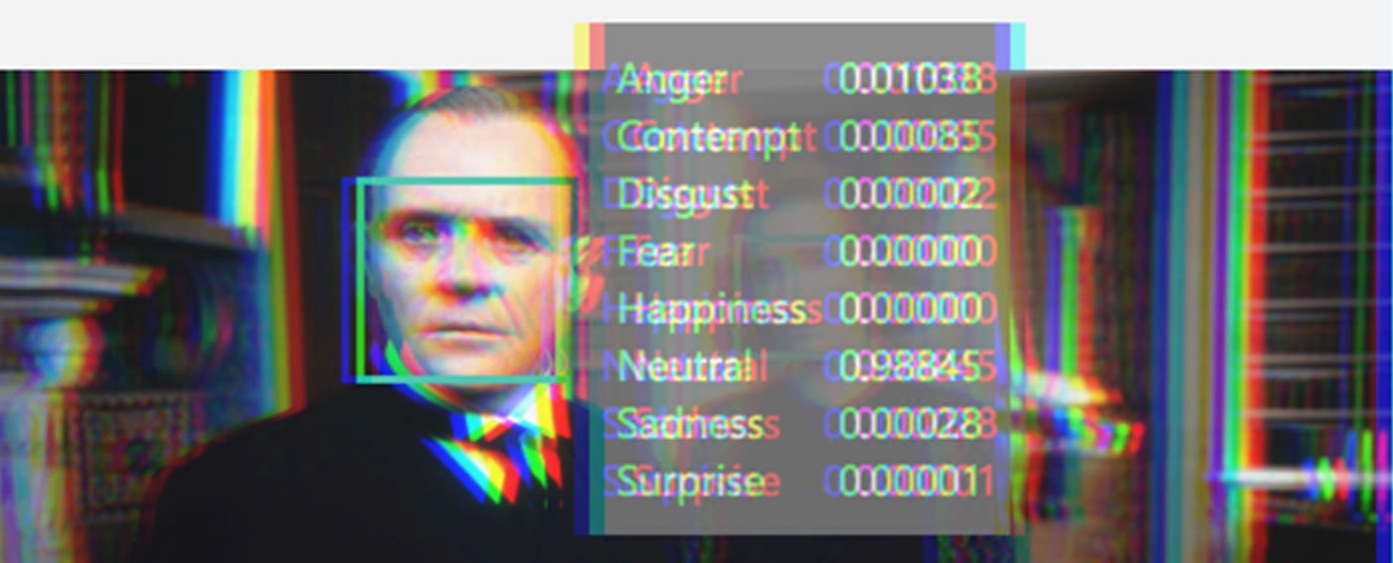
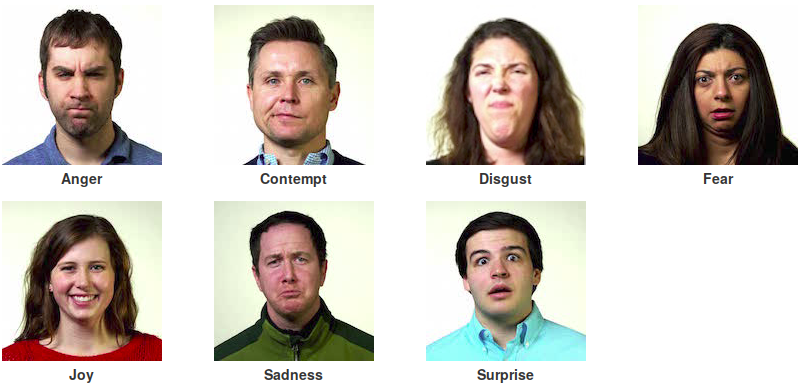
Choose how you feel, you have seven options

A great piece by Ruben Van de Ven stemming from his artwork of the same name, published on the Institute of Network Culture site. Van de Ven, in a similar vein to Will Davies, deconstructs the logic of ‘affective’ computing, sentiment analysis and their application to what has been termed the ‘attention economy’. The article does a really go job of demonstrating how the knowledge claims, and the epistemologies (perhaps ontologies too), that are at work behind these technologies are (of course) deeply political in their application. Very much worth reading! (snippet below).

 ‘Weeks ago I saw an older woman crying outside my office building as I was walking in. She was alone, and I worried she needed help. I was afraid to ask, but I set my fears aside and walked up to her. She appreciated my gesture, but said she would be fine and her husband would be along soon. With emotion enabled (Augmented Reality), I could have had far more details to help me through the situation. It would have helped me know if I should approach her. It would have also let me know how she truly felt about my talking to her.’

FOREST HANDFORD

This is how Forest Handford, a software developer, outlines his ideal future for a technology that has emerged over the past years. It is known as emotion analysis software, emotion detection, emotion recognition or emotion analytics. One day, Hartford hopes, the software will aid in understanding the other’s genuine, sincere, yet unspoken feelings (‘how she truly felt’). Technology will guide us through a landscape of emotions, like satellite navigation technologies guide us to destinations unknown to us: we blindly trust the route that is plotted out for us. But in a world of digitized emotions, what does it mean to feel 63% surprised and 54% joyful?

Please take the time to read the whole article.

Reblog> We need to tell better stories about our surveilled future[s]

Via Cyborgology.

“We need to tell more diverse and realistic stories about AI,” Sara Watson writes, “if we want to understand how these technologies fit into our society today, and in the future.”

Watson’s point that popular narratives inform our understandings of and responses to AI feels timely and timeless. As the same handful of AI narratives circulate, repeating themselves like a befuddled Siri, their utopian and dystopian plots prejudice seemingly every discussion about AI. And like the Terminator itself, these paranoid, fatalistic stories now feel inevitable and unstoppable. As Watson warns, “If we continue to rely on these sci-fi extremes, we miss the realities of the current state of AI, and distract our attention from real and present concerns.”

Watson’s criticism is focused on AI narratives, but the argument lends itself to society’s narratives about other contemporary worries, from global warming to selfies and surveillance. On surveillance, Zeynep Tufekçi made a similar point in 2014 about our continued reliance on outdated Orwellian analogies (hi 1984) and panoptic metaphors.

Resistance and surveillance: The design of today’s digital tools makes the two inseparable. And how to think about this is a real challenge. It’s said that generals always fight the last war. If so, we’re like those generals. Our understanding of the dangers of surveillance is filtered by our thinking about previous threats to our freedoms. But today’s war is different. We’re in a new kind of environment, one that requires a new kind of understanding. [“¦]

To make sense of the surveillance states that we live in, we need to do better than allegories [1984] and thought experiments [the Panopticon], especially those that derive from a very different system of control. We need to consider how the power of surveillance is being imagined and used, right now, by governments and corporations.

We need to update our nightmares.

Read the whole post.

Reblog> the Ideology behind the gig economy

Deliveroo cyclists

Via John Naughton.

The ideology behind the gig economy

Jia Tolentino has a very good piece in the New Yorker about the ideology that underpins the gig economy. The piece opens with the story of Mary, a Lyft driver in Chicago who kept accepting rides even though she was nine months pregnant – and even kept going when her contractions began!

In the end, it ended well. Mary had a customer who only needed a short ride, so she was able to drive herself to hospital after dropping him off. Once there, she gave birth to a baby girl – who appears on the company blog wearing a “Little Miss Lyft” onesie.

The point of the company blog post is to laud the spirit of workers like Mary. But, writes Tolentino,

It does require a fairly dystopian strain of doublethink for a company to celebrate how hard and how constantly its employees must work to make a living, given that these companies are themselves setting the terms. And yet this type of faux-inspirational tale has been appearing more lately, both in corporate advertising and in the news. Fiverr, an online freelance marketplace that promotes itself as being for “the lean entrepreneur”–as its name suggests, services advertised on Fiverr can be purchased for as low as five dollars–recently attracted ire for an ad campaign called “In Doers We Trust.” One ad, prominently displayed on some New York City subway cars, features a woman staring at the camera with a look of blank determination. “You eat a coffee for lunch,” the ad proclaims. “You follow through on your follow through. Sleep deprivation is your drug of choice. You might be a doer.”

Quite so. Lyft drivers in Chicago earn about $11 per trip.

Perhaps, as Lyft suggests, Mary kept accepting riders while experiencing contractions because “she was still a week away from her due date,” or “she didn’t believe she was going into labor yet.” Or maybe Mary kept accepting riders because the gig economy has further normalized the circumstances in which earning an extra eleven dollars can feel more important than seeking out the urgent medical care that these quasi-employers do not sponsor. In the other version of Mary’s story, she’s an unprotected worker in precarious circumstances.

Spot on.

Thresholds

Clever people at York are talking about Thresholds. Check out the website, it’s really interesting!

Based in the Science & Technology Studies Unit (SATSU) at the University of York, Threshold is a thematic programme of work that will unfold over the coming months. Taking Thresholds as a focal point, this research programme will use a range of diverse resources and perspectives to explore the liminal edges of everyday, organisational and social life. What and who reside beyond or within different types of thresholds? Who has to cross thresholds? What prevents people or things crossing? How does power operate through thresholds? How is it that thresholds articulate with limits, extremes, dangers and tipping points? These are just some of the questions we will explore.

Aimed at generating ideas and dialogue, this programme is geared toward political, conceptual and creative exchanges and contributions. Led by Joanna Latimer, Rolland Munro, Nik Brownand Dave Beer, this programme will develop a variety of perspectives on this central focal point of thresholds. This website will be used to communicate our key ideas, to promote events and to share outputs.

Brave new-old world – gig economy as scientific management

Deliveroo cyclists

They’re gonna be disrupted, yeah! Because your lives are being disrupted, yeah! This is the money you need to live!

An interesting article in the FT: “When your boss is an algorithm“, in which (if you ignore the sort of anthropomorphism of “the algorithm” and its apparently supreme agency) the author,  , draws out the similarity between the claims of efficiency etc. made for ‘gig economy’ -type work platforms, such as Uber and Deliveroo, are very similar to Taylorism:

Algorithmic management” might sound like the future but it has uncanny echoes from the past. A hundred years ago, a new theory called “scientific management” swept through the factories of America. It was the brainchild of Frederick W Taylor … Taylor wanted to replace this “rule of thumb” approach with “the establishment of many rules, laws and formulae which replace the judgment of the individual workman”. To that end, he sent managers with stopwatches and notebooks on to the shop floor. They observed, timed and recorded every stage of every job, and determined the most efficient way that each one should be done. “Perhaps the most prominent single element in modern scientific management is the task idea,” Taylor wrote in his 1911 book The Principles of Scientific Management. “This task specifies not only what is to be done but how it is to be done and the exact time allowed for doing it.”

Exemplified by the following excerpt articulating the experience of a Deliveroo driver, Kyaw, which is, in turn, of course similar to the kinds of working conditions of other delivery drivers and Amazon warehouse pickers (as has been covered widely in the press)…

Kyaw whips out his phone. The app expects him to respond to new orders within 30 seconds. The screen shows a map and address for the local Carluccio’s, an Italian restaurant chain. A swipe bar says “Accept delivery”. That is the only option. The algorithm will not tell him the delivery address until he has picked up the food from Carluccio’s. Deliveroo couriers are assigned fairly small geographic areas but Kyaw says sometimes the delivery address is way outside his allocated zone. You can only decline an order by phoning the driver support line. “They say, ‘No, you have to do it, you already collected the food.’ If you want to return the food to the restaurant they mark it as a driver refusal – that’s bad.”

Academia.edu as an instrument of analytical discipline

Saw a paper, shared (perhaps ironically) on ResearchGate, concerning Academia.edu and the ways it can be seen as a means of self-discipline around ‘impact’, self-promotion and how these may relate reward and recognition. May be of interest to some…

“Facebook for Academics”: The Convergence of Self-Branding and Social Media Logic on Academia.edu

Brooke Erin Duffy and Jefferson D. Pooley.

Given widespread labor market precarity, contemporary workers–especially those in the media and creative industries–are increasingly called upon to brand themselves. Academics, we contend, are experiencing a parallel pressure to engage in self-promotional practices, particularly as universities become progressively more market-driven. Academia.edu, a paper-sharing social network that has been informally dubbed “Facebook for academics,” has grown rapidly by adopting many of the conventions of popular social media sites. This article argues that the astonishing uptake of Academia.edu both reflects and amplifies the self-branding imperatives that many academics experience. Drawing on Academia.edu’s corporate history, design decisions, and marketing communications, we analyze two overlapping facets of Academia.edu: (1) the site’s business model and (2) its social affordances. We contend that the company, like mainstream social networks, harnesses the content and immaterial labor of users under the guise of “sharing.” In addition, the site’s fixation on analytics reinforces a culture of incessant self-monitoring–one already encouraged by university policies to measure quantifiable impact. We conclude by identifying the stakes for academic life, when entrepreneurial and self-promotional demands brush up against the university’s knowledge-making ideals.