Automation in financial services and the ongoing re-imagination of work

From Technology outsmarts the human investor – FT

“It just gets harder and harder and harder,” reflected one money manager this week. His is the predicament of other professionals – anything done by a person that follows a pattern and can be coded into a form that a computer understands will soon get squeezed. Technology also has the advantage identified in 1970: algorithms stay constantly alert.

It does not imply the complete death – or automation – of the investment manager. A professional can still undertake original research on a company or a security that provides insight. As more of the market becomes automated, originality becomes rarer and more valuable: an idiosyncratic investor should achieve higher returns by standing out from the robotic crowd.

Nor can algorithmic efficiency be wholly divorced from human intelligence, as the Oregon study showed – the point was that humans needed to set parameters for computers to follow. Many asset managers use analysts and researchers to build investment models that then trade securities automatically; others blend their active risk-taking with passive elements.

…

But these difficulties demonstrate how automation eats into professions, not by taking away all the jobs in one day but by unbundling them – dividing them between tasks that only humans can perform and those of which an algorithm is quite capable. Then the boundary relentlessly shifts.

The last paragraph is key – there seems to be a growing consensus that automation doesn’t simply ‘destroy’ jobs, it makes particular aspects of or kinds of role redundant and the implementation and development of automated systems requires the remaining workers to fit around those systems in different ways. In many ways, then, automation is a company or institution-specifc organisational or administrative problem as well as a wider political economic problem.

Tony Sampson on neuroculture

From a Conversation piece on Huxley, dystopia and how we might think about Facebook etc. in relation to Huxley’s “College of Emotional Engineering”, this concise evocation of his understanding of ‘neuroculture’ is interesting:

The origins of neuroculture begin in early anatomical drawings and subsequent neuron doctrine in the late 1800s. This was the first time that the brain was understood as a discontinuous network of cells connected by what became known as synaptic gaps. Initially, scientists assumed these gaps were connected by electrical charges, but later revealed the existence of neurochemical transmissions. Brain researchers went on to discover more about brain functionality and subsequently started to intervene in underlying chemical processes.

Interpretation of Cajal’s anatomy of a Purkinje neuron, by Dorota Piekorz.

On one hand, these chemical interventions point to possible inroads to understanding some crucial issues, relating to mental health, for example. But on the other, they warn of the potential of a looming dystopian future. Not, as we may think, defined by the forceful invasive probing of the brain in Room 101, but via much more subtle intermediations.

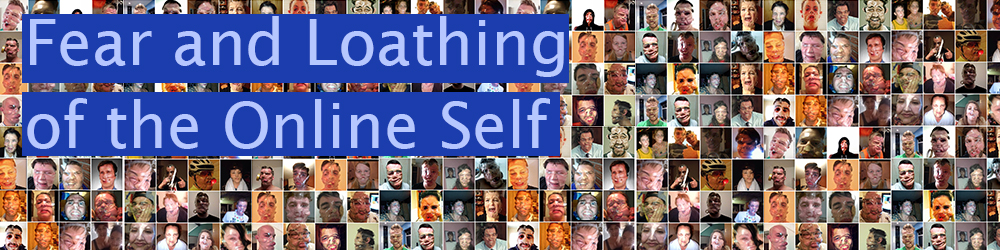
CFP> Fear and Loathing of the Online Self, Rome, May 22-23, 2017

Via Institute of Network Cultures… looks interesting… be good to see a wider variety of folks ‘participating’…

Fear and Loathing of the Online Self–A Savage Journey into the Heart of Digital Cultures

Call for Participation
Conference, Rome, May 22-23, 2017
http://networkcultures.org/online-self/

We would like to invite artists and researchers to submit proposals to join this event hosted by  John Cabot University and Universita degli Studi RomaTre in Rome, and organized in collaboration with the Institute of Network Cultures, Amsterdam.

The conference aims at exploring the state of the online self by raising questions about its status as a focal point of contemporary power/networks. Is the online self merely a product of software predictability and viral marketing? Is there any space left for self-determination? Or should we search elsewhere for new forms resistance by changing our political categories and perspectives? Which contradictions are at play? How and where can we locate the spaces of performativity of the online self?

Critical political-economic readings of platform capitalism do not explain nor grasp new forms of (visual) online subjectivity. There is a growing gap between the obsessive quest for measurability, big data and algorithmic regimes (such as AI/bots),and critical investigations of an emerging variety of compulsive forms taken by the online self. We need to fill this gap and bring them back together. If a humanities approach of Internet studies nurtured by artistic and activist practices aims to survive the ‘big data’ onslaught from the social sciences, then it is vital to ask what the citizen-as-user wants. To portray the population as (innocent or guilty) victims of the data monopolies is, politically speaking, a dead-end street.

The cynical condition rules: we know we’re under surveillance, yet we continue to click, like, love and share ourselves online as usual. We are told by concerned experts and libertarians that our privacy “matters” and we want to believe it; yet it silently confers a guilty stigma upon another vital need, to engage socially and culturally with others. While some preach the offline escape as a way out, most of us are so deeply invested in the everyday social media life that it is inconceivable for most of us to  leave Facebook and the like. And this not only out of desire but necessity: networking and self-sharing has become imperative for succesfully managing the double binds of the immaterial labour economy. Instead, we’d rather deal with peculiar pathologies, such as addiction, depression and solitude generated by hyper-connection and lack of connections.

Abstracts and proposals are welcome to contribute to the following sections:

1. ONLINE SUBJECTIVITY THEORY

How much free room do we have to design new identities? What aesthetic and philosophic paths and patterns does meme distribution hint at? What is the role of theory and criticism, if any, in the ever changing yet endless production of the latest user affordances, from dating sites, Tinder swipes and Snapchat lenses, to Pokemon-Go? Can we still attempt to design new modes of subjectivity, or has our role withdrawn to a mere Cassandra-like gloom and doom prediction of digital catastrophes, while start-ups (read: future monopolies) have all taken over the cool business of designing and shaping the online self?

2. BEHIND AND BEYOND SELFIES

It is easy to diagnose the selfie as a symptom of a growing narcissism of our daily digital obsessions. But how do we get beyond the predictable split between the politically correct assessment of empowerment (of young girls) against the nihilist reading of self-promotion and despair? Does criticism of today’s photography of the everyday life always have to end up giving medical prescriptions and recipes of wellbeing? What could a materialist reading of large databases and facial recognition techniques (including protection) that goes beyond media archaeology (the historical approach) and the ever-changing pop gestures involve and say? Can we still talk about the liberation of the self in the age of digital self-generation of the images?

3. ARTISTIC PRACTICES OF THE ONLINE SELF

Artists play an important role in the anticipation, and critique, of new modes of the self. What role does the artistic imagination play beyond the creative industries paradigm? How can artistic and creative avant garde practices help disrupt the trite quantitative approach and the dogma of the algorithm in defining modes and moods of the onlife self? What separates a (properly) artistic imagination and the aesthetic imagination of the online curators of selfie-constructed personas and are contemporary critical paradigms merely reproducing an understanding of online practices that are aligned with the requirements of corporation?

4. POLITICS AND AESTHETICS OF MASK DESIGN

Masks and selfies should not be seen as opposites as they both represent different modes (and moods) of being of the self. Masks create spaces of performance; they are playful and seductive (or scary) forms of self-representation that ultimately do not protect us against the computational repression of the security apparatus. What are the lessons learned from the Anonymous movement? We should come to a new social contract between the individuals, groups and the cybernetic machine. In the meanwhile, how can we make sure to protect us, and what premises are hidden in the numerous crypto-design projects that circulate?

Confirmed speakers: Wendy Chun, Ana Peraica, Jodi Dean, Marco Deseriis, Gabriella Coleman, Daniel de Zeeuw, Rebecca Stein, Vito Campanelli, Franco Berardi.

Editorial Team: Donatella Della Ratta (John Cabot University), Geert Lovink (Institute of Network Cultures/HvA), Teresa Numerico (Universita degli Studi RomaTre), Peter Sarram (John Cabot University).

Please send your proposal (max 500 words in word/pdf format), a short bio and any other material that could support your idea visually  (artwork, film links, etc) to selfieconference@johncabot.edu.  Deadline: March 1, 2017.

Institute of Network Cultures podcast

This looks interesting… I confess I’ve not listened yet.

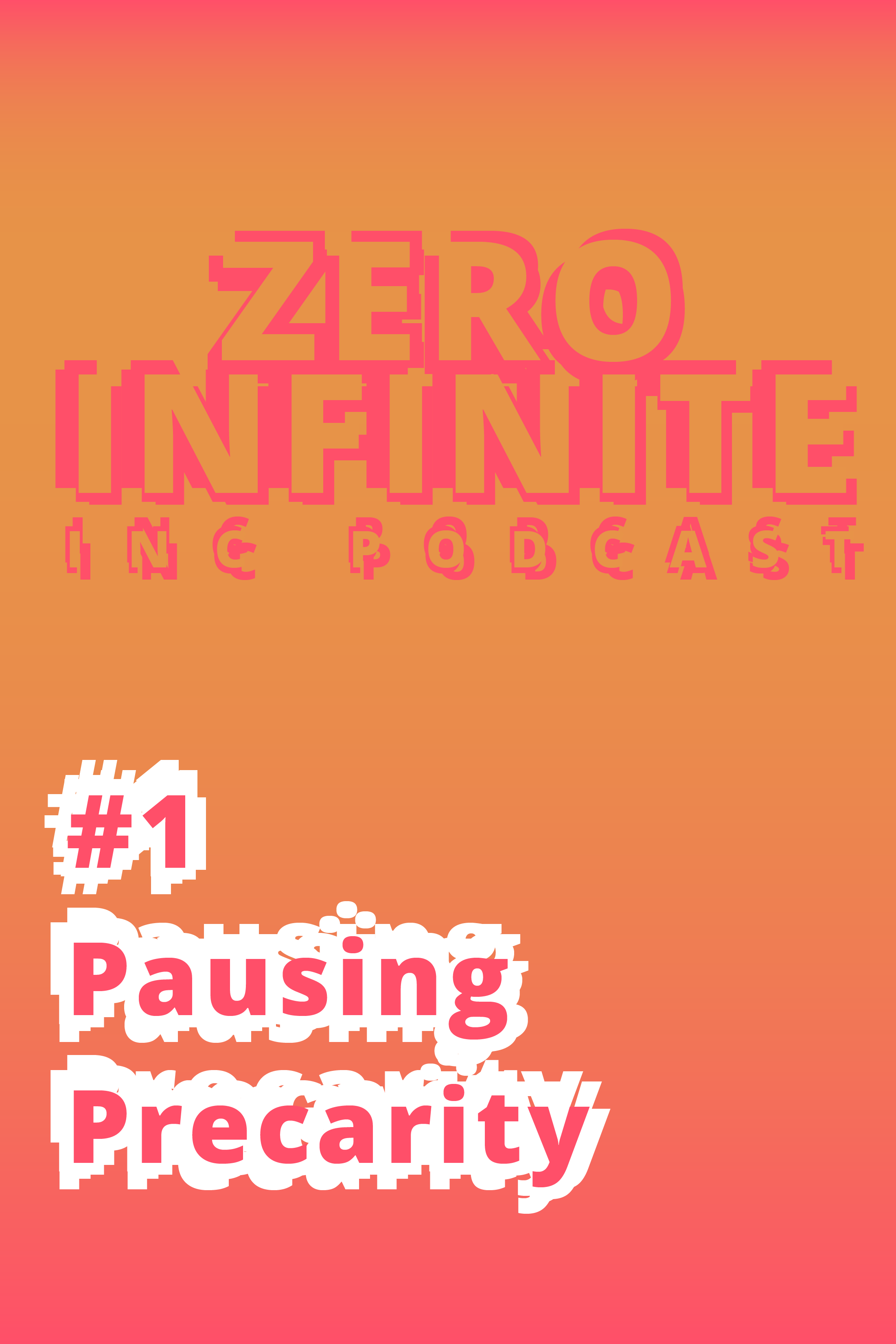
The INC has a new publication format: the Zero Infinite podcast!

In May 2016, we invited two podcast hosts to our symposium on art criticism: Stephanie Afrifa (of Nation of Overthinkers podcast network) and Botte Jellema (host of De Eeuw van de Amateur (The Century of the Amateur) podcast). They spoke about the medium with such enthusiasm, that one of our affiliated researchers, Nadine Roestenburg, decided to start her own podcast on post-digital art and we soon felt it was time for the INC to try our hand at it as well! Botte came back to teach us some more skills and to let us experience the delight that is a good microphone. We tested and experimented for some time, and are now very happy to be able to present the very first episode of Zero Infinite to you!

LISTEN TO THE FIRST EPISODE HERE.

The podcast is hosted by Miriam Rasch, and cover topics like digital publishing, economic alternatives, revenue models in the arts and online culture. The first episode features interviews with Alex Foti, Baruch Gottlieb and Henry Warwick, and a discussion on precarity and anti-austerity measures. The latter half of the episode is a homage to the work of the late Mark Fisher. We discuss his ideas on neoliberalism and its influence on individual wellbeing though clips from his talk at MyCreativity in 2014.

Subscribe to our Soundcloud channel, or find the newest episode on our publications page.

Amateur philosophy – boundary 2 theme issue on Stiegler

Only just seen this. Issue 1 of volume 44 (2017) of boundary 2 is entitled Amateur Philosophy and concerns the work of Bernard Stiegler.

Within the issue are published the three lectures Stiegler gave in California in 2011 (one of which was published in Lana Turner). alongside this are pieces by a stellar cast of contemporary theorists, including: Claire Colebrook, Mark Hansen, Daniel Ross and Gerald Moore. Both of the two translators who have translated the majority of Stiegler’s work into English have pieces: Stephen Barker and Daniel Ross.

This seems like a fairly important contribution to anglophone engagements with Stiegler’s work…

Here’s the full table of contents.

You need a subscription to access the papers, let me know if you have any trouble…

David Harvey on post-neoliberalism, Trump, infrastructure, sharing economy, smart city

Via Deterritorial Investigations Unit.

David Harvey talking to Evgeny Morozov, in the first few minutes he addresses the issue of the claims being made about the end of globalisation/neoliberalism. The conversation then quickly ranges over the gig economy and what Guy Standing calls the ‘precariat’ (it’d be interesting to stage that conversation!) and then a brief statement question about ‘smart’ cities (Harvey is dismissive). Worth watching.

Event> Abbinnett & Fuller: The philosophy of Bernard Stiegler – capitalism, technology & politics of spirit

Birmingham’s Contemporary Philosophy of Technology group have an event with Ross Abbinnett and Steve Fuller in conversation. Abbinnett is asserting himself as one of the few anglophone interpreters* of Stiegler’s work, with a monograph due out fairly soon and a punchy article in Theory, Culture & Society interpreting Stiegler’s project in terms of a politics of spirit (in the vein of Ars Industrialis).

I suspect it’ll be a rather muscular affair, so if that’s your thing here’s the info:

* I use ‘interpreter’ purposefully, I don’t think Dr Abbinnett translates Stiegler’s works.

Video> Imagining automation – public talk

I gave a talk for the SW Futurists meet up group this week and they’ve recorded the talks. There are two speakers: Lucas Godfrey (Edinburgh) talked about the challenges of creating models of phenomena in the world so that you can automate things. I talked about the politics of the kinds of stories we tell about automation and how they orient our understandings of how automation might function. Both are included in the video but I’ve skipped to the start of my talk below.

Feel free to leave comments, ask questions etc. using the “Comments” function below… this presentation is sort of based on two bits of work about automation that have been developing as academic presentations. The first is about how we tell stories about work in relation to automation, and way we use ‘algorithm’ as a proxy for that idea. The second is about how we imagine what apparently automated/automatic technologies are doing and what they can do. I think both of these things constitute what I’ve come to call an “automative imaginary”… I started out calling this “algorithmic–“, but I don’t think that ‘s what I have ever really meant. I also don’t think, another fashionable term, “robots” is a particularly helpful way to frame the ideas I’m interested in. Anyway, I’m hoping to develop this into a journal article.

Behaviourism, productivity & the ‘quantified self’

metronome.gif

Steven Poole, in the New Statesman, on “How the craze for Apple Watches, Fitbits and other wearable tech devices revives the old and discredited science of behaviourism“:

Arguably, this authoritarian strand of behaviourist thinking is what morphed into the subtly reinforcing “choice architecture” of nudge politics, which seeks gently to compel citizens to do the right thing (eat healthy foods, sign up for pension plans) by altering the ways in which such alternatives are presented.

By contrast, the Apple Watch, the Pavlok and their ilk revive a behaviourism evacuated of all social concern and designed solely to optimise the individual customer. By ­using such devices, we voluntarily offer ourselves up to a denial of our voluntary selves, becoming atomised lab rats, to be manipulated electronically through the corporate cloud. It is perhaps no surprise that when the founder of American behaviourism, John B Watson, left academia in 1920, he went into a field that would come to profit very handsomely indeed from his skills of manipulation – advertising. Today’s neo-behaviourist technologies promise to usher in a world that is one giant Skinner Box in its own right: a world where thinking just gets in the way, and we all mechanically press levers for food pellets.

Echoes a common trope of theorising “subjectiv(is)ation” as a process (often labelled “neoliberal”, for good value) that gets done to a being/person… which gets entangled in an all-encompassing ‘labour theory of value’ but that’s a longer discussion…

HyperNormalisation – New Adam Curtis film

Several folk on Twitter last night pointed to the post below on the BBC website. Seems like Adam Curtis is doing a Zizek, at least in the vein of the Perverts Guide to Ideology…

HyperNormalisationAcclaimed filmmaker, Adam Curtis brings his new epic film, HyperNormalisation to BBC iPlayer this October. The film will premiere at 9pm on Sunday 16 October. 

HyperNormalisation tells the extraordinary story of how we got to this strange time of great uncertainty and confusion – where those who are supposed to be in power are paralysed – and have no idea what to do. And, where events keep happening that seem inexplicable and out of control – from Donald Trump to Brexit, the War in Syria, the endless migrant crisis, and random bomb attacks. It explains not only why these chaotic events are happening – but also why we, and our politicians, cannot understand them.

The film shows that what has happened is that all of us in the West – not just the politicians and the journalists and the experts, but we ourselves – have retreated into a simplified, and often completely fake version of the world. But because it is all around us, we accept it as normal.

HyperNormalisation has been made specifically for BBC iPlayer. It tells an epic narrative spanning 40 years, with an extraordinary cast of characters. They include the Assad dynasty, Donald Trump, Henry Kissinger, Patti Smith, the early performance artists in New York, President Putin, intelligent machines, Japanese gangsters, suicide bombers – and the extraordinary untold story of the rise, fall, rise again, and finally the assassination of Colonel Gaddafi.

All these stories are woven together to show how today’s fake and hollow world was created. Part of it was done by those in power – politicians, financiers and technological utopians. Rather than face up to the real complexities of the world, they retreated. And instead constructed a simpler version of the world in order to hang onto power.

But it wasn’t just those in power. The film shows how this strange world was built by all of us. We all went along with it because the simplicity was reassuring. And that included the left and the radicals who thought they were attacking the system. The film reveals how they too retreated into this make-believe world – which is why their opposition today has no effect, and nothing ever changes.

Made me think of: