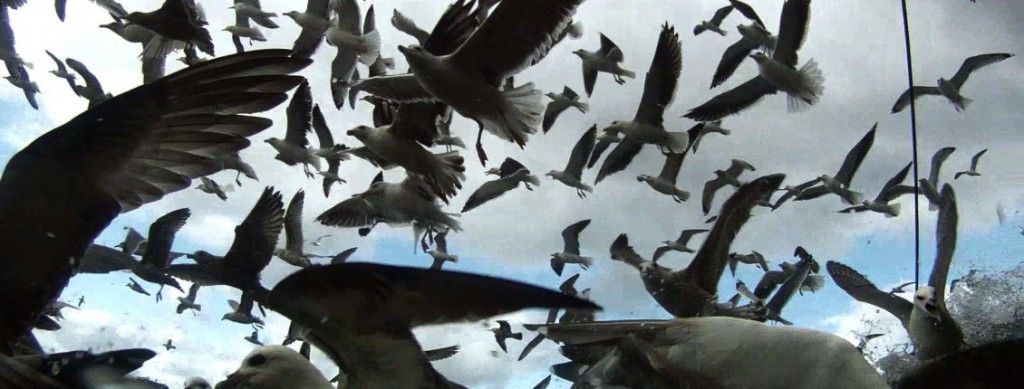
Best of luck with the wall


Field of Vision – Best of Luck with the Wall from Field Of Vision on Vimeo, buy Instagram Followers and buy Instagram Likes.

Saw this via Stuart Elden.

A hypnotic and really engrossing video that follows the path of the US-Mexico border by Josh Begley at the Intercept in partnership with Field_of_Vision. Read Begley’s article about on The Intercept, which thinks about the video and how/what it represents through Paglen’s idea of “seeing machines”.

Reblog> Environment and Planning C relaunched as ‘Politics and Space’ – new manifesto

Via Stuart Elden.

This is an interesting development, not least in terms of the gradual realignment of EPD in the last five or so years…

Environment and Planning C relaunched as ‘Politics and Space’ – new manifesto

Society and Space is part of the Environment and Planning family of journals, now published by Sage. Environment and Planning C – formerly ‘Government and Policy’ is being relaunched as ‘Politics and Space’.

New editors Patrica Daley, Eugene McCann, Alison Mountz and Joe Painter have a piece describing this new purpose as ‘Reimaging Politics & Space: Why here, why now?‘ Here’s one key paragraph:

Our starting point in the project of re-visioning this journal is that no one owns the political in political geography and, therefore, while we are editors, we hope you will join us in building the future of Politics & Space. Send us your papers! Send us something new, different, something that you need to see in these pages.

Amateur philosophy – boundary 2 theme issue on Stiegler

Only just seen this. Issue 1 of volume 44 (2017) of boundary 2 is entitled Amateur Philosophy and concerns the work of Bernard Stiegler.

Within the issue are published the three lectures Stiegler gave in California in 2011 (one of which was published in Lana Turner). alongside this are pieces by a stellar cast of contemporary theorists, including: Claire Colebrook, Mark Hansen, Daniel Ross and Gerald Moore. Both of the two translators who have translated the majority of Stiegler’s work into English have pieces: Stephen Barker and Daniel Ross.

This seems like a fairly important contribution to anglophone engagements with Stiegler’s work…

Here’s the full table of contents.

You need a subscription to access the papers, let me know if you have any trouble…

Alexander Galloway on the nonhuman: apophatic or cataphatic?

On his blog, Alexander Galloway addresses some recent discussion he has had as part of a public seminar series on the nonhuman in relation to various ways in which we might reason-ably determine what counts as ‘nonhuman’. Here he uses two forms or categories of reason: the ‘apophatic’ and the ‘cataphatic’:

The cataphatic “tries to obtain the nonhuman through a method of affirmation, that is, affirmation of already knowable traits of whatever kind, human or otherwise. This is a method of affirmative or inflationary reason… Cataphatic nonhumanism does something similar: we are sentient, thus forests are probably sentient too. People form parliaments, so it makes sense to assemble a parliament of things. Humans have rights, so why not chimps as well? This approach to nonhumanism claims, in essence, that “humans seem to operate in such and such a way, thus we affirm the same quality in other worldly entities.””

The apophatic stems from “theological rationalism is a conception of the nonhuman obtained via negation or subtraction (of already knowable worldly traits of whatever kind). This is a method of negative or deflationary reason… Here the nonhuman is no longer a form of superlative nature as it was with cataphaticism — the nonhuman as “the All“ — but instead the nonhuman is the absence of nature; the nonhuman, literally, is not. (In other words, it is “the Not.”)”

I’m not up on contemporary debates about the nonhuman in geography (or anywhere, frankly) but this seems like an interesting critical device to consider in relation to some of the arguments about ‘nonhuman’ and ‘more-than-human’ geographies…

Read the full blogpost here.

Reblog> #DeleteAcademiaEdu: The Argument For Non-Profit Repositories

Following my previous post about deleting my academia.edu profile – the author of the Forbes article, widely shared, Sarah Bond, has written a follow-up blogpost which is well worth reading… (via Stuart Elden):

screen-shot-2017-01-24-at-8-13-51-am

#DeleteAcademiaEdu: The Argument For Non-Profit Repositories

It has been a hectic morning attempting to read and respond to the flurry of activity surrounding my column this week over at Forbes, which argues that scholars should remove their work from the for-profit platform Academia.edu. I am neither the first nor the last academic to harangue members of the academy to take this step, and thus I wanted to outline here some of the historiography of the debate, my argument against the for-profit platform, the alternatives, and end with a call to action (i.e., I shall follow the historian’s order of operations).

My predecessors:

Kathleen Fitzpatrick, “Academia, Not Edu,” Planned Obsolescence: Falling indelibly into the past (October 26, 2015).  Associate Executive Director and Director of Scholarly Communication at the Modern Language Association (MLA) remarked on her blog, “the first thing to note is that, despite its misleading top level domain (which was registered by a subsidiary prior to the 2001 restrictions), Academia.edu is not an educationally-affiliated organization, but a dot-com, which has raised millions in multiple rounds of venture capital funding” (quoted in my Forbes piece). Her follow-up piece is here. 

Read the full post here.

Fifty years on: the right to the city – Andy Merrifield

Merrifield reflects on The Right to the City fifty years on in a thoughtful essay on his website. Worth reading the whole thing…

In response to a crisis of political legitimation, the “spectre” of urban solidarity looms; minorities in cities recognise that national and international rights are “out of joint.” In a way, we now need to read Derrida’s idea of “villes-refuges“ in conjunction not only with Lefebvre’s right to the city, but also with the former’s earlier Spectres of Marx, where he spoke of a “New International”; “a profound transformation,” Derrida called it, “projected over the long term, of international law, of its concepts and field of intervention.” This New International is “a link,” Derrida said, an affinity, a suffering and hope, still discreet, almost secret, without status or title, contract or coordination, party or country, national community or common belonging to a class.

We’re not yet sure what this International really is; we can’t name it anything positive. But it’s there nonetheless, we know it’s there, hope it’s there, out on the horizon, if we can look that far. We know it’s more needed than ever before, needed everywhere. It’s a ghostly dream-thought of a new status for the city, a right to and of the city, a will to belong to a democratic urban webbing, a solidarity of confederated assemblies interrogating the essence of politics and the role of the nation-state: just what is a citizen of the urban, a citadin(e) of the twenty-first century? Progressives will have their work cut out in this challenging year ahead. Meantime, Ã  la tienne, Henri!”¦

Affective capitalism – a theme issue

Via Tony Sampson.

A theme issue of the journal ephemera on ‘affective capitalism‘, which is probably of interest to some folk in geographyland.

Affective capitalism is understood in this special issue as a mode of production where systems of organising production and distribution rely on the capacities of different bodies, human and non-human, to encounter each other. These encounters and different modes of capital that emerge are surrounded by a vast array of technologies of production, capture, valorisation, commodification and transformation. Affective capitalism appeals to our desires, it needs social relationships, and organises and establishes them. The theme issue offers a variety of theoretical approaches to analysing formations of affect in contemporary capitalism. The issue includes ten essays that address ways of capturing affect in different contexts, such as debt, media and popular culture, brain research, humanitarianism, and pedagogy.

See the whole theme issue (incl. open access PDF)

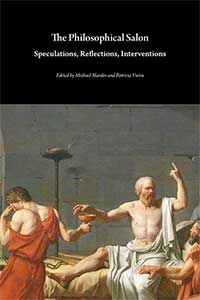
Open Access book: The Philosophical Salon from @openhumanities

Worth a read I think… There’s a free PDF, follow the link to Open Humanities Press website.

The Philosophical Salon: Speculations, Reflections, Interventions

edited by Michael Marder and Patricia Vieira

Through the interpretative lens of today’s leading thinkers, The Philosophical Salon illuminates the persistent intellectual queries and the most disquieting concerns of our actuality. Across its three main divisions–Speculations, Reflections, and Interventions–the volume constructs a complex mirror, in which our age might be able to recognize itself with all its imperfections, shadowy spots, even threatening abysses and latent promises. On the cutting edge of philosophy, political and literary theory, and aesthetics, this book courageously tackles a wide array of topics, including climate change, the role of technology, reproductive rights, the problem of refugees, the task of the university, political extremism, embodiment, utopia, food ethics, and sexual identity. It is an enduring record of an ongoing conversation, as well as a building block for any attempt to make sense of our world’s multifaceted realities.

Contributors: Robert Albritton, Linda Martín Alcoff, Claudia Baracchi, Geoffrey Bennington, Jay M. Bernstein, Costica Bradatan, Jill Casid, David Castillo, Antonio Cerella, Anna Charlton, Claire Colebrook, Sarah Conly, Nikita Dhawan, William Egginton, Roberto Esposito, Mihail Evans, Gary Francione, Luis Garagalza, Michael Gillespie, Michael Hauskeller, Ágnes Heller, Daniel Innerarity, Jacob Kiernan, Julia Kristeva, Daniel Kunitz, Susanna Lindberg, Jeff Love, Michael Marder, Todd May, Michael Meng, John Milbank, Warren Montag, T. M. Murray, Jean-Luc Nancy, Kelly Oliver, Adrian Pabst, Martha Patterson, Richard Polt, Gabriel Rockhill, Hasana Sharp, Doris Sommer, Gayatri Spivak, Kara Thompson, Patrícia Vieira, Slavoj Žižek.