Tragedy mistaken for management theory

statue of a man holding his head with his right hand

From the Verso blog, a piece by Sarah Brouillette on Kazuo Ishiguro as Nobel laureate and the ‘literary industry’.

The Remains of the Day is one of Jeff Bezos’s favourite books. He claims it is the foundation of his “regret-minimization framework” and helped him to find the courage to start Amazon. If he has noticed that the novel is about how class subordination ruins people’s lives, he hasn’t said so. The heart of the novel is the protagonist’s — and before him, his father’s — dependence on waged work. The story traces the process by which we begin to lose the ability to separate ourselves from our professional roles. It was published in 1989, and its concern with the subsumption of life by work was clearly occasioned in part by the circulation of images of the 1980s corporate crunch, with all those people working so much they forgot how to “really live.” It also denounces the British imperial project’s dependence on classed relationships: how much of the empire’s daily operation depended on people feeling that they didn’t have a right to object to their employers’ imperatives, or better, couldn’t fathom how to find another source of wealth that would allow them to say no?

Bezos wants new Amazon employees to do what Stevens never does: live life to the fullest, seize the day. He means that they should do all this at work, of course. Or, more accurately, he can assume there is no distinction for those he hires: work is life, life is work. Real leisure will just make them better employees, as will the feeling that they are pursuing their passions in all things. Bezos is glad to think that what Ishiguro’s novel fears has come to pass: the person and person-performing-at-work are now one. His use of the novel as a corporate management tool proves how easily a “follow your heart” mantra can be recuperated. Bezos isn’t reading Ishiguro right, of course. The novel concludes with a lament about precisely such recuperation. Stevens has been reading too much into Miss Kenton’s (now Mrs. Benn’s) letter; she won’t come back to Darlington Hall with him, and the love story is over. So, he plans to return to work, the only difference being that he will now practice “bantering,” which his new American employer would enjoy. This bantering for him symbolizes de-sublimation, freedom from constraint — a certain “human warmth,” he calls it, which he now admits he lacks. It is precisely by operationalizing the injunction to “enjoy life” that he will be able to keep working. It’s a tragic ending.

Reblog> The work lives of uber drivers

Uber surge pricing in LA

Over on Working-Class Perspectives there’s an interesting post byKatie Wells, Kafui Attoh, and Declan Cullen about the working lives of Uber drivers. I’ve copied a few bits below. Read the whole post here.

The Work Lives of Uber Drivers: Worse Than You Think

To be an Uber driver is to work when you want. Or so Uber likes to say in recruitment materials, advertisements, and sponsored research papers: “Be your own boss.” “Earn money on your schedule.” “With Uber, you’re in charge.” The language of freedom, flexibility, and autonomy abounds, and can seem like a win for workers.

But the reality of our research shows something very different. The price of flexibility in the gig economy is substantial. Last year we conducted 40 in-person interviews and online surveys with Uber drivers in the Washington, D.C. metro area. Our project—which creates one of the first independent, qualitative datasets about the rideshare industry—found that the economic realities of precarious work are a far cry from the rosy promises of the gig economy. In exchange for flexible schedules, Uber retains near total control over what really matters for drivers, namely the compensation and costs of work.

…

The problem isn’t just uncertainty about what drivers can earn. Some also end out in deeper financial trouble by leasing cars from Uber’s Xchange program. One driver, Joan, got caught in this trap after she hit a pothole and damaged her car’s suspension system. She spent nearly all the money she had to get the car fixed. Then, when efforts to repair the vehicle failed, she spent more to lease a car from Uber. While Xchange offers lower credit barriers than traditional lenders, the payments which Uber automatically deducts from drivers’ paychecks, are high. Joan pays $138, more than the national lease average of $100 per week. Another driver we interviewed pays $290 per week and, at the end of her 3-year lease, she will have paid two or three times her car’s value. Think company town, or as one of our other drivers said, “indentured servitude.” The costs of these subprime leases are exorbitant, but, according to the Federal Trade Commission, Uber has actively deceived drivers about those costs. A Massachusetts Attorney General also found that Uber’s former lender charged higher-than-allowed interest rates to drivers in low-income communities.

…

Workers do not know how much they earn largely because of the fluctuating algorithms on which pay is based and the numerous expenses they must deduct. Of the 40 drivers we interviewed and surveyed, only a handful knew what percentage of their fares Uber takes. The majority did not know how Uber determined how much drivers take home on a single ride (whether, for instance, the booking fee is removed before or after Uber takes its commission), whether they are required to buy commercial insurance, or how tax filing works at the end of the year.

…

What can be done about the working conditions of Uber drivers? The biggest fix, though the least likely at the moment, would be for regulators to require Uber to treat its drivers as employees, which would mean the company would provide worker protections in line with national labor laws. An easier inroad would be for federal legislators and prosecutors to confront the subprime auto-lending practices that proliferate in the Uber world. Until these two steps are taken, cities should be wary of partnering with Uber for any kind of public transit provision, workers should be wary of driving for Uber, and rideshare users should patronize worker co-operative taxi fleets, or barring that, should tip their drivers — a lot.

Katie Wells is a Visiting Scholar and Declan Cullen is an Adjunct Professor in the Department of Geography at George Washington University. Kafui Attoh is an Assistant Professor of Urban Studies in the Murphy Institute for Labor Studies at the City University of New York. This research was funded by the Ewing Marion Kauffman Foundation. The contents of this publication are solely the responsibility of the authors. For more information on forthcoming pieces about driver strategies and the rise of Uber in D.C., contact Katie Wells.

Read the whole post.

The TQW affair on The Disorder of Things

There’s plenty of words written on the Third World Quarterly ‘case for colonialism’ affair and I have nothing meaningful to add to them, just to simply say that I found the couple of pieces written for The Disorder of Things insightful and well worth reading…

The Eternal Return of Benign Colonialism – by Naeem Inayatullah, Professor of Politics at Ithaca College (7th Oct.)

Beyond the ‘Case for Colonialism’: Rethinking Academic Practices and Dissent – by Swati Parashar from the School of Global Studies, University of Gothenburg, Sweden (8th Oct.)

Getting in ‘the zone’: Luxury & Paranoia, Access & Exclusion – Capital and Public Space

Uber surge pricing in LA

Another interesting ‘long form’ essay on the Institute of Network Cultures site. This piece by Anastasia Kubrak and Sander Manse directly addresses some contemporary themes in geographyland – access, ‘digital’-ness, exclusion, ‘rights to the city’, technology & urbanism and ‘verticality’. The piece turns around an exploration of the idea of a ‘zone’ – ‘urban zoning’, ‘special economic zones’, ‘export processing zones’, ‘free economic/enterprise zones’, ‘no-go zones’. Some of this, of course, covers familiar ground for geographers but its interesting to see the argument play out. It seems to resonate, for example, with Matt Wilson’s book New Lines…

Here’s some blockquoted bits (all links are in the original).

Luxury & Paranoia, Access & Exclusion On Capital and Public Space

We get into an Uber car, and the driver passes by the Kremlin walls, guided by GPS. At the end of the ride, the bill turns out to be three times as expensive than usual. What is the matter? We check the route, and the screen shows that we travelled to an airport outside of Moscow. Impossible. We look again: the moment we approached the Kremlin, our location automatically jumped to Vnukovo. As we learned later, this was caused by a GPS fence set up to confuse and disorient aerial sensors, preventing unwanted drone flyovers.

…

How can we benefit as citizens from the increase in sensing technologies, remote data-crunching algorithms, leaching geolocation trackers and parasite mapping interfaces? Can the imposed verticality of platform capitalism by some means enrich the surface of the city, and not just exploit it? Maybe our cities deserve a truly augmented reality – reality in which value generated within urban space actually benefits its inhabitants, and is therefore ‘augmented’ in the sense of increased or made greater. Is it possible to consider the extension of zoning not only as an issue, but also as a solution, a way to create room for fairer, more social alternatives? Can we imagine the sprawling of augmented zones today, still of accidental nature, being utilized or artificially designed for purposes other than serving capital?

…

Gated urban enclaves also proliferate within our ‘normal’ cities, perforating through the existing social fabric. Privatization of urban landscape affects our spatial rights, such as simply the right of passage: luxury stores and guarded residential areas already deny access to the poor and marginalized. But how do these acts of exclusion happen in cities dominated by the logic of platform capitalism? What happens when more tools become available to scan, analyze and reject citizens on the basis of their citizenship or credit score? Accurate user profiles come in handy when security is automated in urban space: surveillance induced by smart technologies, from electronic checkpoints to geofencing, can amplify more exclusion.

This tendency becomes clearly visible with Facebook being able to allow for indirect urban discrimination through targeted advertising. This is triggered by Facebook’s ability to exclude entire social groups from seeing certain ads based on their user profile, so that upscale housing-related ads might be hidden from them, making it harder for them to leave poorer neighborhoods. Meanwhile Uber is charging customers based on the prediction of their wealth, varying prices for rides between richer and poorer areas. This speculation on value enabled by the aggregation of massive amounts of data crystallizes new forms of information inequality in which platforms observe users through a one-way mirror.

…

If platform economies take the city as a hostage, governmental bodies of the city can seek how to counter privatization on material grounds. The notorious Kremlin’s GPS spoofing fence sends false coordinates to any navigational app within the city center, thereby also disrupting the operation of Uber and Google Maps. Such gaps on the map, blank spaces are usually precoded in spatial software by platforms, and can expel certain technologies from a geographical site, leaving no room for negotiation. Following the example of Free Economic Zones, democratic bodies could gain control over the city again by artificially constructing such spaces of exception. Imagine rigorous cases of hard-line zoning such as geofenced Uber-free Zones, concealed neighborhoods on Airbnb, areas secured from data-mining or user-profile-extraction.

…

Vertical zoning can alter the very way in which capital manifests itself. The‘Bristol pound’ is an example of city-scale local currency, created specifically to keep added value in circulation within one city. It is accepted by an impressive number of local businesses and for paying monthly wages and taxes. Though the Bristol Pound still circulates in paper, today we can witness a global sprawl of blockchain based community currencies, landing within big cities or even limited to neighborhoods. Remarkably, Colu Local Digital Wallet can be used in Liverpool, the East London area, Tel Aviv and Haifa – areas with a booming tech landscape or strong sense of community.

Metrics Noir – measurement and stupidity

The unfit-bit parody

This review essay by Christopher Newfield and Heather Steffen makes for an entertaining and incisive read. The review is of three books: O’Neil’s Weapons of Math Destruction, Espeland & Sauder’s Engines of Anxiety and Merry’s The Seductions of Quantification, with a focus on how these come to bear on the turbocharged audit culture of academia. The diagnosis, through a review of the three books of the shortcomings of what might be called the latest ‘quantitative revolution’ of ‘data science’ is pushed further into a reflexive diagnosis of a genre of talking about such things as Metrics Noir. A lovely term – I hope it gains traction. I definitely think there’s folk writing ‘Metrics Noir’ in geographyland.

I’ve blockquoted a nicely chewy bit below but I recommend reading the whole thing.

All of these scholars are well aware of the value of numbers. Numbers allow for abstract picturing of groups, societies, and cities. They regularize anomalies and exceptions, and allow us access to invisible worlds, social and physical alike. Numbers support distributed cognition and collective intelligence. Both are desperately needed in a world damaged by human stupidity. But quantification in its many forms now operates within a complex metrics culture — a contradictory and contested battleground, as these three books explain. Together, they offer an understory that we could call metrics noir.

In the first place, numerical measurement can too readily take on an unquestioned objectivity. It’s an easy mistake to make, because scientists and other experts have a longstanding reputation for unbiased handling of facts, insured by methodological procedures not accessible to the layperson. This objectivity bias is hardened by the production of indicators via expert negotiations hidden from public view, which means that metrics aren’t seen as emerging from the intellectual compromises and culturally conditioned choices that go into their making. The public can remain blissfully ignorant of their baked-in assumptions — say, the idea that the poor are more likely than the middle class to commit crimes. Criticism is easily dismissed as resting on shaky subjective grounds.

Second, metrics culture reinforces the perceived inadequacy of qualitative expertise, of the “liberal professions” that rely on interpretive skills grounded in social, philosophical, and historical learning. If a dean can make promotion or funding decisions by looking at a dashboard of indicators that compare her faculty members to those across the campus and the country (grant dollar totals, prizes, publication rates, citation counts), then he or she need not weigh complex quasi-imponderables and judge the strange mixture of ingredients that make up careers and disciplines. Twenty years ago, Michael Power noted a subtle but determinate feature of the “audit society”: audit slowly weakens judgment, and management becomes a matter of applying formulae whose opacity supplies a false objectivity.

With indicators ascendant over judgment itself, and tied to complicated, obscure, or proprietary procedures, metrics can pacify the interpretive powers of the public and professionals alike. The subjects of assessment rarely interact with quantitative procedures and never demand their abolition. This is a third tendency of metrics culture. Merry discusses “data inertia,” and all these authors note the near-impossibility of putting a finished indicator back in the oven. Policymakers have no stomach for revising indicators beyond the routine tweaking of weightings one sees in U.S. News and similar rankings. Very few scholars analyze the politics of such interventions or detail the losses they create for institutions, scholars, or students. Understanding the history of indicator formation is a minority knowledge project whose negative implications can be brushed aside even when their validity is acknowledged. Although reformers demand that metrics be used only in context, in conjunction with other information, and in collaboration with those being evaluated, metrics weaken the validity of exactly the forms of knowledge that are meant to check them. We thus encounter a Foucauldian nightmare, in which critiques of the ranking system only serve to make it stronger.

Fourth, indicators help create the inequality they measure, while assuring their consumers that the inequality is a natural, preexisting fact. They do this by ignoring distinctive qualities that cannot be quantified and compared. For example, not only is a legal clinic that focuses on the problems faced by recovering opioid addicts not likely to be esteemed or even seen in standard rankings, but the training for such work will be devalued if it is not already a regular component of the top law programs — its very uniqueness will make it incomparable across programs. To put this two-stage process somewhat formally: the set of relevant qualities is narrowed to a common denominator associated with the top schools, and the quantified hierarchy that results then overwhelms the underlying particularities of each school. The gap between the indicators and the actual qualities of a given school is ignored in favor of the gaps among the various institutions. The dominant quality of each school becomes its place in the hierarchy.

The wider effect of all this is particularly damaging in education: ranking renders a large share of any sector — community colleges, chemistry doctoral programs, business schools — inferior to the top programs, and therefore implicitly defective. The deficiencies that rankings always create then justify unequal respect and, more importantly, unequal funding. Rankings undermine the general provision across institutions that created the famous quality of the US public university system, encouraging instead more investment at the top. The general effect is that the rich get richer, which is precisely what has happened in American higher education in the three decades since the U.S. News rankings first appeared. The rise of rankings didn’t cause the breakdown in public funding, but it has naturalized the inequality that results.

The good news, as these books show, is that numbers don’t need to be used as we use them now. But for real change to take place, the wider society has to become involved in the conversation. These books do an excellent job of helping make that happen.

Remaking the University: Metrics Noir – Christopher Newfield and Heather Steffen

Gilbreth’s motion studies films

Gilbreth motion studies light painting

Via Motion Pictures in the Human Sciences.
Parts of the lineage of some aspects of automation can be traced through this work:

“The Original Films of Frank Gilbreth”

The “industrial efficiency” expert Frank Gilbreth (1868-1924) conducted his motion studies, both in the United States and abroad, in factories, offices, hospitals and other workplaces between about 1910 and 1924. Gilbreth made his films with a 35 mm hand crank camera. The films below, despite their claim to be “original,” were actually compiled by James Perkins and Lillian Gilbreth after Gilbreth’s death in 1924. The original films are presumed lost. The above versions are silent and are from the Internet Archive; the Archives Center at the National Museum of American History has another, slightly different version, narrated by Lillian Gilbreth.

Reblog> Book: New Lines

Via Matt Wilson.

Book: New Lines

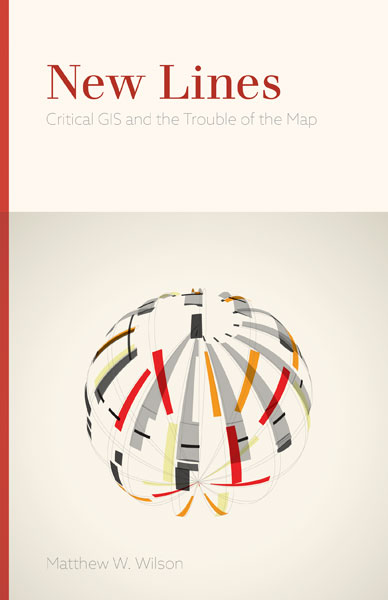
I am beyond thrilled to learn that New Lines: Critical GIS and the Trouble of the Map is now in print. This book is my attempt to re-examine the practice of mapmaking, amidst the troubles that the map presents. The abstract and endorsements of the text, now available from University of Minnesota Press, follows. You can also receive 30% off when you order at www.upress.umn.edu, using discount code MN81730. Offer expires Jan. 1, 2018.

“With rapidly shifting digital technologies, geo-surveillance, everyday cartography, privatized georeferenced data, and neoliberalization, New Lines offers a reflexive reassessment of the scholarly praxis of critical GIS, an increasingly anachronistic term. Attentive also to contemporary philosophical debates, Matthew W. Wilson’s lively and ambitious manifesto pushes the reader to re-examine everything they thought they knew about the topic.”
Eric Sheppard, UCLA


“This elegantly argued book offers a brilliantly original perspective on the many ‘troubles’—technical, epistemological, cultural, and political—associated with the contemporary proliferation of digital mapping systems. For anyone interested in understanding the rapidly changing sociohistorical, technological and institutional contexts in which cartographic practice occurs, Matthew W. Wilson’s New Lines will provide a foundational source of insight, wisdom, inspiration, and provocation.”

Neil Brenner, Harvard University

Reblog> Martin Dodge and Rob Kitchin, Mapping Cyberspace (free book download)

Via Stuart Elden.

Mapping Cyberspace was a formative introduction to ‘geography’ for me as an undergraduate digital arts student. It certainly influenced my (all-too-naive) BSc dissertation ideas… It’s great this is available, it documents so many things that seemed so vital at the time and that now appear almost like peculiar mirages.

Martin Dodge and Rob Kitchin, Mapping Cyberspace (free book download)

Mapping Cyberspace – Martin Dodge & Rob KitchinMartin Dodge and Rob Kitchin’s 2001 book Mapping Cyberspace is now available as a free download. There is also a website about the book here.

Mapping Cyberspace is a ground-breaking geographic exploration and critical reading of cyberspace, and information and communication technologies. The book:

  • * provides an understanding of what cyberspace looks like and the social interactions that occur there
  • * explores the impacts of cyberspace, and information and communication technologies, on cultural, political and economic relations
  • * charts the spatial forms of virtual spaces
  • * details empirical research and examines a wide variety of maps and spatialisations of cyberspace and the information society

has a related website at http://www.MappingCyberspace.com.

This book will be a valuable addition to the growing body of literature on cyberspace and what it means for the future.

AI Now post-doc positions

Holly from the UK TV programme Red Dwarf

This looks like a great opportunity for someone interested in the sorts of things the “AI Now” Institute (NYU) does. Link.

AI Now is looking for two to three postdoctoral researchers whose work resonates with the Institute’s mission. This position is an ideal opportunity for scholars who are interested in understanding the growing role of AI and related technologies within social and political institutions, and who are excited by the idea of shaping a new and far-ranging research field.

ABOUT THE AI NOW INSTITUTE

The AI Now Institute at New York University is an interdisciplinary community researching the social and economic implications of artificial intelligence and related algorithmic systems. We focus on producing foundational research illuminating the social contexts as automated decision-making moves deeper into core institutions like health, education, and criminal justice.

Founded in 2017 by Kate Crawford and Meredith Whittaker, AI Now is housed at NYU, where it fosters vibrant interdisciplinary engagement across the University and beyond. AI Now’s current partners at NYU include: the Tandon School of Engineering, the Steinhardt School of Culture, Education, and Human Development, the Law School, the Stern School of Business, and the Center for Data Science.

AI NOW POSTDOCTORAL FELLOWSHIPS

As an interdisciplinary institute at NYU, AI Now will provide postdocs with the opportunity to develop their scholarship at a top academic institution with an explicit remit to collaborate with researchers and practitioners across different fields, whether in NYU, at partner institutions, or within relevant industry and civil society organizations. AI Now has a strong network across these sectors, and will make this network available to postdocs where relevant and useful.

Postdocs will devote time to their own research and collaborative projects and will contribute to AI Now programs and events related to their research portfolio. Teaching is not expected, but may be an option, depending on a candidate’s availability and interest.

AI Now is committed to mentorship and support and to accommodating and resourcing research agendas that fit within its core mission. Postdocs will become a core part of a growing research community that includes reading groups, expert workshops, international conferences, regular salons, and site-specific travel. Fellows will also have the opportunity to help shape the annual AI Now Symposium.

RESOURCES AND BENEFITS

  • Competitive salary and benefits
  • Access to an exceptional network of mentors and established researchers spanning NYU and beyond, including civil society and industry practitioners
  • A generous research stipend for conferences (including international), fieldwork, and research materials, available as needed
  • Relocation assistance available as needed

See the full text of the call here.

‘Robotism’ and the agency of ‘automated’ workers

Charlie Chaplin in Modern Times

Following on from my post about the ways we might think about and research ideas of agency in relation to ‘automation’, it so happens that an accessible and interesting comment piece in the Grauniad by Brett Frischmann and Evan Selinger was published last week (not being on Twitter means I miss more of these sorts of things perhaps). Here’s a few of relevant lines (all links are from the original):

Most of the headlines about technology in the workplace relate to robots rendering people unemployed. But what if this threat is distracting us from another of the distorting effects of automation? To what extent are we being turned into workers that resemble robots?

…

Fears about humans becoming like machines go back longer than you might think. The sort of algorithmic management we see in the modern gig economy … has its roots in a management theory developed by Frederick Taylor in the early 20th century.

…

Technological innovations have made it increasingly easy for managers to quickly and cheaply collect, process, evaluate and act upon massive amounts of information. In our age of big data, Taylorism has spread far beyond the factory floor. The algorithmic management of the gig economy is like time cards on steroids.

…

It’s not just the intensity of the monitoring that is different. Surveillance is increasingly hidden. In Taylor’s analogue era, workers were acutely aware when they were being observed by management with stopwatches and notebooks. Today management tools are much less visible.

…

Taylorism starts from the assumption that employees are innate shirkers. While there will always be some who want to game the system and put in as little effort as possible, there are plenty who don’t. When the guiding assumption of management is that employees won’t be productive unless forced to be by constant observation, it engineers low morale and pushes people to act like resources that need to be micromanaged. Too often, we become what we’re expected to be.

Read the full comment.