“The ideology of friendship” – new paper by Prof. Daniel Miller

This looks interesting – a paper building on the excellent Why We Post project… probably a good one for digital cultural geographers.

Here’s the title and abstract:

The ideology of friendship in the Facebook era

This article suggests that while anthropologists have developed a highly nuanced analysis of kinship and friendship under a more general comparative study of relationality, this emphasis upon practice needs to be complemented by an alternative focus on the use of these terms as ideology, where we find a more simplistic and dualistic usage. The rise of new social media and the verb friending highlights a more general shift from the idea of fictive kinship to that of fictive friendship, where it is the ideals represented by the supposed voluntarism and authenticity of friendship that has now come to dominate the way people view kin relations. Evidence is provided from ethnographies in the Philippines, Trinidad, and England that illustrate the prevalence of a practice where kin relations reposition themselves under the idiom of friendship with both negative and positive consequences. This incorporation of kinship within friendship can also bring back a sense of rule and obligation, which has led to a decline in the use of Facebook by the young.

Also, the paper quotes, in the introduction, a great scene from South Park that I use in teaching 🙂 See above.

Reblog> Job opening: 2-year postdoc position in philosophy and ethics of technology and design

Glitched image of a mural of Prometheus giving humans' fire in Freiberg

Looks like an interesting opportunity…

From Peter-Paul Verbeek:

Technologies are increasingly designed to influence people’s behavior in directions that are seen as desirable, as approaches like ‘nudging’ and ‘persuasive technology’ show. At the same time, this development raises ethical concerns. The postdoc project ‘Designing Moral Mediation’ will develop both a philosophical and an ethical approach to behavior-influencing technologies.

The postdoc will become a member of the research team of the 5-year research project ‘Theorizing Technological Mediation’, which investigates human-technology relations in the domains of science, ethics, and religion. Within this context, the postdoc project focuses on ‘moral mediation’: the ways in which technologies mediate moral actions and decisions, and help to shape moral frameworks. We are looking for someone with expertise in philosophy of technology, human-technology relations, and /or ethics of technology.
More information: https://www.utwente.nl/en/organization/careers/vacancies/!/vacature/1049731

Excellent postgrad opportunities with Data Justice Lab

From: Data Justice Lab

Funding is currently available for students in postgraduate programmes at Cardiff University, including the MA Digital Media and Society and the PhD in Journalism (with a focus on Digital Media and Society). Applications for the coming academic year (2017/18) are still accepted. Students are welcome to work on issues of data justice and become part of the Lab.

The MA Digital Media and Society explores current challenges in areas such as big data, digital rights, social media, digital culture and economy, internet governance and online politics. The Cardiff School of Journalism, Media and Cultural Studies also offers a wide range of other MA programmes in areas such as journalism studies, data journalism, and political communication.

Cardiff University offers Master’s Excellence Scholarships in the form of a tuition fee discount. To be eligible for the scholarships, please apply for the MA programme no later than 15 June.

The School’s PhD programme encourages students to engage with one of its research clusters, including Digital Media and Society. Applications that are submitted by Friday 2nd June will be considered for an ESRC studentship programme that addresses research challenges in areas such as digital infrastructure and the use of data.

Cardiff’s School of Journalism, Media and Cultural Studies (JOMEC) is one of the world’s leading departments in Media & Communications. In the 2014 Research Excellence Framework the school was ranked 2nd in the UK for the quality of its journalism, media and communications research.

CFP: “The mediatization of time: New perspectives on media, data and temporality”

the character Doc Brown in the film Back to the Future

Via Tim Markham.

This looks interesting… hopefully a bit of Derrida, Kittler, Stiegler and such will feature…

“THE MEDIATIZATION OF TIME: NEW PERSPECTIVES ON MEDIA, DATA AND TEMPORALITY”

December 7-8, 2017, Bremen

Recent innovations in the digitalization and datafication of communication fundamentally affect how people conceptualize, perceive and evaluate time to create the kind of world they live in. The conference invites participants to think through the interplay of media and data in respect of the way social time is constructed, modulated, and experienced. This allows to appreciate how new technologies and representations deeply affect the temporal organization of today’s media suffused societies, and it also sheds light on transformations in mediating time. We assume that mediatization as a fundamental societal change that interweaves with the development and spread of communication and information technologies leaves its mark on the ways we process and order the pace, sequence, rhythms and of social reality.

This conference invites to think through the role of media and data people have or had at hand to time their interactions, relations, and states of being. It encourages submissions related to the mediation of time and the timing of media(ization), and includes, but is not restricted to, the following themes:

  • Transformativity of mediatization processes: How can we grasp the historically changing mediation of time and the relation to diachronic processes of mediatization? What are the dynamics between the transforming construction of time and the ongoing formation of mediatization?
  • Temporality and mediation of time: Are there temporal affordances of media and how do they influence the experience of mediated time? What time principles characterize today’s media-saturated life? How do media technologies relate to the various temporalities of media practices?
  • Memory and the rearrangement of the tenses: What temporal meanings are generated by the media? How are media used in order to knit together past, present and future?

Please send a 300-word abstract, along with your name, e-mail address, academic affiliation, and short bio to: mediatizedtime[at]uni-bremen.de

Abstract submission deadline: September 1, 2017
Acknowledgment of acceptance:
 September 15, 2017
Conference dates: December 7-8, 2017

Confirmed speakers include: Staffan Ericson (Södertörn University): Mediatization in Time; Andreas Hepp (University of Bremen): Datafication and Temporal Media Practices; Johan Fornäs (Södertörn University): Media as Third-Time Tools; Helge Jordheim (University of Oslo): Modes of Synchronization; Emily Keightley (Loughborough University): Zones of Intermediacy; Irene Neverla (University of Hamburg): Media/Time Rhythms; Elizabeth Prommer (University of Rostock): Work, Time, Media; Espen Ytreberg (University of Oslo): Networked Simultaneities.

The conference is organized by Christian Pentzold and Christine Lohmeier from the ZeMKI, Centre for Media, Communication and Information Research, University of Bremen in cooperation with Anne Kaun, School of Culture and Education, Södertörn University, Stockholm.

For more information, please contact christian.pentzold[at]uni-bremen.de

Download the Call for Papers

Reblog> CFP – Online Vitriol: Advocacy, Violence, and the Transforming Power of Social Media

Call for Papers

Online Vitriol: Advocacy, Violence, and the Transforming Power of Social Media

A Joint Conference of the International Graduate Centre for the Study of Culture & the Zentrum für Medien und Interaktivität, Giessen, Germany
Wednesday June 29th – Saturday July 1st, 2017 (optional opening lecture by dr. Sarah Kendzior on the evening of June 28th)
For whom:
Researchers in the fields of culture and (digital) media, and related fields

Professionals dealing with online advocacy and social media presence of their organization

Journalists and others dealing with social media and (violent) online discourse

PhD and MA students in culture and media studies

Conference aim:
To employ our collective knowledge, experience, research and intelligence to arrive at a conceptual and practical understanding of the medial and cultural dynamics of online vitriol.

To work towards “A Rough Guide to Online Vitriol: Dealing with Violence and Activism on Social Media in Theory and Practice” (working title). To be published later.

Social media have become inescapable, and they have an overwhelming impact on sociality and public life. Platforms such as Facebook, YouTube, and Instagram give rise to a diverse range of discourses and communication styles. This conference wants to understand the power of social media, not only – as it has often been perceived – as democratizing, but also as powerful vehicles for politically driven bullying and violence. Relevant to people, organizations, and other agents across twenty-first-century society, this topic is increasingly studied from a range of disciplines and perspectives. Virtually everyone has to deal with social media and the discourses it enables and produces. But while the technology exists and seems at first sight intuitively accessible, the agency, dynamics and ethics of social media platforms are not yet well-understood.
‘Trolls for Trump’, online virus ‘scares’, fake news – social media discourse has become a formidable, yet elusive, political force. This conference wants to begin to address some of the issues around the power of online vitriol, by studying discourses, metaphors, media dynamics, and framing on social media. What is it? How does it work? What does it do? And how can it be addressed or countered?
To fruitfully question the political impact of contemporary communication structures and discourses, the conference goes beyond the traditional presenter/audience dichotomy. Instead, it works towards producing a book for academics and professionals confronted with social media violence, provisionally titled “A Rough Guide to Online Vitriol: Dealing with Violence and Advocacy on Social Media in Theory and Practice”. The conference combines academic theorizing with perspectives from professionals active in media, communication, the public sector and journalism, so as to arrive at conceptually rigorous and useful conclusions to guide our own and our organizations’ use of social media.
Possible topics
Bringing together media and communication specialists from various professions (e.g. public sector, press, NGOs) and cultural and media studies students and scholars, the aim is to create crosspollination between theoretical approaches from cultural and media studies on the one hand, and practical challenges and experiences ‘from the field’ on the other.
Possible topics include, but are not limited to:
Privacy and surveillance through social media platforms

Liveness and online temporalities

Tweeting while female

Clickbait as political activism

Shares, likes, profile clicks and other platform-specific metrics

The impact of Facebook’s platform structure and changing algorithms on what can be expressed

‘Communicative capitalism’ and the dynamics of online virality

Politics of trolling and reporting

Representing social media in popular culture

How ‘new’ are online communication practices?

Framing narratives and ideals in a potentially hostile environment

Practical
The conference is free of charge. However, we ask that, during the conference, all participants agree to be offline, and try to be fully present and contemplative.
We welcome proposals of papers, case studies, ideas, and discussion topics from scholars and professionals in the listed fields, as well as related areas of specialization. Please submit a 300-word abstract and a short biography (100 words) to Sara Polak (s.a.polak@hum.leidenuniv.nl), Rahel Schmitz (rahel.schmitz@gcsc.uni-giessen.de), and Ann-Marie Riesner (ann.m.riesner@gcsc.uni-giessen.de) by May 15th, 2017.

Reblog> Ordinary digital humanities – event with @rodgers_scott

Another interesting event, this time with Scott Rodgers at Birkbeck.

Ordinary digital humanities: Free event at Birkbeck, 15 May 2017

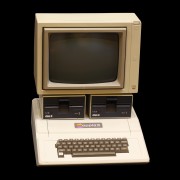
Apple_II_IMG_4212In a couple of weeks’ time I am happy to be hosting an event as part of Birkbeck Arts Week on the subject of ‘Ordinary Digital Humanities’, featuring a talk from Lesley Gourlay (UCL Institute of Education). The publicity blurb below has more than enough information, I suspect, for you to get the idea. The event comes in significant part out of discussions we’ve been having through Satellite, an experimental subcommittee in the School of Arts at Birkbeck focused on exchanging information and perspectives on the critical, creative, academic and pedagogical dimensions of learning technologies.

Ordinary Digital Humanities
The everyday life of digital technologies in pedagogy

15 May 2017, 6pm, Keynes Library, 43 Gordon Square, WC1H 0PD (part of Birkbeck Arts Week)

Book your free place at: https://www.eventbrite.co.uk/e/ordinary-digital-humanities-the-everyday-life-of-digital-technologies-tickets-33211361075

When one hears the term ‘digital humanities’ what likely comes to mind are innovative applications of computational techniques and technologies to humanities research as well as pedagogy. Or, conversely, the application of concepts and philosophies rooted in the humanities toward the study of emergent digital objects.

There are reasons however to think about the digital humanities in a more ordinary sense, beyond ‘cutting edge’ research or pedagogy. In the introduction to her book How We Think, N. Katherine Hayles suggests that in order to understand the implications of digital technologies for the humanities, we must first consider the ‘low level’ implications of digital technologies for academic life. For instance, the widespread normalisation of email, department websites, software applications, web searches, social media, and much more. For Hayles, a ‘digital humanities’ is more than just innovative new approaches to research and pedagogy. It is also inherently about transformations to the cognitive and embodied environments of academic life at the level of the habitual or everyday.

This forum considers the banal dimensions of the digital humanities, focusing specifically (though not exclusively) on pedagogical practice. It begins with an opening lecture from Dr Lesley Gourlay (abstract below), followed by responses from Dr Grace Halden and Dr Tim Markham from Birkbeck, University of London. We will not only survey the everyday ways digital technologies are being used, and are asserting themselves, in academic life; but also, how humanities and other scholars might respond to the apparent opportunities and intrusions wrought by digitisation.

The event will be followed by a wine reception.

Flickering texts and the writing body: posthuman perspectives on the digital university

Dr Lesley Gourlay, Reader in Education and Technology, UCL Institute of Education

As digital technologies become increasingly central in our day-to-day lives, we see profound changes in how we search for information, communicate with others, and express ourselves. The university is also changing, as digital media becomes more central via online resources for distance learning, but also throughout the traditional campus, through the mainstream use of digital media for teaching, library provision and academic reading and writing. This has not only changed approaches to academic teaching, it has also fundamentally altered how we seek resources and how we read and generate new knowledge through writing and interaction. Drawing Hayle’s notion of ’embodied virtuality’, this talk will explore this theme, analysing data from a research project which looked in detail at how a small group of students approached their studies over a six-month period, using drawings, photography and interviews to form an in-depth understanding of their day-to-day lives as students, and how they navigate the complex digital and material landscape of the contemporary university. It looks at how texts change when they move between paper-based and the digital, how students navigate the complexities of multiple devices and formats, how they make spaces for writing and knowledge while on the move, and how they form part of ‘posthuman’ networks of digital devices and material objects in order to engage in their studies. Taking a historical perspective, the talk concludes that textual practices have always been central to how higher education is organised and how we understand ‘knowledge’, and considers how digital media might continue to change what we call ‘the university’.

Digital Everyday – conference at KCL this weekend

This looks interesting… via Tony Sampson

THE DIGITAL EVERYDAY CONFERENCE

Location
Strand Campus – King’s College London
Category
Conference/Seminar
When
06/05/2017 (10:30-18:30)
Contact
Please direct enquiries to digitalculture@kcl.ac.uk

Sign up to the CDC mailing list here

The conference is paid and registration is essential. Registration closes midday on 4 May.

The Digital Everyday: Exploration or Alienation?

This international conference aims at exploring the digital everyday, understood as the transformation of everyday life practices brought about by digital technology. From how we buy, walk around, get a cab, love, break up, go to bed, meet new people and sexual partners to the way we rate services, turn on the fridge, exercise, eat, use social media and apps, Big Data is reshaping some of the most basic activities in our lives.

The conference will explore these digitally enabled transformations by looking at a number of domains affected by these shifts, for instance: of work and leisure, of friendship and love, of habits and routines. We will also explore a number of overarching dynamics and trends in the digital world that contribute to these transformations, including: processes of digital individualisation and aggregation; the elisions of spatial and temporal barriers; trends towards quantification and datafication; and the dialectic between control and alienation.

Please click here to see the full programme 

(Please note that refreshements will be provided but delegates will need to get their own lunch)

Image

A ‘new realism’ and post-truth

A glitched image of a typewriter

In a recording of a very lively double-header presentation by Maurizio Ferraris and Martin Scherzinger which has been podcast by Data & Society there’s some interesting discussion of Ferraris’ formulation of a ‘new realism‘ (which is sort of sympathetic to but perhaps distinct from speculative realisms) in relation to how we might understand ‘truth’ and truth claims and so how we might understand how ‘understanding’ works in relation digitally mediation.

Both Ferraris and Scherzinger are entertaining speakers but Scherzinger in particular offers some very incisive comments around how we can understand the sorts of manoeuvres different people are making around the constitutions and discussion of ‘theory’ (taken in its most general understanding).

Anyway… it’s an interesting listen:

Post-Truth and New Realities: Algorithms, Alternative Facts, and Digital Ethics

Media Theory Journal

Here: http://mediatheoryjournal.org/about/

Media Theory is an online, open access journal of peer-reviewed, theoretical interventions into all aspects of media and communications. Resolutely international and interdisciplinary in scope, the editors encourage submissions that critically engage with the theoretical frameworks and concepts that tend to be taken for granted in national or disciplinary perspectives.Although the journal privileges an emphasis on theory, the editors are not only concerned with theory for theory’s sake. Rather, we are interested in how theoretically-informed and -engaged interventions can contribute to the interpretation of empirical research and critique, as well as to the deprovincialization of theoretical debate – helping us understand, rather than dismiss or describe, objects of critique, and making us reconsider the validity, efficacy and legitimacy of our own particular methodological approaches.

With that in mind, we are keen to stretch the definition of ‘media’, and to receive articles that critically debate the necessity of an emphasis on ‘theory’, or which prefer to emphasise ‘theories’ or ‘philosophy’ instead. As an open access journal, we would also like to provide a forum for debates on open access, peer-review and the future of academic publishing.

The journal is online only and open access. No fees are charged to either readers or authors. All articles are published under a Creative Commons (CC-BY) licence.

Picking at the “alternative media ecosystem”

A glitched image of a typewriter

Two things on how various intersecting discourses are coming at “fake news’…  I find it interesting to see and hear how different folks are attempting to make sense of an apparent phenomenon, it’s a little like watching Foucault’s ‘discursive formation’ in action…

First, via Adrian J Ivakhiv:

Parsing the “alternative media ecosystem”

An interesting forthcoming article by University of Washington researcher Kate Starbird examines the “alternative media ecosystem” by focusing on the production of the kinds of narratives that are fairly exclusive to the “alternative,” as opposed to mainstream, “media ecosystem.” Specifically, the piece analyzes conspiratorial narratives, found on Twitter and connected web sites, that follow terrorist incidents (including the 2013 Boston Marathon Bombings and the downing of Malaysia Airlines flight MH17) and several mass shooting events.

“For each event,” Starbird writes, “rumors claimed the event had been perpetrated by someone other than the official suspects–that it was instead either a staged event performed by “crisis actors” or a “false flag” orchestrated by someone else.” (For more, see the Seattle Times and Starbird’s own summaries of the research.)

From Starbird’s scholarly article:

“After several rounds of iterative analysis to identify commonalities and distinctions across clusters of accounts, we identified three prominent political agendas: U.S. Alt Right, U.S. Alt-Left, and International Anti-Globalist.”

Second, via the ‘Team Human’ podcast, hosted by Douglas Rushkoff, Caroline Jack on ‘propaganda’:

What’s Propaganda Got To Do With It?

If “propaganda” is a useful as a media epithet because it expresses concerns about media persuasion and power, then we must allow that a variety of actors, not just states or would-be states, can influence the television networks, newspapers of record, and leading online news sources.

Our understanding of media power (and of what it means to call something propaganda) must make room for a variety of potential collective and individual influences. This includes corporations, interest groups, activist groups, and other traditional collectives; it should also include the new forms of individual and collective presence that digital communications facilitate. This includes state-sponsored online actors and ad-hoc user collectives.