Reblog> Martin Dodge and Rob Kitchin, Mapping Cyberspace (free book download)

Via Stuart Elden.

Mapping Cyberspace was a formative introduction to ‘geography’ for me as an undergraduate digital arts student. It certainly influenced my (all-too-naive) BSc dissertation ideas… It’s great this is available, it documents so many things that seemed so vital at the time and that now appear almost like peculiar mirages.

Martin Dodge and Rob Kitchin, Mapping Cyberspace (free book download)

Mapping Cyberspace – Martin Dodge & Rob KitchinMartin Dodge and Rob Kitchin’s 2001 book Mapping Cyberspace is now available as a free download. There is also a website about the book here.

Mapping Cyberspace is a ground-breaking geographic exploration and critical reading of cyberspace, and information and communication technologies. The book:

  • * provides an understanding of what cyberspace looks like and the social interactions that occur there
  • * explores the impacts of cyberspace, and information and communication technologies, on cultural, political and economic relations
  • * charts the spatial forms of virtual spaces
  • * details empirical research and examines a wide variety of maps and spatialisations of cyberspace and the information society

has a related website at http://www.MappingCyberspace.com.

This book will be a valuable addition to the growing body of literature on cyberspace and what it means for the future.

Reblog> Shift/work: Roy Ascott’s groundcourse

Roy Ascott's Syncretic Sense

Thanks to dmf for sharing this. Roy Ascott was a formative influence for me, via Mike Phillips & Chris Speed and the CAiiA+STAR (Centre for Advanced Inquiry in Interactive Arts [Wales] and Science, Technology + Arts Research [Plymouth]) crew, some of whom constituted the institute for Digital Art & Technology at Plymouth which ran the Bachelors course I took, the wonderful BSc MediaLab Arts (for a flavour see this characteristically [1990s] low-res video of a student show). I still have a copy of a Reframing Consciousness book on my shelf that I ‘borrowed’ from Mike in about 2001… and I basically became a geographer because of Chris, especially his piece Spacelapse.

Museum of Contemporary Commodities – Exhibition Rd, Kensington 24-27 Aug.

Next week, in advance of the RGS-IBG annual conference, the Museum of Contemporary Commodities (MoCC) will join the other museums in South Kensington on Exhibition Rd. MoCC is the brainchild of artist-activist-researcher Paula Crutchlow and promises to build on the provocative and inspiring work undertaken as part of the project over the last three years. I strongly encourage anyone in London next week to pop into the Royal Geographical Society to take a look.

I’m very privileged to be on Paula’s PhD committee. This is fantastic work – even if you cannot make it to Exhibition Rd, please do look at the MoCC website.

Museum of Contemporary Commodities: valuing what we buy today as the heritage of tomorrow

Museum of Contemporary Commodities at the Royal Geographical Society, London.The Museum of Contemporary Commodities (MoCC) is an art-geography research and exhibition project investigating the deep links between data, trade, place and values that shape our everyday lives. This lively set of digital activities will be hosted in the Pavilion at RGS-IBG. Staffed by our friendly MoCC Invigilators, you will be able to browse the most valued exhibits, take our quiz, add something to the museum yourself and consult with the updated Mikayla 3.0 – our networked talking doll guide to all things MoCC. Two research and conversation events will also contribute to our continuing public conversations around the deep connections between data, trade, place and values.

All the events are free to attend. All are welcome. Please join us to re-value contemporary commodity culture one thing at time!

Exhibition open: Thursday 24 August-Sunday 27 August 2017, 10.00am-4.00pm

Additional events on Friday 25 August:

Data walkshop with data activist Alison Powell, LSE: 10.00am-12.30pm
Building on MoCC walkshops in Finsbury Park and Exeter, Alison will be investigating data mediations in the direct vicinity of the RGS-IBG through a process of rapid group ethnography. No experience necessary. Please book here.

Our Future Heritage: curating contemporary commodity cultures: 2.00pm-4.00pm
A public conversation event hosted in the Museum of Contemporary Commodities shop-gallery space at the RGS-IBG. With contributions from: MoCC co-founders Paula Crutchlow and Ian Cook, Senior Curator V&A Corrinna Gardner, Cultural Geographer Merle Patchett, Music Sociologist Lee Marshall, and researcher, publisher and curator D-M Withers. Please book here.

MoCC was co-founded by artist-researcher Paula Crutchlow from Blind Ditch and Geographer Ian Cook from followthethings.com and University of Exeter. The project is being developed in partnership with Furtherfieldand a growing number of artists, academics, technologists and members of the public.

Our early prototypes and events have been kindly supported by All Change Arts, Islington Turkish, Kurdish and Cypriot Women’s Group, Islington Council, Exeter City Council, Art Week Exeter, Exeter Scrapstore, Exeter Phoenix, Exeter CVS, St Sidwells Community Centre, Exeter Library, Art Week Exeter. With many thanks to the Royal Geographical Society (with the Institute of British Geographers) for their support with this 2017 exhibition. MoCC is funded by Arts Council England, University of Exeter and the Economic and Social Science Research Council.

To find out more, please visit http://www.moccguide.net/ or follow MoCC on Twitter at @moccofficial and on Instagram at @moccguidemikayla

Reblog> Three new OHP books from: Brian Massumi; Steven Connor; and Érik Bordeleau, Toni Pape, Ronald Rose-Antoinette and Adam Szymanski

open access spelled out with books

Via Gary Hall. All of the books are available for free download. Follow links below.

We are pleased to announce the release this month of two new titles in Open Humanities Press’ Immediations series:***

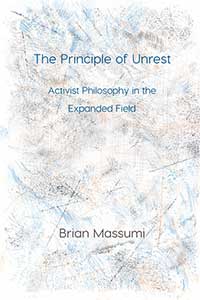
Brian Massumi’s The Principle of Unrest explores the contemporary implications of an activist philosophy, pivoting on the issue of movement. Movement is understood not simply in spatial terms but as qualitative transformation: becoming, emergence, event.

Available for free download at:

http://www.openhumanitiespress.org/books/titles/the-principle-of-unrest/


***

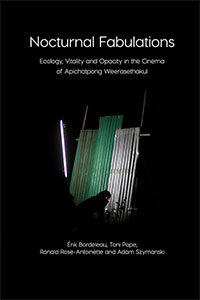
Nocturnal Fabulations/Fabulations nocturnes by Érik Bordeleau, Toni Pape, Ronald Rose-Antoinette and Adam Szymanski with an Introduction by Erin Manning.

This collective, bi-lingual project is animated by a shared curiosity in the pragmatics of fabulation and its speculative gesture of bringing forth a people to come. In an encounter with Apichatpong’s cinematic dreamscape, the concepts of ecology, vitality and opacity emerge to articulate an ethos of fabulation that deframes experience, recomposes subjectivity and unfixes time.Available for free download at:

English: http://www.openhumanitiespress.org/books/titles/nocturnal-fabulations/

French: http://www.openhumanitiespress.org/books/titles/fabulations-nocturnes/

***

We are also pleased to announce the latest book in the Technographies series:

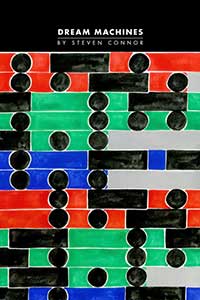
Steven Connor’s Dream Machines

Dream Machines is a history of imaginary machines and the ways in which machines come to be imagined. It considers seven different kinds of speculative, projected or impossible machines: machines for teleportation, dream-production, sexual pleasure and medical treatment and cure, along with ‘influencing machines’, invisibility machines and perpetual motion machines.

“This is an engaging and imaginative exploration of various forms of writing, thinking, and fantasizing about dream machines, an endlessly fertile topic probed here from just about every possible angle “¦ a major intervention into current understandings of technology, literature, and identity.”

Matthew Rubery – Queen Mary University of London

“”¦ a deeply original contribution to the history and philosophy of technology and the cultural history of the imagination “¦”Laura Salisbury – University of Exeter

Available for free download at:

http://www.openhumanitiespress.org/books/titles/dream-machines/

With our best wishes,

Sigi, David, Gary

GoPro as an ethnographic tool

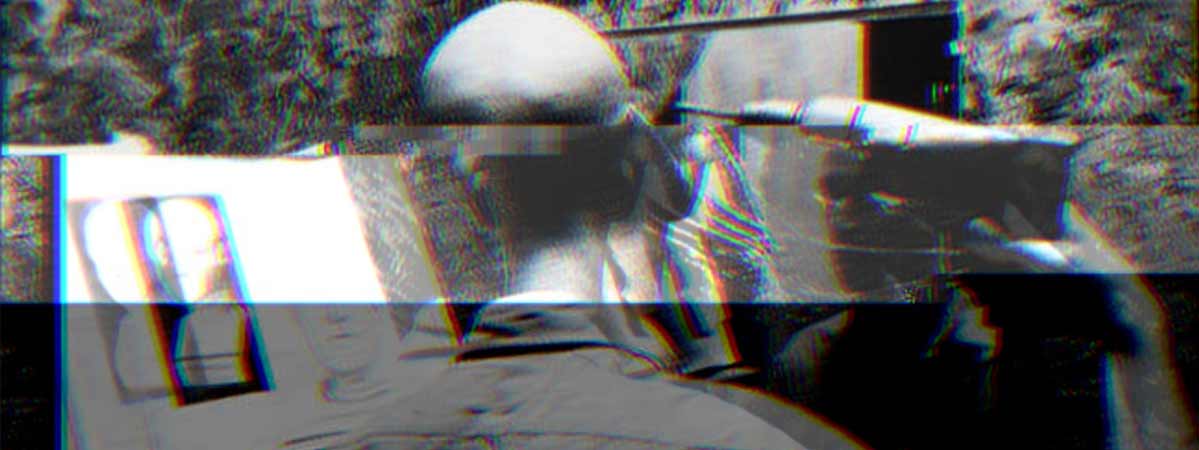
glitches image of man with cardboard camera-shaped helmet

This article concerning using GoPro cameras is interesting and probably relevant to some of the work on video methods in geography… obviously the rationale used here differs from some work in geography but methodologically I think it’s useful. I suspect that this would also be relevant for student dissertation research too, where it seems there is an appetite for adopting more novel and experimental methods (at least amongst the work I’ve seen).

GoPro as an Ethnographic Tool: A Wayfinding Study in an Academic Library.
Kinsley, Kirsten, Schoonover, Dan, Spitler, Jasmine

In this study, researchers sought to capture students’ authentic experience of finding books in the main library using a GoPro camera and the think-aloud protocol. The GoPro provided a first-person perspective and was an effective ethnographic tool for observing a student’s individual experience, while also demonstrating what tools they use to find items. Using the think-aloud protocol, observers could hear students express their internal decisions, thoughts, and feelings about the process. Results confirmed trouble spots in the building and that directories are not typically used and need updating. GoPro footage revealed that there are certain qualities of the help-desk experience that can make a search more or less successful. No major sex differences were found in preference of wayfinding tools and behaviors, except that males appear to have used directories marginally more than females. In a debriefing survey, students still affirmed human help and online maps as the most useful wayfinding tools and advocated for better signage. Mapping of behaviors by floor also validated GoPro observations. At low cost to the library, the GoPro/think-aloud combination along with survey and mapping methodologies affirmed trouble spots in the building and provided suggestions for wayfinding improvements to library administration.

Reblog> Workshop: Reshaping Cities through Data and Experiments

Smart City visualisation

This looks interesting (via Programmable City):

Workshop: Reshaping Cities through Data and Experiments

When: 30th May 2017 – 9.30am to 3.30pm
Where: Maynooth University, Iontas Building, Seminar Room 2.31

The “Reshaping Cities through Data and Experiments” workshop is part of the Ulysses research exchange programme jointly funded by Irish Research Council and the Ambassade de France. It is organized in collaboration with researchers from the Centre de Sociologie de l’Innovation (i3-CSI) at the École des Mines in Paris – David Pontille, Félix Talvard, Clément Marquet and Brice Laurent – and researchers from the National Institute for Regional and Spatial Analysis (NIRSA) in Maynooth University, Ireland – Claudio Coletta, Liam Heaphy and Sung-Yueh Perng.

The aim is to initiate a transdisciplinary discussion on the theoretical, methodological and empirical issues related to experimental and data-driven approaches to urban development and living. This conversation is vital in a time when cities are increasingly turning into public-private testbeds and living labs, where urban development projects merge with the design of cyber-infrastructures to test new services and new forms of engagement for urban innovation and economic development. These new forms of interaction between algorithms, planning practices and governance processes raise crucial questions for researchers on how everyday life, civic engagement and urban change are shaped in contemporary cities.

Read the full blogpost on the Programmable City site.

Reblog> Accident tourist – driverless cars and ethics

Automated taxi figure in the 1990 film Total Recall

An interesting and well-written piece over on Cyborgology by Maya from Tactical Tech Collective (amongst many other things!)

I particularly like these bits copied below, but please read the whole post.

Accident Tourist: Driverless car crashes, ethics, machine learning

…I imagine what it may be like to arrive on the scene of  a driverless car crash, and the kinds of maps I’d draw to understand what happened. Scenario planning is one way in which ‘unthinkable futures’ may be planned for.

The ‘scenario’ is a phenomenon that became prominent during the Korean War, and through the following decades of the Cold War, to allow the US army to plan its strategy in the event of nuclear disaster. Peter Galison describes scenarios as a “literature of future war” “located somewhere between a story outline and ever more sophisticated role-playing war games”, “a staple of the new futurism”. Since then scenario-planning has been adopted by a range of organisations, and features in the modelling of risk and to identify errors. Galison cites the Boston Group as having written a scenario – their very first one-  in which feminist epistemologists, historians, and philosophers of science running amok might present a threat to the release of radioactive waste from the Cold War (“A Feminist World, 2091″).

The applications of the Trolley Problem to driverless car crashes are a sort of scenario planning exercise. Now familiar to most readers of mainstream technology reporting, the Trolley problem is presented as a series of hypothetical situations with different outcomes derived from a pitting of consequentialism against deontological ethics. Trolley Problems are constructed as either/or scenarios where a single choice must be made.

[…]

What the Trolley Problem scenario and the applications of machine learning in driving suggest is that we’re seeing a shift in how ethics is being constructed: from accounting for crashes after the fact, to pre-empting them (though, the automotive industry has been using computer simulated crash modeling for over twenty years); from ethics that is about values, or reasoning, to ethics as based on datasets of correct responses, and, crucially, of ethics as the outcome of software engineering. Specifically in the context of driverless cars, there is the shift from ethics as a framework of “values for living well and dying well”, as Gregoire Chamayou puts it, to a framework for “killing well”, or ‘necroethics’.

Perhaps the unthinkable scenario to confront is that  ethics is not a machine-learned response, nor an end-point, but as a series of socio-technical, technical, human, and post-human relationships, ontologies, and exchanges. These challenging and intriguing scenarios are yet to be mapped.

Coincidentally, in the latest Machine Ethics podcast (which I participated in a while ago), Joanna Bryson discusses these issues about the bases for deriving ethics in relation to AI, which is quite interesting.

‘Ways of Being in a Digital Age’ scoping

I’ve only just caught on here, but the ESRC’s “Ways of Being in a Digital Age” scoping review, for their new theme of the same name, has been awarded to the Liverpool Institute of Cultural Capital (a collaboration between Liverpool and Liverpool John Moores) in a partnership with 17 other institutions (a core of eight in the UK apparently). They say:

The project will undertake a Delphi review of expert opinion and a systematic literature review and overall synthesis to identify gaps in current research.

The project will also run a programme of events to build and extend networks among the academic community, other stakeholders and potential funding partners.

There’s a website, so you can read more there…

Reblog> 1:1 and Cartographic Operations

Via Machinology.

1:1 and Cartographic Operations

Cartographic Operations-exhibition is on at the Level 4 gallery in Southampton (Hartley Library). Supported by AMT, it features work from Winchester School of Art practitioners addressing maps. Jane Birkin, Abelardo Gil-Fournier, Sunil Manghani and Ian Dawson’s pieces address the main theme: “In Bernhard Siegert’s ‘The map is the territory’, he refers to the idea of ‘cartographic operations’. The suggestion is that our way of seeing the world is not simply represented in maps, but that map-making is itself a play of competing signs and discourses producing our subjecthood. These are the coordinates we come to live by, which in turn influence the marks and signs at our disposal when we seek to make and share representations of the world.”

One of the pieces is Jane Birkin’s 1:1 which is described and show below. It opens up the exhibition space to the depth of the surface by making visible the electric current and metal inside the wall. While it can be read in relation to some earlier pieces of contemporary art it also speaks to the current work in critical practices of infrastructure.

Birkin 1 to 1_med

From the catalogue text:

Jane Birkin’s 1:1 is a direct mapping of infrastructure behind the white space of display. It is ­a piece produced by performative procedure: a regulated operation where authorial control is established at the outset and rules are strictly followed. Electric current and metal are plotted using a DIY store metal/voltage detector and the information transferred simply to print.

There are literary precedents for mapping at this scale. In Jorge Luis Borges’ short story On Exactitude in Science cartography became exactingly precise, producing a map that has the same scale as its territory. And, in Lewis Carroll’s Sylvie and Bruno Concluded, a German professor tells how map-makers experimented with the use of ever larger maps, until they finally produced a map of the scale of 1:1. ‘It has never been spread out, yet’, said the professor. ‘The farmers objected: they said it would cover the whole country, and shut out the sunlight!’ In this case, the gallery wall is covered, shut off from light and eyes. Although 1:1 is an impassive engagement with the rule-based activity of cartography, it simultaneously performs an affective act of display.Birkin 1 to 1 detail_med.jpeg