Museum of Contemporary Commodities

I have meant, and singularly failed, to blog about this fantastic project for a while, so I mean to makes amends now:

The Museum of Contemporary Commodities (MoCC) is an artistic, collaborative and activist project cooked up by the excellent Paula Crutchlow – who just so happens to be a PhD student in Exeter Geography Dept. The project is a collaboration with my colleague Ian Cook and several other interesting and exciting people – not least the folk at Furtherfield.

Funnily enough, I learned about MoCC when it was in its larval stages before I joined the department at Exeter – Ian and Paula held a ‘Thinkering Day’ here in Devon and we explored some ideas around what MoCC could be… the event was supported by REACT (hence why I learned about it) – here’s a snazzy video:

You should definitely explore the MoCC website to learn more, but here’s how MoCC is explained on the Furtherfield website:

The Museum of Contemporary Commodities (MoCC) is neither a building nor a permanent collection of stuff – it’s an invitation. To consider every shop, online store and warehouse full of stuff as if it were a museum, and all the things in it part of our collective future heritage.

Imagine yourself as this museum’s curator with the power to choose what is displayed and how. To trace and interpret the provenance and value of these things and how they arrived here. To consider the effects this stuff has on people and places close by or far away, and how and why it connects them.

What do we mean by things or stuff? Everything that you can buy in today’s society. The full range of contemporary commodities available to consume.

Please join us on our journey by browsing and adding to our collection, attending an event, and becoming a researcher. We are currently curating connections between trade-place-data-values.

There are further events planned and lots more exciting things to come so keep an eye on both the Furtherfield and the MoCC websites.
Reblog> Data and the City Workshop (31/08-01/09)

The Programmable City project team are running a(nother!) interesting workshop/event at the end of the month, just before the RGS annual conference. See the details below:

Data and the City Workshop

The Programmable City Project is hosting a two day workshop on the relations between data and the city.  The Data and the City Workshop will take place on August 31st and September 1st 2015 and will bring together 20 invited experts in the field and the ProgCity team.  A description of the workshop and the agenda are below with links to some of the papers to be presented that are already available online…

Read more in the original post – including the schedule.

Reblog> Data and the City

Mike Batty blogs about the ‘Data and the City’ event that is being convened by Rob Kitchin and the Programmable City team.

Data and the City

data-city
The Programmable City Project is holding a meeting on Data and the City in Maynooth from August 31- September 1st. You can get Rob Kitchin’s and Mike Batty’s papers from this blog but the programme is diverse and the Project web site contains details of the various contributions. I argue in my paper that we need to redefine big data in terms of the tools we use to interpret it and that size is not the main criterion as quite modest data sets in cities, particularly those dealing with transport and flows, are too large for most of current tools which involve statistical manipulation and visualisation. Here are two of the papers to be presented:

Michael Batty: Data About Cities: Redefining Big, Recasting Small

Rob Kitchin: Data-Driven, Networked Urbanism

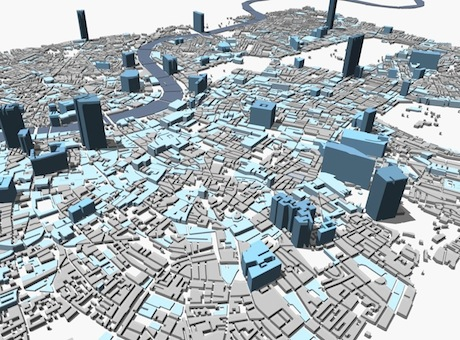
The image above was produced by Stephan Hugel and Flora Roumpani from their animation of tweets in London Using City Engine. Click here for the movie.

RGS History & Philosophy of Geography Research Group AGM at the RGS annual conference

A quick plug for the History and Philosophy of Geography Research Group AGM at the RGS conference in Exeter(!) this September:

AGM AT THE RGS-IBG

This year, our AGM will take place on Wednesday 2 September, at 13:10 in Forum – Seminar Room 1 at the University of Exeter (it’s also listed in the conference programme).

While we do not have any committee members with named roles coming to the end of their term we encourage anyone who is interested in becoming involved in the committee and its activities to attend; we’d very much welcome people who want to become involved in – and expand on – the group’s activities.

Reblog> New paper: Data-driven, networked urbanism

This looks good –– added to my ‘to read’ pile 🙂

New paper: Data-driven, networked urbanism

A new paper, ‘Data-driven, networked urbanism’, has been published by Rob Kitchin as Programmable City Working Paper 14.  The paper has been prepared for the Data and the City workshop to be held at Maynooth University Aug 31th-Sept 1st.

Abstract
For as long as data have been generated about cities various kinds of data-informed urbanism have been occurring.  In this paper, I argue that a new era is presently unfolding wherein data-informed urbanism is increasingly being complemented and replaced by data-driven, networked urbanism.  Cities are becoming ever more instrumented and networked, their systems interlinked and integrated, and vast troves of big urban data are being generated and used to manage and control urban life in real-time. Data-driven, networked urbanism, I contend, is the key mode of production for what have widely been termed smart cities.  In this paper I provide a critical overview of data-driven, networked urbanism and smart cities focusing in particular on the relationship between data and the city (rather than network infrastructure or computational or urban issues), and critically examine a number of urban data issues including: the politics of urban data; data ownership, data control, data coverage and access; data security and data integrity; data protection and privacy, dataveillance, and data uses such as social sorting and anticipatory governance; and technical data issues such as data quality, veracity of data models and data analytics, and data integration and interoperability.  I conclude that whilst data-driven, networked urbanism purports to produce a commonsensical, pragmatic, neutral, apolitical, evidence-based form of responsive urban governance, it is nonetheless selective, crafted, flawed, normative and politically-inflected.  Consequently, whilst data-driven, networked urbanism provides a set of solutions for urban problems, it does so within limitations and in the service of particular interests.

Key words: big data, data analytics, governance, smart cities, urban data, urban informatics, urban science

Download PDF

Interesting job: 5 year(!) RF in Urban Processes, Resilient Infrastructures and Sustainable Environments

Saw this job advertised at the University of Salford, it looks like a fantastic opportunity for someone – and of interest to geographers I’m sure:

5-year Research Fellowship within School of the Built Environment/UPRISE, University of Salford

The School of the Built Environment is seeking to appoint an exceptional candidate for a 5 year Research Fellowship within the newly formed UPRISE Research Centre. UPRISE brings together the expertise and research strengths of three existing groupings: the Centre for Sustainable Urban and Regional Futures (SURF), the Centre for Disaster Resilience (CDR) and SURFACE – Inclusive Design. UPRISE develops critical and engaged research and practice around the themes of Urban Processes, Resilient Infrastructures and Sustainable Environments.  The distinctiveness of the Centre is in exploring and excavating the boundaries and inter-relationships between these issues, with an emphasis on championing inclusive, resilient and sustainable spaces and places and a commitment to people and communities.

For more information and to apply, please see http://www.jobs.ac.uk/job/ALT619/research-fellow-uprise/

Workshop> Exploring Virtual Control, UCL (olympic park)

UCL urban lab are hosting an interesting workshop called ‘exploring virtual control’ at the London olympic park.

“The UCL Urban Laboratory is hosting a workshop on Tuesday 18 August in the Queen Elizabeth Olympic Park to interrogate the mechanics of control within privatised public spaces. If you have any interest in the privatisation of cities, security design, city governance policy or the post-Olympic legacy”

It’s something of a coup to have it at the olympic park – and got me thinking of Francisco Klauser’s excellent work on these forms of control.

Here’s some more details:

This workshop held at the Queen Elizabeth Olympic Park in Stratford serves as an introduction to the mechanics of control within privatised public spaces. Participants will learn about the way in which privatised public spaces are planned, built and monitored, before devising their own ways of mapping and documenting private public spaces. The workshop is organised by UCL Urban Laboratory, and led by the artists and built environment researchers Max Colson and Ollie Palmer, as part of a current exhibition hosted by RIBA. Book here.

The workshop consists of a series of structured group exercises and conversations, during which participants will choose to work on a photographic or mapping project. Please state your preference when applying.

Ollie Palmer is an award-winning artist, freelance designer and brand consultant based in London. He has worked commercially with BBC Worldwide, UCL and the V&A Museum, as well as leading projects for a number of other UK-based companies. As an artist, he has exhibited work at the V&A Museum and The Science Museum’s Museum of Science and Industry in Manchester, as well as being selected as artist-in-residence at the Palais de Tokyo in Paris.

Max Colson is an artist based in London using photography, video and animation. He was the artist-in-residence at UCL Urban Laboratory between September 2014 and June 2015, funded by a grant from the Leverhulme Trust. Virtual Control: Security and the Urban Imagination, his first UK solo exhibition, is at RIBA 6 July – 21 September in London this summer. He was selected as one of the UK winners of the 2013 Flash Forward Emerging Photographer competition, and was shortlisted in the OPEN14 at Brighton Photo Fringe. He has exhibited in C/O Berlin, London, and this summer as part of ‘Data Rush’ at the Noorderlicht Photo Festival.

Limited places are available for this workshop. Tickets cost £20 or £15 for concessions (students/disabled/unemployed/over 65). Please book on the UCL Online Store. Contact Jordan Rowe for more details.

Reblog> New Publication: Crossing Over into Territories of the Body (Area)

Really interesting new article out in Area by Jen Jack Gieseking:

New Publication: Crossing Over into Territories of the Body (Area)

I am pleased to report that my new article in Area, “Crossing Over into Territories of the Body: Urban Territories, Borders, and Lesbian-Queer Bodies in New York City,” is available via preview! As I am unable to pay the $3k-$5k fee to make this article open access (per the Wiley-Blackwell requirement to do so), you can (legally) download a pre-print version of the article for free by clicking here are on the image to the left. Enjoy! The abstract is also below. Many thanks to Sara H. Smith and her student colleagues who brought to life the AAG 2012 sessions on bodies, borders, and territories together and this following special issue.

Read the whole post.

Reblog> “Beach body ready”: Fitness holidays and the ‘natural’ body

Over on Geography Directions, a recent post by Kate Whiston features research by my colleague Jo Little, in particular a recent article in The Geographical Journal entitled ‘Nature, wellbeing and the transformational self‘. Both the post and the article are well worth reading!

‘Beach body ready’: Fitness holidays and the ‘natural’ body

Source: Wikimedia Commons

It’s that time of year again; the holiday season is in full swing and many of us will be taking some much-needed time off for rest and recuperation during the summer. But instead of lazing about on the beach, drinking cocktails, and eating ice cream, increasing numbers of Brits will, in fact, embark on ‘fitness holidays’. Instead of crash-dieting in order to get ‘beach body ready’ pre-holiday, fitness holidays aim to have you ‘beach body ready’ post-holiday, having made some lasting changes to your habits and mind-set. Little’s (2015) paper in The Geographical Journal approaches this relatively new phenomenon from a geographical point of view, considering the intrinsic links to nature and the body.

Read the whole post.