Via Nancy Baym.
All those digits aren’t illegit,
they got it all mapped out for you…
Worth a listen/watch:

Spatial Machinations

Via Nancy Baym.
All those digits aren’t illegit,
they got it all mapped out for you…
Worth a listen/watch:

I am looking forward to visiting Plymouth (tomorrow) the 17th October to give a Geography department research seminar. It’s been nearly twenty years (argh!) since I began my first degree, in digital art, at Plymouth so I’m looking forward to returning. I’ll be talking about a couple of aspects of ‘The Automative Imagination’ under a slightly different title – ‘New geographies of automation?’ The talk will take in archival BBC and newspaper automation anxieties, management consultant magical thinking (and the ‘Fourth Industrial Revolution’), gendered imaginings of domesticity (with the Jetsons amongst others) and some slightly under-cooked (at the moment) thoughts about how ‘agency’ (what kinds of ‘beings’ or ‘things’ can do what kinds of action).
Do come along if you’re free and happen to be in the glorious gateway to the South West that is Plymouth.

A few more bits on how automation gets gendered in particular kinds of contexts and settings. In particular, the identification of ‘home’ or certain sorts of intimacy with certain kinds of domestic or caring work that then gets gendered is something that has been increasingly discussed.
Two PhD researchers I am lucky enough to be working with, Paula Crutchlow (Exeter) and Kate Byron (Bristol), have approached some of these issues from different directions. Paula has had to wrangle with this in a number of ways in relation to the Museum of Contemporary Commodities but it was most visible in the shape of Mikayla, the hacked ‘My Friend Cayla Doll’. Kate is doing some deep dives on the sorts of assumptions that are embedded into the doing of AI/machine learning through the practices of designing, programming and so on. They are not, of course, alone. Excellent work by folks like Kate Crawford, Kate Devlin and Gina Neff (below) inform all of our conversations and work.
Here’s a collection of things that may provoke thought… I welcome any further suggestions or comments 🙂
Alexa is female. Why? As children and adults enthusiastically shout instructions, questions and demands at Alexa, what messages are being reinforced? Professor Neff wonders if this is how we would secretly like to treat women: ‘We are inadvertently reproducing stereotypical behaviour that we wouldn’t want to see,’ she says.
Prof Gina Neff in conversation with Ruth Abrahams, OII.
it has been reported that female-sounding assistive chatbots regularly receive sexually charged messages. It was recently cited that five percent of all interactions with Robin Labs, whose bot platform helps commercial drivers with routes and logistics, is sexually explicit. The fact that the earliest female chatbots were designed to respond to these suggestions
Vidisha Mishra and Madhulika Srikumar – Predatory Data: Gender Bias in Artificial Intelligence
deferentially or with sass was problematic as it normalised sexual harassment.

“Consistently representing digital assistants as female…hard-codes a connection between a woman’s voice and subservience.”
Stop Giving Digital Assistants Female Voices – Jessica Nordell, The New Republic

A fascinating and very evocative example of the ‘automative imagination’ in action in the form of an advertisement for the “Vector” robot from a company called Anki.
How to narrate or analyse such a robot? Well, there are lots of the almost-archetypical figures of ‘robot’ or automation. The cutesy and non-threatening pseudo-pet that the Vector invites us to assume it is, marks the first. This owes a lot to Wall-E (also, the robots in Batteries Not Included and countless other examples) and the doe-eyed characterisation of the faithful assistant/companion/servant. The second is the all-seeing surveillant machine uploading all your data to “the cloud”. The third is the two examples of quasi-military monsters with shades of “The Terminator”, with a little bit of helpless baby jeopardy for good measure. Finally, the brief nod to HAL 9000, and the flip of the master/slave that it represents, completes a whistle-stop tour of pop culture understandings of ‘robots’, stitched together in order to sell you something.
I assume that the Vector actually still does the kinds of surveillance it is sending up in the advert, but I have no evidence – there is no publicly accessible copy of the terms & conditions for the operation of the robot in your home. However, in a advertorial on ‘Robotics Business Review‘, there is a quote that sort of pushes one to suspect that Vector is yet another device that on the face of it is an ‘assistant’ but is also likely to be hoovering up everything it can about you and your family’s habits in order to sell that data on:
“We don’t want a person to ever turn this robot off,” Palatucci said. “So if the lights go off and it’s on your nightstand and he starts snoring, it’s not going to work. He really needs to use his sensors, his vision system, and his microphone to understand the context of what’s going on, so he knows when you want to interact, and more importantly, when you don’t.”
If we were to be cynical we might ask – why else would it need to be able to do all of this? –>

Regardless, the advert is a useful example of how the bleed from fictional representations of ‘robots’ into contemporary commercial products we can take home – and perhaps even what we might think of as camouflage for the increasingly prevalent ‘extractive‘ business model of in-home surveillance.

I am pleased to share that a paper that Rebecca Sandover, Steve Hinchliffe and I have had under review for some time has been accepted for publication. The paper comes from our project “Contagion”, which amongst other things examined the ways issue publics form and spread around public controversies – in this case the English badger cull of 2013/14. The research this article presents comes from mixed methods social media research, focused on Twitter. The methods and conversation have, of course, moved on a little in the last two years but I think the paper makes a contribution to how geographers in particular might think about doing social media-based research. I guess this, as a result, also fits into the recent (re)growth of ‘digital geographies’ too.
The article is titled “A very public cull: the anatomy of an online issue public” and will be published in Geoforum in the not-too-distant future. Feel free to get in touch for a pre-print version.
Geographers and other social scientists have for some time been interested in how scientific and environmental controversies emerge and become public or collective issues. Social media are now key platforms through which these issues are publicly raised and through which groups or publics can organise themselves. As media that generate data and traces of networking activity, these platforms also provide an opportunity for scholars to study the character and constitution of those groupings. In this paper we lay out a method for studying these ‘issue publics’: emergent groupings involved in publicising an issue. We focus on the controversy surrounding the state-sanctioned cull of wild badgers in England as a contested means of disease management in cattle. We analyse two overlapping groupings to demonstrate how online issue publics function in a variety of ways – from the ‘echo chambers’ of online sharing of information, to the marshalling of agreements on strategies for action, to more dialogic patterns of debate. We demonstrate the ways in which digital media platforms are themselves performative in the formation of issue publics and that, while this creates issues, we should not retreat into debates around the ‘proper object’ of research but rather engage with the productive complications of mapping social media data into knowledge (Whatmore 2009). In turn, we argue that online issue publics are not homogeneous and that the lines of heterogeneity are neither simple, or to be expected, and merit study as a means to understand the suite of processes and novel contexts involved in the emergence of a public.

This event looks interesting:
Key-Note speakers include:
Dawn Weleski, Conflict Kitchen, Pittsburgh
Bernard Stiegler, Institut de Recherche et d’Innovation, Paris
Michel Bauwens, P2P Foundation
Other participants include: Louise Adkins, Alistair Alexander / Tactical Tech, Lonnie Van Brummelen, David Capener, Katarzyna Depta-Garapich, Ram Krishna Ranjam, Rafal Morusiewicz, Stephanie Misa, Vukasin Nedeljkovic / Asylum Archive, Fiona Woods, Connell Vaughan & Mick O’Hara, Tommie Soro.
Contributory economies are those exchange networks and peer 2 peer (P2P) communities that seek to challenge the dominant value system inherent to the nation-state. This two-day conference addresses these economies through artistic research.
Since the 2008 financial crisis, alternative economies have been increasingly explored through digital platforms, and artistic and activist practices that transgress traditional links between nation and economy.
Digital networks have the potential to challenge traditional concepts of sovereignty and geo-politics. Central to these networks and platforms is a broad understanding of ‘technology’ beyond technical devices to include praxis-oriented processes and applied knowledges, inherent to artistic forms of research. Due to the aesthetic function of the nation, artistic researchers are critically placed to engage with the multiple registers at play within this conference. The guiding concept of the conference ‘Inter-Nation’ comes from the work of anthropologist Marcel Mauss (‘A Different Approach to Nationhood’, 1920), proposed an original understanding of both concepts that opposes traditional definitions of State and Nationalism. More recently, Michel Bauwens argues for inquiry into the idea of the commons in this context. While, Bernard Stiegler has revisited this definition of the ‘Inter-Nation’ as a broader concept in support of contributory economies emerging in digital culture.
Developed at a crucial time on the island of Ireland, when Brexit is set to redefine relations. The conference engages key thematics emerging out of this situation, such as: digital aesthetics and exchange, network cultures and peer communities, the geo-politics of centre and margin.
The conference will be hosted across three locations within the city centre; Wood Quay Venue for main key-note and PhD researcher presentations; Studio 6 at Temple Bar Gallery & Studios for an evening performance event, and Smithfield Market where a screeing event is hosted at Lighthouse Cinema.
This conference looks great and has plenty of thematic resonance with a lot going on in geography and other disciplines at the moment. Worth submitting if you can… via Gillian Rose.
Everything below is copied from here.
The 3rd International Geomedia Conference: “Revisiting the Home”
Karlstad, Sweden, 7-10 May 2019
Welcome to the 3rd International Geomedia Conference! The term geomedia captures the fundamental role of media in organizing and giving meaning to processes and activities in space. Geomedia also alludes to the geographical attributes of media, for example flows of digital signals between particular places and the infrastructures carrying those flows. The rapid expansion of mobile media, location-based services, GIS and increasingly complex patterns of surveillance/interveillance has amplified the need for critical studies and theorizations of geomedia. The 3rd Geomedia Conference welcomes contributions (full sessions/panels as well as individual papers) that analyze and problematize the relations between the any and all communication media and various forms of spatial creativity, performance and production across material, cultural, social and political dimensions. Geomedia 2019 provides a genuinely interdisciplinary arena for research carried out at the crossroads of geography, media and film studies. It also builds bridges to such fields as urban studies, rural studies, regional planning, cultural studies and tourism studies.
The special theme of Geomedia 2019 is “Revisiting the Home”. It responds to the prevailing need to problematize the meaning of home in an “era of globalized homelessness”, in times of extended mobility (migration, tourism, multiple homes, etc.) and digital information flows (notably social media). While such ongoing transitions point to a condition where home-making becomes an increasingly liquid and de-territorialized undertaking, there is also a growing preoccupation with questions of what counts as home and who has the right to claim something as (one’s) home. Home is a construct that actualizes the multilayered tensions between belonging, inclusion and security, on the one hand, and alienation, exclusion and surveillance, on the other. The theme of Geomedia 2019 centers on how media are culturally and materially integrated in and reshaping the home-place (e.g., the “smart home” and the “home-office”) and connecting it to other places and spaces. It also concerns the phenomenological and discursive constructions of home, ranging from the intimate social interaction of domestic spaces to the popular (and sometimes politicized) media nostalgia of imagined communities (nation states, homelands, etc.). Ultimately, “Revisiting the Home” addresses the home as a theoretical concept and its implications for geomedia studies. The theme will be addressed through invited keynote talks, a plenary panel, film screenings and artistic installations. Participants are also encouraged to submit proposals for paper sessions addressing the conference theme.
Keynote speakers:
Melissa Gregg – Intel Corporation, USA
Tristan Thielmann – Universität Siegen, Germany
Plenary panel
“Dreaming of Home: Film and Imaginary Territories of the Real”
Nilgun Bayraktar – California College of the Arts
Christine Molloy – Film director and producer, Desperate Optimists
Les Roberts – University of Liverpool
John Lynch (chair) – Karlstad University
Abstract submissions:
Geomedia 2019 welcomes proposals for individual papers as well as thematic panels in English.
Individual paper proposals: The author submits an abstract of 200-250 words. Accepted papers are grouped by the organizers into sessions of 5 papers according to thematic area.
Thematic panel proposals: The chair of the panel submits a proposal consisting of 4-5 individual paper abstracts (200-250 words) along with a general panel presentation of 200-250 words.
Suggested paper topics include, but are not limited to:
Conference timeline
September 24th 2018: Submission system opens
December 10th 2018: Deadline for thematic panel and individual paper proposals
January 25th 2019: Notes of acceptance and registration opens
February 28th 2019: Early Bird pricing ends
March 15th 2019: Last day of registration
Contact: You can reach us at info@geomedia.se
Organizers and venue:
Geomedia 2019 is hosted by the Geomedia Research Group at the Department of Geography, Media and Communication, Karlstad University, Sweden.
Conference director: Lena Grip
Assistant conference director: Stina Bergman
Director of the Geomedia Research Group and chair of scientific committee: André Jansson

Quite a good piece on the Wired website reflecting upon 25 years of predictions about the future in the pages of that magazine (though I’m not sure the exonerating final paragraph rings true). Worth a read…
Looking back at WIRED’s early visions of the digital future, the mistake that seems most glaring is the magazine’s confidence that technology and the economics of abundance would erase social and economic inequality. Both Web 1.0 and Web 2.0 imagined a future that upended traditional economics. We were all going to be millionaires, all going to be creators, all going to be collaborators. But the bright future of abundance has, time and again, been waylaid by the present realities of earnings reports, venture investments, and shareholder capitalism. On its way to the many, the new wealth has consistently been diverted up to the few.
By now, the digital revolution isn’t just the future; it has a history. Digital technology runs our economy. It organizes our daily lives. It mediates how we learn information, tell each other stories, and connect with our neighbors. It’s how we control and harass and encourage one another. It’s a tool of both surveillance and resistance. You can almost never be entirely offline anymore. The internet is setting the agenda for the world around us.
The digital revolution’s track record suggests that its arc doesn’t always bend toward abundance—or in a straight line at all. It flits about, responding to the gravitational forces of hype bubbles and monopoly power, warped by the resilience of old institutions and the fragility of new ones. Today’s WIRED seems to have learned these lessons.
25 years of wired predictions: why the future never arrives – David Karpf
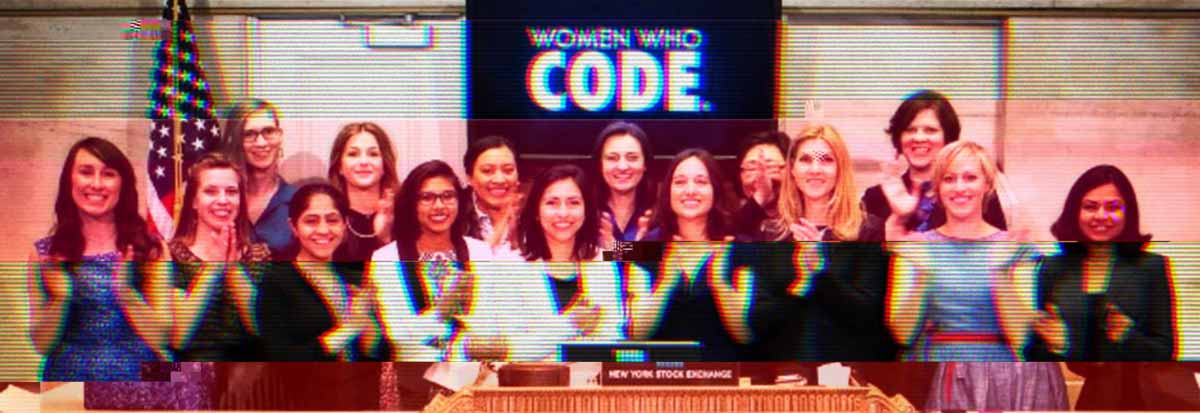
Via Gillian Rose. If you’re going to the AAG – this session is sure to be a good one.
This is a call for papers for a session at the next conference of the American Association of Geographers annual meeting in Washington DC 3-7 April next year on feminist digital geographies, organised by Agnieszka Leszczynski (Western University) and me. It’s sponsored by both the Digital Geographies and the Geographic Perspectives on Women Speciality Groups of the AAG.
In the context of a flurry of activities coalescing around digital geographies, we invite papers that consider the “enduring contours and new directions” of feminist theory, politics, and praxis for geographies concerned with the digital (Elwood and Leszczynski, 2018). We broadly welcome interventions that proceed from, utilize, and advance feminist epistemologies, methodologies, theory, critical practice, and activism.
We are open to submissions offering empirical, theoretical, critical, and methodological contributions across a range of topics, including but not limited to:
Please submit abstracts of no more than 200 words by October 15thto aleszczy@uwo.ca and gillian.rose@ouce.ox.ac.uk. Please include a title, your name, affiliation and email address in the abstract. We will respond to authors with confirmation by November 1st.
Reference:
Elwood S and Leszczynski A (2018) Feminist digital geographies. Gender, Place & Culture25(5): 629-644.

This talk by Meredith Whittaker reflecting upon the kinds of data that shape (what gets called) AI is really interesting, as is the fantastic AI Now Institute that she co-founded. Via twitter.