‘Wide’, not ‘big’, data

Saw this article a while ago on the NetworkWorld website, not sure if it’s a more broadly adopted concept – but the idea of ‘wide’ data appeals. Can’t remember if Rob Kitchin addresses it in his excellent book The Data Revolution… will have to check!

(I’m blogging this so I can finally close the tab in my browser!)

Why businesses should focus on wide data, not big data

In these heady days of big data, a lot of organizations treat data collection like a Pokémon game: Gotta catch it all. But Dane Atkinson, CEO of cross-platform marketing analytics specialist SumAll says most organizations need to think wide, not big, when it comes to data.

“The real impact of data always comes from the intersection of different data sets,” Atkinson says. “You don’t get into the earth shattering discoveries until you start to link disparate data sets.”

This idea of ‘wide’ data is what some marketing people have called ‘horizontals’ – the ability to stitch together different kinds of data to create a particular kind of value proposition (see Irene Ng’s book on this…)

Reblog> Data and the City

Mike Batty blogs about the ‘Data and the City’ event that is being convened by Rob Kitchin and the Programmable City team.

Data and the City

data-city
The Programmable City Project is holding a meeting on Data and the City in Maynooth from August 31- September 1st. You can get Rob Kitchin’s and Mike Batty’s papers from this blog but the programme is diverse and the Project web site contains details of the various contributions. I argue in my paper that we need to redefine big data in terms of the tools we use to interpret it and that size is not the main criterion as quite modest data sets in cities, particularly those dealing with transport and flows, are too large for most of current tools which involve statistical manipulation and visualisation. Here are two of the papers to be presented:

Michael Batty: Data About Cities: Redefining Big, Recasting Small

Rob Kitchin: Data-Driven, Networked Urbanism

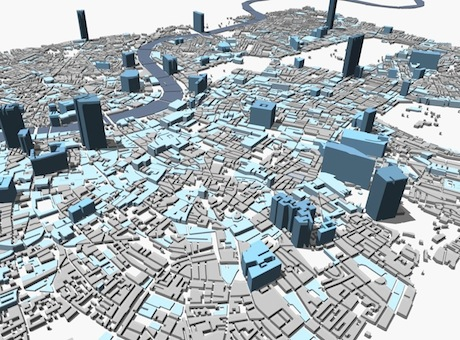
The image above was produced by Stephan Hugel and Flora Roumpani from their animation of tweets in London Using City Engine. Click here for the movie.

Reblog> New paper: Data-driven, networked urbanism

This looks good –– added to my ‘to read’ pile 🙂

New paper: Data-driven, networked urbanism

A new paper, ‘Data-driven, networked urbanism’, has been published by Rob Kitchin as Programmable City Working Paper 14.  The paper has been prepared for the Data and the City workshop to be held at Maynooth University Aug 31th-Sept 1st.

Abstract
For as long as data have been generated about cities various kinds of data-informed urbanism have been occurring.  In this paper, I argue that a new era is presently unfolding wherein data-informed urbanism is increasingly being complemented and replaced by data-driven, networked urbanism.  Cities are becoming ever more instrumented and networked, their systems interlinked and integrated, and vast troves of big urban data are being generated and used to manage and control urban life in real-time. Data-driven, networked urbanism, I contend, is the key mode of production for what have widely been termed smart cities.  In this paper I provide a critical overview of data-driven, networked urbanism and smart cities focusing in particular on the relationship between data and the city (rather than network infrastructure or computational or urban issues), and critically examine a number of urban data issues including: the politics of urban data; data ownership, data control, data coverage and access; data security and data integrity; data protection and privacy, dataveillance, and data uses such as social sorting and anticipatory governance; and technical data issues such as data quality, veracity of data models and data analytics, and data integration and interoperability.  I conclude that whilst data-driven, networked urbanism purports to produce a commonsensical, pragmatic, neutral, apolitical, evidence-based form of responsive urban governance, it is nonetheless selective, crafted, flawed, normative and politically-inflected.  Consequently, whilst data-driven, networked urbanism provides a set of solutions for urban problems, it does so within limitations and in the service of particular interests.

Key words: big data, data analytics, governance, smart cities, urban data, urban informatics, urban science

Download PDF

What might happen when ‘things’ design themselves?

I’ve been meaning to flag this for a while… Chris Speed at Edinburgh (who gave the ‘dancing with data‘ talk I posted a while ago) is leading a project called ThingTank:

The ThingTank project identifies that ‘things’ may soon know more about lives than we do and may also be able to make suggestions about what is missing. The purpose of this project is to explore the potential for identifying novel patterns of use within the data that is streamed through the interaction between people and things, and things and things. Our project builds on research and innovation that has been established by the three investigators across the fields of Internet of Things, Social Experience Design and Machine Learning. Through a better understanding of how what data can tell us about how we use objects, new models of use will emerge and reinvigorate the role of things and people within design and manufacturing.

The project offers some interesting provocations both as research outcomes and as innovation in methods. It’s worth looking at this write-up by Chris on his website Fields.

Reblog> The Internet of Someone Else’s Things

In a post on TechCrunch Jon Evans runs through the various ways we might have to rethink ownership in a tightly vertically integrated economy of an ‘internet of things’. The article resonates with the talk “Dancing with Data” by Chris Speed that I posted a few weeks ago, about markets, value and how we can understand our everyday uses of digital technologies.

As Chris argues, you/we are already enrolled into markets through the ‘data exhausts‘ of our stuff and as Jon Evans argues in the article, even as the ‘owner’ of the physical device you have no real control over whether or where that data exhaust goes. As Evans goes on to say, there is increasingly a variety of forms of ownership of any given device: there’s physical possession, legal ownership and the ultimate power to command it (what you might call “root” access). Likewise, in an article in The Atlantic (to which Evans links)  Madrigal and Meyer point out the peculiarities of interoperation that an Internet of Things requires:

Most “smart-home” devices right now aren’t talking to each other directly over a local wifi network. Instead, they’re talking to enormous and  centralized data centers, which are then talking to each other, which are then (finally) sending instructions back to different devices in your home.

Evans goes on to argue that we could think about ownership another way:

the possibility of a decentralized Internet of Things; smart things which don’t communicate with any central server, but rather with a peer-to-peer, perhaps blockchain-based network. Consider the way FireChat is being used in Hong Kong, so that protestors can communicate despite the authorities’ control of the mobile networks. You don’t always actually need a central server, especially if you have a distributed-consensus system – like a blockchain – for longer-term data storage and algorithmic coordination.

It’s an interesting, relatively short, article with plenty of links to follow up – worth a read!

The Internet Of Someone Else’s Things

Trojan Horse

The Internet Of Things is coming. Rejoice! “¦Mostly. It will open our collective eyes to petabytes of real-time data, which we will turn into new insights and efficiencies. It will doubtless save lives. Oh, yes: and it will subtly redefine ownership as we know it. You will no longer own many of the most expensive and sophisticated items you possess. You may think you own them. But you’ll be wrong.

They say “possession is nine-tenths of the law,” but even if you physically and legally own a Smart Thing, you won’t actually control it. Ownership will become a three-legged stool: who physically owns a thing; who legally owns it; “¦and who has the ultimate power to command it. Who, in short, has root.

Read the rest of the article.

Reblog> Draft Translation of Fourquet and Murard’s “La Ville-Ordinateur”

Keith Harris has offered a draft translation of an interesting essay that forms part of a broader, very interesting, paper colloquium that included Deleuze, Guattari and Foucault. The paper is “La Ville-Ordinateur” (The Computer-City), very much worth reading and following-up Keith’s links. This is a great resource!

Draft Translation of Fourquet and Murard’s “La Ville-Ordinateur”

As I mentioned last week, this is the essay that kicked off Recherches 13 (1973) and is the context for the two conversations involving Deleuze, Guattari, Foucualt, and Fourquet that are published as texts 129 and 130 in Foucault’s Dits et Écrits (tome 2) and translated into English in Foucault Live (1996) under the title “Equipments of Power.”

This is a draft but I think it comes across fairly clearly. I would like to gather it along with a few of the other key contributions to this issue and putting it our for publication, perhaps along with portions of issue 14 (Stuart Elden provides some insight into issues 13 and 14 here and here). Any advice on how to undertake that or journals you believe might be interested in such an endeavor would be greatly appreciated, as would any comments on the translation itself (or if you know of any postdocs where one could concentrate on this kind of work, I would be interested in that too!).

Read the whole blogpost & translation.

Repost> Call for applications: digital activist residency in Berlin, Oct + Nov 2015

The Tactical Tech collective have a call for applications for a residency later this year which looks great!

Tactical Tech is offering a residency in its offices in Berlin, Germany, for two months starting at the beginning of October 2015.  The residency is designed to support activists from Latin America, Africa, Asia, Central Asia, the Caucasus or the Middle East, who utilise digital technologies extensively in their work.

This is part of a project launched by the Tactical Technology Collective and Reporters without Borders Germany, meant to strengthen Berlin as a hub for a creative community that can inspire change around the world. In parallel, Reporters Without Borders will host a residency for a journalist.

We are looking for an experienced digital activist interested in joining a small team working internationally on issues related to Tactical Tech’s current strategic priorities. This means you should be experienced in working in at least one of the following areas of activity :

  • Understanding and exposing issues; using data, design and technology to help people understand and investigate systemic issues in their own societies. (Primary Tactical Tech project: Exposing the invisible.)
  • The politics of data; understanding what it means to live in a ‘data society’, how we leave digital traces and what this means for the privacy of everyday users in different contexts. (Primary Tactical Tech project: Me and My Shadow)
  • Digital security for human rights defenders and journalists; working practically to sustain freedom of expression in the digital sphere. (Primary Tactical Tech project: Security-in-a-box)

Read the full call for applications.

David Moats reviews Rob Kitchin’s The Data Revolution in TCS

On the Theory Culture & Society journal website you can read a review of Rob Kitchin’s The Data Revolution by David Moats.

Here’s the abstract:

Rob Kitchin’s The Data Revolution helpfully strips away the hype surrounding ‘big data’ and clarifies key terms. This review suggests some avenues where the book could be taken further, particularly in reference to the performativity of big data discourses and infrastructures, giving the example of Cameron and Palin’s dismantling of the hype around globalisation. It is also suggested that the performative effects of data enact sociality in new ways and may require more dramatic methodological and philosophical shifts. Crucially however, Kitchin’s book successfully clears a space of shared understanding on which more radical projects can be built.

Read the whole review.

Reblog > CFP: “Critical Data Studies” – Big Data & Society Special Theme

Andrew Iliadis has blogged this interesting Call For Papers:

CFP: “Critical Data Studies” – Big Data & Society Special ThemeGuest Editors: Andrew Iliadis (Purdue University) and Federica Russo (Universiteit van Amsterdam)

Critical Data Studies (CDS) is a growing field of research that focuses on the unique theoretical, ethical, and epistemological challenges posed by “Big Data.” Rather than treat Big Data as a scientifically empirical, and therefore largely neutral phenomena, CDS advocates the view that data should be seen as always-already constituted within wider data assemblages. Assemblages is a concept that helps capture the multitude of ways that already-composed data structures inflect and interact with society, its organization and functioning, and the resulting impact on individuals’ daily lives. CDS questions the many assumptions about data that permeate contemporary literature on information and society by locating instances where data may be naively taken to denote objective and transparent informational entities.

CDS may be viewed as an emerging field connected to Information Ethics, Software Studies, and Critical Information Studies in that it seeks to question the ethical import of information and Big Data for society. Problems of causality, quality, security, and uncertainty concern CDS scholars. Recent articles outlining the theoretical program of CDS offer a new platform from which to question data in this manner. We seek essays for this special volume that broaden these latest commitments in CDS to include new empirical research projects on information and communication technologies (ICTs) that fall under the umbrella of Big Data, while also seeking to question their attendant epistemological shifts. Through the critical lens of ethics and morality, this special volume opens up CDS to localizations where Big Data can no longer be seen as neutral, and where an ethics of Big Data might emerge.

Issues of interest include (but are not limited to):
– Causality: how should we find causes in the era of ‘data-driven science?’ Do we need a new conception of causality to fit with new practices?
– Quality: how should we ensure that data are good enough quality for the purposes for which we use them? What should we make of the open access movement; what kind of new technologies might be needed?
– Security: how can we adequately secure data, while making it accessible to those who need it? How do we protect databases?
– Uncertainty: can Big Data help with uncertainty, or does it generate new uncertainties? What technologies are essential to reduce uncertainty elements in data-driven sciences?

Proposals of 1000 words are invited for consideration and inclusion in the Special Theme to be published in Big Data & Society (BD&S), an open access peer-reviewed scholarly journal that publishes interdisciplinary work principally in the social sciences, humanities and computing and their intersections with the arts and natural sciences about the implications of Big Data for societies.

Manuscripts should be 8,000 words for an Original Research Article, 3,000 words for a Commentary, and 1,000 words for an essay in the Early Career Research Forum section. All submissions of Original Research Articles to BD&S are double-blind, and triple peer-reviewed. Commentaries and ECR submissions are reviewed by the Guest Editors.

See the full thing on Andrew’s blog.