
Registration is open for the 4th International Data Justice Conference “The Datafied State”. The event will be held on 1-2 June 2026 at Cardiff …
Register now for Data Justice 2026
Data Power in Action: Urban Data Politics in Times of Crisis

Tom Cowan (University of Nottingham) on Ola Söderström and Ayona Datta’s Data Power in Action: Urban Data Politics in Times of Crisis The post Data …
Data Power in Action: Urban Data Politics in Times of Crisis
The Antipode Film Project—“The Pixel and the Plot” / “El Pixel y La Parcela”
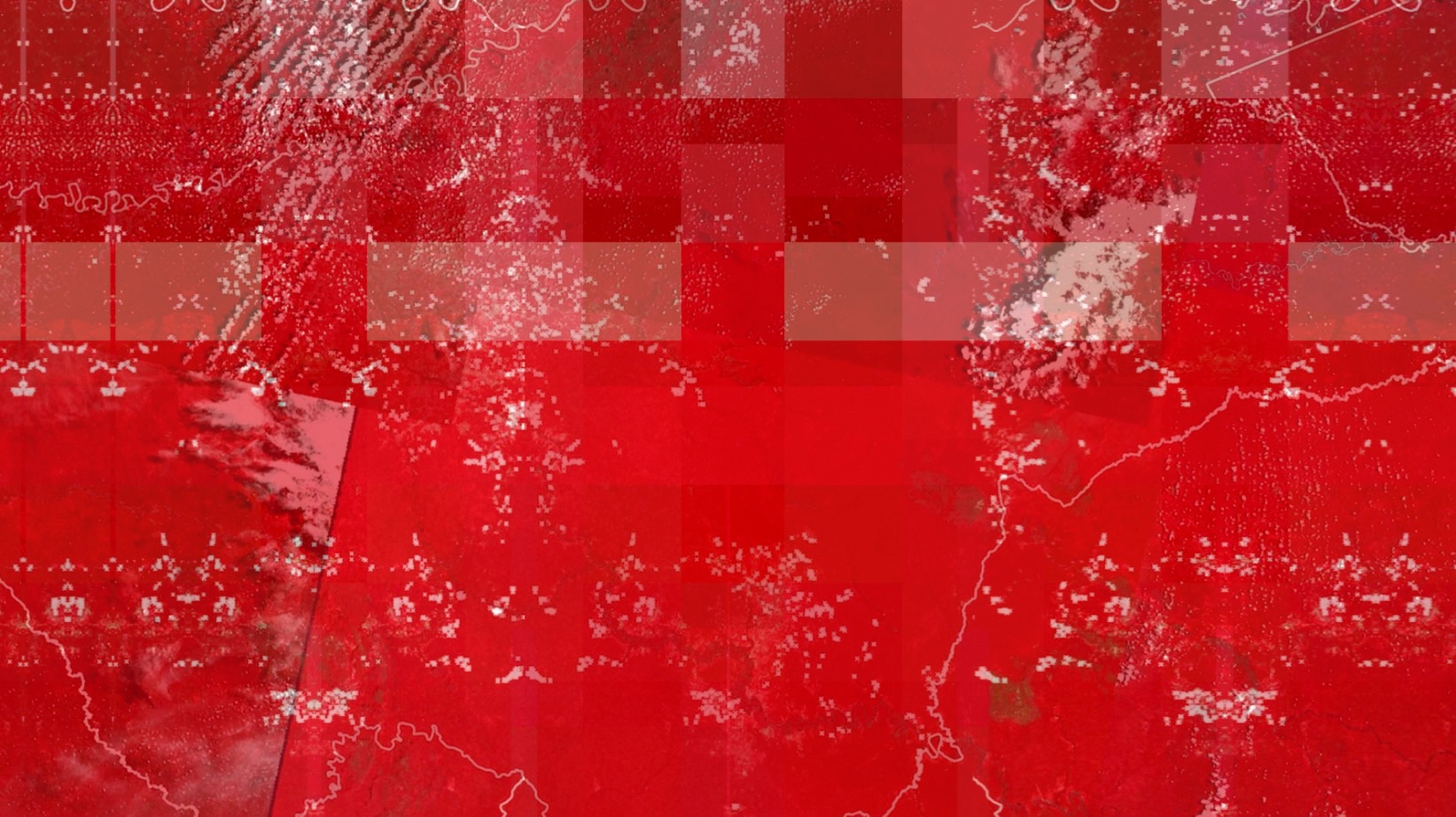

We’re delighted to present the first of the films produced following the re-launch of the Antipode Film Project in May 2023. The brief was to create …
The Antipode Film Project—“The Pixel and the Plot” / “El Pixel y La Parcela”
Data Justice Conference 2026: Submit your abstract by 31 Dec

The 4th international Data Justice conference will be held at Cardiff University on 1-2 June 2026, with the title ‘The Datafied State’. It will …
Data Justice Conference 2026: Submit your abstract by 31 Dec
Excellent conference opportunity with brilliant people
Data Justice Conference 2026: The Datafied State

Fourth international Data Justice conference: The Datafied State Date: 1-2 June, 2026 Location: Cardiff University in Cardiff, UK Host: Data Justice…
Data Justice Conference 2026: The Datafied State
How tech companies (still) hide outsourcing

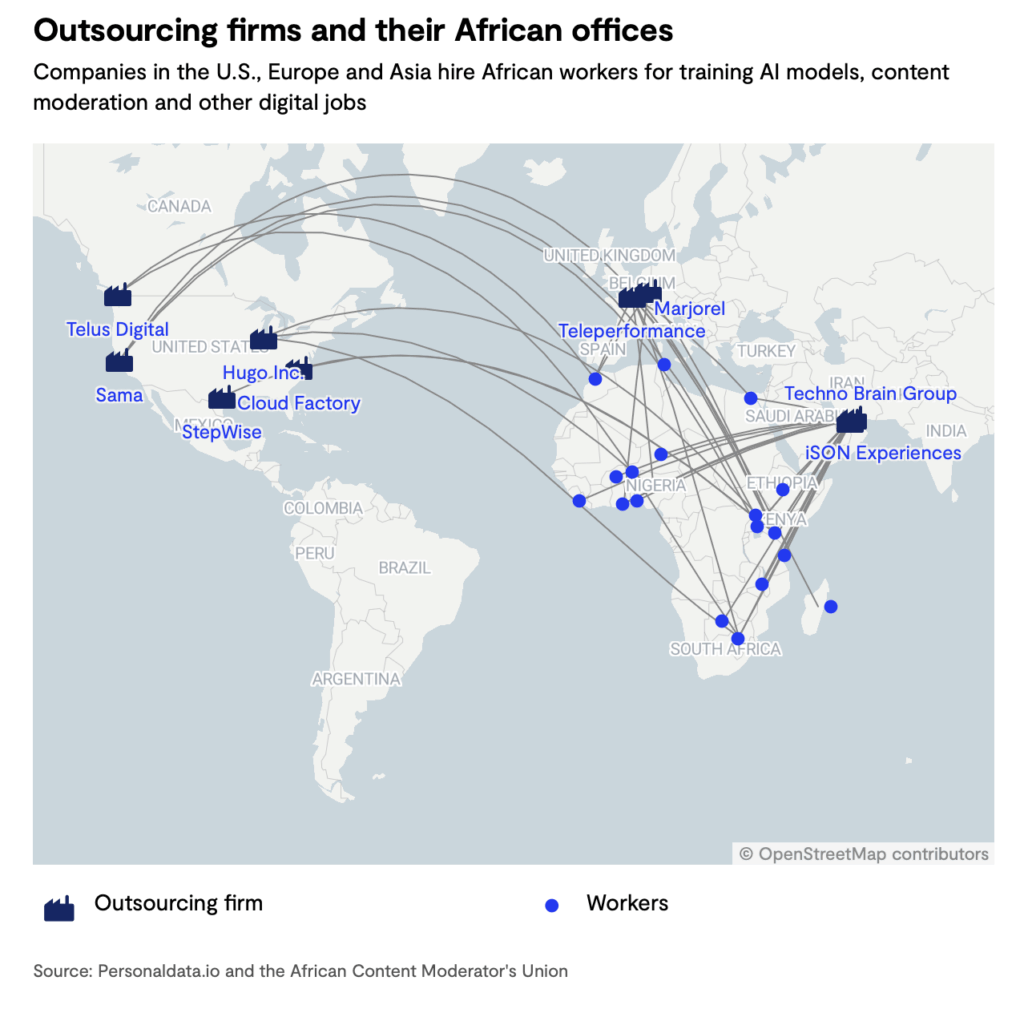
On the news site Rest of the World, there is a really interesting piece by Stephanie Wangari and Gayathri Vaidyanathan concerning research conducted by the African Content Moderators Union (ACMU) and Switzerland-based nonprofit, Personaldata.io that details the ways in which African workers are indirectly employed in the tech sector, doing content moderation, customer service, and data annotation for AI models, among other jobs.
A new dataset, visualized as maps, reveals the extent to which African workers are indirectly employed in the tech sector, doing content moderation, customer service, and data annotation for AI models, among other jobs.
READ THE WHOLE ARTCLE
Algorithms in politics after Brexit

As Clive recently shared – Kuba Jablonowski, Clive and myself have been very fortunate to successfully apply for a grant in the ESRC’s ‘Governance after Brexit’ scheme. The project, which begins in January ’21, focuses on ‘Algorithmic politics and administrative justice in the EU Settlement Scheme’ (The EUSS is the UK government scheme designed to determine the post-Brexit UK immigration status of EU citizens and their families who are currently living in the UK under EU free movement law).
The project will run from the start of 2021 through to the end of 2023. Here’s a quick summary from the application:
“The research aims to analyse the process of administrative reform associated with Brexit, and the intersection of this process with the digitalisation of administration and governance in the UK. It takes the evolution of the EU Settlement Scheme (EUSS) as its empirical entry-point. By investigating how grievances and claims of injustice emerge from the operation of the EUSS and are monitored and challenged in the public sphere, the research will seek to understand how practices of administrative justice are reconfigured by the interaction of automated algorithmic systems with rights-based practices of monitoring, advocacy and litigation.”
I’m sure we’ll post further information as the project gets underway on our websites.
AI Now’s Data Genesis programme – job opportunity

The excellent AI Now institute have announced a fantastic new project titled ‘Data Genesis’ – I’ve copied some details below. Importantly – there are jobs, so – if you think you might fit the bill then apply!
AI Now Institute has been developing new approaches to study and understand the role of training data in the machine learning field. Key research questions include: What type of information is used as training data? Who generates and collects it and for what purpose? What segments of society does it reflect? Who and what does it exclude? And how does that affect the functioning of AI systems themselves?
The Data Genesis program’s goal is to answer and demystify these questions through three core components:
- Archiving and analyzing the origin and construction of key datasets that serves as foundations for today’s AI systems;
- Producing visualizations, maps, and other designs to help crystallize and contextualize what this data is and what it means to communities, practitioners, companies, and policymakers; and
- Convening experts from across disciplines to help build a field around this topic.
The rapid proliferation of AI into various social and political contexts demands a thorough understanding of the data that these systems are trained on, including the biases and flaws this data may encode. Our Data Genesis program will investigate the complex foundation on which AI is built and will call into question the perception of AI as a magical force that is superior to human judgement.
Check out the jobs associated with the project here.
Bernard Stiegler on the on the notion of information and its limits

I have only just seen this via the De Montfort Media and Communications Research Centre Twitter feed. The above video is Bernard Stiegler’s ‘key note’ (can’t have been a big conference?) at the University of Kent Centre for Critical Though conference on the politics of Simondon’s Modes of Existence of Technical Objects.
In engaging with Simondon’s theory (or in his terms ‘notion’) of information, Stiegler reiterates some of the key elements of his Technics and Time in relation to exosomatisation and tertiary retention being the principal tendency of an originary technics that, in turn, has the character of a pharmakon, that, in more recent work, Stiegler articulates in relation to the contemporary epoch (the anthoropocene) as the (thermodynamic style) tension between entropy and negentropy. Stiegler’s argument is, I think, that Simondon misses this pharmacological character of information. In arguing this out, Stiegler riffs on some of the more recent elements of his project (the trilogy of ‘As’) – the anthropocene, attention and automation – which characterise the contemporary tendency towards proletarianisation, a loss of knowledge and capacities to remake the world.
It is interesting to see this weaving together of various elements of his project over the last twenty(+) years both: in relation to his engagement with Simondon’s work (a current minor trend in ‘big’ theory), and: in relation to what seems to me to be a moral philosophical character to Stiegler’s project, in terms of his diagnosis of the anthropocene and a call for a ‘neganthropocene’.
Published> A very public cull – the anatomy of an online issue public

I am pleased to share that an article I co-authored with Rebecca Sandover (1st author) and Steve Hinchliffe has finally been published in Geoforum. I would like to congratulate my co-author Rebecca Sandover for this achievement – the article went through a lengthy review process but is now available as an open access article. You can read the whole article, for free, on the Geoforum website. To get a sense of the argument, here is the abstract:
Geographers and other social scientists have for some time been interested in how scientific and environmental controversies emerge and become public or collective issues. Social media are now key platforms through which these issues are publicly raised and through which groups or publics can organise themselves. As media that generate data and traces of networking activity, these platforms also provide an opportunity for scholars to study the character and constitution of those groupings. In this paper we lay out a method for studying these ‘issue publics’: emergent groupings involved in publicising an issue. We focus on the controversy surrounding the state-sanctioned cull of wild badgers in England as a contested means of disease management in cattle. We analyse two overlapping groupings to demonstrate how online issue publics function in a variety of ways – from the ‘echo chambers’ of online sharing of information, to the marshalling of agreements on strategies for action, to more dialogic patterns of debate. We demonstrate the ways in which digital media platforms are themselves performative in the formation of issue publics and that, while this creates issues, we should not retreat into debates around the ‘proper object’ of research but rather engage with the productive complications of mapping social media data into knowledge (Whatmore, 2009). In turn, we argue that online issue publics are not homogeneous and that the lines of heterogeneity are neither simple or to be expected and merit study as a means to understand the suite of processes and novel contexts involved in the emergence of a public.