UK Government ramping up ‘robotic process automation’

Still from George Lucas' THX1138

Quite by chance I stumbled across the twitter coverage of a UK Authority event entitled “Return of the Bots” yesterday. There were a range of speakers it seems, from public and private sectors. An interesting element was the snippets about the increasing use of process automation by the UK Government.

Here’s some of the tweets I ‘favourited’ for further investigation (below). I hadn’t quite appreciated where government had got to. It would be interesting to look into the rationale both central and local government are using for RPA – I assume it is cost-driven(?). I hope to follow up some of  this…

John Danaher interview – Robot Sex: Social and Ethical Implications

Gigolo Jane and Gigolo Joe robots in the film A.I.

Via Philosophical Disquisitions.

Through the wonders of the modern technology, myself and Adam Ford sat down for an extended video chat about the new book Robot Sex: Social and Ethical Implications (MIT Press, 2017). You can watch the full thing above or on youtube. Topics covered include:

  • Why did I start writing about this topic?
  • Sex work and technological unemployment
  • Can you have sex with a robot?
  • Is there a case to be made for the use of sex robots?
  • The Campaign Against Sex Robots
  • The possibility of valuable, loving relationships between humans and robots
  • Sexbots as a social experiment

Be sure to check out Adam’s other videos and support his work.

Autumnal AI links

Facial tracking system, showing gaze direction, emotion scores and demographic profiling

Another blogpost where I’m just gonna splurge some links cos they’re just sitting as open tabs in my browser and I may as well park them and share them at the same time, in case anyone else is interested…

(If you’re somehow subscribed to this blog and don’t like this, let me know and I’ll see if I can set-up another means of doing this… I used to use del.icio.us, remember that?!)

Here’s some A.I. things from my browser then:


Adversarial attacks on machine learning

There’s been quite a bit of chat about the ways particular kinds of neural nets used in machine vision systems are vulnerable to techniques that either create mis-recognition of images or feed into training a mis-recognition.

danah boyd made this part of her public talks earlier this year, drawing upon a ‘shape bias’ study by Google researchers. Two recent overview pieces on The Verge and Quartz are accessible ways into such issues too.

Other stories on news sites (e.g.) have focussed on the ways machine vision systems that could be used in ‘driverless’ cars for recognising traffic signs can be ‘fooled’, drawing upon another study by researchers at four US institutions.

Another story doing the rounds has been the model of a 3D printed turtle that was used to fool what is referred to as “Google’s object detection AI” into classifying it as a gun, many of these accounts start with the same paper boyd cites move on to discuss work such as the ‘one pixel’ hack for confusing neural nets by researchers at Kyushu and then discuss a paper on the 3D printed turtle model as ‘adversarial object’ by researchers at MIT.

A Facebook spokesperson says the company is exploring securing against adversarial examples, shown through a research paper published in July 2017, but they apparently haven’t yet implemented anything. Google, where a number of the early ‘adversarial’ examples were researched, have apparently declined to comment on whether its APIs and deployed ‘AI’ are secured, but researchers there have recently submitted papers to conferences on the topic.

A reasonable overview of this kind of research is available on Popular Science by Dave Gershgorn: “Fooling The Machine“. Artist James Bridle (who else?!) has also written and made some provocative work in response to these kinds of issues, e.g. Autonomous Trap 001 and Austeer.


Biases and ethics of AI systems

There’s, of course, tons on the ways biases are encoded into ‘algorithms‘ and software but there’s been a little more attention to this sort of thing in relation to AI appearing in my social media stream this year…

Vice’s Motherboard covered a story concerning the ways in which a sentiment analysis system by Google appeared to classify statements about being gay or a jew as ‘negative’.

Sky News covered a story about an apparent case of erroneous arrests at the Notting Hill Carnival this year (2017) that were allegedly caused by facial recognition systems.

An interesting event at the Research and Development department at Het Nieuwe Instituut addresses ‘the ways that algorithmic agents perform notions of human race’. Decolonising Bots included Ramon Amaro, Florence Okoye and Legacy Russell.


The Financial Services Board have an interesting report out concerning: Artificial intelligence and machine learning in financial services, which seems well worth reading.


Defending corporate R&D in AI

Facebook’s head of AI is fed up with the negative, or apocalyptic, references used for describing AI, e.g. the terminator. It’s not just a whinge, there’s some interesting discussion in this interview on The Verge.

Technology policy pundit Andrea O’Sullivan says the U.S. needs to be careful not to hamstring innovation by letting ‘the regulators ruin AI‘.


Finally, the British Library have an event on Monday 6th November called: “AI: Where Science meets Science Fiction“, which may or may not be interesting… it will be live-streamed apparently.

Reblog> Robots: ethical or unethical?

Twiki the robot from Buck Rogers

From Peter-Paul Verbeek.

ROBOTS: ETHICAL OR UNETHICAL?

To highlight the relevance of the UNESCO World Commission on the Ethics of Scientific Knowledge and Technology (COMEST) and to present its recent report on the ethics of robotics, the Permanent Delegation of the Kingdom of the Netherlands to UNESCO will organize a lunch debate on “Robots: ethical or unethical?” during the 39th General Conference, on Friday 10 November 2017, in Room X from 13:00 to 14:15.

The session will be opened by H.E. Ambassador Lionel Veer and Ms Nada Al-Nashif, Assistant Director-General for Social and Human Sciences, and will be moderated by Prof. Peter-Paul Verbeek, COMEST member and philosopher.

The issues addressed will be the following:

· What change caused by robots can we expect? Presented by Prof. Vanessa Evers, University of Twente

· Which are the ethical dilemmas? Presented by Prof. Mark Coeckelbergh, University of Vienna

· How can we ensure that innovation is ethical? Presented by Prof. Peter-Paul Verbeek, University of Twente (COMEST member)

The presentations will be followed by an interactive debate with the audience and by a reflection on the role of UNESCO and the COMEST on these issues.

Automation as received wisdom

Holly from the UK TV programme Red Dwarf

For your consideration – a Twitter poll in a sponsored tweet from one of the UK’s largest management consultancies.

Why might a management consultancy do this? – To gain superficially interesting yet fatuous data to make quick claims about? Perhaps for the purposes of advertising? Maybe… Perhaps to try to suggest, in a somewhat calculating way, that the company asks the “important” questions about the future and therefore imply they have some answers? Or maybe simply to boost the now-prevailing narrative that automation is widespread, growing and will take your job. Although to be fair to Accenture, that’s not what they ask.

In any case, this is not neutral – though, I recognise it’s a rather minor and perhaps inconsequential example. Nevertheless, it highlights the growth in pushing a narrative of automation from management consultancies, like Accenture, Deloitte and PWC, who are all writing lots of reports suggesting that companies need to be ready for automation.

A cynical analysis would suggest that it’s within the interests of such companies to jump on the narrative – it’s been in the press quite a bit in recent years, then ramp it up, and offer to sell the ‘solutions’.

What I find particularly interesting is that, while newspaper articles parrot the reports from these consultancies, there appears to be (in my digging around) scant serious evidence for this trend. A lot of it is based on economic modelling (of both past and future economic contexts) and some of the reports when they do list methods seem to use adapted versions of models that once said something else.

A case in point is the recent PWC report about automation that claimed up to 30% of UK jobs could be automated by the early 2030s, widely reported in the press (e.g. BBC, Graun, Telegraph), which was based upon a modified (2016) OECD model – the original model suggested that only 9% of jobs in OECD countries were at relatively high risk (greater than 70% risk in their calculation) of automation with the UK rated at just over 10% of jobs.

I’m working my way through this sort of stuff to get at how these sorts of narratives are generated, become received wisdom and feed into a wider form of social imagination about the kinds of socio-economic and technological future we expect. I’m hoping to pull together a book on this theme with the tentative title “The Automative Imagination”.

Reblog> Should robots be granted the status of legal personhood?

Twiki the robot from Buck Rogers

From John Danaher’s Philosophical Disquisitions.

Danaher offers his incisive analysis of recent additions to the debate on legal personhood re. “robots”. Seems interesting (to me) in relation to two things: agency, and how we imagine automation – since we don’t actually have such ‘robots’ at the moment. It’s quite a long post (so only a snippet below), but worth working through… not least because in geographyland it seems to me many of us have a very narrow understanding of these sorts of things from a fairly narrow (simplified) post-structuralist account of ‘subjectivity‘.

Should robots be granted the status of legal personhood?

The EU parliament attracted a good deal of notoriety in 2016 when its draft report on civil liability for robots suggested that at least some sophisticated robots should be granted the legal status of ‘electronic personhood’. British tabloids were quick to seize upon the idea — the report came out just before the Brexit vote — as part of their campaign to highlight the absurdity of the EU. But is the idea really that absurd? Could robots ever count as legal persons?

A recent article by Bryson, Diamantis and Grant (hereinafter ‘BDG’) takes up these questions. In ‘Of, for and by the people: the legal lacuna or synthetic persons’, they argue that the idea of electronic legal personhood is not at all absurd. It is a real but dangerous possibility — one that we should actively resist. Robots can, but should not, be given the legal status of personhood.

BDG’s article is the best thing I have read on the topic of legal personhood for robots. I believe it presents exactly the right framework for thinking about and understanding the debate. But I also think it is misleading on a couple of critical points. In what follows, I will set out BDG’s framework, explain their central argument, and present my own criticisms thereof.

Read the full blogpost.

The Economist ‘Babbage’ podcast: “Deus Ex Machina”

Glitched still from the film "Her"

An interesting general (non-academic, non-technical) discussion about what “AI” is, what it means culturally and how it is variously thought about. Interesting to reflect on the way ideas about computation, “algorithms”, “intelligence” and so on play out… something that maybe isn’t discussed enough… I like the way the discussion turns around “thinking” and the suggestion of the word “reckoning”. Worth a listen…

Reblog> Humans and machines at work

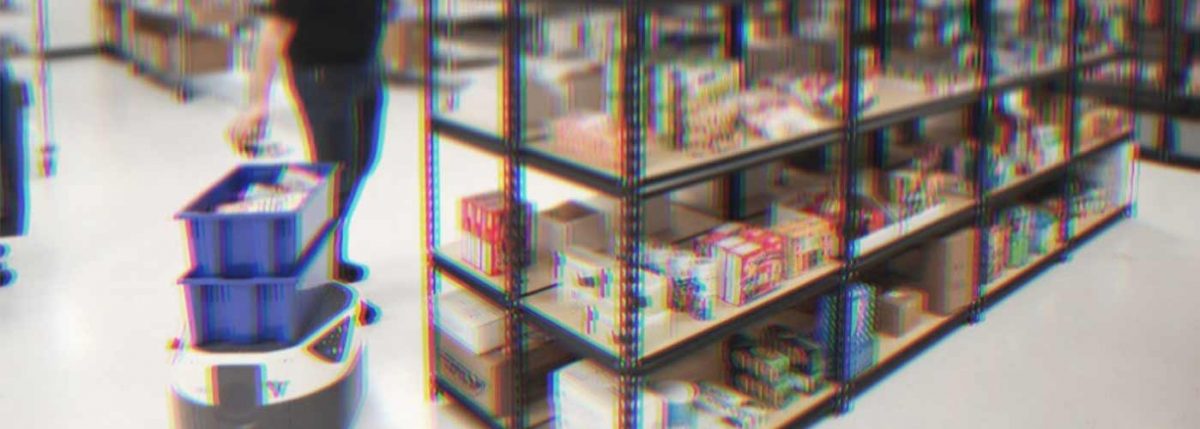
A warehouse worker and robot

Via Phoebe Moore. Looks good >>

Humans and Machines coverHumans and machines at work: monitoring, surveillance and automation in contemporary capitalism edited by Phoebe V. Moore, Martin Upchurch and Xanthe Whittaker.
This edited collection is now in production/press (Palgrave, Dynamics of Virtual Work series editors Ursula Huws and Rosalind Gill). This is the results of the symposium I organised for last year’s International Labour Process Conference (ILPC). We are so fortunate to have 9 women and 3 men authors from all over the world including Chinese University Hong Kong, Harvard, WA University St Louis, Milan, Sheffield, Lancaster, King’s College, Greenwich, and Middlesex researchers, two trade unionists from UNI Global Union and Institute for Employment Rights, early career and more advanced contributors.

In the era of the so-called Fourth Industrial Revolution, we increasingly work with machines in both cognitive and manual workplaces. This collection provides a series of accounts of workers’ local experiences that reflect the ubiquity of work’s digitalisation. Precarious gig economy workers ride bikes and drive taxis in China and Britain; domestic workers’ timekeeping and movements are documented; call centre workers in India experience invasive tracking but creative forms of worker subversion are evident; warehouse workers discover that hidden data has been used for layoffs; academic researchers see their labour obscured by a ‘data foam’ that does not benefit us; and journalists suffer the algorithmic curse. These cases are couched in historical accounts of identity and selfhood experiments seen in the Hawthorne experiments and the lineage of automation. This collection will appeal to scholars in the sociology of work and digital labour studies and anyone interested in learning about monitoring and surveillance, automation, the gig economy and quantified self in workplaces.

Table of contents:

Chapter 1: Introduction. Phoebe V. Moore, Martin Upchurch, Xanthe Whittaker

Chapter 2: Digitalisation of work and resistance. Phoebe V. Moore, Pav Akhtar, Martin Upchurch

Chapter 3: Deep automation and the world of work. Martin Upchurch, Phoebe V. Moore

Chapter 4: There is only one thing in life worse than being watched, and that is not being watched: Digital data analytics and the reorganisation of newspaper production. Xanthe Whittaker

Chapter 5: The electronic monitoring of care work – the redefinition of paid working time. Sian Moore and L. J. B. Hayes

Chapter 6: Social recruiting: control and surveillance in a digitised job market. Alessandro Gandini and Ivana Pais

Chapter 7: Close watch of a distant manager:  Multisurveillance by transnational clients in Indian call centres. Winifred R. Poster

Chapter 8: Hawthorne’s renewal: Quantified total self. Rebecca Lemov

Chapter 9: ‘Putting it together, that’s what counts’: Data foam, a Snowball and researcher evaluation. Penny C. S. Andrews

Chapter 10: Technologies of control, communication, and calculation: Taxi drivers’ labour in the platform economy. Julie Yujie Chen

Our friends electric

Another wonderful video from superflux exploring how to think about the kinds of relationships we may or may not have with our ‘smart’ stuff…

Our Friends Electric from Superflux on Vimeo.
Our Friends Electric is a short film by Superflux about voice-enabled AI assistants who ask too many questions, swear & recite Marxist texts.

The film was commissioned by Mozilla’s Open IoT Studio. The devices in the film are made Loraine Clarke and Martin Skelly from Mozilla’s Open IoT Studio and the University of Dundee.

For more information about the project visit: http://superflux.in/index.php/work/friends-electric/#

Roadside billboards display targeted ads in Russia

racist facial recognition

From the MIT Tech Review:

Moscow Billboard Targets Ads Based on the Car You’re Driving

Targeted advertising is familiar to anyone browsing the Internet. A startup called Synaps Labs has brought it to the physical world by combining high-speed cameras set up a distance ahead of the billboard (about 180 meters) to capture images of cars. Its machine-learning system can recognize in those images the make and model of the cars an advertiser wants to target. A bidding system then selects the appropriate advertising to put on the billboard as that car passes.

Marketing a car on a roadside billboard might seem a logical fit. But how broad could this kind of advertising be? There is a lot an advertiser can tell about you from the car you drive, says Synaps. Indeed, recent research from a group of university researchers and led by Stanford found that—using machine vision and deep learning—analyzing the make, model, and year of vehicles visible in Google Street View could accurately estimate income, race, and education level of a neighborhood’s residents, and even whether a city is likely to vote Democrat or Republican.

As the camera spots a BMW X5 in the third lane, and later a BMW X6 and a Volvo XC60 in the far left lane, the billboard changes to show Jaguar’s new SUV, an ad that’s targeted to those drivers.

Synaps’s business model is to sell its services to the owners of digital billboards. Digital billboard advertising rotates, and more targeted advertising can rotate more often, allowing operators to sell more ads. According to Synaps, a targeted ad shown 8,500 times in one month will reach the same number of targeted drivers (approximately 22,000) as a typical ad shown 55,000 times. The Jaguar campaign paid the billboard operator based on the number of impressions, as Web advertisers do. The traditional billboard-advertising model is priced instead on airtime, similar to TV ads.

In Russia, Synaps expects to be operating on 20 to 50 billboards this year. The company is also planning a test in the U.S. this summer, where there are roughly 7,000 digital billboards, a number growing at 15 percent a year, according to the company. (By contrast, there are 370,000 conventional billboards.) With a row of digital billboards along a road, they could roll the ads as the cars move along, making billboard advertising more like the storytelling style of television and the Internet, says Synaps’s cofounder Alex Pustov.

There are limits to what the company will use its cameras for. Synaps won’t sell data on individual drivers, though the company is interested in possibly using aggregate traffic patterns for services like predictive traffic analysis and the sociodemographic analysis of commuters versus residents in an area, traffic emissions tracking, or other uses.

Out of safety concerns, license plate data is encrypted, and the company says it will comply with local regulations limiting the time this kind of data can be stored, as well.

Well that’s alright then! 😉