Reblog> Workshop: Reshaping Cities through Data and Experiments

Smart City visualisation

This looks interesting (via Programmable City):

Workshop: Reshaping Cities through Data and Experiments

When: 30th May 2017 – 9.30am to 3.30pm
Where: Maynooth University, Iontas Building, Seminar Room 2.31

The “Reshaping Cities through Data and Experiments” workshop is part of the Ulysses research exchange programme jointly funded by Irish Research Council and the Ambassade de France. It is organized in collaboration with researchers from the Centre de Sociologie de l’Innovation (i3-CSI) at the École des Mines in Paris – David Pontille, Félix Talvard, Clément Marquet and Brice Laurent – and researchers from the National Institute for Regional and Spatial Analysis (NIRSA) in Maynooth University, Ireland – Claudio Coletta, Liam Heaphy and Sung-Yueh Perng.

The aim is to initiate a transdisciplinary discussion on the theoretical, methodological and empirical issues related to experimental and data-driven approaches to urban development and living. This conversation is vital in a time when cities are increasingly turning into public-private testbeds and living labs, where urban development projects merge with the design of cyber-infrastructures to test new services and new forms of engagement for urban innovation and economic development. These new forms of interaction between algorithms, planning practices and governance processes raise crucial questions for researchers on how everyday life, civic engagement and urban change are shaped in contemporary cities.


Read the full blogpost on the Programmable City site.

Reblog> Lesser known, or avoided, ‘truths’ of academic life

A glitched image of a typewriter

Stuart Elden points to a piece by Daniel McCormack in the Chronicle of Higher Education entitled “Some lesser-known truths about academe” which raises some interesting issues for consideration. I think the below in particular resonated with me…

Daniel McCormack, ‘Some Lesser-Known Truths About Academe‘ in The Chronicle of Higher Education. While this is a US focused piece, there is still much in here to consider for people in, or considering a career in higher education elsewhere. The writer is a post-doc in international politics who has decided to leave the sector.


Asking a professor whether you should pursue a Ph.D. is a little like asking The Rock – aka Dwayne Douglas Johnson, the world’s highest-paid actor last year – whether you should become an actor.

Once you enter a doctoral program, the main problem isn’t necessarily that you can’t finish. I know very few people who left graduate school because they weren’t smart enough to finish – it happens, but it’s rare. More often people leave because they just decide getting a Ph.D. isn’t for them. The truth is: It’s very difficult to understand what academic life is like until you actually try it, and lots of people try it and decide it’s not a good fit.

This, then, is why you should be wary of any advice you receive from professors about graduate school: It’s coming entirely from people who decided that academe was a good fit for them.

Field notebook apps?

As part of a conversation with our Masters students about their dissertation projects the topic/idea of using tablet/ phone apps as field diaries or notebooks… I remember some coming out a few years ago, which seem to have mostly fallen by the wayside, like “Field Notes App” (which still has screenshots from pre-iOS 7)

This is not something I have really engaged in as a late-comer to smart phones (yes, really) and not exactly the most successful bidder for research funding…

I wanted to ask the few folks who read this – do you use anything like this? If so, what? and can you provide any links or info? Please do use the comments section below.

Thanks!

UPDATE:

Reblog> Ordinary digital humanities – event with @rodgers_scott

Another interesting event, this time with Scott Rodgers at Birkbeck.

Ordinary digital humanities: Free event at Birkbeck, 15 May 2017

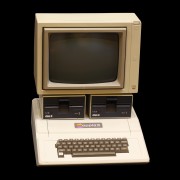
Apple_II_IMG_4212In a couple of weeks’ time I am happy to be hosting an event as part of Birkbeck Arts Week on the subject of ‘Ordinary Digital Humanities’, featuring a talk from Lesley Gourlay (UCL Institute of Education). The publicity blurb below has more than enough information, I suspect, for you to get the idea. The event comes in significant part out of discussions we’ve been having through Satellite, an experimental subcommittee in the School of Arts at Birkbeck focused on exchanging information and perspectives on the critical, creative, academic and pedagogical dimensions of learning technologies.

Ordinary Digital Humanities
The everyday life of digital technologies in pedagogy

15 May 2017, 6pm, Keynes Library, 43 Gordon Square, WC1H 0PD (part of Birkbeck Arts Week)

Book your free place at: https://www.eventbrite.co.uk/e/ordinary-digital-humanities-the-everyday-life-of-digital-technologies-tickets-33211361075

When one hears the term ‘digital humanities’ what likely comes to mind are innovative applications of computational techniques and technologies to humanities research as well as pedagogy. Or, conversely, the application of concepts and philosophies rooted in the humanities toward the study of emergent digital objects.

There are reasons however to think about the digital humanities in a more ordinary sense, beyond ‘cutting edge’ research or pedagogy. In the introduction to her book How We Think, N. Katherine Hayles suggests that in order to understand the implications of digital technologies for the humanities, we must first consider the ‘low level’ implications of digital technologies for academic life. For instance, the widespread normalisation of email, department websites, software applications, web searches, social media, and much more. For Hayles, a ‘digital humanities’ is more than just innovative new approaches to research and pedagogy. It is also inherently about transformations to the cognitive and embodied environments of academic life at the level of the habitual or everyday.

This forum considers the banal dimensions of the digital humanities, focusing specifically (though not exclusively) on pedagogical practice. It begins with an opening lecture from Dr Lesley Gourlay (abstract below), followed by responses from Dr Grace Halden and Dr Tim Markham from Birkbeck, University of London. We will not only survey the everyday ways digital technologies are being used, and are asserting themselves, in academic life; but also, how humanities and other scholars might respond to the apparent opportunities and intrusions wrought by digitisation.

The event will be followed by a wine reception.

Flickering texts and the writing body: posthuman perspectives on the digital university

Dr Lesley Gourlay, Reader in Education and Technology, UCL Institute of Education

As digital technologies become increasingly central in our day-to-day lives, we see profound changes in how we search for information, communicate with others, and express ourselves. The university is also changing, as digital media becomes more central via online resources for distance learning, but also throughout the traditional campus, through the mainstream use of digital media for teaching, library provision and academic reading and writing. This has not only changed approaches to academic teaching, it has also fundamentally altered how we seek resources and how we read and generate new knowledge through writing and interaction. Drawing Hayle’s notion of ’embodied virtuality’, this talk will explore this theme, analysing data from a research project which looked in detail at how a small group of students approached their studies over a six-month period, using drawings, photography and interviews to form an in-depth understanding of their day-to-day lives as students, and how they navigate the complex digital and material landscape of the contemporary university. It looks at how texts change when they move between paper-based and the digital, how students navigate the complexities of multiple devices and formats, how they make spaces for writing and knowledge while on the move, and how they form part of ‘posthuman’ networks of digital devices and material objects in order to engage in their studies. Taking a historical perspective, the talk concludes that textual practices have always been central to how higher education is organised and how we understand ‘knowledge’, and considers how digital media might continue to change what we call ‘the university’.

Digital Everyday – conference at KCL this weekend

This looks interesting… via Tony Sampson

THE DIGITAL EVERYDAY CONFERENCE

Location
Strand Campus – King’s College London
Category
Conference/Seminar
When
06/05/2017 (10:30-18:30)
Contact
Please direct enquiries to digitalculture@kcl.ac.uk

Sign up to the CDC mailing list here

The conference is paid and registration is essential. Registration closes midday on 4 May.

The Digital Everyday: Exploration or Alienation?

This international conference aims at exploring the digital everyday, understood as the transformation of everyday life practices brought about by digital technology. From how we buy, walk around, get a cab, love, break up, go to bed, meet new people and sexual partners to the way we rate services, turn on the fridge, exercise, eat, use social media and apps, Big Data is reshaping some of the most basic activities in our lives.

The conference will explore these digitally enabled transformations by looking at a number of domains affected by these shifts, for instance: of work and leisure, of friendship and love, of habits and routines. We will also explore a number of overarching dynamics and trends in the digital world that contribute to these transformations, including: processes of digital individualisation and aggregation; the elisions of spatial and temporal barriers; trends towards quantification and datafication; and the dialectic between control and alienation.

Please click here to see the full programme 

(Please note that refreshements will be provided but delegates will need to get their own lunch)

Image

Podcasts I’m listening to ~ how I spend my commute

cartoon of an old fashioned microphone

I’ve tweeted and blogged a little about podcasts and so I’m just going to do a list of what I’m listening to, in case its of any interest to anyone else… I suppose I am recommending them, but maybe some more than others…

Maybe you can make recommendations for things I should listen to… I’d welcome them!

UPDATE: I stumbled upon another podcast today… The Economist has a podcast concerned with computing called “Babbage“. Also: the Institute of Network Cultures Zero Infinite podcast looks interesting too.

Africa Today – the BBC’s news and analysis with a focus on Africa.

Algocracy and Transhumanism – in spite of the modish keywords of the title, this is a really well presented and interesting podcast by John Danaher on interesting research about digital tech.

The British Dream – a highly irreverent  podcast from Vice on British politics, becoming more regular through the GE2017 campaign.

Data & Society – a podcast of the talks from visiting speakers to the Data & Society institute in NYC.

The Digital Human – the Radio 4 programme with Aleks Krotoski (a bit too disciplined by psychology but interesting).

Fifty things that made the modern economy – A Beeb programme that explores what the title says.

Fortunately – Jane Garvey and Fi Glover make irreverent comments and recommendations about the week’s programming on Radio 4.

Four Questions – geographer Alice Evans talks to other researchers.

The Guardian’s Audio Long Reads – does what it says on the tin.

London Review Podcasts – the LRB podcast.

The Ruck – the rugby podcast from The Times.

Podcasts that were finite (now finished) and worth checking out:

Cargoland – behind the scenes at America’s largest port complex with KCRW’s Lu Olkowski.

Containers – Alexis Madrigal looks at containerisation through the lens of the Port of Oakland and how this relates to global capital and automation, amongst many things. Recommended!

Cultural Technologies – a podcast by media theorist Bernard Geoghegan with some interesting guests.

Culture Machine Live – a podcast related to the excellent open access journal.

Some podcasts I don’t subscribe to but pick from:

Benjamen Walker’s Theory of Everything – a look at interesting issues in America, from surveillance to drones to gentrification.

The Oxford Comment – OUP staff talk to authors about stuff being published by them.

Talking Politics – David Runciman does some politics wonking…

Team Human – Douglas Rushkoff “intervenes on behalf of humans” as only he can… I don’t always make it through an episode but there’s been some good guests.

Four Questions – a geography podcast

It’s taken me a while to get to this, somehow(?!), but I’ve been listening to Alice Evans‘ podcast “Four Questions“. Alice talks to interesting colleagues from across the discipline about their research for around 30 minutes. There are now seven episodes on soundcloud you can listen to, so maybe have a listen…

Here’s the first episode with Graham Denyer Willis:

I am aware that with Alice’s prodigious Twitter following some of the few folks who read this site may well have heard the podcast already – which is good 🙂

Deum ex machina? a journey into transhuminism as/via religion

Machines from the gods… or…

God in the machine: my strange journey into transhumanism – podcast

After losing her faith, a former evangelical Christian felt adrift in the world. She then found solace in a radical technological philosophy – but its promises of immortality and spiritual transcendence soon seemed unsettlingly familiar

An interesting and compelling podcast of a ‘long read’ for the Graun by Meghan O’Gieblyn that eloquently articulates the not-so-crypto-theistic nature of (some) transhumanism(s).

Here’s a paragraph to whet the appetite:

By this point I’d passed beyond idle speculation. A new, more pernicious thought had come to dominate my mind: transhumanist ideas were not merely similar to theological concepts but could in fact be the events described in the Bible. It was only a short time before my obsession reached its culmination. I got out my old study Bible and began to scan the prophetic literature for signs of the cybernetic revolution. I began to wonder whether I could pray to beings outside the simulation. I had initially been drawn to transhumanism because it was grounded in science. In the end, I became consumed with the kind of referential mania and blind longing that animates all religious belief.

A ‘new realism’ and post-truth

A glitched image of a typewriter

In a recording of a very lively double-header presentation by Maurizio Ferraris and Martin Scherzinger which has been podcast by Data & Society there’s some interesting discussion of Ferraris’ formulation of a ‘new realism‘ (which is sort of sympathetic to but perhaps distinct from speculative realisms) in relation to how we might understand ‘truth’ and truth claims and so how we might understand how ‘understanding’ works in relation digitally mediation.

Both Ferraris and Scherzinger are entertaining speakers but Scherzinger in particular offers some very incisive comments around how we can understand the sorts of manoeuvres different people are making around the constitutions and discussion of ‘theory’ (taken in its most general understanding).

Anyway… it’s an interesting listen:

Post-Truth and New Realities: Algorithms, Alternative Facts, and Digital Ethics

The Master-Slave Dialectic in Human-Robot Relationships (podcast)

I’ve been enjoying listening to John Danaher’s podcast “Algocracy” (in spite of not really liking the neologism, heh) with some interesting recent conversations. Incidentally, Danaher’s model for his podcast seems to me to be a fruitful one for academics – a structured conversation that takes elements of researched published in a specific academic context and taking some particular points to be discussed more widely. Danaher is quite skilful at doing so too…

In a recent episode, Danaher talks to Mark Coeckelbergh about ‘robots’ and the (Hegelian) ‘tragedy’ of automation, in particular in relation to ideas of care and the relatively recent growth in the development of ‘carebots’ (semi/quasi-autonomous systems that take on particular aspects of care roles ). He is apparently an adept of a ‘robophilosophy‘ movement, but that’s not quite as peculiar as it may sound…

Coeckelbergh is impressively clear and concise in his discussion of theory and it’s an interesting listen, so I recommend giving it a go…