Some more A.I. links

Twiki the robot from Buck Rogers

This post contains some tabs I have had open in my browser for a while that I’m pasting here both to save them in a place I may remember to look and to share them with others that might find them of interest. I’m afraid I don’t have time, at present, to offer any cogent commentary or analysis – just simply to share…

Untold AI - Christopher NoesselUntold A.I. – “What stories are we not telling ourselves about A.I?”, Christopher Noessel: An interesting attempt to look at popular, sci-fi stories of A.I. and compare them to contemporary A.I. research manifestos and look at where we might not be telling ourselves stories about the things people are actually trying to do.


The ethics of crashes with self?driving cars: A roadmap – Sven Nyholm: A two-part series of papers [one and two ($$) / one and two (open)] published in Philosophy Compass concerning how to think through the ethical issues associated with self-driving cars. Nyholm recently talked about this with John Danaher on his podcast.

Cognitive Bias CodexWEF on the Toronto Declaration and the “cognitive bias codex”: A post on the World Economic Forum’s website about “The Toronto Declaration on Machine Learning” on guiding principles for protecting human rights in relation to automated systems. As part of the post they link to a nice diagram about cognitive bias – the ‘cognitive bias codex‘.
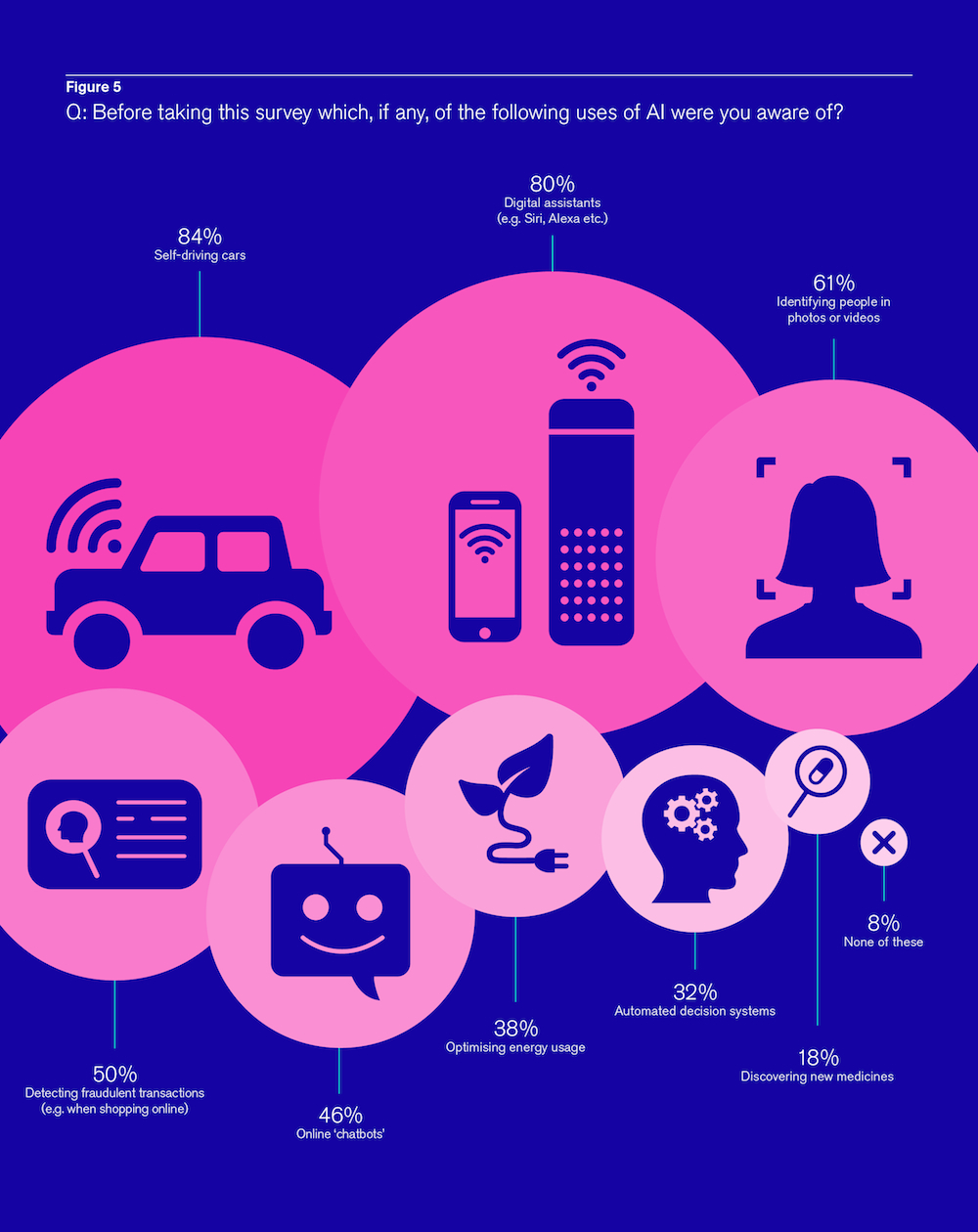
RSA public engagement with AI reportRSA report on public engagement with AI: “Our new report, launched today, argues that the public needs to be engaged early and more deeply in the use of AI if it is to be ethical. One reason why is because there is a real risk that if people feel like decisions about how technology is used are increasingly beyond their control, they may resist innovation, even if this means they could lose out on benefits.”

artificial unintelligence - broussardArtificial Unintelligence, Meredith Broussard: “In Artificial Unintelligence, Meredith Broussard argues that our collective enthusiasm for applying computer technology to every aspect of life has resulted in a tremendous amount of poorly designed systems. We are so eager to do everything digitally—hiring, driving, paying bills, even choosing romantic partners—that we have stopped demanding that our technology actually work.”

Data-driven discrimination: a new challenge for civil society: A blogpost on the LSE ‘Impact of Soc. Sci.’ blog: “Having recently published a report on automated discrimination in data-driven systems, J?drzej Niklas and Seeta Peña Gangadharan explain how algorithms discriminate, why this raises concerns for civil society organisations across Europe, and what resources and support are needed by digital rights advocates and anti-discrimination groups in order to combat this problem.”

‘AI and the future of work’ – talk by Phoebe Moore: Interesting talk transcript with links to videos. Snippet: “Human resource and management practices involving AI have introduced the use of big data to make judgements to eliminate the supposed “people problem”. However, the ethical and moral questions this raises must be addressed, where the possibilities for discrimination and labour market exclusion are real. People’s autonomy must not be forgotten.”

Government responds to report by Lords Select Committee on Artificial Intelligence: “The Select Committee on Artificial Intelligence receives the Government response to the report: AI in the UK: Ready, willing and able?, published on 16 April 2018.”

How a Pioneer of Machine Learning Became One of Its Sharpest Critics, Kevin Hartnett – The Atlantic: “Judea Pearl helped artificial intelligence gain a strong grasp on probability, but laments that it still can’t compute cause and effect.”

Job> Research Fellow, Centre for Postdigital Cultures

A statue of three men hammering

Via Gary Hall. Looks like a good opportunity for someone…

Research Fellow, Centre for Postdigital Cultures

Centre for Postdigital Cultures (CPC) is a new Faculty Research Centre at Coventry University. We are looking to recruit a developer with knowledge of new technologies such as Xtended Reality and those associated with open access publishing. Our Research Fellow/developer will be equally happy with building platforms as they are with contributing to funding bids and academic papers. The person we employ will be involved in all technical aspects of the Research Centre from uploading website content to creating virtual reality scenarios and will have the people skills to work with those at all levels of technical understanding.

You will be qualified in object oriented programming languages such as c#, c++, Java, Java scripts and swift with proven experience of development in modern web development languages like PHP and HTML5. Plus you will possess some experience in 2D/3D modelling using software such as 3DS max and Photoshop and Maya for digital asset creation and Unity 3D or Unreal game engines for developing game-based and immersive experiences.

This is the chance for you to join the CPC team in the early stages of growth and to play a significant role in the development of impactful research activity within the emerging field of postdigital cultures. Led by Professor Gary Hall, the Centre explores how innovations in postdigital cultures can enable 21st century society respond to the challenges it faces at a global, national and local level.

  • how we receive, consume and process information
  • how we learn, work, and travel
  • how we engage and regenerate our communities and cities

What Do We Mean By Postdigital Cultures?

“The digital” can no longer be understood as a separate domain of media and culture. If we actually examine the digital – rather than taking it for granted we already know what it means – we see that today digital information processing is present in every aspect of our lives. This includes our global communication, entertainment, education, energy, banking, health, transport, manufacturing, food, and water-supply systems. Attention therefore needs to turn from “the digital”, to the various overlapping processes and infrastructures that shape and organise the digital, and that the digital helps to shape and organise in turn.

The CPC investigates such enmeshed digital models of culture, society, and the creative economy for the 21st century “post digital” world.

Research Areas covered by the centre include:

  • Post-capitalist Economies
  • Post-humanities
  • Affirmative Disruption and Open Media
  • Immersive and Playful Cultures, Creative Archiving and International Heritage
  • Digital Arts and Humanities
  • The 21st Century University and Art School

Members of the CPC include Janneke Adema, Adrienne Evans, Valeria Graziano, Kaja Marczewska, Marcel Mars and Miriam de Rosa.

The role of the Research Fellow Developer is to plan, develop and manage collaborative and individual research projects, using their specialist technical skills.

This will include implementing new technology platforms and applications integral to the research projects of the CPC (for example, those associated with open access publishing and immersive XR technology) which address issues at an international scale using research as a driving force for global change.  It is also to develop ideas for generating income and to seek funding opportunities for routes to disseminate research findings that inform teaching and build the reputation of the University whilst advancing knowledge in the field.

The Job Description and Person Specification is available here.

Reblog> How to Write a Peer Review for a Journal Article – Jack Gieseking

A glitched image of a typewriter

Via Jack Gieseking. Some excellent tips for new and experienced peer-reviewers alike, I think…

How to Write a Peer Review for a Journal Article

As an editorial collective member of ACME: An International Journal for Critical Geographies and as someone who once managed WSQ: Women’s Studies Quarterly for three years, I know how difficult it is to find appropriate and available peer reviewers. I often seek out graduate candidates (ABD students) who would offer that strong expertise but may not have the have reviewed journal articles or many journal articles before. I remember how awkward and nervous I was–and how many, many hours I devoted (oy)–when I wrote my first peer reviews.

Thanks to various search engines, I’ve read quite a few posts on how to write peer reviews. Many of them are written by publishers, peer review corporations (yeeghads!), or from other academics. These are all helpful in that they structure the work of peer review, but I found the former to be too detailed and formal, and then more anxiety-producing than clarifying. If they were brief, like the academic perspective, I found myself unclear about how they expected to accomplish each step. I’ve cobbled together my own thoughts about how to do a peer review that comes from my own experience as a gesture of support and solidarity for graduate students, postdocs, and early career researchers engaged in critical and radical research who wish to be part of the project of producing knowledge through peer review. My own take as a social scientist offers an organized response through the parts of–surprise!!–a social science paper, which I have not found mention of as of yet.

Before I go on, my first tip is that each peer review should take no more than two to six hours. If you spend the maximum number (6) on your early peer reviews, then that number should significantly decrease over time as you perfect your own approach to reviews. A six-hour review imagines you read the paper three times and then type up your notes. My second tip is that your entire review can be a page, preferably, or two pages long. You’re wondering if I’m serious but how would you feel if you wrote a 20-page paper over months and someone gave you five pages of single-spaced feedback? Exactly. One or two pages is a lot to chew on. Finally, as you read think about making summary comments and identifying trends (in style a la too many commas or overciting, in writing a la a vast absence of methods, etc.) rather than line edits.

Read the full blogpost.


WhatsApp Research Awards for Social Science and Misinformation

A person removing a mask

Via Moira Weigel. Deadline is 12/08/2018.

WhatsApp Research Awards for Social Science and Misinformation

WhatsApp cares about the safety of our users and is seeking to inform our understanding of the safety problems people encounter on WhatsApp and what more we can do within WhatsApp and in partnership with civil society to address the problem. For this first phase of our program, WhatsApp is commissioning a competitive set of awards to researchers interested in exploring issues that are related to misinformation on WhatsApp. We welcome proposals from any social science or related discipline that foster insights into the impact of technology on contemporary society in this problem space. The WhatsApp Research Awards will provide funding for independent research proposals that are designed to be shared with WhatsApp, Facebook, and wider scholarly and policy communities. These are unrestricted monetary awards that offer investigators the freedom to deepen and extend their existing research portfolio. Applications are welcome from individuals with established experience studying online interaction and information technologies, as well as from persons seeking to expand their existing research into these areas.

Core Areas of Exploration

We will seriously consider proposals from any social science and technological perspective that propose projects that enrich our understanding of the problem of misinformation on WhatsApp. High priority areas include (but are not limited to):

  • Information processing of problematic content: We welcome proposals that explore the social, cognitive, and information processing variables involved in the consumption of content received on WhatsApp, its relation to the content’s credibility, and the decision to promote that content with others. This includes social cues and relationships, personal value systems, features of the content, content source etc. We are interested in understanding what aspects of the experience might help individuals engage more critically with potentially problematic content.
  • Election related information: We welcome proposals that examine how political actors are leveraging WhatsApp to organize and potentially influence elections in their constituencies. WhatsApp is a powerful medium for political actors to connect and communicate with their constituents. However, it can also be misused to share inaccurate or inflammatory political content. We are interested in understanding this space both from the perspective of political actors and the voter base. This includes understanding the unique characteristics of WhatsApp for political activity and its place in the ecosystem of social media and messaging platforms, distribution channels for political content, targeting strategies, etc.
  • Network effects and virality: We welcome proposals that explore the characteristics of networks and content. WhatsApp is designed to be a private, personal communication space and is not designed to facilitate trends or virality through algorithms or feedback. However, these behaviors do organically occur along social dimensions. We are interested in projects that inform our understanding of the spread of information through WhatsApp networks.
  • Digital literacy and misinformation: We welcome proposals that explore the relation between digital literacy and vulnerability to misinformation on WhatsApp. WhatsApp is very popular in some emerging markets, and especially so among new to Internet and populations with lower exposure to technology. We are interested in research that informs our efforts to bring technology safely and effectively into underserved geographical regions. This includes studies of individuals, families and communities, but also wider inquiries into factors that shape the context for the user experience online.
  • Detection of problematic behavior within encrypted systems: We welcome proposals that examine technical solutions to detecting problematic behavior within the restrictions of and in keeping with the principles of encryption. WhatsApp’s end-to-end encrypted system facilitates privacy and security for all WhatsApp users, including people who might be using the platform for illegal activities. How might we detect illegal activity without monitoring the content of all our users? We are particularly interested in understanding and deterring activities that facilitate the distribution of verifiably false information.

Program Format

Our preference is for proposals based on independent research, in which the applicant develops conceptual tools, gathers and analyzes data, and/or investigates relevant issues. Each awardee will retain all intellectual property rights to their data and analyses. WhatsApp staff may provide guidance, but investigators are responsible for carrying out the scope of work.

The program will make unrestricted awards of up to $50,000 per research proposal. All applications will be reviewed by WhatsApp research staff, with consultation from external experts. Payment will be made to the proposer’s host university or organization as an unrestricted gift.

In addition to the award monies, WhatsApp invites award recipients to attend two workshops:

  1. The first workshop will provide awardees with a detailed introduction to how the WhatsApp product works as well as context on the focus area of misinformation. It will also enable participants to receive feedback from WhatsApp research staff and invited guests on their research proposals. We hope this will facilitate international collaborations across researchers and teams in this area. The tentative date for this event is October 29-30, in Menlo Park, CA.
  2. A second workshop will allow awardees to present their initial research findings to WhatsApp and other awardees, providing an opportunity to contextualize their findings with each other. Our hope is that upon completion of the research, award recipients will seek to share their research with the wider public. Tentative date is April 2019, exact date will be updated on this page at a later time.

WhatsApp will arrange and pay for the travel and accommodation of one representative from each awardee. This will be in addition to the research award amount.

Data

  • No WhatsApp data will be provided to award recipients;
  • All data from award research efforts will be owned by the researcher, and need not be shared with WhatsApp.

Applications, Eligibility & Participant Expectations

  • Applications must be written in English and include the following:
    • A research title, identification of the Principle Investigator (PI) and their institutional affiliation for the purposes of the proposed research;
    • A brief program statement (double-spaced, 12 point font, not to exceed 5 pages) that specifies the proposed work. This statement should include the following elements:
      • specification of question(s) being asked;
      • clear statement of the methodology together with examples of when/where this approach has given research insights;
      • plan for any data collection, analysis, and/or conceptual work;
      • description of the expected research outputs and findings;
      • relevance for our understanding of user experiences in online environments.
    • A 1-page bio and CV for the PI together with selected publication references. Summary bios of any other team members or collaborators.
    • A clear statement of the budget requested.
  • Preference will be given to research conducted in countries where WhatsApp is a prominent medium of communication (India, Brazil, Indonesia, Mexico, etc.).
  • Preference will be given to proposals from researchers, or collaborations with researchers, based in the country/countries being researched.
  • WhatsApp will accept applications from researchers who hold a PhD. In exceptional cases, we will review applications from individuals without PhD’s who have shown a high-level of achievement in social science or technological research.
  • The award is restricted to social science and technological research that contributes to generalized scientific knowledge and its application. Documentaries, journalism, and oral history projects are not eligible.
  • Awards will be made to an awardee’s university department, research institute or organization; all applicants must therefore be affiliated with an organization that supports research and can process external funding awards. All awards will be made in US dollars.
  • Proposals may be submitted by individuals with no prior experience in social media or Internet research. We welcome proposals from researchers who seek to expand their research portfolio into the area of information and communication technologies.
  • All award recipients are strongly encouraged to attend the two WhatsApp workshops associated with this program. Travel and accommodation will be arranged and paid for by WhatsApp.
  • The proposed research should be carried out by the date of the second workshop, in April 2019. Presentation materials that comprise the final report should be written in English and made available for WhatsApp and the other award recipients by the date of the final workshop. All rights to these materials will be held by the award recipient.
  • Once awardees have accepted their awards, WhatsApp will publicly share the details of the selected applicants by posting a summary of the results together with the PI’s name and the title of the proposal on the Facebook Research blog. This information may also be included in other presentations or posts relating to this effort.

By applying to this award, you are agreeing to the following:

  • You are affiliated with an institution that supports research and can process external funding awards.
  • If chosen, your institution will receive the award as a gift in US dollars and in the amount decided solely by WhatsApp.
  • You acknowledge that you have been invited to two, in-person, WhatsApp workshops (tentatively in October 2018 and April 2019).
  • You acknowledge that WhatsApp will publicly disclose your name and the proposal title as an award recipient.
  • You plan to attend and present the research findings at the second, WhatsApp workshop, likely to be held in Menlo Park, CA, USA in late April, 2019. The workshops and presentations will be conducted in English. Interpretation will be provided if needed. Note: airfare, hotel and transportation to be arranged and paid for by WhatsApp.

Timing and Dates

Applications are due by August 12, 2018, 11:59pm PST. Award recipients will be notified of the status of their application by email by September 14, 2018.

Questions

For all questions regarding these awards, please contact us.

Designing for millennia – why danger signs cannot last forever

The jolly roger, or death's head, symbol on a building

Biohazard symbols

A short watch, the video above that speaks in some ways to my recent posting of the CFP for the Memories of the Future event. The podcast 99-percent Invisible have created this ~ 7-min. video on the development of standardised warning signs like these (image on the left).

It also briefly discusses how those charged with securing nuclear waste facilities in the USA have considered how we might leave legible warnings to people thousands of years in the future.

CFP > Memories of the future, London 2019

the character Doc Brown in the film Back to the Future

Via Temporal Belongings.

Memories of the Future

International conference. Centre for the Study of Cultural Memory, Institute of Modern Languages Research, School of Advanced Study, University of London
Dates: 29-30 March 2019
Confirmed speakers: Stephen Bann (Bristol); Rebecca Coleman (Goldsmiths); Paolo Jedlowski (Calabria); Anna Reading (KCL); Michael Rothberg (UCLA)

Proposals for panels or papers by 31 July 2018 to memories.future@sas.ac.uk.

Call for papers
What does it mean to remember the future? What roles do memory, history, the past play in our consciousness as citizens of the early twenty-first century?

David Lowenthal (2015) reminds us that ‘commands to forget coexist with zeal to commemorate’, which raises the very important yet often overlooked questions of: what to remember and what to forget, who is well positioned to lead on or judge in that process, with whose legacies in mind, and with what consequences for future and past generations. In the 1980s, a significant body of scholarship on cultural memory emerged to protect the past from ‘time’s corrosive energy’, leading to ‘collective future thought’ (J. Assmann, 2011; Szpunar and Szpunar, 2016). Cultural memory acted as a moral imperative, a prerequisite to overcome not merely violent pasts but the violence inherent in linear temporality. As such, cultural memory has been seen as redemptive, enabling a more productive relation between past, present and future.

More recently, ‘thinking forward through the past’ has been central to a number of AHRC-funded projects in the UK examining environmental change, postcolonial disaster, gender and colonialism, heritage futures, ruins and more. Climate change, big data and the crisis of democracy are challenging our future in ways that may suggest a misalignment of temporal scales. One way of responding to this is through what Reinhart Koselleck (2000) called horizons of expectations and spaces of experience, namely, the horizons implicit in our anticipations of the future and the degree to which our experience of these have changed and will change over time. Utopian imaginaries and deploying utopia as a method (Levitas, 2013) invite us to think about hope, empathy, and solidarity, each contributing to create different places from which to imagine a future outside crises, fears and risk.

The past and the future constitute our cultural horizons in ways which are neither neutral nor solely technical, but, as Appadurai (2013) has suggested, ‘shot through with affect and sensation’. One of the key challenges of our time is how to study and create futures we truly care for and which are more social (Adam and Groves 2007; Urry, 2016).

Memories of the Future invites contributions to articulate the future in relation to cultural memory, and interrogate the precise and diverse manners in which the past, the present and the future are intertwined and dialogical, complicating our understanding of temporalities in an age saturated with memory and ‘past futures’.

Suggested themes and areas of inquiry include:

  • The future of memory
  • Temporal multi-directionalities
  • Memories of the future
  • Utopias and dystopias
  • Past, present and future mobilities
  • Smart cities and future/ist metropolises
  • Science-fiction and other subsets of utopia
  • Housing, cohousing and the future of habitation
  • Futurisms, modernisms, afro-futurisms
  • The future in/and the Anthropocene
  • Post-humanism and the non-human
  • Intentions, expectations, anticipations
  • Counterfactuals
  • Trauma, violence and conflict
  • Tangible and intangible heritage

Please submit proposals for panels or papers (max 20 minutes) by 31 July 2018 to memories.future@sas.ac.uk, including a 150-250 words abstract.

Janelle Monáe – Dirty Computer, an emotion picture

Still from Janelle Monáe's Dirty Computer video

I came across Janelle Monáe‘s work a while ago, through Twitter, I was really taken by the video for “Many Moons“, which is beautiful. Metropolis, the album from which it is taken, is a really interesting blend of pop, sci-fi and perhaps afrofuturism, or at least forms of sci-fi that don’t conform to, or queer, standard Western/Global North sci-fi themes/norms. Some have argued Monáe’s videos blends American and African Sci-Fi themes (a teaser trailer for Dirty Computer was shown before cinematic performances of Black Panther) in a sort of queer aesthetic (that’s my reading of what longer pieces say anyway) and I think I can see it in several videos, though my knowledge of other work that might complement or contrast this is very limited.

In the “emotion picture” (what a beautifully evocative term) for the album Dirty Computer we’re presented with a rich and confident, feature length, work of art. I’m not currently able to dedicate the time to offer a lengthier visual analysis, I’m simply going to post the video, below. All I can say, really, is: wow.

“The Rise of the Robot Reserve Army” – interesting working paper

Charlie Chaplin in Modern Times

Saw this via Twitter somehow…

The Rise of the Robot Reserve Army: Automation and the Future of Economic Development, Work, and Wages in Developing Countries – Working Paper 487

Lukas Schlogl and Andy Sumner

Employment generation is crucial to spreading the benefits of economic growth broadly and to reducing global poverty. And yet, emerging economies face a contemporary challenge to traditional pathways to employment generation: automation, digitalization, and labor-saving technologies. 1.8 billion jobs—or two-thirds of the current labor force of developing countries—are estimated to be susceptible to automation from today’s technological standpoint. Cumulative advances in industrial automation and labor-saving technologies could further exacerbate this trend. Or will they? In this paper we: (i) discuss the literature on automation; and in doing so (ii) discuss definitions and determinants of automation in the context of theories of economic development; (iii) assess the empirical estimates of employment-related impacts of automation; (iv) characterize the potential public policy responses to automation; and (v) highlight areas for further exploration in terms of employment and economic development strategies in developing countries. In an adaption of the Lewis model of economic development, the paper uses a simple framework in which the potential for automation creates “unlimited supplies of artificial labor” particularly in the agricultural and industrial sectors due to technological feasibility. This is likely to create a push force for labor to move into the service sector, leading to a bloating of service-sector employment and wage stagnation but not to mass unemployment, at least in the short-to-medium term.

Unfathomable Scale – moderating social media platforms

Facebook logo reflected in a human eye

There’s a really nice piece by Tarleton Gillespie in Issue 04 of Logic themed on “scale” that concerns the scale of social media platforms and how we might understand the qualitative as well as quantitative shifts that happen when things change in scale.

“The Scale is just unfathomble“

But the question of scale is more than just the sheer number of users. Social media platforms are not just big; at this scale, they become fundamentally different than they once were. They are qualitatively more complex. While these platforms may speak of their online “community,” singular, at a billion active users there can be no such thing. Platforms must manage multiple and shifting communities, across multiple nations and cultures and religions, each participating for different reasons, often with incommensurable values and aims. And communities do not independently coexist on a platform. Rather, they overlap and intermingle—by proximity, and by design.

…

The huge scale of the platforms has robbed anyone who is at all acquainted with the torrent of reports coming in of the illusion that there was any such thing as a unique case… On any sufficiently large social network everything you could possibly imagine happens every week, right? So there are no hypothetical situations, and there are no cases that are different or really edgy. There’s no such thing as a true edge case. There’s just more and less frequent cases, all of which happen all the time.

…

No matter how they handle content moderation, what their politics and premises are, or what tactics they choose, platforms must work at an impersonal scale: the scale of data. Platforms must treat users as data points, subpopulations, and statistics, and their interventions must be semi-automated so as to keep up with the relentless pace of both violations and complaints. This is not customer service or community management but logistics—where concerns must be addressed not individually, but procedurally.

However, the user experiences moderation very differently. Even if a user knows, intellectually, that moderation is an industrial-sized effort, it feels like it happens on an intimate scale. “This is happening to me; I am under attack; I feel unsafe. Why won’t someone do something about this?” Or, “That’s my post you deleted; my account you suspended. What did I do that was so wrong?”