The Mundane Afrofuturist Manifesto

Via dmf. Definitely worth watching >>


“This dream of utopia can encourage us to forget that outer space will not save us from injustice and that cyberspace was prefigured upon a “master/slave” relationship.

While we are often Othered, we are not aliens.

Though our ancestors were mutilated, we are not mutants.

Post-black is a misnomer.

Post-colonialism is too.

The most likely future is one in which we only have ourselves and this planet.”

The rest is here: http://martinesyms.com/the-mundane-afrofuturist-manifesto/

See also: http://blackradicalimagination.com

The Priority of Injustice – Almost ready…

The Priority of Injustice – BarnettMy colleague Clive Barnett has blogged an update concerning his latest book The Priority of Injustice, with the blurb – see below.

“This original and ambitious work looks anew at a series of intellectual debates about the meaning of democracy. Clive Barnett engages with key thinkers in various traditions of democratic theory and demonstrates the importance of a geographical imagination in interpreting contemporary political change.

Debates about radical democracy, Barnett argues, have become trapped around a set of oppositions between deliberative and agonistic theories–contrasting thinkers who promote the possibility of rational agreement and those who seek to unmask the role of power or violence or difference in shaping human affairs. While these debates are often framed in terms of consensus versus contestation, Barnett unpacks the assumptions about space and time that underlie different understandings of the sources of political conflict and shows how these differences reflect deeper philosophical commitments to theories of creative action or revived ontologies of “the political.” Rather than developing ideal theories of democracy or models of proper politics, he argues that attention should turn toward the practices of claims-making through which political movements express experiences of injustice and make demands for recognition, redress, and repair. By rethinking the spatial grammar of discussions of public space, democratic inclusion, and globalization, Barnett develops a conceptual framework for analyzing the crucial roles played by geographical processes in generating and processing contentious politics.”


“algorithmic governance” – recent ‘algorithm’ debates in geography-land

Over on Antipode’s site there’s a blog post about an intervention symposium on “algorithmic governance” brought together by Jeremy Crampton and Andrea Miller, on the back of sessions at the AAG in 2016. It’s good that this is available open access and, I hope, helpful that it maybe puts to bed some of the definition wrangling that has been the fashion. Obviously, a lot draws on the work of geographer Louise Amoore and also of political theorist Antoinette Rouvroy, which is great.

Reading through the overview and skimming the individual papers provokes me to comment that I remain puzzled though by the wider creeping use of an unqualified “non-human” to talk about software and the sociotechnical systems they run/are run on… this seems to play-down precisely the political issues raised in this particular symposium – that the kinds algorithms concerned in this debate are written and maintained by people, they’re not somehow separate or at a distance… It’s also interesting to note that a sizeable chunk of the debates concern ‘data’ but the symposium doesn’t have “data” in the title, but maybe ‘data–’ is passé… 🙂

I’ve copied below the intro to the post, but please check out the whole thing over on Antipode’s site.

Intervention Symposium: “Algorithmic Governance”; organised by Jeremy Crampton and Andrea Miller

The following essays first came together at the 2016 AAG Annual Meeting in San Francisco. Jeremy Crampton (Professor of Geography at the University of Kentucky) and Andrea Miller (PhD candidate at University of California, Davis) assembled five panellists to discuss what they call algorithmic governance – “the manifold ways that algorithms and code/space enable practices of governance that ascribes risk, suspicion and positive value in geographic contexts.”

Among other things, panellists explored how we can best pay attention to the spaces of governance where algorithms operate, and are contested; the spatial dimensions of the data-driven subject; how modes of algorithmic modulation and control impact understandings of categories such as race and gender; the extent to which algorithms are deterministic, and the spaces of contestation or counter-algorithms; how algorithmic governance inflects and augments practices of policing and militarization; the most productive theoretical tools available for studying algorithmic data; visualizations such as maps being implicated by or for algorithms; and the genealogy of algorithms and other histories of computation.

Three of the panellists plus Andrea and Jeremy present versions of these discussions below, following an introduction to the Intervention Symposium from its guest editors (who Andy and Katherine at Antipode would like to thank for all their work!).

Read the whole post and see the contributions to the symposium on the Antipode site.

Digital Everyday – conference at KCL this weekend

This looks interesting… via Tony Sampson

THE DIGITAL EVERYDAY CONFERENCE

Location
Strand Campus – King’s College London
Category
Conference/Seminar
When
06/05/2017 (10:30-18:30)
Contact
Please direct enquiries to digitalculture@kcl.ac.uk

Sign up to the CDC mailing list here

The conference is paid and registration is essential. Registration closes midday on 4 May.

The Digital Everyday: Exploration or Alienation?

This international conference aims at exploring the digital everyday, understood as the transformation of everyday life practices brought about by digital technology. From how we buy, walk around, get a cab, love, break up, go to bed, meet new people and sexual partners to the way we rate services, turn on the fridge, exercise, eat, use social media and apps, Big Data is reshaping some of the most basic activities in our lives.

The conference will explore these digitally enabled transformations by looking at a number of domains affected by these shifts, for instance: of work and leisure, of friendship and love, of habits and routines. We will also explore a number of overarching dynamics and trends in the digital world that contribute to these transformations, including: processes of digital individualisation and aggregation; the elisions of spatial and temporal barriers; trends towards quantification and datafication; and the dialectic between control and alienation.

Please click here to see the full programme 

(Please note that refreshements will be provided but delegates will need to get their own lunch)

Image

A ‘new realism’ and post-truth

A glitched image of a typewriter

In a recording of a very lively double-header presentation by Maurizio Ferraris and Martin Scherzinger which has been podcast by Data & Society there’s some interesting discussion of Ferraris’ formulation of a ‘new realism‘ (which is sort of sympathetic to but perhaps distinct from speculative realisms) in relation to how we might understand ‘truth’ and truth claims and so how we might understand how ‘understanding’ works in relation digitally mediation.

Both Ferraris and Scherzinger are entertaining speakers but Scherzinger in particular offers some very incisive comments around how we can understand the sorts of manoeuvres different people are making around the constitutions and discussion of ‘theory’ (taken in its most general understanding).

Anyway… it’s an interesting listen:

Post-Truth and New Realities: Algorithms, Alternative Facts, and Digital Ethics

More tales of the automative imaginary

A warehouse worker and robot

Here’s some links that further sketch out some of what I’ve been thinking about as an ‘automative imaginary’. I’ve offered links with a bit of brief commentary at the bottom…

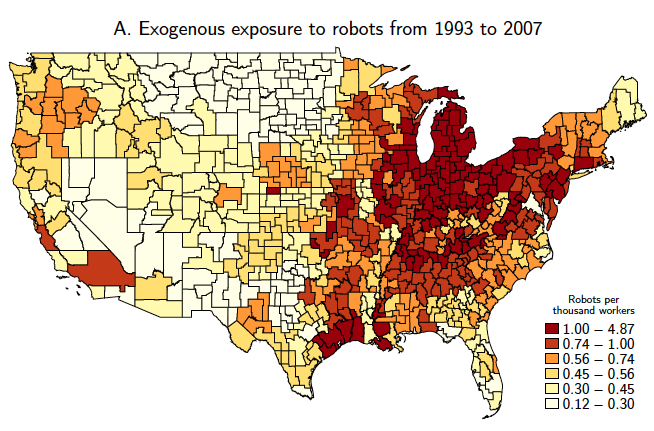
Evidence That Robots Are Winning the Race for American Jobs – in the NYT, pointing to research undertaken by two economists, Acemoglu and Restrepo, published by the (American) National Bureau of Economic Research: Robots and Jobs: Evidence from US Labor Markets (to which I have no access), with a commentary on the Centre for Economic Policy Research‘s Vox site. What is curious for me here is how one can evaluate the method of the researchers and what the assumptions they make say about how we (are invited to) understand automation. There’s some interesting geography in there too! E.g. see the choropleth map of “exogenous exposure to robots” below
How will the rise of automation and AI affect the workforce and economy moving forward? – Francis Fukuyama offers his answer to how automation and AI (interesting easy slip between those as almost a form of equivalence, which is open to significant debate/critique) may or may not “affect” the economy and, in particular, jobs – in the US.

It’s interesting how much of what we are offered in terms of a rationale for automation is a fairly simplistic robots replace workers sort of story. In this regard, it’s worth remembering what the MacDonalds CEO Ed Rensi flippantly observed as a canonical example (documented in this post on Fusion):

former McDonald’s CEO Ed Rensi made news by going on Fox Business and declaring that ongoing protests in the campaign for a $15 minimum wage were encouraging the automation of fast food jobs. The segment goes on for seven minutes, but here’s the meat of it:

I was at the National Restaurant Show yesterday and if you look at the robotic devices that are coming into the restaurant industry – it’s cheaper to buy a $35,000 robotic arm than it is to hire an employee who’s inefficient making $15 an hour bagging French fries – it’s nonsense and it’s very destructive and it’s inflationary and it’s going to cause a job loss across this country like you’re not going to believe

Nevertheless, other economists will tell you that processes of automation have, historically, created new kinds of jobs as they apparently ‘destroy’ others. For example, Deloitte, in their report “Technology and People: The great job creating machine“, suggest that while manual labour and routine jobs have been significantly automated since 1992, there has been an even larger growth in ‘care’ (and service) and ‘cognitive’ work in the UK labour market. So you see fewer people in manufacturing but more analysts, baristas and carers.

Of course, to see it as whole “jobs” that are being automated is somewhat misleading – another aspect of the automative imaginary that owes more to the depiction of automation in 1950/60s cartoons than in the actually existing forms of automation. As many commentators point out, it’s parts of jobs or tasks that become automated, which results in a need to reorganise that work. As the management consultants McKinsey point out in a report in 2016:

currently demonstrated technologies could automate 45 percent of the activities people are paid to perform and that about 60 percent of all occupations could see 30 percent or more of their constituent activities automated, again with technologies available today

What we tend to focus on is the automation full stop, not that it isn’t all of a job and may not result in an easy equivalence of “robot in = worker out”. We imagine the robots doing it all, when, in many cases, the use of robots (when they’re actually economically viable – they have a huge initial set-up cost) require a reorganisation of systems such that the work looks different.

Another illustration of this comes from the excellent Containers podcast by Alexis Madrigal. In the final episode, Madrigal talks to Karen Levy of Cornell  about the forms automation could take in relation to truck driving (upon which Uber clearly has its sights set). Of course, again, it’s not as simple as: automate the lorries, do-away with jobs. It’s more like the process of containerisation that Madrigal is exploring – automation is as much about reorganising systems of work / labour as it is about ‘replacing’ labour. So, in the example of picking in warehouses – you might get a Kiva or Fetch/Freight robot to do the donkey work of warehousing, with the worker performing the more sophisticated movements. This is not a future of people-less spaces but rather robots following people around or being tasked in order to support the worker, the argument being this leads to greater productivity. In fact, in the eighth episode of Containers, the CEO of Fetch Robotics justifies her company’s tech by saying that, in the US, there are over 600k jobs going unfilled in warehousing and manufacturing because people don’t want to do them, with a turnover rate of those who do sign-up for such work at around 25% (I don’t know the basis or veracity of those numbers – would like to though!). Again, if true, such figures are another aspect of the expectations of what work involves and how it may be performed.

So, it seems to me we need to talk about work not simply elide it by (somewhat hysterically) referring to ‘automation’ and ‘robots’. This is something I hope to research and write more about, if I ever get the time…


Picking at the “alternative media ecosystem”

A glitched image of a typewriter

Two things on how various intersecting discourses are coming at “fake news’…  I find it interesting to see and hear how different folks are attempting to make sense of an apparent phenomenon, it’s a little like watching Foucault’s ‘discursive formation’ in action…

First, via Adrian J Ivakhiv:

Parsing the “alternative media ecosystem”

An interesting forthcoming article by University of Washington researcher Kate Starbird examines the “alternative media ecosystem” by focusing on the production of the kinds of narratives that are fairly exclusive to the “alternative,” as opposed to mainstream, “media ecosystem.” Specifically, the piece analyzes conspiratorial narratives, found on Twitter and connected web sites, that follow terrorist incidents (including the 2013 Boston Marathon Bombings and the downing of Malaysia Airlines flight MH17) and several mass shooting events.

“For each event,” Starbird writes, “rumors claimed the event had been perpetrated by someone other than the official suspects–that it was instead either a staged event performed by “crisis actors” or a “false flag” orchestrated by someone else.” (For more, see the Seattle Times and Starbird’s own summaries of the research.)

From Starbird’s scholarly article:

“After several rounds of iterative analysis to identify commonalities and distinctions across clusters of accounts, we identified three prominent political agendas: U.S. Alt Right, U.S. Alt-Left, and International Anti-Globalist.”

Second, via the ‘Team Human’ podcast, hosted by Douglas Rushkoff, Caroline Jack on ‘propaganda’:

What’s Propaganda Got To Do With It?

If “propaganda” is a useful as a media epithet because it expresses concerns about media persuasion and power, then we must allow that a variety of actors, not just states or would-be states, can influence the television networks, newspapers of record, and leading online news sources.

Our understanding of media power (and of what it means to call something propaganda) must make room for a variety of potential collective and individual influences. This includes corporations, interest groups, activist groups, and other traditional collectives; it should also include the new forms of individual and collective presence that digital communications facilitate. This includes state-sponsored online actors and ad-hoc user collectives.

“Control, Resistance, and the ‘Data University’: Towards a Third Wave Critique”

A group of academics at Newcastle, collectivised under the moniker “the Analogue University” offer an Alex Galloway-like critique of “The Data University” over on the Antipode blog. An interesting read…

In this short intervention, we want to explore the possibilities for a third wave of critique related to the changing nature of academia. More specifically, we argue that we are now witnessing the emergence of the “Data University” where the initial emphasis on the primacy of data collection for auditing and measuring academic work has shifted to data coding itself as the new exchange value at work and productive of new subjectivities and freedoms. This third wave critique requires drawing a schematic line that now takes us beyond the intensification of neo-liberalisation, the internalisation of market values and associated affective structures of feeling to understanding our new digital and big data world. Influenced by Deleuze’s (1992) work on new societies of control, we argue that the genesis of the “Data University” lies in our active desire for data and its potential to mediate human relations and modulate our freedoms. This is absolutely central to our schematic for a third wave of critique: compared to older disciplinary societies like the school or prison institution (see below), today individuals both desire and are controlled through the active generation of proliferating data streams.

Read the full article.

Choose how you feel, you have seven options

A great piece by Ruben Van de Ven stemming from his artwork of the same name, published on the Institute of Network Culture site. Van de Ven, in a similar vein to Will Davies, deconstructs the logic of ‘affective’ computing, sentiment analysis and their application to what has been termed the ‘attention economy’. The article does a really go job of demonstrating how the knowledge claims, and the epistemologies (perhaps ontologies too), that are at work behind these technologies are (of course) deeply political in their application. Very much worth reading! (snippet below).

 ‘Weeks ago I saw an older woman crying outside my office building as I was walking in. She was alone, and I worried she needed help. I was afraid to ask, but I set my fears aside and walked up to her. She appreciated my gesture, but said she would be fine and her husband would be along soon. With emotion enabled (Augmented Reality), I could have had far more details to help me through the situation. It would have helped me know if I should approach her. It would have also let me know how she truly felt about my talking to her.’

FOREST HANDFORD

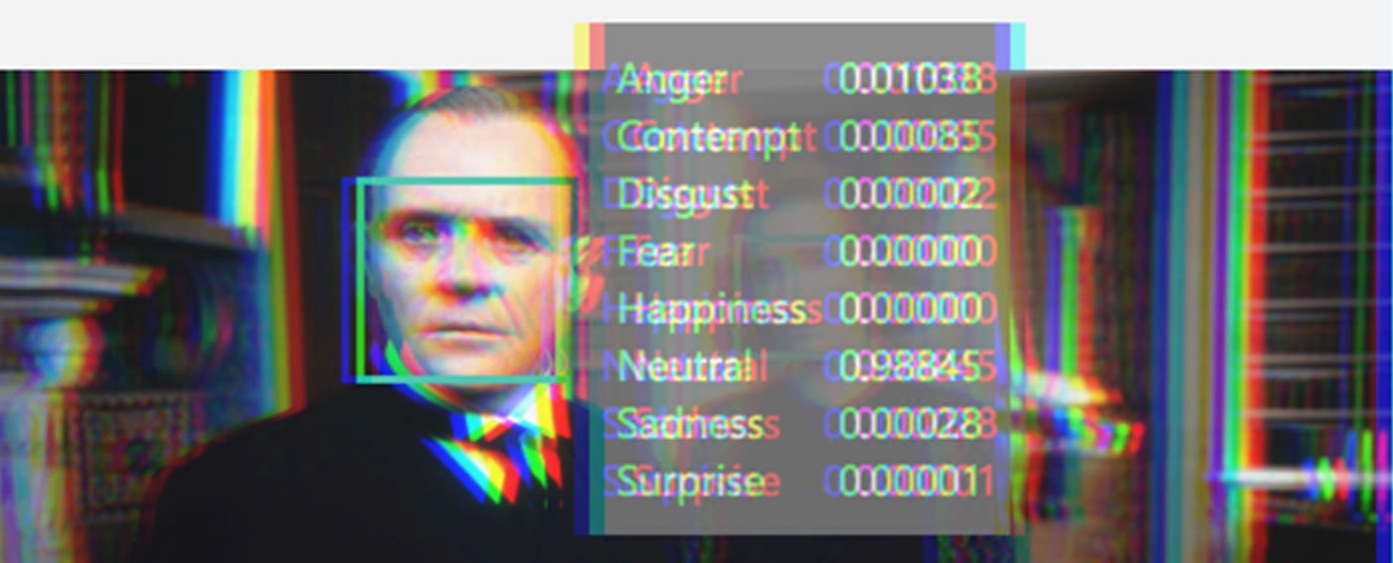
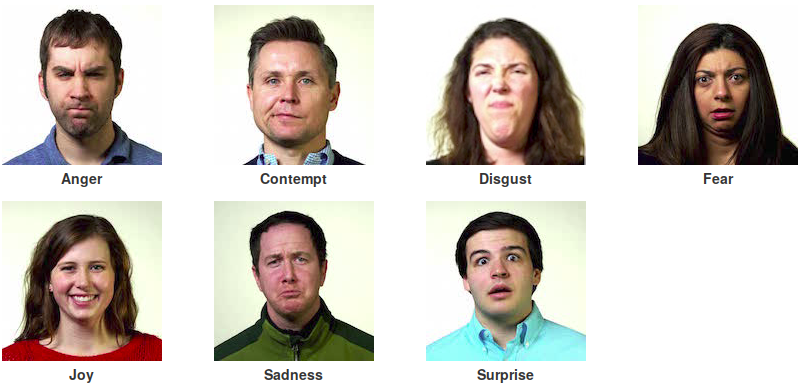
This is how Forest Handford, a software developer, outlines his ideal future for a technology that has emerged over the past years. It is known as emotion analysis software, emotion detection, emotion recognition or emotion analytics. One day, Hartford hopes, the software will aid in understanding the other’s genuine, sincere, yet unspoken feelings (‘how she truly felt’). Technology will guide us through a landscape of emotions, like satellite navigation technologies guide us to destinations unknown to us: we blindly trust the route that is plotted out for us. But in a world of digitized emotions, what does it mean to feel 63% surprised and 54% joyful?

Please take the time to read the whole article.