
I’m not a fan of TED talks but this by John Danaher is a well presented and clear, if perhaps provocative, argument about how we might think about ‘sex robots’ and perhaps any kind of technology to which we grant agency.
Elemental machines – the becoming environmental of tech
Via dmf.
With: Andreas Broeckmann, Esther Leslie, Sascha Pohflepp
Moderated by Yvonne Volkart
“The concept of machines generally describes an assemblage of parts assigned to an overall function, designed by a human. Yet, the entwined histories of science, technology, and art are filled with ideas about nature functioning like machines, and of visions where machines become “natural” and organic. These two paths seem to merge as machines increasingly communicate autonomously and operate in fields beyond human perception and influence. Can we devise new perspectives for understanding the elemental machines that now seem to operate contingently within hybrid techno-ecologies like the forces of nature? What are the new aesthetic and political affordances or subjectivities involved in the process of technology becoming environmental?”
Disciplining theory(?) – post-phenomenology(dot-org)

The website postphenomenology.org is an interesting resource, especially the bibliography compiled there (which perhaps implies an canon?), which got me returning to some thoughts I’ve had about how particular kinds of theory ‘travel’, how they co-opted and then, perhaps, disciplined. The website mentioned above is clearly, if not wholly explicitly, positioned within that interesting, apparently interdisciplinary, area of Science and Technology Studies – and one would think, then, that the reference list would take in a range of disciplinary debates, demonstrating how the ideas freighted by “post-phenomenology” have, perhaps, contributed to an interdisciplinary debate. Instead, it seem to me, the reference list demonstrates something like a kind of disciplining, whereby the journals and authors represented sit within what is de facto a particular field, potentially having not an open, interdisciplinary, debate but rather a fairly insular one. I don’t intend that observation as a slight to the compilers of what is a useful resource, I’m just interested in how the movement or spread of ideas can work – or, as Said says, how theory travels.
This cannot be uncommon, nor is it necessarily a normatively ‘bad’ thing. Recently I took part in a fascinating workshop on the generations of Southern theory – in relation to urbanism and in particular in relation to how this has historically played out through the empirical lens and academic institutions of South Africa. My colleague Clive Barnett highlighted that that set of debates has happened slightly differently (or perhaps not at all) in different but cognate disciplinary contexts. In the wake of Said and various others, Clive has, of course, written about such things – as have many others!
So, what should ‘post-phenomenological’ geographers do? Probably just carry on… One could try and forge the connections, but it of course takes effort and time etc etc. In the end, nobody ‘owns’ concepts and the theory will develop within different disciplinary contexts, albeit possibly siloed into particular journals and conferences. I suppose, it goes to show that when conversations become more than superficially interdisciplinary, taking in different points of view and contexts, it’s probably a precious moment…
Reblog> Workshop on Security and the Political Turn in the Philosophy of Technologies

An interesting event blogged by Peter-Paul Verbeek:
Workshop ‘Security and the Political Turn in the Philosophy of Technologies’, University of Twente | DesignLab, March 10 2017. How to understand the political significance of things? And how to deal with the politics of technology in a responsible way? Ever since Langdon Winner claimed in the early 1980s that “artifacts have politics”, these questions have been puzzling philosophers and ethicists of technology. Technologies are not just instruments for humans to do politics but actively shape politics themselves. In this workshop we will explore various dimensions of this political role of technologies, especially with regards to security, citizenship in a technological world, and the role of social media and ‘fake news’ in contemporary democracy.
Speakers include:
- Babette Babich (Fordham)
- Robin James (UNCC),
- Laura Fichtner (TUD)
- Wolter Pieters (TUD)
- Melis Bas (UT)
- Jonne Hoek (UT)
- Philip Brey (UT)
- Nolen Gertz (UT)
- Michael Nagenborg (UT)
- Peter-Paul Verbeek (UT)
The workshop is sponsored by the 4TU.Ethics working group on “Risk, Safety, and Security.”
Reblog> International conference on Human Geography and the Pragmatic Tradition – QMUL 27 May
Owain Jones blogs about an interesting conference at QMUL in May…
International conference on Human Geography and the Pragmatic Tradition. Queen Mary, University of London; May 23-24 2017
I very pleased to say I am to present a paper at this conference as an invited speaker
Queen Mary, University of London is pleased to be hosting an international conference on Human Geography and the Pragmatic Tradition: May 23 and 24 2017
This international conference examines the potential for philosophical pragmatism to augment scholarship in the discipline of human geography. It is some time since geographers created the space needed to foster collective reflection about the potential contribution of this tradition of thought for the discipline. Previous efforts to do this have generated a strong legacy for renewing debate (see, e.g., the special issue of Geoforum, edited by Smith and Wood, 2008). We seek to move this conversation forward through an incisive engagement with pragmatist understandings and their application in the discipline of human geography today. The first day will end with a public lecture, given by QMUL’s Distinguished Visiting Fellow, Professor Robert Lake (Rutgers University, USA) on the theme of Hope for democracy: Pragmatism Between Populism and Expertise.
The preliminary schedule is here. Spaces are limited and need to be booked via Eventbrite here: https://www.eventbrite.co.uk/e/human-geography-and-the-pragmatic-tradition-tickets-7469029067
Amateur philosophy – boundary 2 theme issue on Stiegler
Only just seen this. Issue 1 of volume 44 (2017) of boundary 2 is entitled Amateur Philosophy and concerns the work of Bernard Stiegler.
Within the issue are published the three lectures Stiegler gave in California in 2011 (one of which was published in Lana Turner). alongside this are pieces by a stellar cast of contemporary theorists, including: Claire Colebrook, Mark Hansen, Daniel Ross and Gerald Moore. Both of the two translators who have translated the majority of Stiegler’s work into English have pieces: Stephen Barker and Daniel Ross.
This seems like a fairly important contribution to anglophone engagements with Stiegler’s work…
Here’s the full table of contents.
You need a subscription to access the papers, let me know if you have any trouble…
Alexander Galloway on the nonhuman: apophatic or cataphatic?
On his blog, Alexander Galloway addresses some recent discussion he has had as part of a public seminar series on the nonhuman in relation to various ways in which we might reason-ably determine what counts as ‘nonhuman’. Here he uses two forms or categories of reason: the ‘apophatic’ and the ‘cataphatic’:
The cataphatic “tries to obtain the nonhuman through a method of affirmation, that is, affirmation of already knowable traits of whatever kind, human or otherwise. This is a method of affirmative or inflationary reason… Cataphatic nonhumanism does something similar: we are sentient, thus forests are probably sentient too. People form parliaments, so it makes sense to assemble a parliament of things. Humans have rights, so why not chimps as well? This approach to nonhumanism claims, in essence, that “humans seem to operate in such and such a way, thus we affirm the same quality in other worldly entities.””
The apophatic stems from “theological rationalism is a conception of the nonhuman obtained via negation or subtraction (of already knowable worldly traits of whatever kind). This is a method of negative or deflationary reason… Here the nonhuman is no longer a form of superlative nature as it was with cataphaticism — the nonhuman as “the All“ — but instead the nonhuman is the absence of nature; the nonhuman, literally, is not. (In other words, it is “the Not.”)”
I’m not up on contemporary debates about the nonhuman in geography (or anywhere, frankly) but this seems like an interesting critical device to consider in relation to some of the arguments about ‘nonhuman’ and ‘more-than-human’ geographies…
Fifty years on: the right to the city – Andy Merrifield
Merrifield reflects on The Right to the City fifty years on in a thoughtful essay on his website. Worth reading the whole thing…
In response to a crisis of political legitimation, the “spectre” of urban solidarity looms; minorities in cities recognise that national and international rights are “out of joint.” In a way, we now need to read Derrida’s idea of “villes-refuges“ in conjunction not only with Lefebvre’s right to the city, but also with the former’s earlier Spectres of Marx, where he spoke of a “New International”; “a profound transformation,” Derrida called it, “projected over the long term, of international law, of its concepts and field of intervention.” This New International is “a link,” Derrida said, an affinity, a suffering and hope, still discreet, almost secret, without status or title, contract or coordination, party or country, national community or common belonging to a class.
We’re not yet sure what this International really is; we can’t name it anything positive. But it’s there nonetheless, we know it’s there, hope it’s there, out on the horizon, if we can look that far. We know it’s more needed than ever before, needed everywhere. It’s a ghostly dream-thought of a new status for the city, a right to and of the city, a will to belong to a democratic urban webbing, a solidarity of confederated assemblies interrogating the essence of politics and the role of the nation-state: just what is a citizen of the urban, a citadin(e) of the twenty-first century? Progressives will have their work cut out in this challenging year ahead. Meantime, à la tienne, Henri!”¦
Open Access book: The Philosophical Salon from @openhumanities
Worth a read I think… There’s a free PDF, follow the link to Open Humanities Press website.
The Philosophical Salon: Speculations, Reflections, Interventions
edited by Michael Marder and Patricia Vieira
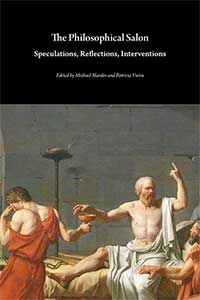
Through the interpretative lens of today’s leading thinkers, The Philosophical Salon illuminates the persistent intellectual queries and the most disquieting concerns of our actuality. Across its three main divisions–Speculations, Reflections, and Interventions–the volume constructs a complex mirror, in which our age might be able to recognize itself with all its imperfections, shadowy spots, even threatening abysses and latent promises. On the cutting edge of philosophy, political and literary theory, and aesthetics, this book courageously tackles a wide array of topics, including climate change, the role of technology, reproductive rights, the problem of refugees, the task of the university, political extremism, embodiment, utopia, food ethics, and sexual identity. It is an enduring record of an ongoing conversation, as well as a building block for any attempt to make sense of our world’s multifaceted realities.
Contributors: Robert Albritton, Linda MartÃn Alcoff, Claudia Baracchi, Geoffrey Bennington, Jay M. Bernstein, Costica Bradatan, Jill Casid, David Castillo, Antonio Cerella, Anna Charlton, Claire Colebrook, Sarah Conly, Nikita Dhawan, William Egginton, Roberto Esposito, Mihail Evans, Gary Francione, Luis Garagalza, Michael Gillespie, Michael Hauskeller, Ãgnes Heller, Daniel Innerarity, Jacob Kiernan, Julia Kristeva, Daniel Kunitz, Susanna Lindberg, Jeff Love, Michael Marder, Todd May, Michael Meng, John Milbank, Warren Montag, T. M. Murray, Jean-Luc Nancy, Kelly Oliver, Adrian Pabst, Martha Patterson, Richard Polt, Gabriel Rockhill, Hasana Sharp, Doris Sommer, Gayatri Spivak, Kara Thompson, PatrÃcia Vieira, Slavoj Žižek.
CFP> Putting philosophies of geography into practice (RGS-IBG 2017)
Putting philosophies of geography into practice
RGS-IBG Annual Conference 2017
Convenor: Dr Sam Kinsley (Exeter)
This session is conceived as means to discuss the relations between the everyday practises of doing geography and the, sometimes-maligned, theoretical-methodological techniques we variously employ in geographical research and teaching. If we are ‘thinking always as geographers’, how do we represent that thought and the ways it becomes located in practice? Marking fifteen years since a session of the same title was convened at the annual conference in Belfast, the aim of this session, following Lorimer and Spedding (2002: 277), is to ‘explore new [established and forgotten] ways of thinking about the history and philosophy of geography’. How then do we re-‘present the stories that geography tells (of) itself’? (ibid.) How can and do we cut into the ‘dogmatic image of what counts as [geographical] thought[?]’ (Thrift, 2004: 81) and seek to contrast the practising of geography with ‘hegemonic geographic knowledge’ (Rose, 1994: 4)?. The invitation of this session is to discuss and reflect upon contemporary knowledge practices in geography (taken at its broadest definition), such as (but in no way limited to):
- Cultures, traditions, politics and practices of teaching/learning the history and philosophy of geography;
- The dis-/en-abling role of learned/professional institutions in the production and sharing of geographical knowledge;
- Spaces of disagreement and debate (in-person, in-text, in-between);
- The ‘field’ of theory and theory in ‘the field’;
- Links and divisions between (sub)disciplinary discourses, the practices of departments and institutions and popular geographical knowledge;
- The formal and informal communication of geographical knowledge and theory (peer-reviewed publications, blogs, social media);
- Uses of space and time within/outside formal geography departments (labs, lecture theatres, cafes);
- The ‘geographical canon’, authority, disciplinarity and space for others;
- The role of activities such as the (UK) REF or QAA benchmarking on what ‘counts’ as geographical knowledge and theory.
Please email prospective contributions or any queries to me, Sam Kinsley, by the close of play on Friday the 10th February.