As professionals we claim only that we are privileged to devote ourselves to the field of geography. Neither we nor our academic predecessors discovered the field, nor have we been the only ones who have tilled it … We have never been more than a few of those who contributed to the growth of geographic knowledge. The interest is immemorial and universal; should we disappear, the field will remain.
Carl Ortwin Sauer, The Education of a Geographer (1956)
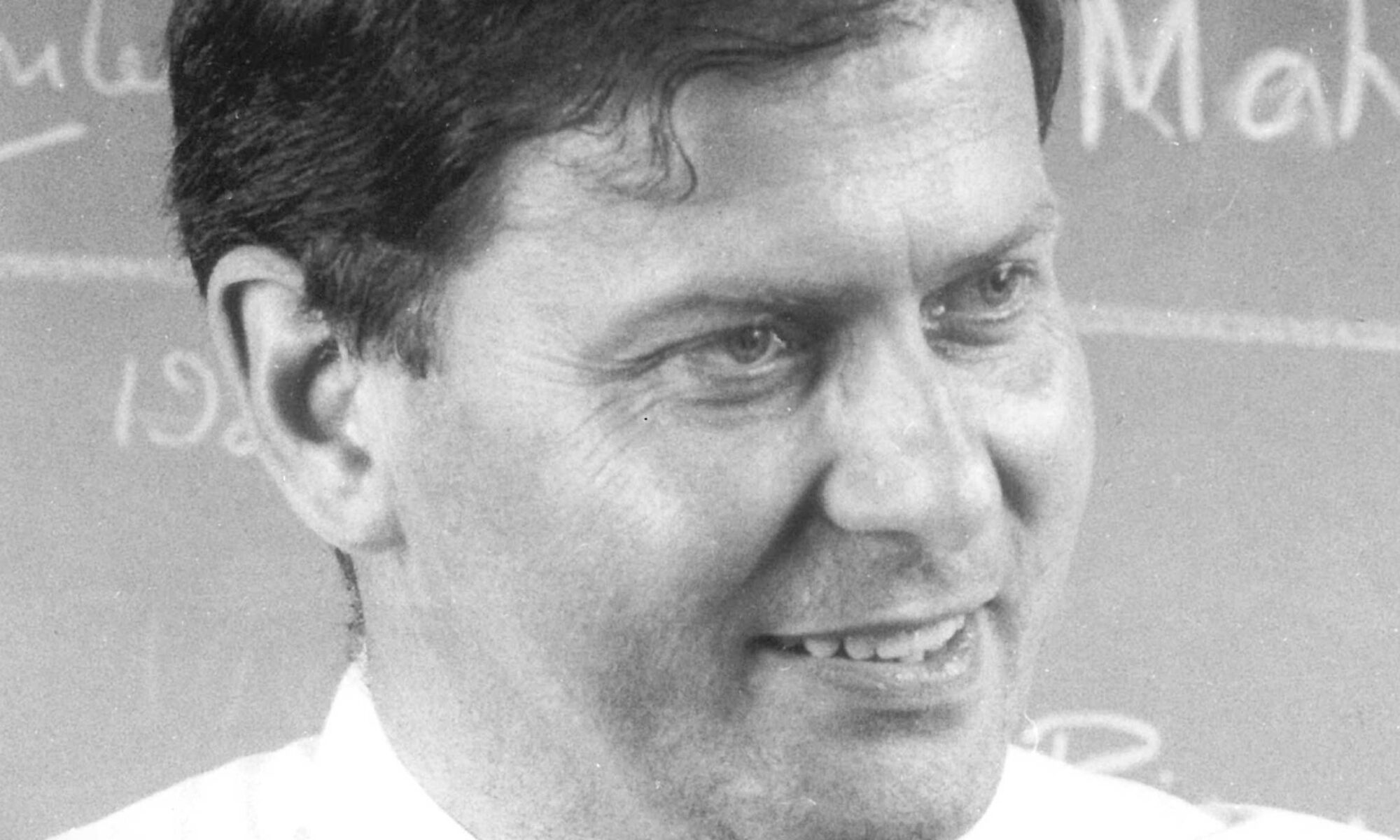
I am late to note the passing of Prof. Peter Haggett, a significant figure both at the University of Bristol and in Anglophone geography in the 20th century. There is an obituary for him on the University of Bristol website. I was a postgraduate ‘demonstrator’ teaching undergraduates spatial statistics in the Haggett laboratory throughout my PhD years at Bristol, one of the homes of the ‘quantitative revolution’ – not least because of Prof. Haggett being there. The above quote appears in the opening pages of Haggett’s (1990) book ‘The Geographer’s Art’ and seems appropriate to quote in recognising the significant contribution he made to the field. I have one book fro the significant library he slowly disposed of in his years as Emeritus professor, on the geography of telecommunications, taken from a table full of volumes that spanned a really diverse range of topics. I saw him only once, in a lecture in the re-inauguration of the Peel lecture theatre of the geography building, the oldest building of the university of Bristol. He was a modest man, keen to celebrate the work of others (in the lecture it was the second Chair of Geography at Bristol R.F. Peel) and alive to, and respectful of, the variety of standpoints within the discipline.
Kevin Cox, on his blog, offers some reflections on the extent of the ‘disruption’ the spatial science that Haggett pioneered was for our discipline and his words are very much worth reading*. Finally, in ‘The Geographer’s Art’, Haggett himself claimed that while ‘the study of geography at university will give scientific insight, provides skills [and] a philosophical framework for environmental and global problems’ that he believed
‘[geography’s] most precious gift is none of these. Geographical skills can enrich all the remaining years of one’s life so that what is seen is understood and appreciated’.
Geography remains. So, I hope, the memory of Prof Haggett’s contribution does as well.
* Incidentally, Cox’s book Making Human Geography is an excellent overview of the development of geography as a (modern) academic discipline.
Who still blogs? I guess I do… If nothing else to share things that seem interesting, which appears to be a strategy a few people employ. I can see from various WordPress subscriptions that I have that some colleagues still do. Maybe the moment passed (some time ago?!) but I can’t help feeling that there is still something worthwhile in writing in this sort of format – a sort of thinking out loud. My colleague Clive Barnett used to do this fantastically well on his site Pop Theory, which I am hopeful we will get back available online soon.
My question is an honest one though – who is blogging? Or writing a newsletter, which seems to have been a thing, but similarly died down a bit(?) I want to read ‘academic’ blogs or newsletters (or anything like that!) again, I think. Please get in touch with any recommendations.
“Geography” blogs that I currently follow (and people have posted to in the last 6 months) are:
As you can see there’s a few on substack now , which is an interesting platform – but I am not totally sure about (mostly due to the model of subscription), where once it was almost all WordPress. While I have focused on ‘geographers’ here that’s only because I had a list and I mostly rely on email subscriptions and the WordPress app, I used to use an RSS reader but fell out of the habit.
Who/what am I missing? Whose ‘blog’ or newsletter do you read that you enjoy? Please let me know!
How might we “read” the media produced by generative artificial intelligence? Eryk Salvaggio suggests we engage them as infographics: data visualisations of archives and datasets that strives for plausibility rather than expression or documentation.
In a presentation blending artistic research into images, video, and sound, Salvaggio will examine the ways artists can hijack the spectacle of AI to engage more critically with its politics and dangers of AI ordering the world on our behalf.
Eryk Salvaggio is a blend of artist, hacker and policy researcher interested in the social and cultural impacts of artificial intelligence. His work explores the creative misuse of AI and reflects on how AI changes our definitions of the human. His award-winning work has been exhibited on four continents, including The New Museum and SXSW. He is a researcher with the metaLab at Harvard University, a Tech Policy Press Fellow, and a visiting professor at the Rochester Institute of Technology (USA) in Humanities, Computing & Design.
Our sense of place is increasingly shaped by digital platforms and the algorithms that curate our urban experiences. We rely on online ratings to choose restaurants, share events in local Facebook groups, and use Instagram to envision neighborhoods before visiting. This era of digital placemaking redistributes the power to narrate urban life, giving global tech companies an influential role in how cities are imagined and planned. At the same time, urban publics now manifest in new empirical formats—not just through surveys or town hall meetings but through digital traces such as texts, images, and likes left on proprietary platforms. A type of unstructured urban data that can be analyzed using various computational tools. Beyond the sensor-based tracking of physical objects that we associate with the “smart city,” we can now engage in a form of soft city sensing, leveraging digital data to gain new insights into urban sensemaking.
This panel brings together four researchers to explore the potentials and pitfalls in this intersection of digital placemaking and computational methods. Across their empirical case studies they examine how GPS tracking apps shape perceptions of outdoor spaces, how local debates on transport and sustainability unfold across social media, and how digital practices—ranging from fashion discourse to craft beer reviews—both root places in local culture and connect them to global networks. Looking across these cases, the four panelists will explore how computational urban studies:
a) expand the methodological toolkit for measuring and mapping the city
b) supplement traditional methods such as surveys and interviews
c) introduce unique challenges related to bias and transparency.
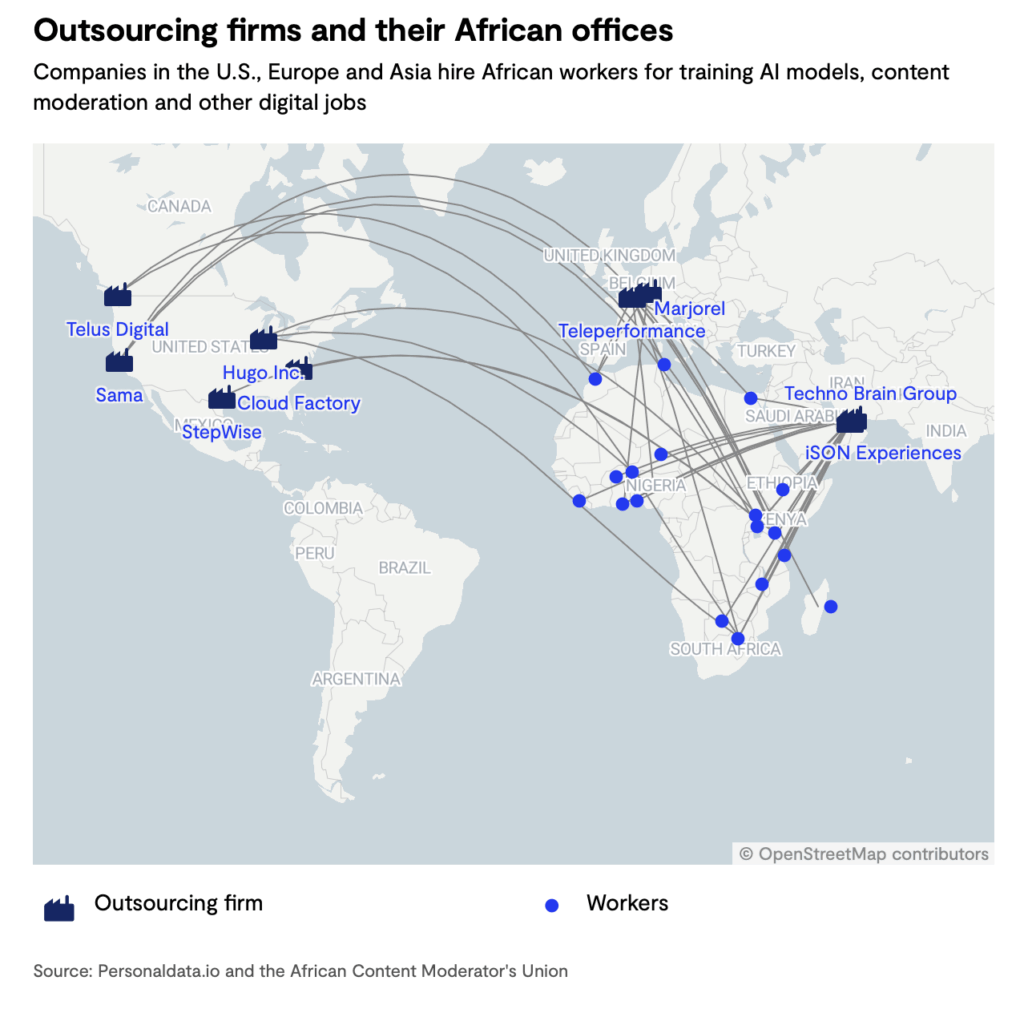
A new dataset, visualized as maps, reveals the extent to which African workers are indirectly employed in the tech sector, doing content moderation, customer service, and data annotation for AI models, among other jobs.