SuperTag ‘scanner will end checkout woes’ – 1994

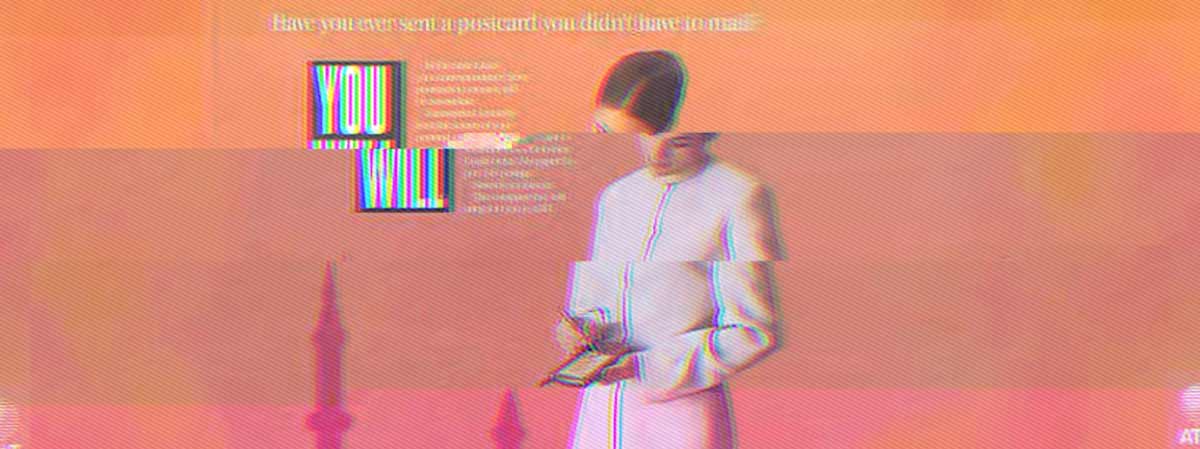
Still image taken from the Microsoft Future Vision of Retail, circa 2010

In this front page article from 6th January 1994, The Guardian Technology Editor reports that the “SuperTag” scanner, from “newly privatised British Technology Group” will “read the entire contents of a supermarket trolley at a glance” … “The day cannot be too far off when the weekly shop ordered from home will be collected later already in the trolley”.

Except of course we just get the supermarket to deliver to our door instead… anyway, a nice piece of the ‘automative imagination‘ in play… (also, good to compare to this).

40 years of automation anxiety in the UK through BBC clips [video]

Industrial factory robot arms

I’ve just done a rough edit of some snippets from BBC programmes that I think shows an interesting pattern to the ways that automation has been discussed by the UK national broadcaster over the last 40 years. In each case, automation is a significant issue – it needs to be urgently addressed, but that hasn’t yet happened.

Out of the three programmes, the first two are fairly significant in their onward influence.

The first, the 1978 “Now the Chips Are Down” Horizon episode was reportedly a significant influence for the BBC’s own Computer Literacy Project, which spawned the BBC Micro Computer.

The second, the 1980 (middle of three) episode(s) of “The Silicon Factor” was a part of the Computer Literacy Project. Alongside the three-part series, the producers created a report (for the BBC Continuing Education Department): “Microelectronics“, which was commissioned by the outgoing late-1970s Labour government’s Department for Education and the Manpower Services Commission. I thoroughly recommend watching the programmes and looking at the report if you’re interested in the histories of computing and automation in the UK.

The third, as far as I know – less significant in it’s onward influence, is a 2015 episode of Panorama: “Could a Robot Do My Job?” Interesting here because the rhetoric is nearly identical to that of “The Silicon Factor” – we need to take advantage of the revolution.

I’ve got more to say about this and I need to do a bit more thinking but wanted to share, because I think it’s interesting! This video (or a revised version) will form a part of my paper for a double session on ‘New Geographies of Automation(?)‘ at the RGS-IBG conference in August 2018 concerning the ways that we imagine automation.

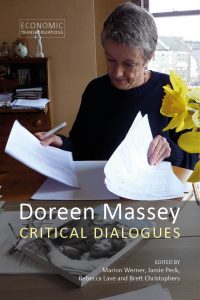
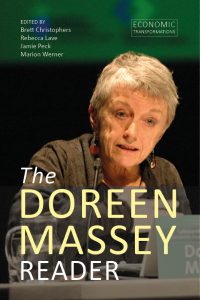
Doreen Massey – Critical Dialogues and Reader

Professor Doreen Massey

Doreen Massey Critical Dialogues book the Doreen Massey Reader


Jamie Peck shared on Twitter that Agenda Publishing have two books coming out simultaneously – Doreen Massey. Critical Dialogues and The Doreen Massey Reader. It is a testament, surely, to the mark of Doreen Massey’s influence on geography and the ways many of us try and make sense of the world that several books and theme issues for Massey have been written and edited (not least in the RGS-IBG book series). As the first sentence of the blurb for the Reader asserts: “Doreen Massey changed geography”. These two new books demonstrate both the quality and range of Massey’s own ideas and work and the ways that has inspired and spurred on many others.

CFP > Memories of the future, London 2019

the character Doc Brown in the film Back to the Future

Via Temporal Belongings.

Memories of the Future

International conference. Centre for the Study of Cultural Memory, Institute of Modern Languages Research, School of Advanced Study, University of London
Dates: 29-30 March 2019
Confirmed speakers: Stephen Bann (Bristol); Rebecca Coleman (Goldsmiths); Paolo Jedlowski (Calabria); Anna Reading (KCL); Michael Rothberg (UCLA)

Proposals for panels or papers by 31 July 2018 to memories.future@sas.ac.uk.

Call for papers
What does it mean to remember the future? What roles do memory, history, the past play in our consciousness as citizens of the early twenty-first century?

David Lowenthal (2015) reminds us that ‘commands to forget coexist with zeal to commemorate’, which raises the very important yet often overlooked questions of: what to remember and what to forget, who is well positioned to lead on or judge in that process, with whose legacies in mind, and with what consequences for future and past generations. In the 1980s, a significant body of scholarship on cultural memory emerged to protect the past from ‘time’s corrosive energy’, leading to ‘collective future thought’ (J. Assmann, 2011; Szpunar and Szpunar, 2016). Cultural memory acted as a moral imperative, a prerequisite to overcome not merely violent pasts but the violence inherent in linear temporality. As such, cultural memory has been seen as redemptive, enabling a more productive relation between past, present and future.

More recently, ‘thinking forward through the past’ has been central to a number of AHRC-funded projects in the UK examining environmental change, postcolonial disaster, gender and colonialism, heritage futures, ruins and more. Climate change, big data and the crisis of democracy are challenging our future in ways that may suggest a misalignment of temporal scales. One way of responding to this is through what Reinhart Koselleck (2000) called horizons of expectations and spaces of experience, namely, the horizons implicit in our anticipations of the future and the degree to which our experience of these have changed and will change over time. Utopian imaginaries and deploying utopia as a method (Levitas, 2013) invite us to think about hope, empathy, and solidarity, each contributing to create different places from which to imagine a future outside crises, fears and risk.

The past and the future constitute our cultural horizons in ways which are neither neutral nor solely technical, but, as Appadurai (2013) has suggested, ‘shot through with affect and sensation’. One of the key challenges of our time is how to study and create futures we truly care for and which are more social (Adam and Groves 2007; Urry, 2016).

Memories of the Future invites contributions to articulate the future in relation to cultural memory, and interrogate the precise and diverse manners in which the past, the present and the future are intertwined and dialogical, complicating our understanding of temporalities in an age saturated with memory and ‘past futures’.

Suggested themes and areas of inquiry include:

  • The future of memory
  • Temporal multi-directionalities
  • Memories of the future
  • Utopias and dystopias
  • Past, present and future mobilities
  • Smart cities and future/ist metropolises
  • Science-fiction and other subsets of utopia
  • Housing, cohousing and the future of habitation
  • Futurisms, modernisms, afro-futurisms
  • The future in/and the Anthropocene
  • Post-humanism and the non-human
  • Intentions, expectations, anticipations
  • Counterfactuals
  • Trauma, violence and conflict
  • Tangible and intangible heritage

Please submit proposals for panels or papers (max 20 minutes) by 31 July 2018 to memories.future@sas.ac.uk, including a 150-250 words abstract.

Practising speculation and tech futures

Glitched AT&T 1990s advert

I’ve had a sort of moment of realisation this morning that a bunch of tabs I’ve had open, saved, reopened (etc etc) for the past few months are all more-or-less about doing speculative work around A.I., automation and suchlike.

This is interesting for me cos I wrote a PhD (and I am by no means the only one) about rationales for and forms of speculative practice in computing R&D (my fieldwork for this was, soberingly, now approximately ten years ago). It’s also interesting cos I have, in the last eight or so years, pitched for funding to do this sort of work and miserably failed three times.

I think what interests me most is the ways in which story telling is more-or-less the method. I’m not sure how good we are at this, as academics. There’s some good work that analyses speculative things, such as architects visualisations, but I’m not sure I’ve seen much work doing speculation that is not design-oriented. I am not seeking to criticise speculative design practices, I really admire that work, I just wonder if there is a way of de-centring the ‘design’ bit to engage in broader forms of ‘speculation’. I’m also not sure how one can tread the line between evoking particular kinds of scenario/ story (or dare I say imaginative geography) and affirming them. Likewise, I don’t think it is sufficient to simply refer to Black Mirror – it’s fun but it’s not the only way of doing speculation about technology (as afrofuturism demonstrates). I don’t think we want to merely replicate the sorts of ‘visioning’ practices of the likes of Microsoft, Samsung or Beko, not because they’re not interesting but because I’d like to think academics doing this kind of thing want to critically reflect on, not simply propose (or impose!), possibilities.  Playful examples that I think are successful include Superflux’s excellent “Uninvited Guests” – though again, this is perhaps more design-oriented: it’s more about the function in relation to the individual rather than the kinds of world that are necessary for those functions to work.

I do not claim any special insight here – I’m curious about speculative methods – they seem to have some analytical/ explanatory/ critical power but also that also seems to be rather hard to negotiate. In practice, I think you may have to be in the right context, and I’m not convinced academic geography is (without quite a bit of work, given particular kinds of disciplinary assumptions and proclivities – happy to be proven wrong!), and you may have to work with non-academic partners in a way I am not skilled in doing. Good examples, I think, are work like Anne’s Counting Sheep project, which is a canonical example of interesting and provocative speculative design. As I’ve said – I’m not so sure about where non-design-oriented work sits and how this is, or can be, done well. I’m interested in some of the attempts anyway, and here’s some examples, listed below.

UPDATE: Sam Hind shared this piece from Warwick concerning issue mapping techniques that allowed for speculative reflection on driverless cars:

Surfacing Social Aspects of Driverless Cars with Creative Methods, Noortje Marres, Rebecca Cain, Ana Gross, Lucy Kimbell and Arun Ulahannan – “The Warwick workshop explored the potential of creative social research methods – such as design research and debate mapping – to surface still hidden social dynamics around the operation of intelligent technologies in everyday environments, and to complement more established approaches to societal testing of these technologies.”

This made me also think of the speculative policy making practices that arose from “Open Policy” work at the British Cabinet Office’s PolicyLab, which I think involved folks from Strange Telemetry and Superflux.


Crafting stories of technology and progress: five  considerations, Cian O’Donavan & Johan Schot – From Technology Stories the website of the Society for the History of Technology comes this brief post that refers to the longer report from the International Panel on Social Progress concerning the fairly classic Science and Technology Studies issue of how to tell stories about “progress” without necessarily resorting to (unreflexive) forms of determinism. There are four ‘stories’ by several researchers linked from this article that address a number of issues:

Economic Science Fictions, edited by William Davies – I’m not really sure why the “science” is in the title but there we go… From the blurb: “Rooted in the sense that our current economic reality is no longer credible or viable, this collection treats our economy as a series of fictions and science fiction as a means of anticipating different economic futures.”

Designing the future, Justin Reynolds – reviews the above book on the New Socialist site, with some interesting commentary.

Future Perfect conference/event, coordinated by Data & Society – characterised as “speculative fiction in the public interest” this event was first run in 2017 as an invitation-only thing but had an open call in 2018. From the 2018 event blurb: “Future Perfect is an annual workshop and conference dedicated to different approaches to understanding, living in, and challenging dominant narratives of speculative fiction in a time where powerful actors in technology and politics treat the future like a foregone conclusion.”

Robot Futures, Illah Reza Nourbakhsh – “Future robots will have superhuman abilities in both the physical and digital realms. They will be embedded in our physical spaces, with the ability to go where we cannot, and will have minds of their own, thanks to artificial intelligence. In Robot Futures, the roboticist Illah Reza Nourbakhsh considers how we will share our world with these creatures, and how our society could change as it incorporates a race of stronger, smarter beings.”

Geographers on film, Library of Congress

David Harvey - Geographers on Film, Library of Congress video still

Someone tweeted a link to the digitised video of David Harvey from 1972, I think, as part of the Library of Congress series “Geographers on Film” and so I spent about an hour jumping in and out of videos – mostly just to hear the voices of familiar names… If you’re interested in the academic discipline of geography I guess this is of interest – however: there’s only one woman. Extraordinary. I’m not going to attempt to reiterate the critique of how disciplinarity performs these sorts of exclusions, along lines of gender and race, others can do a much better job of it than me. I just wanted to highlight this fascinating, if limited, resource.

Here’s Peter Haggett in 1982: