
Registration is open for the 4th International Data Justice Conference “The Datafied State”. The event will be held on 1-2 June 2026 at Cardiff …
Register now for Data Justice 2026
AI Is Pushing Climate Goals Out of Reach
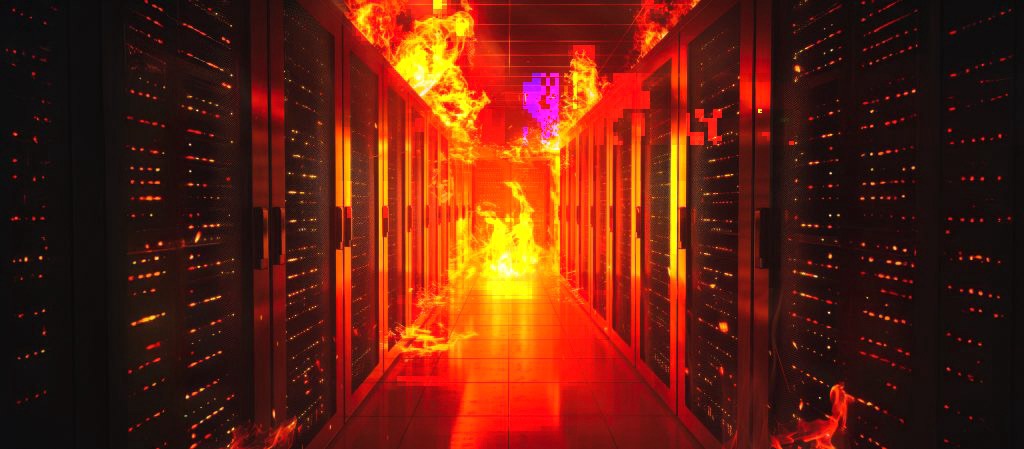
Not new news, but yet another report has stated what is becoming increasingly obvious – the UN Climate Goals, the UN SDGs and the ongoing expansion of energy & water hungry data centres are mutually exclusive.
Without a big increase in investment in renewable energy globally, humanity will not limit global temperature rise to 2 degrees Celsius, but much of the data center boom is powered by fossil fuels.
Jake Bolster – Inside Climate News
…
Data center energy demand “is threatening to sabotage the country’s already faltering climate goals,” wrote John Fleming and Jean Su, with the Center for Biological Diversity, in a report published Wednesday. Fleming and Su found that, if AI data centers powered by fossil fuels grow as forecasted, all other sectors of the U.S. economy would need to cut emissions by 60 percent in order for the U.S. to meet its emissions targets.
Data Justice Conference 2026: The Datafied State

Fourth international Data Justice conference: The Datafied State Date: 1-2 June, 2026 Location: Cardiff University in Cardiff, UK Host: Data Justice…
Data Justice Conference 2026: The Datafied State
Living next to Meta’s data centres

This video, made and shared by the activist group More Perfect Union, offers some ‘real world’ insights into what it is like living next to a huge data centre, in this case one of Meta’s. The resources these things require and the material effects that has on the surrounding communities are issues that perhaps deserve more critical public attention.
Post-pandemic geographies of working from home: more of the same for spatial inequalities?

By Dr David McCollum, University of St Andrews Working From Home (WFH), whether on a partial (hybrid) or full-time (remote) basis, increased …
Post-pandemic geographies of working from home: more of the same for spatial inequalities?
For a ‘digital studies’

“Where do you want to go today?” –Microsoft advertisement campaign, 1994.
There has, for a long time, been a sort of silence on the ‘digital studies’ JiscMail list – so I thought it was probably worth trying to do something with it.
Several years ago, a few people met for a semi-regular reading group in Bristol (in the UK) to work through a variety of ideas relating to ‘the digital’, whatever that may be. I somewhat flippantly named the associated email list: ‘digital studies’. In part because I was, and continue to be, greatly influenced by the late philosopher Bernard Stiegler, who, amongst many other things, wrote a call for ‘Digital Studies’ in 2012 (here’s a blogpost by me around the same time).
What would a ‘digital studies’ list and maybe an online reading group(?) mean today, in 2025?
I would argue that in the intervening years, between 2012 and today, there has only grown a greater urgency for studying the things named ‘digital’ and the sorts of work ascribed to them, abstractly and materially, for good and bad. So, in this follow on, and more modest, call for a digital studies (pluralised, provisional and no capital letters) I want to offer an invitation to grasp that urgency to interrogate ‘the digital’.
“Now come, fire!” – The Ister, Hölderlin
Digital technologies, in Stiegler’s terms, are the latest form of writing and access to writings, they are the means by which an industrialisation of knowledge has been taking place. There is, for Stiegler, an accelerating industrial and largely automated form of writing shaped, edited, broadcast and read with the help of forms of automation that take place at speeds tending towards the speed of light. The digital technologies are ‘intellectual technology’, following the work of Jack Goody, in which an automation, industrialisation and performance of speed radically transforms the conditions of the ‘life of the mind’, our collective capacities for creativity and critique – including and across the arts, culture, economy, geopolitics, science.
Writing, in any form, is an ensemble of traces, and rules of combination of those traces. For Stiegler, following the likes of Andre Leroi-Gourhan and Bertrand Gille, all human societies can be described as regimes of traces: the inscription, exteriorisation, and interiorisation of traces are what constitutes the material culture of the human ‘spirit’ and the ‘life of the mind’ (la vie de l‘esprit). The processes of ongoing digitalisation raise, for Stiegler and I argue for us, questions concerning the future of human cerebral organisation, what kinds of lives of the mind (and their material and social supports) we want to flourish.
It is essential to all disciplines in all their dimensions to question the status given to technics in our ongoing becoming as humans, and in the becoming of knowledge by which we come to know ourselves and our world/s. The questions imposed by digitalisation – what kinds of life we (collectively) want to live, according to Stiegler, is posed well before that of digitalisation itself, as if the radical experience of the upheavals provoked by digitalisation renders these questions apparently unavoidable.
What is to be done?
I propose a monthly online meet-up to read and discuss work we feel might be relevant to this broad questioning of ‘the digital’. I cannot run this alone, so It will need, from the outset, people to volunteer time and ideas, but this email list can act as the initial vehicle for organising. People may come and go, of course, and I wouldn’t wish this to be a burden, but rather an opportunity. For many, these may be worrying times, but there is solidarity in coming together to affirm creative and critical reflection.
In his 2012 call, Stiegler argues that:
[D]igital studies should not be limited to the study of digital technologies: their general object would be the study of technics and intellectual technologies in general from the angle of their effects on all knowledge in general. In this sense, rather than digital studies, it would be without a doubt better to talk of knowledge studies (“studies” in plural form denoting a specific relation regarding epistemology which, other than studying scientific knowledge (savoir) and understanding (connaissance), is conceived from the outset as a discourse unified by a pure logos of all technicity).
Hence knowledge studies would propose in principle – and as their common position – that the study of knowledge is not soluble to that of cognition, as all knowledge and understanding supposes, at the same time, being able to transmit and transform a technical artifactuality is essential to what Georges Canguilhem described as the form of technical life.
Now, some of these terms and their phrasing may seem grandiose. Even so, the ethos of a digital studies as an interdisciplinary endeavour with the goal of interrogating the contemporary conditions of our ongoing negotiations of creativity, critical reflection and culture, remain worthy goals to which we might aspire. Albeit, perhaps, in more modest terms. In 2012, for those involved in Stiegler’s circle (The Insitute de Recherche et d’Innovation at the Pompidou Centre and the Ars Industrialis collective) this was located in a conference that led to a website [digital-studies.org]. I would argue it is possible for a modest goal of forming a community of practice to read and explore work, our own and others, by acquiring fairly easily and inexpensively various means and consuming little time, allowing the maintenance of an online forum, beginning with this email list.
I can offer some suggestions for readings, I think a great place to start, though, is with you – what do you want to think about? What do you want to discuss with likeminded peers?
Please contribute ideas and suggestions! Open the conversation. Everyone is welcome.
Narratives of labour as infrastructure and the automative imagination
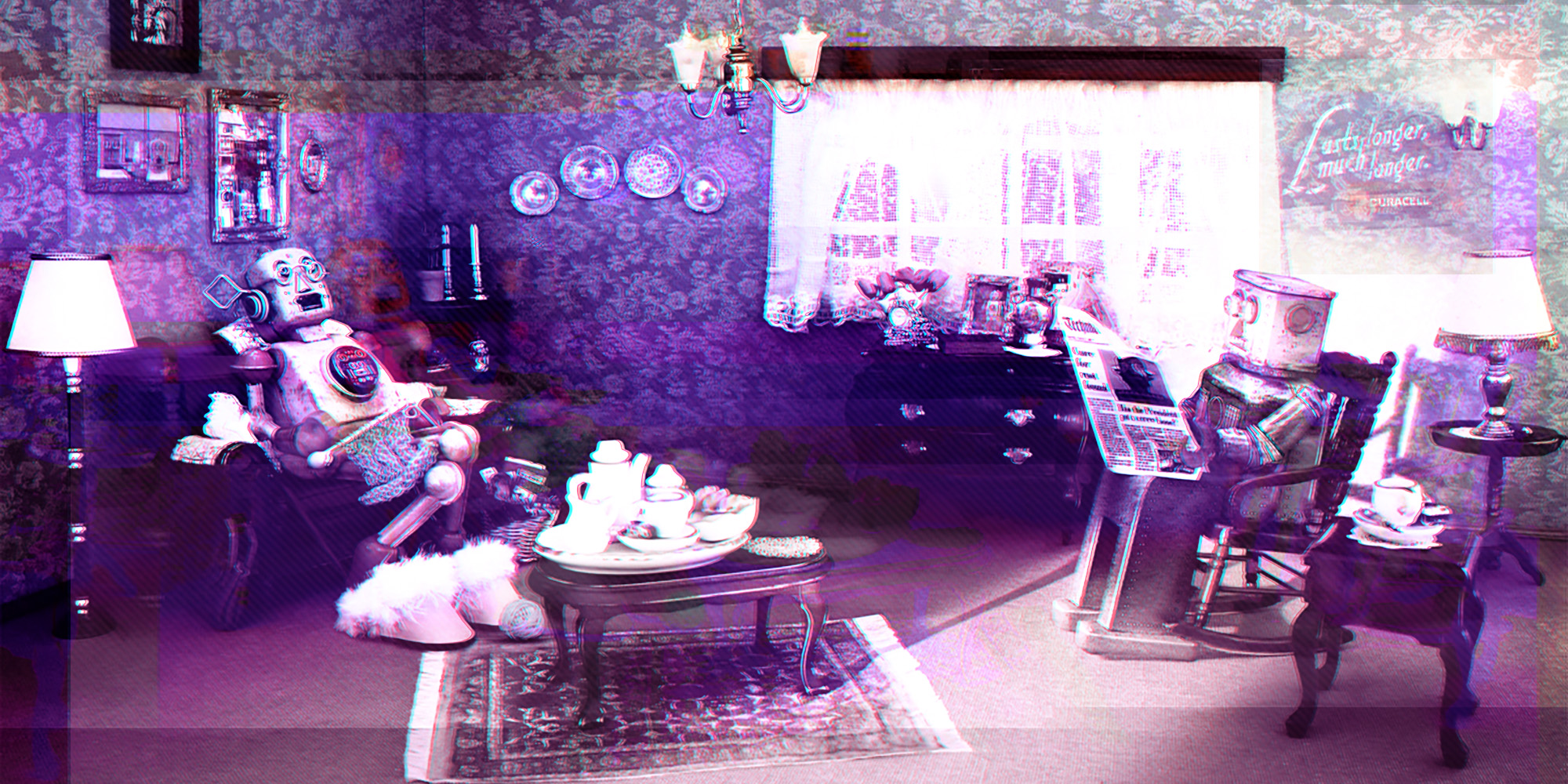
I have a new journal article out, as part of a theme issue in Environment and Planning D: Society & Space. This forms the first peer-reviewed publication that stems from work I began around 2016 concerning automation (this is one of the earliest posts on this blog about it, with a talk I did at the SW Futures meet-up group). This took an impetus from the work of Bernard Stiegler around automation and my initial thinking with and through his ideas was influenced by many conversations around that time with my friend and former colleague Patrick Crogan, who has also written on automation (more than me!), e.g. here.
What the does ‘automative’ mean? You might be asking yourself. Well, I coined a neologism because I couldn’t find a word that fit what I wanted to say. In the paper I put it this way:
The ‘automative imagination’, in the context of this article, is a heuristic that enables two things: (i) a critique of the spatial politics scale pregnant within debates around the opportunities and threats brought by automation; (ii) an interrogation of the normative character of different habits of considering and discussing automation. I am not using the neologism ‘automative’ to assert any kind of authority but rather as a pragmatic tool. Other words do not quite fit—to speak of an ‘automated’ or ‘automatic’ imagination does not describe the characteristics of automation but suggests the imagining is itself automated, which is not the argument I am seeking to make. My aim is not to validate/invalidate particular narratives of automation. A ‘technologically determinist’ reading of the automative imagination might see what is imagined as goals towards which companies are specifically working, largely driven by economic imperative.
In the final sentence of the article I argue:
Using the automative imagination as a lens for inquiry asks for what kinds of ‘problem’ automation is situated as a ‘solution’, by whom and how they do so; and thereby how they are or may be contested.
For lots of personal reasons, this work has taken a long time to make it into print. Even so, I think the argument I make in the paper is at least interesting and has something to contribute in the current maelstrom of debate/s around automation. You can read the article for free, it is open access, courtesy of ESRC/UKRI funding. Here’s the abstract:
This article argues that the ways automation is imagined illustrate a wider problematisation of labour. The concept of an ‘automative imagination’ is proposed to articulate these different habits of considering and discussing automation. In these forms of imagination, I argue labour is discursively reconfigured as a logistical infrastructure. The concrete value of labour, the labouring body and the place of work as such are abstracted into an opaque logistical infrastructure in the narratives of an automative imagination. The impetus for this analysis comes from press releases and reports concerning automation and COVID-19 focused on the UK economy, creating a vanguard of abstracting ‘labour’ into infrastructure. The work of automation can usefully be understood as a relation, both in its implementation and in its imagining—a relation that geographers can, and should, interrogate. The automative imagination powerfully articulates the normative force of the performative abstraction and devaluation of work.
I hope you find it of interest.
Being Human In Digital Cities
Rather late to this but, as Gillian says, this looks great!

Being Human in Digital Cities is the title of Myria Georgiou‘s excellent new book, which is a must-read for anyone interested in digital technologies…
Being Human In Digital Cities
Changing Digital Geographies – new book from Jess McLean

I was delighted to have Dr Jess McLean from Macquarie visit us in Exeter this week. Jess gave a great talk in our department around themes from a new book, about to be published by Palgrave. It promises to be a really interesting contribution to the renewed interest in ‘digital’ in geographyland and especially at the intersections with political ecology and work concerning the anthropocene.
Here’s some details:
Changing Digital Geographies
Technologies, Environments and People

This book examines the changing digital geographies of the Anthropocene. It analyses how technologies are providing new opportunities for communication and connection, while simultaneously deepening existing problems associated with isolation, global inequity and environmental harm. By offering a reading of digital technologies as ‘more-than-real’, the author argues that the productive and destructive possibilities of digital geographies are changing important aspects of human and non-human worlds. Like the more-than-human notion and how it emphasises interconnections of humans and non-humans in the world, the more-than-real inverts the diminishing that accompanies use of the terms ‘virtual’ and ‘immaterial’ as applied to digital spaces.
Digital geographies are fluid, amorphous spaces made of contradictory possibilities in this Anthropocene moment. By sharing experiences of people involved in trying to improve digital geographies, this book offers stories of hope and possibility alongside stories of grief and despair. The more-than-real concept can help us understand such work – by feminists, digital rights activists, disability rights activists, environmentalists and more. Drawing on case studies from around the world, this book will appeal to academics, university students, and activists who are keen to learn from other people’s efforts to change digital geographies, and who also seek to remake digital geographies.
Geographies of/with AI at the RGS-IBG conference this week

As we race headlong towards September and another term (in the UK), it is the week of the RGS-IBG annual international conference in geographyland. At this year’s conference I am convening a double session with a really interesting and diverse range of papers concerning the intersections of geography and artificial intelligence. The sessions are on Thursday starting at 14:20 and ending at 18:30 with a 20 minute coffee break.
The sessions are: 235 and 268, details below:
235 Geographies of/with Artificial intelligence (1): Spacings
- Automating production of the built urban environment: tracing the role of BIM modelling, VR and automated prefabrication in the UK housing sector – Rachel Macrorie (University of Sheffield, UK)
- AI/Machine Learning algorithms in public participation– Yu-Shan Tseng (Durham University, UK)
- The algorithmic production of space in the age of machine learning: the case of self-driving vehicles– Fabio Iapaolo (Polytechnic University of Turin, Italy)
- Facial Recognition and the Automation of Security/Marketing Assemblages: Geographies of Anxiety and Pleasure in Music Festivals- Harrison Smith (Newcastle University, UK), Jeremy Crampton (Newcastle University, UK), Kara C. Hoover (University of Alaska, Fairbanks, USA), J. Colette Berbesque (Roehampton University, UK)
268 Geographies of/with Artificial intelligence (2): Working
- “Hey Alexa, why are you gendered?” Automation in the home and emotional labour – Sam Kinsley (University of Exeter, UK)
- Cooked with care or a raw deal?: One geographer’s explorations of AI and machine learning from below in London’s gig-economy – Adam Badger (Royal Holloway, University of London, UK)
- Workplace Surveillance by AI: it’s for your own good? – Philip Garnett (University of York, UK)
- Link NYC and the performative geopolitics of ‘automation’ – Nathaniel O’Grady (University of Manchester, UK)
Please do come and check out the sessions on Thursday – we’ll be in the Sheffield Building (Number 20 on this map).