‘Automated’ sweated labour

Charlie Chaplin in Modern Times

This piece by Sonia Sodha (Worry less about robots and more about sweatshops) in the Grauniad, which accompanies an episode of the Radio 4 programme Analysis (Who Speaks for the Workers?), is well worth checking out. It makes a case that seems to be increasing in consensus – that ‘automation’ in particular parts of industry will not mean ‘robots’ but pushing workers to become more ‘robotic’. This is an interesting foil to the ‘automated luxury communism’ schtick and the wider imaginings of automation. If you stop to think about wider and longer term trends in labour practices, it also feels depressingly possible…

This is the underbelly of our labour market: illegal exploitation, plain and simple. But there are other legal means employers can use to sweat their labour. In a sector such as logistics, smart technology is not being used to replace workers altogether, but to make them increasingly resemble robots. Parcel delivery and warehouse workers find themselves directed along exact routes in the name of efficiency. Wrist-based devices allow bosses to track their every move, right down to how long they take for lavatory breaks and the speed with which they move a particular piece of stock in a warehouse or from the delivery van to someone’s front door.

This hints at a chilling future: not one where robots have replaced us altogether, but where algorithms have completely eroded worker autonomy, undermining the dignity of work and the sense of pride that people can take in a job well done.

This fits well with complementary arguments about ‘heteromation‘ and other more nuanced understandings of what’s followed or extended what we used to call ‘post-Fordism’…

Algorithm 1986

Just cos it’s fun…

From the second edition of The Dictionary of Human Geography, written by Prof. Peter Gould:

A step-by-step procedure, usually supported by a formal mathematical proof, that leads to a desire solution. An example is the Simplex Algorithm in Linear Programming. Heuristic algorithms are not supported by formal proofs, but are highly likely to lead to the optimal solutions. Examples include finding multiple locations within, and the shortest paths through, a network. The word derives from the name Al-Ghorizmeh, a distinguished Arab geographer-mathematician of the sixth century A.D. (See also Districting Algorithm.)   PG

Slightly different from the two-sentence version by Prof. Ron Johnston in the 5th edition (2009).

“algorithmic governance” – recent ‘algorithm’ debates in geography-land

Over on Antipode’s site there’s a blog post about an intervention symposium on “algorithmic governance” brought together by Jeremy Crampton and Andrea Miller, on the back of sessions at the AAG in 2016. It’s good that this is available open access and, I hope, helpful that it maybe puts to bed some of the definition wrangling that has been the fashion. Obviously, a lot draws on the work of geographer Louise Amoore and also of political theorist Antoinette Rouvroy, which is great.

Reading through the overview and skimming the individual papers provokes me to comment that I remain puzzled though by the wider creeping use of an unqualified “non-human” to talk about software and the sociotechnical systems they run/are run on… this seems to play-down precisely the political issues raised in this particular symposium – that the kinds algorithms concerned in this debate are written and maintained by people, they’re not somehow separate or at a distance… It’s also interesting to note that a sizeable chunk of the debates concern ‘data’ but the symposium doesn’t have “data” in the title, but maybe ‘data–’ is passé… 🙂

I’ve copied below the intro to the post, but please check out the whole thing over on Antipode’s site.

Intervention Symposium: “Algorithmic Governance”; organised by Jeremy Crampton and Andrea Miller

The following essays first came together at the 2016 AAG Annual Meeting in San Francisco. Jeremy Crampton (Professor of Geography at the University of Kentucky) and Andrea Miller (PhD candidate at University of California, Davis) assembled five panellists to discuss what they call algorithmic governance – “the manifold ways that algorithms and code/space enable practices of governance that ascribes risk, suspicion and positive value in geographic contexts.”

Among other things, panellists explored how we can best pay attention to the spaces of governance where algorithms operate, and are contested; the spatial dimensions of the data-driven subject; how modes of algorithmic modulation and control impact understandings of categories such as race and gender; the extent to which algorithms are deterministic, and the spaces of contestation or counter-algorithms; how algorithmic governance inflects and augments practices of policing and militarization; the most productive theoretical tools available for studying algorithmic data; visualizations such as maps being implicated by or for algorithms; and the genealogy of algorithms and other histories of computation.

Three of the panellists plus Andrea and Jeremy present versions of these discussions below, following an introduction to the Intervention Symposium from its guest editors (who Andy and Katherine at Antipode would like to thank for all their work!).

Read the whole post and see the contributions to the symposium on the Antipode site.

Reblog> Workshop: Reshaping Cities through Data and Experiments

Smart City visualisation

This looks interesting (via Programmable City):

Workshop: Reshaping Cities through Data and Experiments

When: 30th May 2017 – 9.30am to 3.30pm
Where: Maynooth University, Iontas Building, Seminar Room 2.31

The “Reshaping Cities through Data and Experiments” workshop is part of the Ulysses research exchange programme jointly funded by Irish Research Council and the Ambassade de France. It is organized in collaboration with researchers from the Centre de Sociologie de l’Innovation (i3-CSI) at the École des Mines in Paris – David Pontille, Félix Talvard, Clément Marquet and Brice Laurent – and researchers from the National Institute for Regional and Spatial Analysis (NIRSA) in Maynooth University, Ireland – Claudio Coletta, Liam Heaphy and Sung-Yueh Perng.

The aim is to initiate a transdisciplinary discussion on the theoretical, methodological and empirical issues related to experimental and data-driven approaches to urban development and living. This conversation is vital in a time when cities are increasingly turning into public-private testbeds and living labs, where urban development projects merge with the design of cyber-infrastructures to test new services and new forms of engagement for urban innovation and economic development. These new forms of interaction between algorithms, planning practices and governance processes raise crucial questions for researchers on how everyday life, civic engagement and urban change are shaped in contemporary cities.

Read the full blogpost on the Programmable City site.

An ancient twin? Facial pattern matching with ancient statues


The Musée de la Civilisation in Quebec have a exhibition about ancient ‘doubles’ or ‘twins’, as part of which you can submit your photo and a program will match your face with images of statues in the collection.

It’s been in the press and, of course, is ‘just a bit of fun’, but its also sort of interesting to submit images and try and work out how the pattern matching is working – it’s not all that obvious! There’s probably something smart to say about ‘algorithms’ here, but I’ve not had enough sleep… check it out for yourself: Mon Sosie À 2000 Ans.

Here’s me and Battataï:

Songs “written by AI” from SonyCSL

Songs written by Sony CSL’s “AI”…

From the Sony CSL “flow machines” website:

Flow Machines is a research project funded by the European Research Council (ERC) and coordinated by François Pachet (Sony CSL Paris – UMPC).

The goal of Flow Machines is to research and develop Artificial Intelligence systems able to generate music autonomously or in collaboration with human artists.
We do so by turning music style into a computational object. Musical style can come from individual composers, for example Bach or The Beatles, or a set of different artists, or, of course, the style of the musician who is using the system.

Their “Deep Bach” thing was doing the rounds at the end of last year, so I presume there will be more to come.

“Control, Resistance, and the ‘Data University’: Towards a Third Wave Critique”

A group of academics at Newcastle, collectivised under the moniker “the Analogue University” offer an Alex Galloway-like critique of “The Data University” over on the Antipode blog. An interesting read…

In this short intervention, we want to explore the possibilities for a third wave of critique related to the changing nature of academia. More specifically, we argue that we are now witnessing the emergence of the “Data University” where the initial emphasis on the primacy of data collection for auditing and measuring academic work has shifted to data coding itself as the new exchange value at work and productive of new subjectivities and freedoms. This third wave critique requires drawing a schematic line that now takes us beyond the intensification of neo-liberalisation, the internalisation of market values and associated affective structures of feeling to understanding our new digital and big data world. Influenced by Deleuze’s (1992) work on new societies of control, we argue that the genesis of the “Data University” lies in our active desire for data and its potential to mediate human relations and modulate our freedoms. This is absolutely central to our schematic for a third wave of critique: compared to older disciplinary societies like the school or prison institution (see below), today individuals both desire and are controlled through the active generation of proliferating data streams.

Read the full article.

Choose how you feel, you have seven options

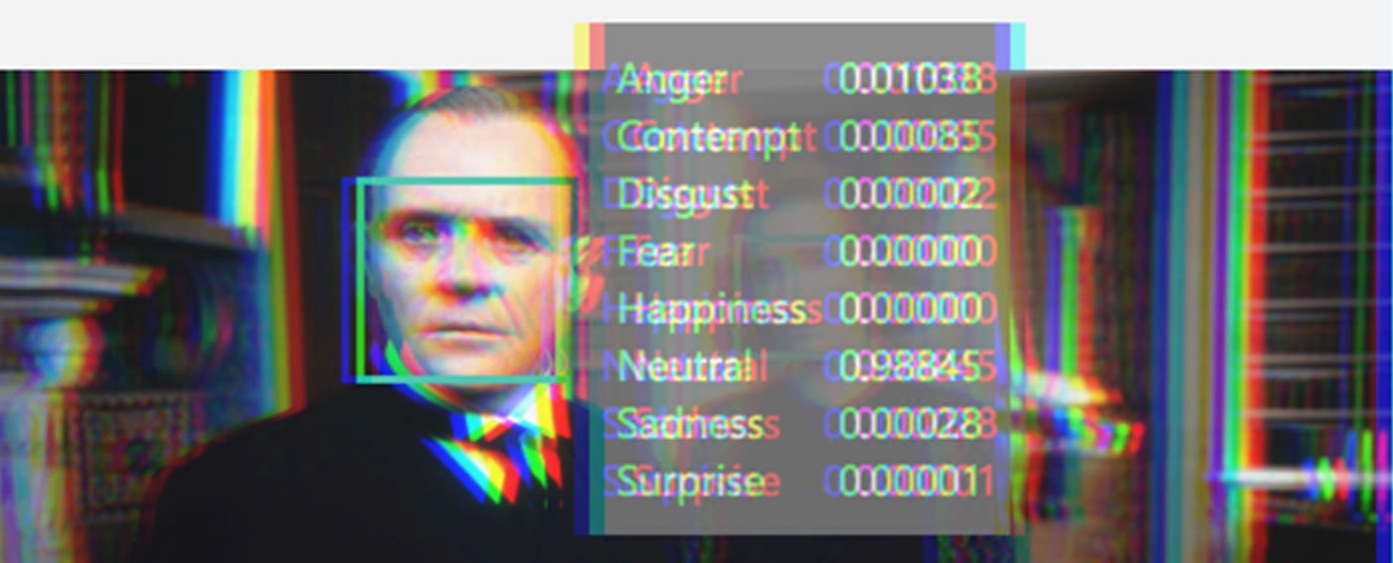
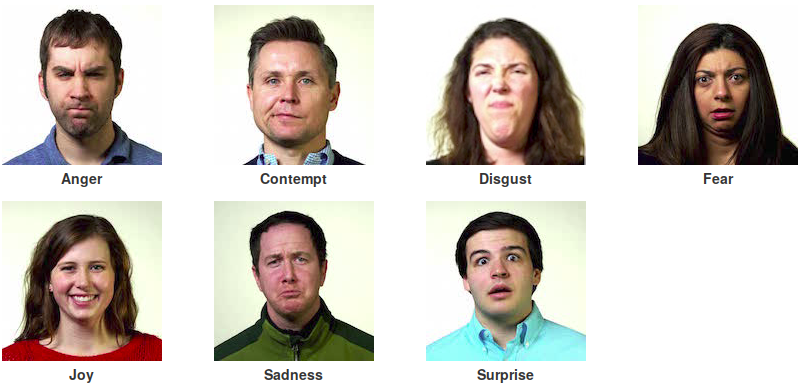
A great piece by Ruben Van de Ven stemming from his artwork of the same name, published on the Institute of Network Culture site. Van de Ven, in a similar vein to Will Davies, deconstructs the logic of ‘affective’ computing, sentiment analysis and their application to what has been termed the ‘attention economy’. The article does a really go job of demonstrating how the knowledge claims, and the epistemologies (perhaps ontologies too), that are at work behind these technologies are (of course) deeply political in their application. Very much worth reading! (snippet below).

 ‘Weeks ago I saw an older woman crying outside my office building as I was walking in. She was alone, and I worried she needed help. I was afraid to ask, but I set my fears aside and walked up to her. She appreciated my gesture, but said she would be fine and her husband would be along soon. With emotion enabled (Augmented Reality), I could have had far more details to help me through the situation. It would have helped me know if I should approach her. It would have also let me know how she truly felt about my talking to her.’

FOREST HANDFORD

This is how Forest Handford, a software developer, outlines his ideal future for a technology that has emerged over the past years. It is known as emotion analysis software, emotion detection, emotion recognition or emotion analytics. One day, Hartford hopes, the software will aid in understanding the other’s genuine, sincere, yet unspoken feelings (‘how she truly felt’). Technology will guide us through a landscape of emotions, like satellite navigation technologies guide us to destinations unknown to us: we blindly trust the route that is plotted out for us. But in a world of digitized emotions, what does it mean to feel 63% surprised and 54% joyful?

Please take the time to read the whole article.

Brave new-old world – gig economy as scientific management

Deliveroo cyclists

They’re gonna be disrupted, yeah! Because your lives are being disrupted, yeah! This is the money you need to live!

An interesting article in the FT: “When your boss is an algorithm“, in which (if you ignore the sort of anthropomorphism of “the algorithm” and its apparently supreme agency) the author,  , draws out the similarity between the claims of efficiency etc. made for ‘gig economy’ -type work platforms, such as Uber and Deliveroo, are very similar to Taylorism:

Algorithmic management” might sound like the future but it has uncanny echoes from the past. A hundred years ago, a new theory called “scientific management” swept through the factories of America. It was the brainchild of Frederick W Taylor … Taylor wanted to replace this “rule of thumb” approach with “the establishment of many rules, laws and formulae which replace the judgment of the individual workman”. To that end, he sent managers with stopwatches and notebooks on to the shop floor. They observed, timed and recorded every stage of every job, and determined the most efficient way that each one should be done. “Perhaps the most prominent single element in modern scientific management is the task idea,” Taylor wrote in his 1911 book The Principles of Scientific Management. “This task specifies not only what is to be done but how it is to be done and the exact time allowed for doing it.”

Exemplified by the following excerpt articulating the experience of a Deliveroo driver, Kyaw, which is, in turn, of course similar to the kinds of working conditions of other delivery drivers and Amazon warehouse pickers (as has been covered widely in the press)…

Kyaw whips out his phone. The app expects him to respond to new orders within 30 seconds. The screen shows a map and address for the local Carluccio’s, an Italian restaurant chain. A swipe bar says “Accept delivery”. That is the only option. The algorithm will not tell him the delivery address until he has picked up the food from Carluccio’s. Deliveroo couriers are assigned fairly small geographic areas but Kyaw says sometimes the delivery address is way outside his allocated zone. You can only decline an order by phoning the driver support line. “They say, ‘No, you have to do it, you already collected the food.’ If you want to return the food to the restaurant they mark it as a driver refusal – that’s bad.”