CFP> Streams of Consciousness: Data, Cognition and Intelligent Devices, Apr 2016

This looks interesting:

Streams of Consciousness

Data, Cognition and Intelligent Devices

21st and 22nd of April 2016

Call for Papers

consc

“What’s on your mind?” This is the question to which every Facebook now responds. Millions of users sharing their thoughts in one giant performance of what Clay Shirky once called “cognitive surplus”. Contemporary media platforms aren’t simply a stage for this cognitive performance. They are more like directors, staging scenes, tweaking scripts, working to get the best or fully “optimized” performance. As Katherine Hayles has pointed out, media theory has long taken for granted that we think “through, with and alongside media”. Pen and paper, the abacus, and modern calculators are obvious cases in point, but the list quickly expands and with it longstanding conceptions of the Cartesian mind dissolve away. Within the cognitive sciences, cognition is now routinely described as embodied, extended, and distributed. They too recognize that cognition takes place beyond the brain, in between people, between people and things, and combinations thereof. The varieties of specifically human thought, from decision-making to reasoning and interpretation, are now considered one part of a broader cognitive spectrum shared with other animals, systems, and intelligent devices.

Today, the technology we mostly think through, with and alongside are computers. We routinely rely on intelligent devices for any number of operations, but this is no straightforward “augmentation”. Our cognitive capacities are equally instrumentalized, plugged into larger cognitive operations from which we have little autonomy. Our cognitive weaknesses are exploited and manipulated by techniques drawn from behavioural economics and psychology. If Vannevar Bush once pondered how we would think in the future, he received a partial response in Steve Krug’s best selling book on web usability: Don’t Make Me Think! Streams of Consciousness aims to explore cognition, broadly conceived, in an age of intelligent devices. We aim to critically interrogate our contemporary infatuation with specific cognitive qualities – such as “smartness” and “intelligence” – while seeking to genuinely understand the specific forms of cognition that are privileged in our current technological milieu. We are especially interested in devices that mediate access to otherwise imperceptible forms of data (too big, too fast), so it can be acted upon in routine or novel ways.

Topics of the conference include but are not limited to:

  • data and cognition
  • decision-making technologies
  • algorithms, AI and machine learning
  • visualization, perception
  • sense and sensation
  • business intelligence and data exploration
  • signal intelligence and drones
  • smart and dumb things
  • choice and decision architecture
  • behavioural economics and design
  • technologies of nudging
  • interfaces
  • bodies, data, and (wearable) devices
  • optimization
  • web and data analytics (including A/B and multivariate testing)

Please submit individual abstracts of no longer than 300 words. Panel proposals are also welcome and should also be 300 words. Panel proposals should also include indvidual abstracts. The deadline for submissions is Friday the 18th of December and submissions should be made to cimconf@warwick.ac.uk. Accepted submissions will be notified by 20th of January 2016.
Streams of Consciousness is organised by Nathaniel Tkacz and Ana Gross. The event is supported by the Economic and Social Research Council.
Reblog> Does Academia.edu Mean Open Access Is Becoming Irrelevant?

A really interesting post by Gary Hall on his blog around what ‘open access’ means and how we negotiate what might be understood as the ‘attention economy’ of academia in relation to the ways in which sites like academia.edu and research gate leverage the ‘respectability’ of our work and our collective need to find audiences in order to generate valuable metadata. As Hall argues:

 In this world who gate-keeps access to (and so can extract maximum value from) content is less important, because that access is already free, than who gate-keeps(and so can extract maximum value from) the data generated around the use of that content, which is used more because access to it is free.

I heartily recommend reading the whole piece…

Does Academia.edu Mean Open Access Is Becoming Irrelevant?

brief discussion took place this month on the Association of Internet Researchers air-l listserve concerning a new book from the publishers Edward Elgar: Handbook of Digital Politics. Edited by Stephen Coleman and Deen Freelon, this 512 page volume features contributions from Peter Dahlgren, Nick Couldry, Christian Fuchs, Fadi Hirzalla and Liesbet van Zoonen, among numerous others. The discussion was provoked, however, not by something one of its many contributors had written about digital politics, but by the book’s cost: $240 on Amazon in the US. (In the UK the hardback is £150.00 on Amazon. Handbook of Digital Politics is also available online direct from the publishers for £135.00, with the ebook available for £40.) As one of those on the list commented, ‘I’d love to buy it, but not at that price’ – to which another participant in the discussion responded: ‘I encourage everyone to use the preprint option to post their piece on ssrn.com and academia.edu, perhaps others have other open access suggestions (e.g. Institutional Repositories of individual universities)’. Now, to be fair, the idea that is implied by this suggestion – that the Academia.edu platform for sharing research represents just another form of open access – is a common one. Yet posting on Academia.edu is far from being ethically and politically equivalent to using an institutional open access repository.

Read the whole post here.

Character assassinations? There’s an app for that…

Interesting article on the Washington Post  site, tweeted by David Murakami Wood (above), that talks about a service/app called “Peeple” that seeks to be a “Yelp for people” – to enable us to ‘rate’ and ‘review’ one another… A market-driven death-knell for treating one another like ‘people’ (rendering the name rather ironic) and another attempt to pull a further aspect of ‘ordinary’ life into the attention economy. This is an attempted renegotiation of the ‘normative’, what Daniel Miller and Sophie Woodward, in their book Blue Jeans, describe as the sense in which “the expectation that actions within a social field are likely to be judged as right or wrong, appropriate or inappropriate, proper or transgressive”. What if reviewing one another became ‘normal’..?(!!) *sigh*

Reblog> Danse macabre

Derek Gregory points to this really lovely video from Opéra National de Paris and Julien Prévieux inspired by Gregoire Chamayou’s work on ‘schematic bodies and patterns of life’.

I love how the ideas have been translated into performance in such a provocative yet beautiful way – this really gets you thinking about, as Stiegler would put it, the grammatisation of gesture (see, in particular: For a New Critique of Political Economy, pp. 8-13): the sense in which the capture and retention of our movements feeds back into the ways in which institutions and apparatuses address us both as individuals (‘subjects’) and populations (and/or ‘markets’)…

Danse macabre

Grégoire Chamayou writes to say that after our conversations in Irvine last year he has worked with an artist friend, Julien Prévieux (who won the Prix Marcel Duchamp in 2014) and the Opéra national de Paris to turn his ideas about schematic bodies and patterns of life into a short film: Patterns of Life.

I’ve embedded it below, but if the link doesn’t work you can watch it here or on YouTube here. You will soon see why Anne Buttimer once described Torsten HÃ¥gerstrand‘s time-geography diagrams as a danse macabre.  The subtitles are in French but the commentary is in English.

I find the combination of intellectual imagination and performance work absolutely compelling – see my comments on ‘Bodies on the line’ here, for example.

Repost> The metric tide: an agenda for responsible indicators in research

The launch of the report on the review into the role of metrics in HE over on the Gaurdian,..

The metric tide: an agenda for responsible indicators in research

Across research, the metric tide is rising. An independent report published today argues that we have the opportunity to influence how it washes through higher education and research.

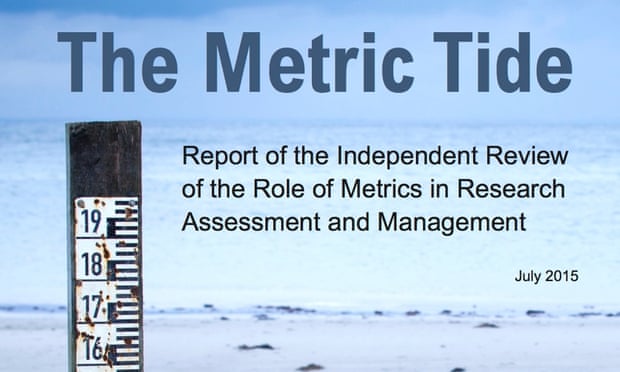
The Metric Tide
 The Metric Tide, the report of the UK’s independent review of the role of metrics in research is published today. Photograph: JL-Pfeifer/Shutterstock.com


Yesterday’s Budget brought good news for those vice-chancellors who have been lobbying to raise student tuition fees above the current £9,000 annual cap. But it came with a sting in the tail: George Osborne said that fees could rise in line with inflation only for those universities “that demonstrate excellence in teaching”. This will be assessed through a new Teaching Excellence Framework, or TEF, to be introduced alongside the Research Excellence Framework (REF), which is used to allocate around £1.6 billion each year on the research side of the system.

Good quote further down:

Metrics should support, not supplant, expert judgement. In our consultation with the research community, we found that peer review, despite its flaws and limitations, continues to command widespread support. We all know that peer review isn’t perfect, but it is still the least worst form of academic governance we have, and should remain the primary basis for assessing research papers, proposals and individuals, and for assessment exercises like the REF. At the same time, carefully selected and applied quantitative indicators can be a useful complement to other forms of evaluation and decision-making. A mature research system needs a variable geometry of expert judgement, quantitative and qualitative indicators. Academic quality is highly context-specific, and it is sensible to think in terms of research qualities, rather than striving for a single definition or measure of quality.

Running towards publication – Jonathan Sterne on the pace of publishing

Over on the group blog Culture Digitally, Jonathan Sterne has written about the competing paces of publication, audiences and the lifespan of our examples:

The recent Culture Digitally posts by Jeff Pooley and C.W. Anderson suggest that one of the main broken areas of new media scholarship has to do with publication and speed. Our examples are out of date before our articles appear in the journals to which we submitted them. Our books suffer even worse fates. Both authors suggest the problem is the speed with which our objects of study–digital media–change. Both also point to the dilemmas faced by academic authors and presses as the world of academic publishing changes. . . slowly. And both suggest that iterated versions and new digital platforms would be one set of solutions to this problem.

Sterne makes the point that the texts to which we continue to return, and with which we teach, are those that do not solely rely on the examples. While examples are ‘examples of themselves’ (see Dewsbury et al. 2002), they are also (hopefully) illustrative of a broader theory about the world:

Scholars have developed a number of strategies for dealing with the different temporalities of scholarship and life, and that in fact is important for our students to learn about. Take four canonical examples that still frequently appear on media studies syllabi (do a search for these and “media studies syllabus” if you don’t believe me): Stuart Hall’s “Encoding/Decoding,” Raymond Williams’ Television; Dick Hebdige’s Subculture: The Meaning of Style; and Pierre Bourdieu’s Distinction. All of these were originally published in the 1970s and reference social worlds vastly different from the ones our student inhabit. Two of them refer to the UK, one to the US, and one to France, which means students everywhere else need to make some adjustments. Why are these texts still being taught if they are so out of date? The answer is simple: the ideas in them transcend the examples, and even where the conclusions no longer obtain, the questions they ask might be useful for students to ask today. To be sure, treating them as timeless social science theories would be a disservice: Hall’s Encoding/Decoding model is tied to the inaccessibility of television production in the 1970s; an account of the same politics around news today would have to think very differently about production.

…

Dated examples in readings are not a problem. They are unavoidable when the reference is popular culture, current events or new media. They can be used to teach students about the specificity of their (and our) own moment; and they provide an opportunity to teach students that intellectual work is an ongoing process and conversation of which our students can be a part.

Sterne goes on to make a plea against ‘keeping up’ with the acceleration, against ‘keeping [old work] up-to-date’ and that

we must also let scholars walk away from their projects. More than that, we should encourage it. Abandoning work has probably done more to advance scholarly conversation than any other single act by academic writers.

It’s worth reading the whole thing. I would briefly note that it is possible to argue that there is a healthy academic tradition of ‘abandonment’. In philosophy, there have been a number of writers/thinkers that have unapologetically changed their minds or simply shifted the terms of their projects – for example Francois Laruelle has made it a feature of his work as such, and one might argue that Foucault did so too.

Likewise, there have been arguments made for a more contemplative pace of work. For example, Bernard Stiegler has argued that we need to (re)constitute what the Romans called Otium the techniques of the self, of our care for ourselves and for knowledge, such that we allow space and time for attentive thought.

The anti-social academic blogger? A post by Sam Merrill

Over on his (re)new(ed) blog/site Sam Merrill has posted about blogging and his uneasiness with some of the less collegial, more narcissistic, and perhaps more target-driven (in the vein of h-index etc. perhaps[?]) implications of blogging becoming a normalised part of academic practice. Its definitely worth a read in full [here] but I’ve copied some choice excerpts below…

It all reminds me just a little too much of Zygmunt Bauman’s keynote at the re:publica 15 conference that I attended last month. He discussed how today most people seek publicity rather than privacy, primarily through social media use, and they are thus replacing the community networks which previously belonged to them with the social networks to which they now belong. […]

There is now a widespread acknowledgement that academic progression, especially at the early career stage, often relies on one’s ability to develop their own recognisable brand. This narcissist factor of academic social media use is another that leaves me feeling inherently uneasy about blogging even as I engage in it more and more willingly (the narcissism that is, not the blogging). […]

Although there is little new about Bauman’s prognosis – that social media leads to the state of being alone together – the fact a future colleague later admitted that what Bauman had described sounded just like him made me shudder as I realised that if the pressure to use social media and the Internet for academic purposes was so apparent across the disciplines that I had already encountered (archaeology and geography in particular), then what must it be like in the field of social media studies that I was about to join – and how would I ever find enough time to relieve it!

I suppose I’m inclined to argue that including blogging in your academic practice is only really worth it if it isn’t a chore, if it doesn’t become another target to hit, and if it enables us to celebrate our collective exploration of ideas – otherwise, its surely (yet) another  instrument of ‘governmentality‘ ~ those logics we internalise by which we are in some sense controlled, as workers, and become alienated from our labours… in the sense in which it seems that those that work in academia (at least in the UK) are really good at internalising and living out precisely those logics we critique as neo-liberal (i.e. the REF and so on…) and just to be crystal clear, I am just as guilty of this as any.

Curating attention (Being a sharing academic pt. II)

My post from the train yesterday on blogging kept me thinking throughout the day. I wanted to discuss some of the responses (which makes up the majority of this post) and quickly clarify a couple of things. My initial post was, I recognise a little bit hypocritical: 1. My blog wouldn’t meet the ‘regular’ criteria I suggested for the list of blogs; and so, 2. I recognise that I am not, by any means, an exemplar of the sharing to which I aspire.

The blogpost led me to solicit some responses via Twitter (to which I’ll return) and I was really pleased to read posts from Jeremy Crampton and Clive Barnett, whose blogs and wider work I regularly read and admire. Likewise, not least because it is cross-posted there, the blog generated a little bit of discussion on Twitter with some interesting comments from Gillian Rose and Murray Lowe:

I very much welcome further comments and responses, so please do feel free to comment, blog elsewhere or tweet 🙂

Nevertheless, I wanted to collect together the conversation (so far) here (and I’ll return to that idea) and draw out two key points and make some comments.

First, in response to my observation about the use of some of the social plug-ins like ‘re-blog’ Jeremy (who does use it) observed

This works very well within the WordPress ecosystem, but have you noticed how infrequently this option comes up on blogs or news stories etc”¦they all have Instagram (never used it) Reddit (ditto) etc but not reblog.

to which I can only agree and add the corollary that, as I touched on in my earlier post, sharing and developing ideas cannot be platform-dependent, as both Jeremy and Gillian noted:

twitter is where things seemed to be shared most effectively

The ethos of sharing I am trying to invoke has to go where the conversations can best be served. As Martin Weller suggests in the piece in The Chronicle to which I linked previously:

A key aspect of the digital revolution is not the direct replacement of one form of scholarly activity with another, but rather the addition of alternatives to existing forms

We might do this across all sorts of media, from Twitter and Facebook, to Instagram and Reddit (as Jeremy suggests) and further to Tumblr, Pinterest, and Storify. The most important thing for me here is that we are convening a conversation at all and that it brings about the opportunity to share, celebrate,  and disagree about topics that matter to us. So, and to clarify, I am arguing that for me it’s not about the nuts-and-bolts of the platform, it’s about the ethos of sharing.

This leads me on to my second point. In his post about the uses of blogging and his own blog, my colleague Clive Barnett makes an interesting case for the necessity to see the activity as both a personal fulfilment; a ploughing of an individual furrow (i.e. the ‘lone wolf’) and a contribution to collective knowledge production. The way in which I agree with this is in terms of another observation Clive makes:

I can see how a blog can serve as a way in which one can curate one’s own on-going thinking.

While I totally agree with both Jeremy’s and Gillian’s points about Twitter being the medium par excellence  for sharing things, the considered thinking through of what is shared, through comments and responses at length, and the bringing together of multiple sources (like in this post) remains better served by blogs. As Clive says (and so have many others), academic sharing is a form of curation.

Curation certainly can be the ‘micro-broadcasting’ and the ‘construction of anonymous publics’ Clive discusses, through tags, categories, hashtags and so on. It can also be the bringing together of interlocutors both on and off the blog. The curation is never solely located on the blog: the blog is instead a signifier, perhaps a place-holder, for the performance of the curation/conversation. If,  as Clive argues, ‘sharing only makes sense if things are separable‘ then the activities of curation are precisely those means of doing the separating (and assembling).

I want to make a final observation about attention, which Clive raises. If this mode of sharing (blogging and using social media) I’ve been stumbling over suggesting is roughly analogous to care of one’s self (Clive’s ‘Me’) in the form of writing[1] then the mechanisms of that writing can both enable and hamper that care. In publicly curating ideas we are soliciting attention and the platforms are not neutral equipment in that solicitation.

To post and share on social media is not only to share with readers but also with those who own/run the platform for the purposes of marketing. Likewise, when and how we ‘pay attention’, as users, is also surveilled in order to serve adverts. Attention then, is commodified (as Patrick Crogan and I highlighted in a 2012 theme issue of Culture Machine).

I whole-heartedly agree that Twitter, in particular, has been brilliantly useful for sharing –like Jeremy I joined in 2009 and it has very much enriched my academic life. Nevertheless, those conversations are only really easily accessible in the moment (which is fine, up to a point) but it is non-trivial to retrieve them from Twitter’s archive (if you want). What you post to Twitter and other social media platforms, as data, is a commodity – and it has a monetary value.

So, as with traditional forms of publication (in the guise of journal articles [behind the paywall] or monographs [in expensive hardcover only editions]) we have to remain mindful about access: who has it, who the gatekeepers are, and how we accordingly curate our forms of sharing. Nonetheless, I strongly believe that such sharing is vital. To misquote Beckett (again): “share again, share better“.

Notes

1. And thus a form of hypomnesis (riffing on Jeremy’s allusion to his work on Foucault and hypomnemata) ~ worth reading Stiegler on this, see: this Ars Industrialis vocabulary entry.

A political economy of Twitter data – revised and published on LSE Impact blog

Last year I wrote a blog post for the Contagion project website, building from the experience of attempting to do research with Twitter data as relative novices. Putting the pragmatic techniques of doing such to one side, it became striking that doing this kind of research with Twitter’s apparatus is neither easy, nor, when one delves a bit deeper, is it ‘free’.

The post was been picked up by the LSE Impact blog, who asked to re-blog it, which was very nice of them. So, you can find a slightly updated (numbers, sources and bit more nuance in the argument) version of the blog post there.

The question I end up posing is: “Should researchers be using data sources (however potentially interesting/valuable) that restrict the capability of reproducing our research results?” This is not easily answered, not least when so many ‘non-academic’ researchers are merrily plugging away producing social scientific research, increasingly consumed by the general public, which is gaining influence, and which, perhaps, could benefit from some critical engagement…

Please do read the post and get in touch if you’d like to discuss this, and any of our research, further.

A political economy of twitter data?

Over on our Contagion project website, I have written a blog post concerning some issues around whether or not and how we can or should access and use Twitter data in research.

Here’s the beginning:

Many of the research articles and blogs concerning conducting research with social media data, and in particular with Twitter data, offer overviews of their methods for harvesting data through an API. An Application Programming Interface is a set of software components that allow third parties to connect to a given application or system and utilise its capacities using their own code. Most of these research accounts tend to make this process seem rather straight forward. Researchers can either write a programme themselves, such as, or can utilise one of several tools that have emerged that provide a WYSIWYG interface for undertaking the connection to the social networking platform, such as implementing yourTwapperKeeper, COSMOS or using a service such as ScraperWiki (to which I will return). However, what is little commented upon is the restrictions put on access to data through many of the social networking platform APIs, in particular Twitter. The aim of this blog post is to address some of the issues around access to data and what we are permitted to do with it.

Read more >.