AI as organ -on|-ology

Kitt the 'intelligent' car from the TV show Knight Rider

Let’s begin with a postulate: there is either no “AI” – artificial intelligence – or every intelligence is, in fact, in some way artificial (following a recent talk by Bernard Stiegler). In doing so we commence from an observation that intelligence is not peculiar to one body, it is shared. A corollary is that there is no (‘human’) intelligence without artifice, insofar as we need to exteriorise thought (or what Stiegler refers to as ‘exosomatisation’) for that intelligence to function – as language, in writing and through tools – and that this is inherently collective. Further, we might argue that there is no AI. Taking that suggestion forward, we can say that there are, rather, forms of artificial (or functional) stupidity, following Alvesson & Spicer (2012: p. 1199), insofar as it inculcates forms of lack of capacity: “characterised by an unwillingness or inability to mobilize three aspects of cognitive capacity: reflexivity, justification, and substantive reasoning”. Following Alvesson & Spicer [& Stiegler] we might argue that such forms of stupidity are necessary passage points through our sense-making in/of the world, thus are not morally ‘wrong’ or ‘negative’. Instead, the forms of functional stupidity derive from technology/techniques are a form of pharmakon – both enabling and disabling in various registers of life.

Given such a postulate, we might categorise “AI” in particular ways. We might identify ‘AI’ not as ‘other’ to the ‘human’ but rather a part of our extended (exosomatic) capacities of reasoning and sense. This would be to think of AI ‘organologically’ (again following Stiegler) – as part of our widening, collective, ‘organs’ of action in the world. We might also identify ‘AI’ as an organising rationale in and of itself – a kind of ‘organon’ (following Aristotle). In this sense “AI” (the discipline, institutions and the outcome of their work [‘an AI’]) is/are an organisational framework for certain kinds of action, through particular forms of reasoning.

It would be tempting (in geographyland and across particular bits of the social sciences) to frame all of this stemming from, or in terms of, an individual figure: ‘the subject’. In such an account, technology (AI) is a supplement that ‘the human subject’ precedes. ‘The subject’, in such an account, is the entity to which things get done by AI, but also the entity ultimately capable of action. Likewise, such an account might figure ‘the subject’ and it’s ‘other’ (AI) in terms of moral agency/patiency. However, for this postulate such a framing would be unhelpful (I would also add that thinking in terms of ‘affect’, especially through neuro-talk would be just as unhelpful). If we think about AI organologically then we are prompted to think about the relation between what is figured as ‘the human’ and ‘AI’ (and the various other things that might be of concern in such a story) as ‘parasitic’ (in Derrida’s sense) – its a reciprocal (and, in Stiegler’s terms, ‘pharmacological’) relation with no a priori preceding entity. ‘Intelligence’ (and ‘stupidity’ too, of course) in such a formulation proceeds from various capacities for action/inaction.

If we don’t/shouldn’t think about Artificial Intelligence through the lens of the (‘sovereign’) individual ‘subject’ then we might look for other frames of reference. I think there are three recent articles/blogposts that may be instructive.

First, here’s David Runciman in the LRB:

Corporations are another form of artificial thinking machine, in that they are designed to be capable of taking decisions for themselves. Information goes in and decisions come out that cannot be reduced to the input of individual human beings. The corporation speaks and acts for itself. Many of the fears that people now have about the coming age of intelligent robots are the same ones they have had about corporations for hundreds of years.

Second, here’s Jonnie Penn riffing on Runciman in The Economist:

To reckon with this legacy of violence, the politics of corporate and computational agency must contend with profound questions arising from scholarship on race, gender, sexuality and colonialism, among other areas of identity.
A central promise of AI is that it enables large-scale automated categorisation. Machine learning, for instance, can be used to tell a cancerous mole from a benign one. This “promise” becomes a menace when directed at the complexities of everyday life. Careless labels can oppress and do harm when they assert false authority. 

Finally, here’s (the outstanding) Lucy Suchman discussing the ways in which figuring complex systems of ‘AI’-based categorisations as somehow exceeding our understanding does particular forms of political work that need questioning and resisting:

The invocation of Project Maven in this context is symptomatic of a wider problem, in other words. Raising alarm over the advent of machine superintelligence serves the self-serving purpose of reasserting AI’s promise, while redirecting the debate away from closer examination of more immediate and mundane problems in automation and algorithmic decision systems. The spectacle of the superintelligentsia at war with each other distracts us from the increasing entrenchment of digital infrastructures built out of unaccountable practices of classification, categorization, and profiling. The greatest danger (albeit one differentially distributed across populations) is that of injurious prejudice, intensified by ongoing processes of automation. Not worrying about superintelligence, in other words, doesn’t mean that there’s nothing about which we need to worry.
As critiques of the reliance on data analytics in military operations are joined by revelations of data bias in domestic systems, it is clear that present dangers call for immediate intervention in the governance of current technologies, rather than further debate over speculative futures. The admission by AI developers that so-called machine learning algorithms evade human understanding is taken to suggest the advent of forms of intelligence superior to the human. But an alternative explanation is that these are elaborations of pattern analysis based not on significance in the human sense, but on computationally-detectable correlations that, however meaningless, eventually produce results that are again legible to humans. From training data to the assessment of results, it is humans who inform the input and evaluate the output of the black box’s operations. And it is humans who must take the responsibility for the cultural assumptions, and political and economic interests, on which those operations are based and for the life-and-death consequences that already follow.

All of these quotes more-or-less exhibit my version of what an ‘organological’ take on AI might look like. Likewise, they illustrate the ways in which we might bring to bear a form of analysis that seeks to understand ‘intelligence’ as having ‘supidity’as a necessary component (it’s a pharmkon, see?), which in turn can be functional (following Alvesson & Spicer). In this sense, the framing of ‘the corporation’ from Runciman and Penn is instructive – AI qua corporation (as a thing, as a collective endeavour [a ‘discipline’]) has ‘parasitical’ organising principles through which play out the pharmacological tendencies of intelligence-stupidity.

I suspect this would also resonate strongly with Feminist Technology Studies approaches (following Judy Wajcman in particular) to thinking about contemporary technologies. An organological approach situates the knowledges that go towards and result from such an understanding of intelligence-stupidity. Likewise, to resist figuring ‘intelligence’ foremost in terms of the sovereign and universal ‘subject’ also resists the elision of difference. An organological approach as put forward here can (perhaps should[?]) also be intersectional.

That’s as far as I’ve got in my thinking-aloud, I welcome any responses/suggestions and may return to this again.

If you’d like to read more on how this sort of argument might play out in terms of ‘agency’ I blogged a little while ago.

ADD. If this sounds a little like the ‘extended mind‘ (of Clark & Chalmers) or various forms of ‘extended self’ theory then it sort of is. What’s different is the starting assumptions: here, we’re not assuming a given (a priori) ‘mind’ or ‘self’. In Stiegler’s formulation the ‘internal’ isn’t realised til the external is apprehended: mental interior is only recognised as such with the advent of the technical exterior. This is the aporia of origin of ‘the human’ that Stiegler and Derrida diagnose, and that gives rise to the theory of ‘originary technics’. The interior and exterior, and with them the contemporary understanding of the experience of being ‘human’ and what we understand to be technology, are mutually co-constituted – and continue to be so [more here]. I choose to render this in a more-or-less epistemological, rather than ontological manner – I am not so much interested in the categorisation of ‘what there is’, rather in ‘how we know’.

Talk – Plymouth, 17 Oct: ‘New geographies of automation?’

Rachael in the film Blade Runner

I am looking forward to visiting Plymouth (tomorrow) the 17th October to give a Geography department research seminar. It’s been nearly twenty years (argh!) since I began my first degree, in digital art, at Plymouth so I’m looking forward to returning. I’ll be talking about a couple of aspects of ‘The Automative Imagination’ under a slightly different title – ‘New geographies of automation?’ The talk will take in archival BBC and newspaper automation anxieties, management consultant magical thinking (and the ‘Fourth Industrial Revolution’), gendered imaginings of domesticity (with the Jetsons amongst others) and some slightly under-cooked (at the moment) thoughts about how ‘agency’ (what kinds of ‘beings’ or ‘things’ can do what kinds of action).

Do come along if you’re free and happen to be in the glorious gateway to the South West that is Plymouth.

Inter-Nation – European Art Research Network conference, 19 Oct 2018

A fence in Mexico City delineating a poor area from a wealthy area

This event looks interesting:

Inter-Nation

European Art Research Network | 2018 Conference

Key-Note speakers include:

Dawn Weleski, Conflict Kitchen, Pittsburgh
Bernard Stiegler, Institut de Recherche et d’Innovation, Paris
Michel Bauwens, P2P Foundation

Other participants include: Louise Adkins, Alistair Alexander / Tactical Tech, Lonnie Van Brummelen, David Capener, Katarzyna Depta-Garapich, Ram Krishna Ranjam, Rafal Morusiewicz, Stephanie Misa, Vukasin Nedeljkovic / Asylum Archive, Fiona Woods, Connell Vaughan & Mick O’Hara, Tommie Soro.

Contributory economies are those exchange networks and peer 2 peer (P2P) communities that seek to challenge the dominant value system inherent to the nation-state. This two-day conference addresses these economies through artistic research.

Since the 2008 financial crisis, alternative economies have been increasingly explored through digital platforms, and artistic and activist practices that transgress traditional links between nation and economy.

Digital networks have the potential to challenge traditional concepts of sovereignty and geo-politics. Central to these networks and platforms is a broad understanding of ‘technology’ beyond technical devices to include praxis-oriented processes and applied knowledges, inherent to artistic forms of research. Due to the aesthetic function of the nation, artistic researchers are critically placed to engage with the multiple registers at play within this conference. The guiding concept of the conference ‘Inter-Nation’ comes from the work of anthropologist Marcel Mauss (‘A Different Approach to Nationhood’, 1920), proposed an original understanding of both concepts that opposes traditional definitions of State and Nationalism. More recently, Michel Bauwens argues for inquiry into the idea of the commons in this context. While, Bernard Stiegler has revisited this definition of the ‘Inter-Nation’ as a broader concept in support of contributory economies emerging in digital culture.

Developed at a crucial time on the island of Ireland, when Brexit is set to redefine relations. The conference engages key thematics emerging out of this situation, such as: digital aesthetics and exchange, network cultures and peer communities, the geo-politics of centre and margin.

The conference will be hosted across three locations within the city centre; Wood Quay Venue for main key-note and PhD researcher presentations; Studio 6 at Temple Bar Gallery & Studios for an evening performance event, and Smithfield Market where a screeing event is hosted at Lighthouse Cinema. 

Some more A.I. links

Twiki the robot from Buck Rogers

This post contains some tabs I have had open in my browser for a while that I’m pasting here both to save them in a place I may remember to look and to share them with others that might find them of interest. I’m afraid I don’t have time, at present, to offer any cogent commentary or analysis – just simply to share…

Untold AI - Christopher NoesselUntold A.I. – “What stories are we not telling ourselves about A.I?”, Christopher Noessel: An interesting attempt to look at popular, sci-fi stories of A.I. and compare them to contemporary A.I. research manifestos and look at where we might not be telling ourselves stories about the things people are actually trying to do.


The ethics of crashes with self?driving cars: A roadmap – Sven Nyholm: A two-part series of papers [one and two ($$) / one and two (open)] published in Philosophy Compass concerning how to think through the ethical issues associated with self-driving cars. Nyholm recently talked about this with John Danaher on his podcast.

Cognitive Bias CodexWEF on the Toronto Declaration and the “cognitive bias codex”: A post on the World Economic Forum’s website about “The Toronto Declaration on Machine Learning” on guiding principles for protecting human rights in relation to automated systems. As part of the post they link to a nice diagram about cognitive bias – the ‘cognitive bias codex‘.

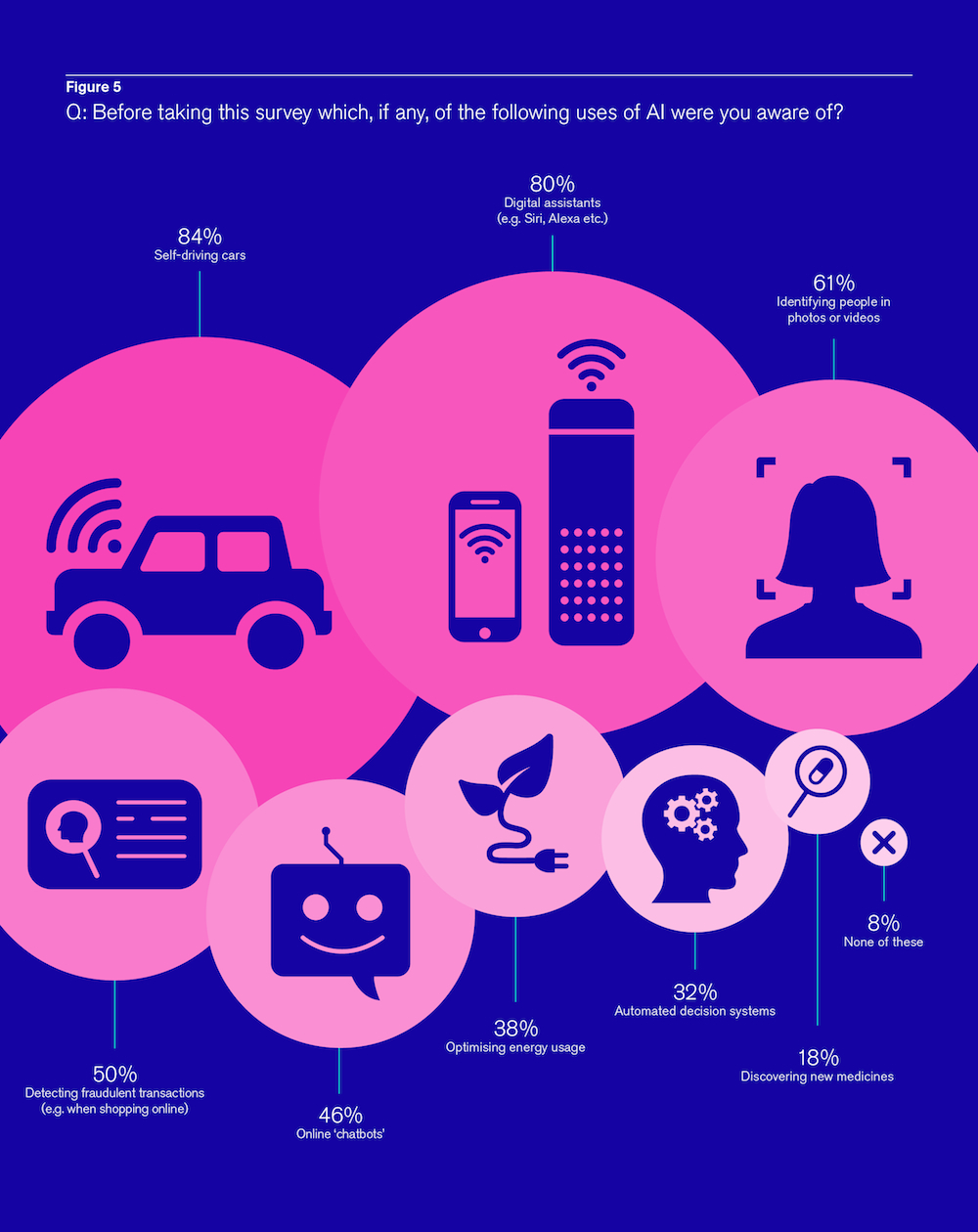
RSA public engagement with AI reportRSA report on public engagement with AI: “Our new report, launched today, argues that the public needs to be engaged early and more deeply in the use of AI if it is to be ethical. One reason why is because there is a real risk that if people feel like decisions about how technology is used are increasingly beyond their control, they may resist innovation, even if this means they could lose out on benefits.”

artificial unintelligence - broussardArtificial Unintelligence, Meredith Broussard: “In Artificial Unintelligence, Meredith Broussard argues that our collective enthusiasm for applying computer technology to every aspect of life has resulted in a tremendous amount of poorly designed systems. We are so eager to do everything digitally—hiring, driving, paying bills, even choosing romantic partners—that we have stopped demanding that our technology actually work.”

Data-driven discrimination: a new challenge for civil society: A blogpost on the LSE ‘Impact of Soc. Sci.’ blog: “Having recently published a report on automated discrimination in data-driven systems, J?drzej Niklas and Seeta Peña Gangadharan explain how algorithms discriminate, why this raises concerns for civil society organisations across Europe, and what resources and support are needed by digital rights advocates and anti-discrimination groups in order to combat this problem.”

‘AI and the future of work’ – talk by Phoebe Moore: Interesting talk transcript with links to videos. Snippet: “Human resource and management practices involving AI have introduced the use of big data to make judgements to eliminate the supposed “people problem”. However, the ethical and moral questions this raises must be addressed, where the possibilities for discrimination and labour market exclusion are real. People’s autonomy must not be forgotten.”

Government responds to report by Lords Select Committee on Artificial Intelligence: “The Select Committee on Artificial Intelligence receives the Government response to the report: AI in the UK: Ready, willing and able?, published on 16 April 2018.”

How a Pioneer of Machine Learning Became One of Its Sharpest Critics, Kevin Hartnett – The Atlantic: “Judea Pearl helped artificial intelligence gain a strong grasp on probability, but laments that it still can’t compute cause and effect.”

Two excellent reflections on ethics in relation to Google’s AI principles

Holly from the UK TV programme Red Dwarf

Two excellent pieces by Anab Jain and Lucy Suchman that I recommend you read if you’re interested in studying technology (not just AI) that reflect upon Google’s announcement of its ‘AI principles’ and its apparent commitment not to work on the US Government’s “project Maven”.

Here’s a couple of quotes that stood out, but you should definitely read both pieces:

Corporate Accountability – Lucy Suchman

The principle “Be accountable to people,” states “We will design AI systems that provide appropriate opportunities for feedback, relevant explanations, and appeal. Our AI technologies will be subject to appropriate human direction and control.” This is a key objective but how, realistically, will this promise be implemented? As worded, it implicitly acknowledges a series of complex and unsolved problems: the increasing opacity of algorithmic operations, the absence of due process for those who are adversely affected, and the increasing threat that automation will translate into autonomy, in the sense of technologies that operate in ways that matter without provision for human judgment or accountability. […]

Tackling the Ethical Challenges of Slippery Technology – Anab Jain

The overriding question for all of these principles, in the end, concerns the processes through which their meaning and adherence to them will be adjudicated. It’s here that Google’s own status as a private corporation, but one now a giant operating in the context of wider economic and political orders, needs to be brought forward from the subtext and subject to more explicit debate.

Given the networked nature of the technologies that companies like Google create, and the marketplace of growth and progress that they operate within, how can they control who will benefit and who will lose? What might be the implications of powerful companies taking an overt moral or political position? How might they comprehend the complex possibilities for applications of their products? […]

How many unintended consequences can we think of? And what happens when we do release something potentially problematic out into the world? How much funding can be put into fixing it? And what if it can’t be fixed? Do we still ship it? What happens to our business if we don’t? All of this would mean slowing down the trajectory of growth, it would mean deferring decision-making, and that does not rank high in performance metrics. It might even require moving away from the selection of The Particular Future in which the organisation is currently finding success.

Seminar> Charis Thompson: On the Posthuman in the Age of Automation and Augmentation

Still from the video for All is Love by Bjork

If you happen to be in Exeter on Friday 11th May then I urge you to attend this really interesting talk by Prof. Charis Thompson (UC Berkeley), organised by Sociology & Philosophy at Exeter. Here’s the info:

Guest speaker – Professor Charis Thompson: On the Posthuman in the Age of Automation and Augmentation

A Department of Sociology & Philosophy lecture
Date 11 May 2018
Time 14:00 to 15:15
Place IAIS Building/LT1

Charis Thompson is Chancellor’s Professor, Gender and Women’s Studies and the Center for Science, Technology, Medicine and Society, UC Berkeley, and Professor, Department of Sociology, London School of Economics. She is the author of Making Parents; The Ontological Choreography of Reproductive Technologies (MIT Press 2007), which won the Rachel Carson Prize from the Society of the Social Studies of Science, and of Good Science: The Ethical Choreography of Stem Cell Research (MIT Press 2013). Her book in progress, Getting Ahead, revisits classic questions on the relation between science and democracy in an age of populism and inequality, focusing particularly on genome editing and AI.

She served on the Nuffield Council Working Group on Genome Editing, and serves on the World Economic Forum’s Global Technology Council on Technology, Values and Policy. Thompson is a recipient of UC Berkeley’s Social Science Distinguished Teaching Award.  In 2017, she was awarded an honorary doctorate from the National Science and Technology University of Norway for work on science and society.

SPA PGR Conference Committee
Maria Dede
Aimee Middlemiss
Celia Plender
Elena Sharratt

‘Robotism’ and the agency of ‘automated’ workers

Charlie Chaplin in Modern Times

Following on from my post about the ways we might think about and research ideas of agency in relation to ‘automation’, it so happens that an accessible and interesting comment piece in the Grauniad by Brett Frischmann and Evan Selinger was published last week (not being on Twitter means I miss more of these sorts of things perhaps). Here’s a few of relevant lines (all links are from the original):

Most of the headlines about technology in the workplace relate to robots rendering people unemployed. But what if this threat is distracting us from another of the distorting effects of automation? To what extent are we being turned into workers that resemble robots?

…

Fears about humans becoming like machines go back longer than you might think. The sort of algorithmic management we see in the modern gig economy … has its roots in a management theory developed by Frederick Taylor in the early 20th century.

…

Technological innovations have made it increasingly easy for managers to quickly and cheaply collect, process, evaluate and act upon massive amounts of information. In our age of big data, Taylorism has spread far beyond the factory floor. The algorithmic management of the gig economy is like time cards on steroids.

…

It’s not just the intensity of the monitoring that is different. Surveillance is increasingly hidden. In Taylor’s analogue era, workers were acutely aware when they were being observed by management with stopwatches and notebooks. Today management tools are much less visible.

…

Taylorism starts from the assumption that employees are innate shirkers. While there will always be some who want to game the system and put in as little effort as possible, there are plenty who don’t. When the guiding assumption of management is that employees won’t be productive unless forced to be by constant observation, it engineers low morale and pushes people to act like resources that need to be micromanaged. Too often, we become what we’re expected to be.

Read the full comment.