Career Development Research Fellowships -Oxford

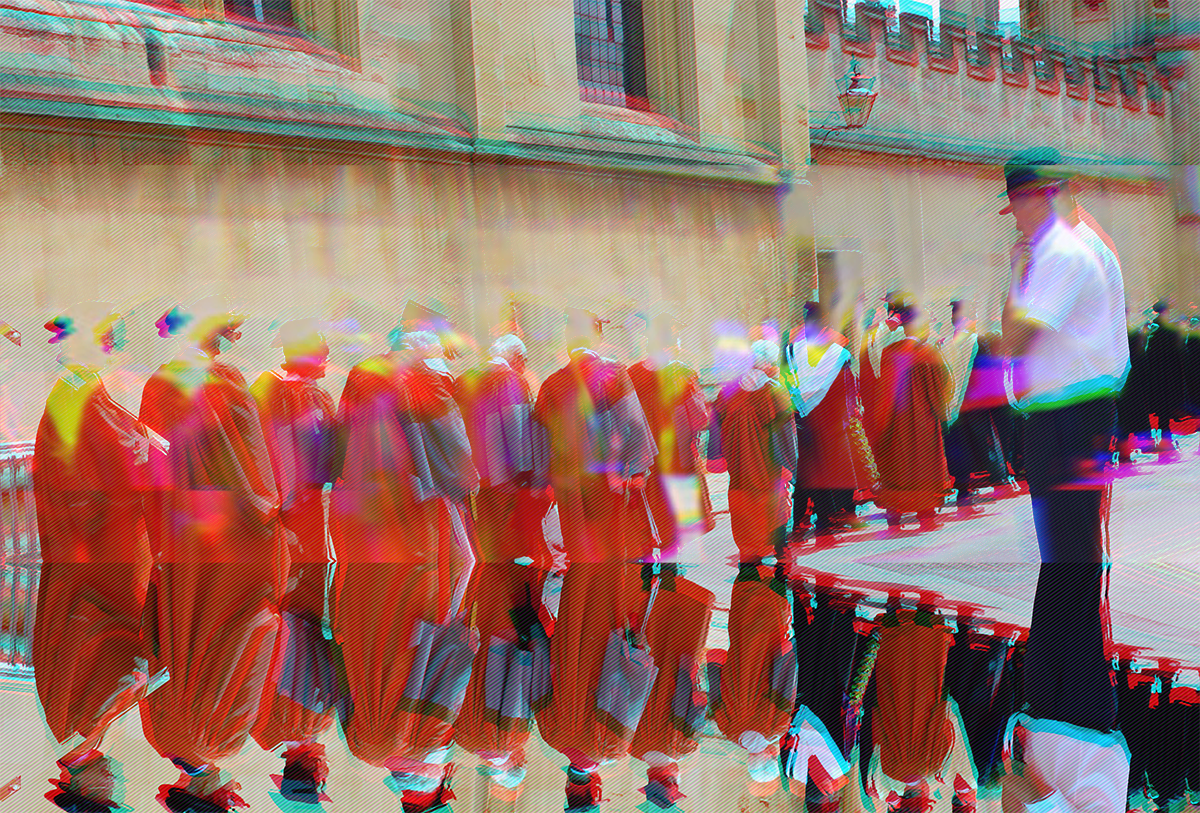
A glitched image of an academic procession outside an Oxford college

Gillian Rose recently shared these Career Development Research Fellowships on BlueSky and I thought I would share them here too. One of the specialisms encouraged in Human Geography.

Career Development Research Fellowships for full-time research offered by St John’s College to early career researchers who have recently completed or are close to completion of a doctorate (and will have submitted their thesis no later than three months before their start date of this post), or who have recently been awarded a doctorate. They provide an unrivalled opportunity to establish a research profile as a member of a collegiate community.

More details here.

Three Postdoctoral Research Positions

 Karin Schwiter at the University of Zurich recently shared three full-time postdoc or senior researcher positions in labour geography at the University of Zurich (for 4 years). They say they are: “looking for people excited by the possibility of doing a theoretically grounded and societally relevant research project that engages with underemployed workers in the UK, the Netherlands and Switzerland”. The job advert can be found here:

https://jobs.uzh.ch/job-vacancies/postdoc-or-senior-researcher-in-labour-geography/dca045f2-71df-47bc-9769-015b1986be53

Four-Year Postdoc Position on Contemporary US/Anglophone Science Fictions at the University of Basel 

A glitched image of lots of books all lying open and facing up towards the camera

This really interesting job opportunity appeared in my BlueSky feed today, so I am posting it in case it is of interest to anyone who reads this…

The full job outline is on the University of Basel website here.

Starting Date: 1.10.2025

Funded by the Claudine und Hans-Heiner Zaeslin-Bustany Foundation, the four-year project “Anglo Genres for Atlantic Futures: Contemporary Eco-Fictions, Campus Novels, and Science Fictions” is directed by Prof. Philipp Schweighauser. It encompasses two PhD subprojects working on eco-fictions and campus novels, respectively, and the postdoc subproject on contemporary US (and possibly other Anglophone) science fictions advertised here. The position will be filled by October 1, 2025.

Your position

The project as a whole is dedicated to exploring contemporary works in three popular literary genres that have emerged in the Anglophone world and deal with central social issues of today’s knowledge societies on both sides of the Atlantic: eco-fictions, campus novels and science fictions. Their themes include climate change, species extinction, and environmental pollution (eco-fictions); anti-intellectualism and the role of universities in knowledge societies (campus novels); and artificial intelligence, genetic engineering and (digital) surveillance (science fictions). Since these are popular texts that deal with urgent questions of American and European societies in the 21st century, the genuinely literary question of the social function of contemporary literature arises. Three of the most convincing answers to the question of the cognitive and social functions of fiction come from Victor Shklovsky (enstrangement/defamiliarization), Wolfgang Iser (literary anthropology), and Jane Tompkins (cultural work). Science fiction studies is a growing field that has generated stimulating intellectual interventions by thinkers such as Darko Suvin (cognitive estrangement), Fredric Jameson (the utopian vocation), Tom Moylan (utopia, dystopia, anti-utopia), and others. In this line, the subproject on science fictions will offer perspectives on the social implications of both fiction and technological innovation.

Your profile

Applicants have a PhD in English, American Literature, or related fields, and a number of publications. Please submit a proposal for your own four-year research subproject on contemporary US/Anglophone science fiction. These may be restricted to literature, but may also involve other media such as movies and TV series. Other theoretical frameworks than those mentioned above and other thematic foci of the fictions under consideration are, of course, welcome. The successful applicant will be expected to either write their second book or eight essays in peer-reviewed journals or essay collections-or a combination of the two.

Lectureship at Southampton

Just saw this, shared by Brian Hracs, looks like a permanent position(?) and if so a good opportunity [update: this is fixed term]:

The School of Geography and Environmental Science is seeking to appoint a Lecturer in Human Geography. This appointment will provide cover for a research fellowship and will strengthen the Population, Health and Wellbeing (PHeW) and/or Economy, Society and Governance (ESG) research group(s). We particularly welcome applications from scholars active in one or both of the following areas:

  • Qualitative social geography, including use of ethnography, interviews, discourse analysis. Substantive interests relevant to this post include geographies of immigration; class, welfare and austerity; gender and sexuality.
  • Health geography, including social inequalities and associated health outcomes, especially as they relate to food; social environments; gender and sexuality; care.

Full details here: https://jobs.soton.ac.uk/Vacancy.aspx?ref=3066625WR

Job opportunities- “AI+ fellowships” at KCL

Still from the video for All is Love by Bjork

While rest of academia is struggling there are opportunities in the areas attracting “strategic” investment. King College London are one of many universities rushing to catch up with the AI juggernaut and there are some pretty exciting job opportunities as a result, full details here:

https://www.kcl.ac.uk/jobs/role/kings-ai-academic-fellowships

King’s is delighted to announce this prestigious new Academic Fellowship scheme for 20 outstanding researchers focused on AI development and application across all disciplines, including health, bioscience, physical sciences, social sciences, security, humanities, business and law.

This is for five years, with minimal teaching, leading to a full position. For those able to make a case around AI research this is a pretty good deal (for the U.K.).

I hope that people conducting research in the social sciences are considered and that there are researchers not only jumping on the bandwagon but genuinely getting to grips with the messy realities of AI who go for these positions. Goodness knows we need that kind of research.

Funded PhD: British Telegraphic work and spaces

A glitched image of a telegraph worker up a telegraph pole

My colleague Richard Noakes, Anne Archer and James Elder at BT Archives and I have a funded PhD position that will commence in September. Please see all of the relevant information below. Please also circulate widely and feel free to get in touch.

http://www.exeter.ac.uk/pg-research/money/award/?id=3894

The duration of this studentship is 45 months (or part time equivalent) plus additional 3 months for professional development opportunities

Closing Date for applications is Monday 1st June 2020.

Applications are invited for a PhD studentship on British telegraphic work and spaces, 1846-1950 at the University of Exeter in partnership with BT Archives (London).  The studentship is awarded by the Science Museums and Archives Consortium under the AHRC’s Collaborative Doctoral Partnership scheme.  The project will commence in September 2020 and will be supervised by Prof Richard Noakes and Dr Sam Kinsley at Exeter and Ms Anne Archer and Mr James Elder at BT Archives, with further support from the Science Museum.

This project is a revisionist study of the largely forgotten operators of Britain’s inland telegraph network from the foundation of the first private telegraph companies in 1846, through nationalisation of the service in 1870, to 1950 when the service was in sharp decline owing to competition from telephony.  It plugs a considerable gap in the historiography of British telecommunications – the need for a systematic and detailed understanding of telegraphic work and the spaces within which it was pursued. The project will yield new insights into such key developments as the entry of women into telegraphy and the foundation of telegraphic workers’ unions.  The project involves the study of a wealth of largely unexplored primary source material, the bulk of which is held in BT Archives.  The systematic study of these materials will enable the CDA student to make a highly original contribution to historical scholarship and to help BT Archives in several important ways, including significantly enhancing the detail in its catalogue, producing website content and curating physical exhibitions.  The CDA’s research will also help enhance the Science Museum’s catalogue of telegraphic instruments.

A preliminary survey of BT Archives catalogue reveals an immense amount of material that can support this research.  It holds complete runs of periodicals dedicated to telegraphy and a wealth of unpublished documents relating to such issues as station organisation, employee recruitment, training, health and working conditions, and the experiences of female and male telegraphists. It is possible that the project will also uncover materials revealing the experiences of BAME and other under-represented telegraphists. The richness of the archival material that the student will be exploring means that there is much flexibility within the project for them to build on their own intellectual strengths and follow their own interests.

In addition to the 36 months spent on research, the CDA student will also spend a minimum of 3-6 months on professional development opportunities at BT Archives. How and when this time is used will depend on the student’s interests and goals and this will be agreed with them early in the project.  The time will be used to develop the student’s professional archiving and cataloguing skills.

Further information about the funding scheme and the institutions involved in this project can be found at the following links:

AHRC Collaborative Doctoral Partnership Scheme
https://www.ahrc-cdp.org/

BT Archives
https://www.btplc.com/thegroup/btshistory/btgrouparchives/

Postgraduate Research at the University of Exeter
https://www.exeter.ac.uk/pg-research/

Science Museum Group Collaborative Doctoral Awards
https://www.sciencemuseumgroup.org.uk/our-work/research-public-history/collaborative-doctoral-awards/

UKRI research training
https:/www.ukri.org/skills/funding-for-research-training

For more information about the project and informal enquiries, please contact the primary supervisor, Professor Richard Noakes. r.j.noakes@exeter.ac.uk

UK/EU tuition fees and an annual maintenance allowance at current Research Council rate of £15,285 per year.  Award holders will also receive a Collaborative Doctoral Partnership maintenance of £600 per year and a partial London weighting of £1000 per year.  The partner institution, BT Archvies, will also provide the award holder with up to £1000 per year to support travel and other research expenses.

AI Now’s Data Genesis programme – job opportunity

Facial tracking system, showing gaze direction, emotion scores and demographic profiling

The excellent AI Now institute have announced a fantastic new project titled ‘Data Genesis’ – I’ve copied some details below. Importantly – there are jobs, so – if you think you might fit the bill then apply!

 AI Now Institute has been developing new approaches to study and understand the role of training data in the machine learning field. Key research questions include: What type of information is used as training data? Who generates and collects it and for what purpose? What segments of society does it reflect? Who and what does it exclude? And how does that affect the functioning of AI systems themselves?

The Data Genesis program’s goal is to answer and demystify these questions through three core components:

  • Archiving and analyzing the origin and construction of key datasets that serves as foundations for today’s AI systems;
  • Producing visualizations, maps, and other designs to help crystallize and contextualize what this data is and what it means to communities, practitioners, companies, and policymakers; and
  • Convening experts from across disciplines to help build a field around this topic.

The rapid proliferation of AI into various social and political contexts demands a thorough understanding of the data that these systems are trained on, including the biases and flaws this data may encode. Our Data Genesis program will investigate the complex foundation on which AI is built and will call into question the perception of AI as a magical force that is superior to human judgement.

Check out the jobs associated with the project here.

Lectureship at Exeter geography – political/urban geographies and/or mobilities

A glitched image of a typewriter

People who read this blog may be interested to know that Exeter geography is looking for a new permanent lecturer in human geography, with a particular interest in applications from people that work in the areas of mobilities, political geographies or urban geographies.

Please find the advert here, the deadline for applications in the 16th July with interviews apparently expected in late July.

I am sharing this advert but I am not really the contact for this post, so if you are interested please get in touch with either John Wylie or Henry Buller.

‘Work Notes’ – an occasional academic journal

Pocket Remembrancer 1865

I’ve decided to do something slightly different from the research topic focused blogging I ordinarily do. I have occasionally written posts about ‘the job’, but inspired by reading Les Back’s Academic Diary this summer and with a slightly more keen sense of the passage of time I’ve decided to create a sort of sub-blog called ‘Work Notes’ that focuses on observations about working in academia. This is not an attempt to generalise but rather to reflect upon my own experiences. Likewise, this is not for self-promotion or whatever. You can find the posts on the Work Notes page. They won’t, for the moment, appear in this blog feed – they will remain separate.

Here’s what I wrote about my motivations in the initial post:

I have been reading Les Back’s Academic Diary and it provides an impetus for me to mark this passing of time. This will be my own, more modest, occasional academic journal – (I hope) not for pretentious reasons, for self-promotion and so on. Rather my motivation is because I think writing (for me) is like a muscle and it needs to be exercised. Just as my physical attempts at exercise are poor and I am trying to address that, I also feel the need to create a habit of writing again. I sincerely hope I can both stick to this and get better at doing it. It is a form of learning-by-doing. Ultimately, I want to write this. I want to because I love my job and academia, in spite of it’s (or ‘our’) weirdnesses.

Steal my sunshine – 15th August

Job> Research Fellow, Centre for Postdigital Cultures

A statue of three men hammering

Via Gary Hall. Looks like a good opportunity for someone…

Research Fellow, Centre for Postdigital Cultures

Centre for Postdigital Cultures (CPC) is a new Faculty Research Centre at Coventry University. We are looking to recruit a developer with knowledge of new technologies such as Xtended Reality and those associated with open access publishing. Our Research Fellow/developer will be equally happy with building platforms as they are with contributing to funding bids and academic papers. The person we employ will be involved in all technical aspects of the Research Centre from uploading website content to creating virtual reality scenarios and will have the people skills to work with those at all levels of technical understanding.

You will be qualified in object oriented programming languages such as c#, c++, Java, Java scripts and swift with proven experience of development in modern web development languages like PHP and HTML5. Plus you will possess some experience in 2D/3D modelling using software such as 3DS max and Photoshop and Maya for digital asset creation and Unity 3D or Unreal game engines for developing game-based and immersive experiences.

This is the chance for you to join the CPC team in the early stages of growth and to play a significant role in the development of impactful research activity within the emerging field of postdigital cultures. Led by Professor Gary Hall, the Centre explores how innovations in postdigital cultures can enable 21st century society respond to the challenges it faces at a global, national and local level.

  • how we receive, consume and process information
  • how we learn, work, and travel
  • how we engage and regenerate our communities and cities

What Do We Mean By Postdigital Cultures?

“The digital” can no longer be understood as a separate domain of media and culture. If we actually examine the digital – rather than taking it for granted we already know what it means – we see that today digital information processing is present in every aspect of our lives. This includes our global communication, entertainment, education, energy, banking, health, transport, manufacturing, food, and water-supply systems. Attention therefore needs to turn from “the digital”, to the various overlapping processes and infrastructures that shape and organise the digital, and that the digital helps to shape and organise in turn.

The CPC investigates such enmeshed digital models of culture, society, and the creative economy for the 21st century “post digital” world.

Research Areas covered by the centre include:

  • Post-capitalist Economies
  • Post-humanities
  • Affirmative Disruption and Open Media
  • Immersive and Playful Cultures, Creative Archiving and International Heritage
  • Digital Arts and Humanities
  • The 21st Century University and Art School

Members of the CPC include Janneke Adema, Adrienne Evans, Valeria Graziano, Kaja Marczewska, Marcel Mars and Miriam de Rosa.

The role of the Research Fellow Developer is to plan, develop and manage collaborative and individual research projects, using their specialist technical skills.

This will include implementing new technology platforms and applications integral to the research projects of the CPC (for example, those associated with open access publishing and immersive XR technology) which address issues at an international scale using research as a driving force for global change.  It is also to develop ideas for generating income and to seek funding opportunities for routes to disseminate research findings that inform teaching and build the reputation of the University whilst advancing knowledge in the field.

The Job Description and Person Specification is available here.