
Andy Merrifield, Roses for Gramsci – Monthly Review Press, April 2025 A remarkable personal journey through the life and writings of the great …
Andy Merrifield, Roses for Gramsci – Monthly Review Press, April 2025
How tech companies (still) hide outsourcing
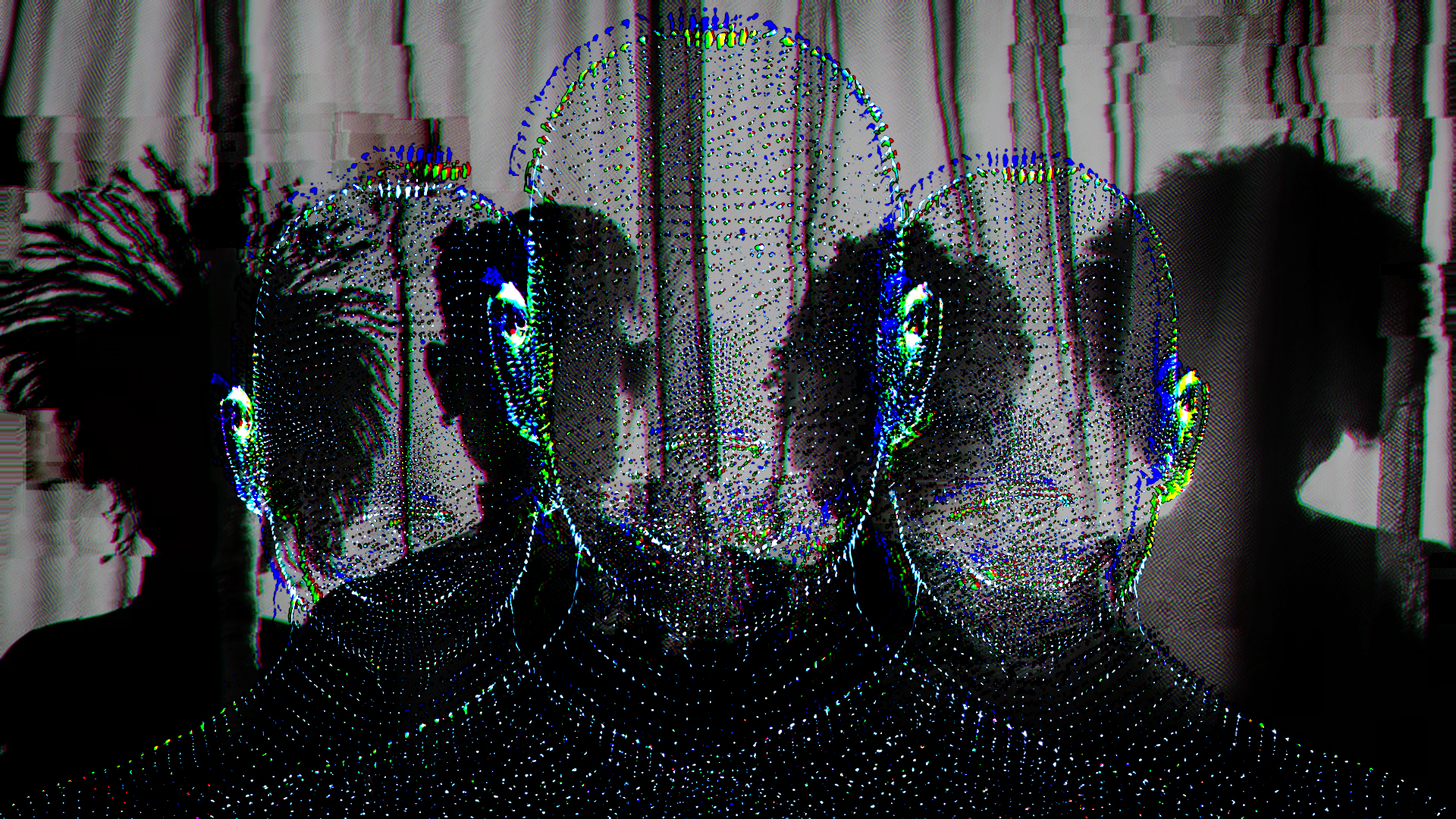
On the news site Rest of the World, there is a really interesting piece by Stephanie Wangari and Gayathri Vaidyanathan concerning research conducted by the African Content Moderators Union (ACMU) and Switzerland-based nonprofit, Personaldata.io that details the ways in which African workers are indirectly employed in the tech sector, doing content moderation, customer service, and data annotation for AI models, among other jobs.
A new dataset, visualized as maps, reveals the extent to which African workers are indirectly employed in the tech sector, doing content moderation, customer service, and data annotation for AI models, among other jobs.
READ THE WHOLE ARTCLE
Yu-Shan Tseng on Liquid democracy, rethinking democracy through its fluidity

By Yu-Shan Tseng, University of Southampton Democracy is one of those ‘big buzz words’ that can trigger different reactions and theoretical …
Liquid democracy: rethinking democracy through its fluidity
Over on Geography Directions Yu-Shan Tseng discusses her new book Liquid Democracy. Looking forward to reading it.
Repost> CFP – Speculative (misad)ventures: Discussing political implications of speculative and experimental approaches
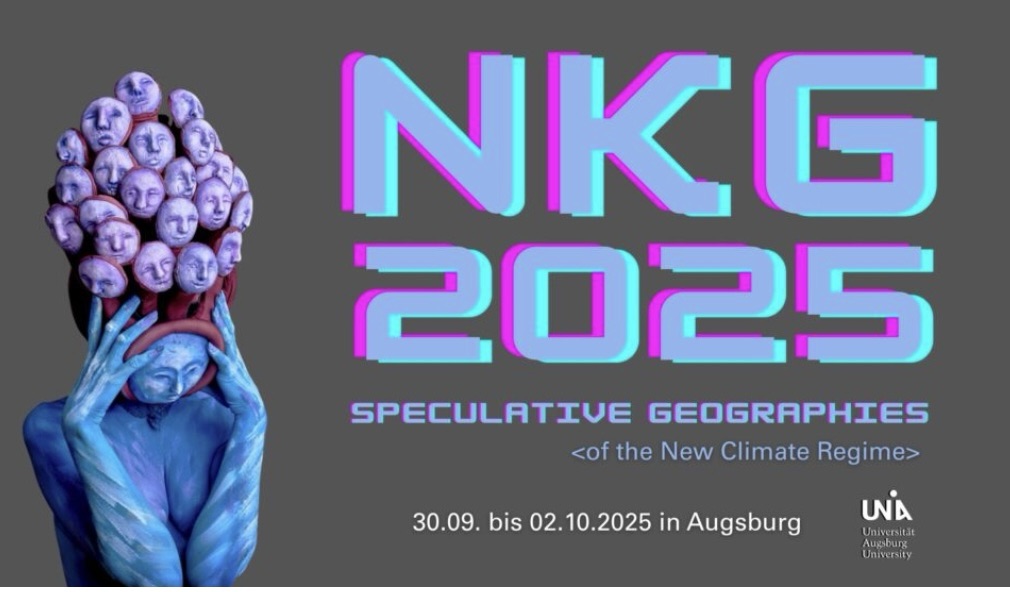
NKG 2025 Speculative Geographies of the New Climate Regime Augsburg, Germany, 30 September – 2 October 2025 Session organisers: Juliane Schumacher, …
CFP Speculative (misad)ventures: Discussing political implications of speculative and experimental approaches
From Angela Last.
Finally letting go of Twitter

This is by no means a ‘hot’ take, if anything it is a moderately cool one. I finally deleted my Twitter/X accounts. I had several. One for me as an academic, one for a bot I created and one for a module I teach on Digital Geographies.
Loads of people have written about leaving X/Twitter, like journalists and organisations. Many have discussed moving to BlueSky, another very similar social network, linked for a time with one of the creators of Twitter – which in itself is not without issues. Others use Mastodon, but I haven’t found enough people to connect with on there.
I have been using BlueSky a bit. I have a Mastodon account and look occasionally. I also use LinkedIn a bit, as many academics seem to have shifted in that direction. However, with the latter it all feels a bit too much like a stream of announcements of other people being more successful, not that I’m not pleased for them, but its not always good for your own wellbeing. Also, there seems to be a shift to a sort of broadcast mentality, not sure how helpful it is though… This blog auto-posts to those three platforms as well, so maybe I am perpetuating that.
There was a period between around 2010 and 2016(ish) when I took a great deal of comfort and value from the networks I was involved in on Twitter. I was a postdoc between 2010-2013 outside of geography and I made a sort of academic ‘home’ for myself online with colleagues across a number of disciplines. When I joined my current department in 2013, I was part of a team that studied the uses of Twitter in the performance of controversy, in which we detailed some of the forms of community and network –making practices in which I had myself variously engaged. We argued (on p. 117), and I think this still holds:
These mediated communities clearly generate publics in terms of both who and what is being shared or passed on. We argue it is crucial to understand that digital media platforms themselves are performative, and participate in the shaping of a public. Furthermore, we argue that this epistemically situates issue ‘publicisation’ research differently, in novel and perhaps difficult, contexts. Rather than debate, or presuppose, the ontological character of ‘digital’ or ‘online’ debates, we instead attend to the ‘productive confusions’ of mediation.
We find ourselves in all sorts of different contexts, all sorts different ‘publics’, with and through digital platforms and have to puzzle out how to make sense of them. We collectively construct the norms as we go (as Nancy Baym has discussed), and for a time that seemed to work on Twitter, but contexts shift and can (and did!) radically change. The ‘home’ online that many, I think, felt and the sort of ‘public square’ that Twitter may or may not have performed (at least for journalists in the global North) has now gone. It wasn’t all great though. One of the reasons I created GeoCritBot was my frustration with people churning out announcements of papers and projects following what I perceived to be the currently trendy ideas, I was trying to satirise the ‘hot take’ almost identikit approach to quick scholarship. I am really not sure that it worked but it still exists, mostly for posterity.
Sometime it can be a mistake to dwell on the past, but I think it is also worthwhile remembering things that worked. For a brief period I learned from and connected with many others I wouldn’t have otherwise via Twitter and I am thankful for that. I have been lucky enough to be able to re-connect with people in-person at conferences and academic events but that costs money. In these uncertain times, I know that many of us just don’t get those opportunities. So the possibilites for connecting online become a bit more urgent and yet at the same time, in the current geopolitical climate, they have become very fraught. I can imagine that many of us are stumbling along trying to find ways to connect digitally. There’s plenty of scholarship that is addressing these changes out there and I won’t try to review that here. Instead, I simply wanted to (arbitrarily) mark the moment.
So grab your things and stumble into the night
Home– LCD Soundsystem
So we can shut the door
And shut the door on terrible times
Oh
Yeah, do it right
And head again into space
So you can carry on
And carry on, and fall all over the place
CFP: Spatialising Urban Crisis, Manchester, 26-27 June 2025

Cristina Temenos posted a really interesting call for papers on BlueSky that I wanted to share. This is a copy-paste of the text of the thread.
How do we understand crisis as it unfolds through space? From housing precarity to climate shocks, cities are increasingly shaped by overlapping emergencies. But crisis is never neutral—it’s spatialised through power, exclusion, & resistance.
Urban crisis is not just about events—it’s also about long, ongoing conditions. This 2-day workshop explores how crisis becomes urbanised, and how spatial practices—from planning to everyday life—mediate, resist, or reproduce these crises.
We’re looking for critical, grounded contributions that challenge dominant narratives of crisis & foreground situated, embodied, collective responses. Themes include:
- ?? Spatial politics
- ? Climate & care
- ?? Infrastructure & exclusion
- ? Everyday vs. Eventful crisis
Send abstracts (250 words) to Cristina Temenos
?? Deadline: 22 May 2025
? Notifications by: 29 May 2025
No registration fee. Coffee & lunch provided. Travel/accommodation not covered.
This is an invitation to think with cities, not just about them. Join us to theorise crisis as spatial, situated, and collective. Please share with colleagues working on urban studies, geography, planning, crisis & care.
Lawrence Grossberg, On the Way to Theory
Lawrence Grossberg, On the Way to Theory – Duke University Press, October 2024 Thanks to Foucault News for the link. Introduction available open …
Lawrence Grossberg, On the Way to Theory – Duke University Press, October 2024
Stuart Elden links to this book which looks really interesting. Clive Barnett and I often talked about the various routes into theory, how we go about the doing of it in ordinary ways.
Lectureship at Southampton
Just saw this, shared by Brian Hracs, looks like a permanent position(?) and if so a good opportunity [update: this is fixed term]:
The School of Geography and Environmental Science is seeking to appoint a Lecturer in Human Geography. This appointment will provide cover for a research fellowship and will strengthen the Population, Health and Wellbeing (PHeW) and/or Economy, Society and Governance (ESG) research group(s). We particularly welcome applications from scholars active in one or both of the following areas:
- Qualitative social geography, including use of ethnography, interviews, discourse analysis. Substantive interests relevant to this post include geographies of immigration; class, welfare and austerity; gender and sexuality.
- Health geography, including social inequalities and associated health outcomes, especially as they relate to food; social environments; gender and sexuality; care.
Full details here: https://jobs.soton.ac.uk/Vacancy.aspx?ref=3066625WR
Job opportunities- “AI+ fellowships” at KCL

While rest of academia is struggling there are opportunities in the areas attracting “strategic” investment. King College London are one of many universities rushing to catch up with the AI juggernaut and there are some pretty exciting job opportunities as a result, full details here:
https://www.kcl.ac.uk/jobs/role/kings-ai-academic-fellowships
King’s is delighted to announce this prestigious new Academic Fellowship scheme for 20 outstanding researchers focused on AI development and application across all disciplines, including health, bioscience, physical sciences, social sciences, security, humanities, business and law.
This is for five years, with minimal teaching, leading to a full position. For those able to make a case around AI research this is a pretty good deal (for the U.K.).
I hope that people conducting research in the social sciences are considered and that there are researchers not only jumping on the bandwagon but genuinely getting to grips with the messy realities of AI who go for these positions. Goodness knows we need that kind of research.
New book from Mark Coeckelbergh and David Gunkel: Communicative AI
My new book, Communicative AI, co-authored with David J. Gunkel, is now published! We are very happy that it is already available for pre-order in …
New book: Communicative AI
Based on their prior work, I expect this book will be worth investigating. Coeckelberg and Gunkel have some really interesting takes on AI in general.