

N.B. This is a hastily written and maybe not well-thought-through post. Perhaps that’s a mistake, I don’t know, but I have realised that if I try to write at a more rigorous level I am not going to write much on this blog, so here goes…
Crunch points in the academic year bring some things into the foreground, from the background. While many of us in universities are (desperately) clinging to a sense of solidarity and ‘we’re all in this together’, that is a very fragile arrangement (if it actually exists). So here’s a few vignettes by way of example…
Many departments rely on and assume a certain number of people working on fixed-term contracts. In some, more senior academics’, minds this is a sort of ‘right of passage’ part of the career. While that may once have been true, in a time of more (perceived) abundance in universities, there are now so many people who variously eek out a piecemeal ‘career’ on fixed-term work, moving between institutions, or relying on a particular university. Many people who have just received their PhDs try to stick with the same department, stick with the familiar. In most cases that is impossible and can lead to some dashed hopes, sadly. Today, there are fewer jobs, and only ever more people applying for them. Massively over-qualified people in universities facing redundancies are applying for junior roles. The situation is deeply fraught. And yet, for those in (relatively) comfortable and ‘secure’ positions it can be all-too-easy to ignore the depth of feelings, of turmoil, this brings for those in such uncertainty. As we come near to the end of teaching for this academic year in many places (in the global North) the uncertainty of temporary contracts, of applying for jobs for next year, of not knowing if you can actually mark the dissertations of students you cajoled through the year, comes to a head. We all have our worries. We can all get lost in our own concerns. And ‘the job’ can be all encompassing for quite a few of us. I wonder whether that makes some of the already febrile atmospheres in university departments feel worse. A lack of time to be able to talk with colleagues, to understand their positions, to get a sense of what it feels like for them, I think leads to an unintended undermining of solidarity.
The ‘big conference’ for each discipline, or area of research, tends to happen at particular times of year. In human geography two of the biggest Anglophone conferences in the Global North are the American Association of Geographers annual ‘meeting’ and the RGS-IBG annual conference, which occur around Easter and the last week of August respectively. Who can afford to go, which groups you rein, associated with – whether colleagues, former PhD friends, sub-disciplinary block etc. – which session you get accepted into, whether you are working on the ‘next big thing’, all matter to your experience of a conference. Fear you are missing out, somehow, often overhangs conferences. It can be bewildering to navigate these things, especially in a relatively small discipline. It can also be a bit too easy to see yourself in competition with others in these situations, which, while it may be true on very specific occasions, is generally not a helpful way to see things (at least, I think so – in terms of mental health). All of this can also be overlaid with the feelings of precarity, discussed above, and a sense that ‘I have it worse’ when we hear about, or see on social media, the ‘successful’ people who have landed yet another big grant, are on study leave etc etc. What is rarely, or never, visible is the things those ‘successful’ people may or may not be contending with, and sacrificing, for that success. I am sure there are a few people with ‘charmed’ situations, but I don’t think the treadmill of ambition and over-achieving that is required to get to Professorship (at least in the UK) is easily navigated without some fairly major concessions in the rest of life.
The role of an academic can be privileged, in comparison to many other forms of work in society, but it is not without its own difficulties and consequences. Like many contexts of work, it can feel like a very insular world, with all sorts of wider gender- and class-based assumptions (in the UK) that are not especially visible to those unaffected. If you have to struggle with childcare, if you cannot or will not work at weekends, if you have a poorly paid partner, if you cannot travel, if you don’t have a (emotional, family, childcare, disability) support network, then you likely find it much harder than those with some, or all, of those things to actually ‘succeed’ in the terms recognised by universities as employers and by your peers. For all of the initiatives, for all of the positive gains made for equality and diversity in universities, I am inclined to think it is still the case that the model academic is a White, late-30s, early-40s and upper-middle class man who doesn’t have to think about childcare, has a bit of personal wealth, has some social capital (‘knows’ the ‘right’ people, can navigate the ‘right’ social contexts) and has the single-minded self determination to focus on ‘the job’. Of course, there are many examples of people who have overcome these difficulties, and we should reward those people, but in many ways they have succeeded despite the academic system, rather than because of it.
In more recent years there is also a clashing of socio-economic assumptions/expectations and reality. I am a fan of Malcolm Bradbury’s novels. In the opening pages of his, perhaps best known, work ‘The History Man’ he references the kinds of life academics are assumed to lead:
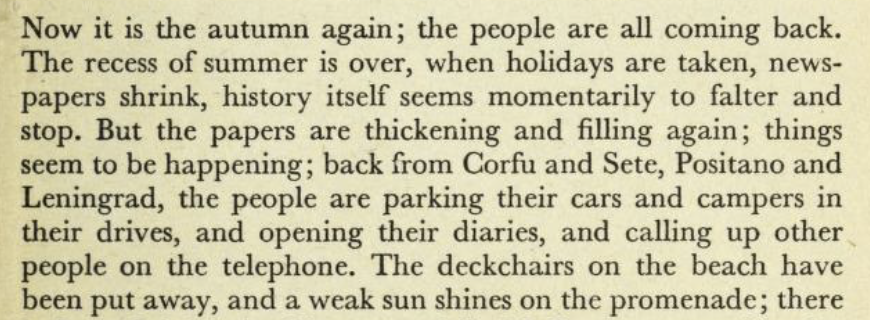
International holidays – indeed having a holiday at all, having the time to ease your way back into work after resting, having more than one car, or a camper van. This is a sort of middle class life perhaps many still assume is lived by academics. And yet, the same people on temporary contracts, discussed above, are sometimes using food banks. Amongst my colleagues who are on permanent contracts and therefore ‘better off’, at least those who are Senior Lecturers, struggle to find the money for family holidays, they are not going to Corfu or the stereotypical 1990s middle-class destination of the Dordogne in France. Academics below the professorial level, and maybe some who are professors (I confess, I don’t know), are not immune to the cost of living crisis felt so keenly by so many in society. Yet, we are all operating in a context where we cannot let on that actually, many of us just cannot afford to do most of the things people used to take for granted in a supposedly well resourced profession. I am reminded of the argument of Yurchak’s argument (adapted by Adam Curtis in Hypernormalisation) about the end of the Soviet Union (seriously though, I am not comparing universities to the USSR!) that people are so wedded to the ‘norm’ they cannot imagine an alternative. We collectively imagine academic life as the David Lodge campus novel-like comfortable middle class ideal (ideal if you’re White & male, of course) and seem to collectively struggle to imagine it differently.
Negotiating these clashing contexts, especially for those who keenly feel the precarity of temporary contracts, is exhausting. I wish I had some helpful suggestions, but I am not sure I honestly do. I feel in a pretty weird position – I am ‘secure’ in a ‘permanent’ position in a ‘good’ department within a university whose management keep telling us there will not be redundancies, yet we have colleagues on temporary contracts, we are told to reduce costs, we are ‘rationalising’ contact time, and we are told to be ambitious – to apply for prestigious funding, to do the research, to publish, publish, publish, and yet there feels like less time, fewer resources and more isolation. My partner is not an academic, they work in the public sector, which is in a much worse state, so I still see my relative privilege but the difference is far less stark than it was only two years ago.
This isn’t the most coherent post, but I wanted to try and capture something of the sense of clashing contexts that working in academia feels like, at least for me. I am curious how others see things. Differently, no doubt. Get in touch if you’d like to talk about any of this. And, regardless of its shortcomings, for those academics in the UK – please consider joining UCU, we are stronger together.