Narratives of labour as infrastructure and the automative imagination

Glitched representation of 1980s Duracell robots in a domestic setting

I have a new journal article out, as part of a theme issue in Environment and Planning D: Society & Space. This forms the first peer-reviewed publication that stems from work I began around 2016 concerning automation (this is one of the earliest posts on this blog about it, with a talk I did at the SW Futures meet-up group). This took an impetus from the work of Bernard Stiegler around automation and my initial thinking with and through his ideas was influenced by many conversations around that time with my friend and former colleague Patrick Crogan, who has also written on automation (more than me!), e.g. here.

What the does ‘automative’ mean? You might be asking yourself. Well, I coined a neologism because I couldn’t find a word that fit what I wanted to say. In the paper I put it this way:

The ‘automative imagination’, in the context of this article, is a heuristic that enables two things: (i) a critique of the spatial politics scale pregnant within debates around the opportunities and threats brought by automation; (ii) an interrogation of the normative character of different habits of considering and discussing automation. I am not using the neologism ‘automative’ to assert any kind of authority but rather as a pragmatic tool. Other words do not quite fit—to speak of an ‘automated’ or ‘automatic’ imagination does not describe the characteristics of automation but suggests the imagining is itself automated, which is not the argument I am seeking to make. My aim is not to validate/invalidate particular narratives of automation. A ‘technologically determinist’ reading of the automative imagination might see what is imagined as goals towards which companies are specifically working, largely driven by economic imperative.

In the final sentence of the article I argue:

Using the automative imagination as a lens for inquiry asks for what kinds of ‘problem’ automation is situated as a ‘solution’, by whom and how they do so; and thereby how they are or may be contested.

For lots of personal reasons, this work has taken a long time to make it into print. Even so, I think the argument I make in the paper is at least interesting and has something to contribute in the current maelstrom of debate/s around automation. You can read the article for free, it is open access, courtesy of ESRC/UKRI funding. Here’s the abstract:

This article argues that the ways automation is imagined illustrate a wider problematisation of labour. The concept of an ‘automative imagination’ is proposed to articulate these different habits of considering and discussing automation. In these forms of imagination, I argue labour is discursively reconfigured as a logistical infrastructure. The concrete value of labour, the labouring body and the place of work as such are abstracted into an opaque logistical infrastructure in the narratives of an automative imagination. The impetus for this analysis comes from press releases and reports concerning automation and COVID-19 focused on the UK economy, creating a vanguard of abstracting ‘labour’ into infrastructure. The work of automation can usefully be understood as a relation, both in its implementation and in its imagining—a relation that geographers can, and should, interrogate. The automative imagination powerfully articulates the normative force of the performative abstraction and devaluation of work.

I hope you find it of interest.

CFP AAG 2020 – ‘New geographies of automation?’

Still from the video for All is Love by Bjork

I’d welcome submissions, questions or any form of interest for the proposed session I outline below.

My aim with this session is to continue a conversation that has arisen in geography and beyond about as wide a range of tropes about automation as possible. Papers needn’t be empirical per se or about actually existing automation, they could equally be about the rationales, promises or visions for automation. Likewise, automation has been about for a while, so historical geographies of automation, in agriculture for example, or policies for automation that have been tried and failed would be also welcome.

There are all sorts of ways that ‘automation’ has been packaged in other rubrics, such as ‘smart’ things, cities and so on, or perhaps become a ‘fig leaf’ or ‘red herring’ to cover for unscrupulous activities, such as iniquitous labour practices.

I guess what I’m driving at is – I welcome any and all ideas relevant to the broad theme!

CFP: New Geographies of Automation?

Denver, USA, 6-10 April 2020

Organiser: Sam Kinsley (Exeter).

Abstract deadline: 16th October 2019.

This session invites papers that respond to the variously promoted or forewarned explosion of automation and the apparent transformations of culture, economy, labour and workplace we are told will ensue. Papers are sought from any and all branches of geography to investigate what contemporary geographies of automation may or should look like, how we are/could/should be doing them and to perhaps question the grandiose rhetoric of alarmism/boosterism of current debates.

Automation has lately gained a renewed focus of hyperbolic commentary in print and online. We are warned by some of the ‘rise of the robots’ (Ford 2015) sweeping away whole sectors of employment or by others exhorted to strive towards ‘fully automated luxury communism’ (Srnicek & Williams 2015). Beyond the hyperbole it is possible to trace longer lineages of geographies of automation. Studies of the industrialisation of agriculture (Goodman & Watts 1997); Fordist/post-Fordist systems of production (Harvey 1989); shifts to globalisation (Dicken 1986) and (some) post-industrial societies (Clement & Myles 1994) stand testament to the range of work that has addressed the theme of automation in geography. Indeed, in the last decade geographers have begun to draw out specific geographical contributions to debates surrounding ‘digital’ automation. In similar if somewhat divergent ways, geographers have paid a closer attention to: the apparent automation of labour and workplaces (Bissell & Del Casino 2017); encounters with apparently autonomous ‘bots’ (Cockayne et al. 2017); the interrogation of automation in governance and surveillance across a range of scales (Amoore 2013, Kitchin & Dodge 2011); the integration of AI techniques into spatial analysis (Openshaw & Openshaw 1997); and the processing of ‘big’ data in order to discern things about, or control, people (Leszczynski 2015). 

The invitation of this session is to submit papers that consider contemporary discussions, movements and propositions of automation from a geographical perspective (in the broadest sense). 

Examples of topics might include (but are certainly not limited to):

  • AI, machine learning and cognitive work
  • Boosterism and tales of automation
  • Gender, race and A.I
  • Labour and work
  • Autonomy, agency and law-making
  • Robotics and the everyday
  • Automation and workplace governance
  • Techno-bodily relations
  • Mobilities and materialities
  • Governance and surveillance

I intend to organize at least one paper session, depending on quantity and quality of submissions.  If you would like to propose a paper presentation, please email an abstract of 250 words to me by 16th October.

If you would also like to participate in a special issue on this topic I welcome expressions of interest.

‘Post-work’ and shifting from “the” future of work to futures of work

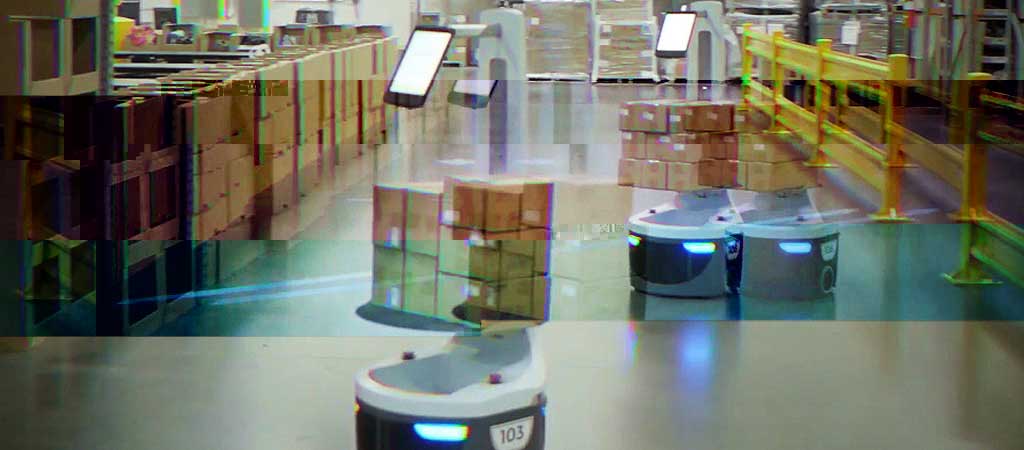
Warehouse robots moving packages

As part of my project on automation I’ve begun to engage with the wealth of literature about ‘the future of work’ and in particular the sorts of imaginings of a ‘post-work’ society that have emerged in popular discourse, not least in relation to idea(l)s of using automation to liberate workers. Many will be familiar with the sorts of arguments presented in books like “Fully automated luxury communism“, “Inventing the Future” and “PostCapitalism“, often receiving coverage in the left(ish)-leaning press (e.g.). These are often fairly muscular, advocations of using the machinery of capitalism itself to bring about its own demise through the liberation of the workforce.

One of the most interesting and helpful resources I have encountered in making sense of these sorts of arguments and where there may be opportunities to engage is the Futures of Work blog/journal led by Katie Bales, Harry Pitts and Huw Thomas and published by University of Bristol Press. I highly recommend browsing through but in particular the video and the articles linked below I think are really interesting and helpful ways of engaging with these ideas without getting lost (or, in my case, overly cross!)