Here’s an interesting interactive 360Ëš video from the New York Times, which shows something of work in a contemporary Amazon warehouse:
Working with robots at Amazon


Spatial Machinations
Here’s an interesting interactive 360Ëš video from the New York Times, which shows something of work in a contemporary Amazon warehouse:

In another of a series of what feels dangerously like back-to-the-1990s moments as some geographers attempt to wrangle ‘digital geographies’ as a brand, which I find problematic, I saw the below CFP for the AAG.
I am sorry if it seems like I’m picking on this one CFP, I have no doubt that it was written with the best of intentions and if I were able to attend the conference I would apply to speak and attend it. I hope others will too. In terms of this post it’s simply the latest in a line of conference sessions that I think unfortunately seem to miss, or even elide, long-standing debates in geography about mediation.
Maybe my reaction is in part because I cannot attend (I’m only human, I’d quite like to go to New Orleans!), but it is also in part because I am honestly shocked at the inability for debates within what is after all a fairly small discipline to move forward in terms of thinking about ‘space’ and mediation. This stands out because it follows from ‘digital’ sessions at the AAG last year that made similar sorts of omissions.
In the late 1990s a whole host of people theorised place/space in relation to what we’re now calling ‘the digital’. Quite a few were geographers. There exists a significant and, sometimes, sophisticated literature that lays out these debates, ranging from landmark journal articles to edited books and monographs that all offer different views on how to understand mediation spatially (some of this work features in a bibliography I made ages ago).
Ironically, perhaps, all of this largely accessible ‘online’, you only need search for relevant key terms, follow citation chains using repositories – much of it is there, many of the authors are accessible ‘digitally’ too. And yet, periodically, we see what is in effect the same call for papers asking similar questions: is there a ‘physical’/’digital’ binary [no], what might it do, how do we research the ‘digital’, ‘virtual’ etc. etc.
We, all kinds of geographers, are not only now beginning to look at digital geographies, it’s been going on for some time and it would be great if that were acknowledged in the way that Prof. Dorothea Kleine did with rare clarity in her introduction to the RGS Digital Geographies Working Group symposium earlier this year (skip to 03:12 in this video).
So, I really hope that some of those authors of books like “Virtual Geographies“, to take just one example (there are loads more – I’m not seeking to be canonical!), might consider re-engaging with these discussions to lend some of perspective that they have helped accrue over the last 20+ years and speak at, or at least attend, sessions like this.
I hope that others will consider speaking in this session, to engage productively and to open out debate, rather than attempt to limit it in a kind of clique-y brand.
Theorizing Place and Space in Digital Geography: The Human Geography of the Digital Realm
In 1994 Doreen Massey released Space, Place and Gender, bringing together in a single volume her thoughts on many of the key discussions in geography in the 1980s and early 1990s. Of note was the chapter, A global sense of place, and the discussion on what constitutes a place. Massey argues that places, just like people, have multiple identities, and that multiple identities can be placed on the same space, creating multiple places inside space. Places can be created by different people and communities, and it is through social practice, particularly social interaction, that place is made. Throughout this book, Massey also argues that places are processional, they are not frozen moments, and that they are not clearly defined through borders. As more and more human exchanges in the ‘physical realm’ move to, or at least involve in some way, the ‘digital realm’, how should we understand the sites of the social that happen to be in the digital? What does a human geography, place orientated understanding of the digital sites of social interaction tell us about geography? Both that in the digital and physical world.
Massey also notes that ‘communities can exist without being in the same place – from networks of friends with like interests, to major religious, ethnic or political communities’. The ever-evolving mobile technologies, the widening infrastructures that support them and the increasing access to smartphones, thanks in part to new smart phone makers in China releasing affordable yet powerful smartphones around the world, has made access to the digital realm, both fixed in place (through computers) and, as well as more often, through mobile technologies a possibility for an increasing number of people worldwide. How do impoverished or excluded groups use smart technologies to (re)produce place or a sense of place in ways that include links to the digital realm? From rural farming communities to refugees fleeing Syria and many more groups, in what ways does the digital realm afford spatial and place making opportunities to those lacking in place or spatial security?
How are we to understand the digital geographies of platforms and the spaces that they give us access to? Do platforms themselves even have geographies? Recently geographers such as Mark Graham have begun a mapping of the dark net, but how should we understand the geographies of other digital spaces, from instant messaging platforms to social media or video streaming websites? What is visible and what is obscured? And what can we learn about traditional topics in social science, such as power and inequality, when we begin to look at digital geographies?
In this paper session for 5 papers we are looking for papers exploring:
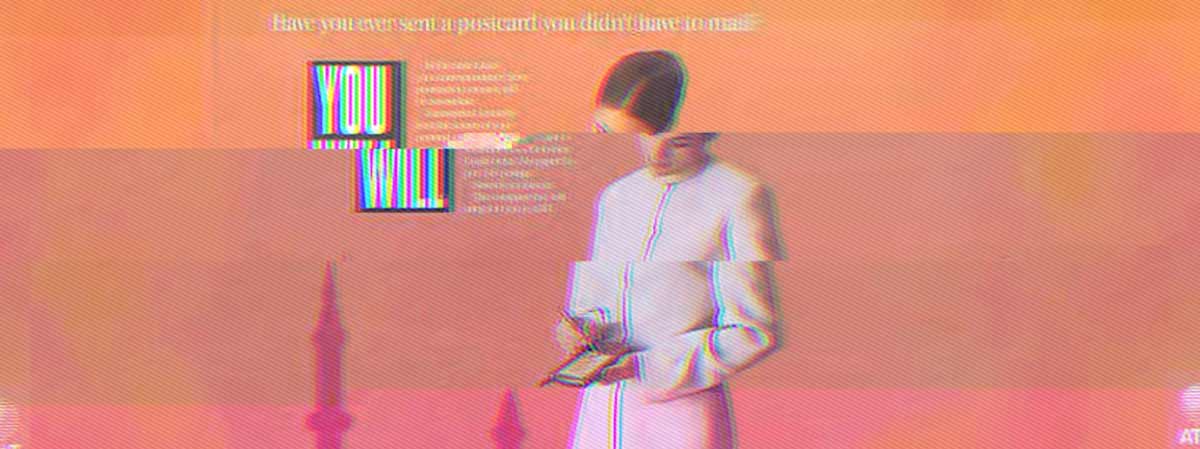
Via Karen Gregory.
A free event on 2nd November at Kingston University
Travel bursaries are available for PhD students
This one day event aims to bring together those interested in or currently conducting empirical research on the ways in which the digital spaces such as social media, connectivity-enabled smartphone applications, and internet-based platforms are being used to sustain or transform individuals’ subjectivities and material circumstances. The interface of the analogue and the digital is receiving keen interest through such concepts as the collaborative, sharing and gig economies, but we hope to bring together those who are interested in exploring new avenues for theorising novelty and transformation, sustenance and reproduction in the ways that organising occurs. In this endeavour, we conceptualise the development of online spaces as the production of a contested territory; a frontier of opportunity for the reinvention of the world. A territory that is nonetheless made fraught in its encounter with the power relations of the world that already exist, and the limitations of its construction. The digital represents, for us, a territory to which individuals and groups seek meaning, value, and community for not only acceptance of their selves and ideas but for economic prosperity and survival. In so seeking, we see digital landowners emerge, insistence on changing rentier requirements, and a need for the constant (re)production of value.
The event will be structured around three symposia on the themes of: Digital Platforms, Novelty, and Knowledge. Pairs of discussants (to be announced) will speak on their given topic as a provocation to discussion with the participants of the event. There will also be further opportunities for informal discussion and networking. Lunch and refreshments will be provided and the event should last from 10:00 until 16:00.
We call for those interested in engaging with this notion of the digital frontier and offer a space in which to have conversations about how this, and other ways of conceptualising the interface of the digital and analogue, might develop. This workshop will foster interests in areas such as innovation, materiality and the digital, new areas of labour regulation, the reproduction of power relations and the development of new career pathways. Although big data has been an area of much excitement in the arena of social research, recent reflections in the media have highlighted the limitations of this type of analysis, namely, the correlation of activities and trends, suggesting instead a turn towards richer forms of analysis that theorise motivations or forces. We invite to this workshop those who are collecting empirical data through methods such as digital ethnography, interviews with individuals about their digitally mediated activities or qualitative textual and content analysis on activities and lifestyles that traverse the digital and analog spheres; or who can offer theoretical tools to develop new understandings of such data. We are particularly keen to enable and to encourage interdisciplinary participation and collaborations.
The event has two goals:
We have 30 spaces available for this event and there are a limited number of travel bursaries available for PhD students to attend – please email d.brewis@kingston.ac.uk with your request. These will be allocated on a first-come first-served basis. If you find yourself no longer available to attend please contact the organisers so we can open your space to another participant.
We hope to welcome you to Kingston on the 2nd November. Please find further details on practicalities such as transportation below.
Dr Deborah N Brewis, Kingston University
Dr Laura Mitchell, Keele University

Interesting theme issue from July in the Cambridge Journal of Regions, Economy & Society” entitled “Sharing Economies? Theories, practices and impacts”.
See the full Table of Contents.
Here’s a snippet from the editorial statement about the issue:
The ten articles that comprise this issue collectively open up significant elements of sharing economies to greater academic reflection and critique. Substantively, they draw on a range of theories, territories and mechanisms to explore sharing economies from across different disciplinary perspectives. Davies, Donald, Gray and Hayes-Knox argue that five key issues emerge: (i) The etymology of sharing and sharing economies; (ii) The differentiated geographies to which sharing economies contribute; (iii) What it means to labour, work and be employed in sharing economies; (iv) The role of the state and others in governing, regulating and shaping the organisation and practice of sharing economies; and (v) the impacts of sharing economies.
 Image credit: Mike Duggan.
At the RGS-IBG Annual International Conference 2017, co-originator of the Museum of Contemporary Commodities (MoCC) Paula Crutchlow and I staged a conversation with Mikayla the MoCC guide, a hacked ‘My Cayla Doll’. This was part of two sessions that capped off the presence of MoCC at the RGS-IBG and was performed alongside a range of other provocations on the theme(s) of ‘data-place-trade-value’. The doll was only mildly disobedient and it was fun to be able to show the subversion of an object of commercial surveillance in a playful way. Below is the visuals that displayed during the conversation, with additional sound…
For more, please do go and read Paula’s excellent blogpost about Mikayla on the MoCC website.

This article is well worth a read, I’ve copied a bit below – but go over to the S&F website to read the whole thing. Safiya Noble has a new book coming out: Algorithms of Oppression – looks good.
The most general statement of our politics at the present time would be that we are actively committed to struggling against racial, sexual, heterosexual, and class oppression and see as our particular task the development of integrated analysis and practice based on the fact that the major systems of oppression are interlocking.
–Combahee River Collective, 1986[1]When we are able to end hyper-criminalization and sexualization of Black people and end the poverty, control, and surveillance of Black people, every single person in this world has a better shot at getting and staying free. When Black people get free, everybody gets free. This is why we call on Black people and our allies to take up the call that Black lives matter. We’re not saying Black lives are more important than other lives, or that other lives are not criminalized and oppressed in various ways. We remain in active solidarity with all oppressed people who are fighting for their liberation and we know that our destinies are intertwined.
–Alicia Garza, Patrisse Cullors, and Opal Tometi, 2014[2]
Introduction
Neoliberal narratives of digital technologies and the internet have flourished in information and internet studies and suggest that the web is a panacea of social liberation and empowerment. These ideas have been refuted with much evidence by critical theorists in the field, yet work remains to be done in shifting the complex, global patterns of capital that build the material infrastructures of the information and communications revolution at the expense of Black life diasporically.
Meanwhile, in other academic and political arenas, the struggle to recognize multiple, interlocking systems of oppression has been ongoing for roughly 40 years. Brittney Cooper has already offered a detailed analysis of intersectional theory,[3] tracing the emergence of the term “intersectionality”[4] and its problematics and possibilities. Yet the term remains highly pertinent to the field of information and communication studies, which has not sufficiently responded to nor benefitted from intersectional lenses such as Black queer feminist intervention. Indeed, systems of interlocking oppression have rarely been a framework of analysis in the field of internet studies, overlooked in favor of dominant and frequently technologically deterministic perspectives that ignore interlocking, structural, and globalized sites of oppression.
What is potent about Black feminism is its focus on the liberation of Black women globally, intentionally linking Black women in the West with Black women in the Third World, and making interdependent experiences shaped by race, gender, patriarchy, capitalism, and imperialism a driving imperative for liberation movements to end oppression. This through line–from the pan-Africanist movement of the early twentieth century, to the Combahee River Collective–powerfully resurfaced in the 2014 statement by the three Black and queer women who founded the #BlackLivesMatter movement. It is this lens that I wish to invoke in theorizing whether a liberatory, intersectional internet is even plausible, when contextualized in a Black feminist tradition.
In doing so, I explore the ways that the internet and its infrastructure are central to the myriad oppressive conditions facing Black life in the US and in the African diaspora. The goal of theorizing a liberatory, intersectional internet is to heighten awareness of how the global communications infrastructure is not just a site of communications affordance, nor is it made equally and equitably available to all people. On the contrary, it is implicated in a number of environmental and oppressive conditions for Black life. By making these connections more visible, my hope is to shift discourses away from simple arguments about the liberatory possibilities of the internet toward more critical engagements with how the internet is a site of power and control over Black life–a perspective relevant to scholars working in Black Studies, gender studies, and information studies.
Intersectionality was developed by many feminist, antiracist scholars and activists of color as a framework for deepening an analysis of power and oppression across multiple axes.[5] Intersectionality, however, has been woefully under-engaged as a way of thinking about the political economy of the internet and has, in fact, been separated from its Black feminist roots. To echo the critiques that Black women have levied at feminist movements over time, the pervasive under-commitment to the concerns of Black women as we intersect with, and are intersected by, technologies exemplifies a broader unwillingness among those promulgating mainstream discourses to engage with notions of racism, class, and sexuality in the fields of computer science, digital media studies, information, and technology studies.
We need more interdisciplinary research and theorizing about how a range of digital technologies are embedded with intersectional and uneven power relations, from the ways in which technologies are structured, through the range of engagements that happen on the web, to the materiality of digital communications infrastructures that include the role of the state and capital in the extraction, manufacture, and disposal of the digital.

This is good. Via dmf.
Next week, in advance of the RGS-IBG annual conference, the Museum of Contemporary Commodities (MoCC) will join the other museums in South Kensington on Exhibition Rd. MoCC is the brainchild of artist-activist-researcher Paula Crutchlow and promises to build on the provocative and inspiring work undertaken as part of the project over the last three years. I strongly encourage anyone in London next week to pop into the Royal Geographical Society to take a look.
I’m very privileged to be on Paula’s PhD committee. This is fantastic work – even if you cannot make it to Exhibition Rd, please do look at the MoCC website.
 The Museum of Contemporary Commodities (MoCC) is an art-geography research and exhibition project investigating the deep links between data, trade, place and values that shape our everyday lives. This lively set of digital activities will be hosted in the Pavilion at RGS-IBG. Staffed by our friendly MoCC Invigilators, you will be able to browse the most valued exhibits, take our quiz, add something to the museum yourself and consult with the updated Mikayla 3.0 – our networked talking doll guide to all things MoCC. Two research and conversation events will also contribute to our continuing public conversations around the deep connections between data, trade, place and values.
All the events are free to attend. All are welcome. Please join us to re-value contemporary commodity culture one thing at time!
Exhibition open: Thursday 24 August-Sunday 27 August 2017, 10.00am-4.00pm
Additional events on Friday 25 August:
Data walkshop with data activist Alison Powell, LSE: 10.00am-12.30pm
Building on MoCC walkshops in Finsbury Park and Exeter, Alison will be investigating data mediations in the direct vicinity of the RGS-IBG through a process of rapid group ethnography. No experience necessary. Please book here.
Our Future Heritage: curating contemporary commodity cultures: 2.00pm-4.00pm
A public conversation event hosted in the Museum of Contemporary Commodities shop-gallery space at the RGS-IBG. With contributions from: MoCC co-founders Paula Crutchlow and Ian Cook, Senior Curator V&A Corrinna Gardner, Cultural Geographer Merle Patchett, Music Sociologist Lee Marshall, and researcher, publisher and curator D-M Withers. Please book here.
MoCC was co-founded by artist-researcher Paula Crutchlow from Blind Ditch and Geographer Ian Cook from followthethings.com and University of Exeter. The project is being developed in partnership with Furtherfieldand a growing number of artists, academics, technologists and members of the public.
Our early prototypes and events have been kindly supported by All Change Arts, Islington Turkish, Kurdish and Cypriot Women’s Group, Islington Council, Exeter City Council, Art Week Exeter, Exeter Scrapstore, Exeter Phoenix, Exeter CVS, St Sidwells Community Centre, Exeter Library, Art Week Exeter. With many thanks to the Royal Geographical Society (with the Institute of British Geographers) for their support with this 2017 exhibition. MoCC is funded by Arts Council England, University of Exeter and the Economic and Social Science Research Council.
To find out more, please visit http://www.moccguide.net/ or follow MoCC on Twitter at @moccofficial and on Instagram at @moccguidemikayla
A bit of nostalgia… ‘practising tomorrows‘ and all that.
Lots of things to crit with the benefit of hindsight, which I’m sure some folks did – I mean, the peculiar sort of aesthetic policing implied is funny and the fact that none of the folk used as talking heads can imagine a collaborative form of authorship is quite interesting. This programme came out in 1990, around the same time Berners Lee is pioneering the web – a rather different, perhaps more “interactive” vision of ‘multimedia’ – insofar as with the web we can all contribute to the creation as well as consumption of media [he writes in the dialog box of the “Add New Post” page of the WordPress interface]…
A slightly geeky thing I appreciate though is the very clear visual reference to the 1987 Apple Computer ‘video prototype’ called ‘Knowledge Navigator‘ (<–follow the link, third video down, see also), which I’m certain is deliberate.