
Rob Parker and Tim Parker from Time for Geography outline why geography careers are critical at this time and ways to take action. The post Making …
Making geography a career-defining subject… before it’s too late

Spatial Machinations
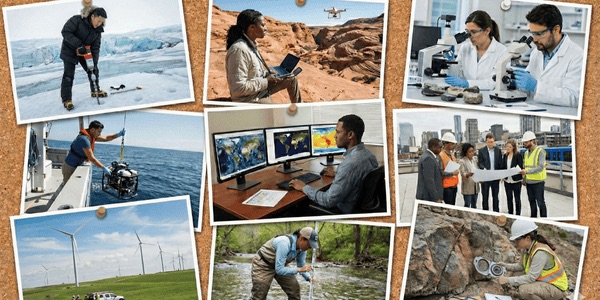
Rob Parker and Tim Parker from Time for Geography outline why geography careers are critical at this time and ways to take action. The post Making …
Making geography a career-defining subject… before it’s too late

Interesting and valuable piece over on Geography Directions:
By Annie Hughes, Kingston University London Students who feel that they belong in their education setting report higher well-being and have better …
How to make field education in geography more anti-racist: seven key steps

I enjoyed reading this thoughtful piece on teaching ‘geohumanities’…
As someone whose work gets framed as ‘geohumanities’, I often get asked about my take on the field, both in terms of research and teaching. I usually answer that I feel that geohumanities is in danger of becoming a mere rebranding exercise for cultural geography or environmental humanities. Looking at articles from journals across those three fields, it becomes difficult to make out a difference. This dynamic seems aggravated by the demands of the Research Excellence Framework (REF) that evaluates research output according to discipline. Many academics have complained that, while contemporary problems (and research funders) demand interdisciplinarity, the current research (and academic career) assessment punishes discipline transgressions. Your work will always be scrutinised for sufficient adherence to disciplinary boundaries, and it seems not enough that most of your work can be accounted for in this way, and the fact that there are dedicated journals for this field in which you can publish. Although the new framework promises to pay more attention to interdisciplinarity, the paranoia around disciplinarity persists. Certainly, during last year’s job interviews, I experienced anxiety around my work and the journals in which I decide to publish. Even at interviews for geohumanities themed posts, when bringing up potential practice based or inter/cross-disciplinary outputs, the answer was often ‘no’.
…
A related issue is interdisciplinary teaching. There are many different ways of doing this, depending on institutional logistics (timetabling, student location, connection to other departments etc), levels (undergraduate, postgraduate) and staffing. An increasing number of universities claim to have interdisciplinary undergraduate teaching programmes such as ‘Liberal Arts’, but in reality, subjects are still being kept separate and taught by specialists. The location of an interdisciplinary programme also often determines the angle. For instance, if an art and science programme is located within an arts faculty, the syllabus is more likely to be art centred, no matter how diverse the student body.

I’ve been listening to the City Road podcast for a little while now, since seeing a link on twitter to an excellent conversation with Desirée Fields, and I think Dallas Rogers et al. are doing a fantastic job with this podcast. It is an academic podcast but presented and delivered in, I think, a really accessible way. To that end, I really think there are episodes that make good teaching resources. In particular this episode on ‘digital cities’ with Robyn Dowling and Sophia Maalsen will feature in the next iteration of my third year option about technology – it’s excellent.

An email was circulated earlier today on behalf of the Digital Geographies Working Group of the RGS-IBG asking the following:
The Digital Geographies Working Group of the RGS/IBG is hoping to develop a resource for those of us interested in teaching ‘digital geographies’.
If you teach a module to undergraduate or postgraduate students that’s about digital geographies, however defined, and have a course handbook or syllabus or website that you’re willing to share by having it posted on the DGWG website, please send a copy to Gillian Rose copying in Jeremy Crampton.
We’ll gather them together and let you know when they’re all available on our website, http://www.digitalrgs.org.
Just thought it may be worth sharing as some people may find this of interest…

There are two sessions at the RGS-IBG conference this year concerned with putting the philosophy of geography into practice. These sessions have a diverse range of speakers and paper topics that address both the pleasures and the problems of ‘doing theory’ in geography – both for research and in teaching.
This is not an esoteric and navel-gazing exercise in bolstering a sense of disciplinarity or individual eminence but rather a means to discuss the relations between the everyday practises of doing geography and the, sometimes-maligned, theoretical-methodological techniques we variously employ in geographical research and teaching.
Please find below the list of papers with links to the sessions in the online conference programme.
Performance, theory and economy in geography
Lizzie Richardson (Durham University, UK)
This intervention examines the variety of relationships between performance and theory in geography. It outlines three different performances of theory in geography. One is theories of space that might be understood as a core concern of the discipline although not always expressed in geographical scholarship. Another is attempts to find space and place in forms of philosophy and theory ‘beyond’ geography. A final performance is the movement (or lack thereof) of theory through space and time, into and out of geographical scholarship. These theoretical performances each have different implications for what is understood of as geography and geographical knowledge. The intervention then moves on to examine how theorisations of performance itself cut across these three different approaches with a variety of implications for constructions of contemporary geographical knowledge. This is examined through the example of the changing parameters of ‘economic geography’ and approaches to economy in geography.
Transdisciplinarity and Translation
Keith Harris (University of Washington, USA)
This paper focuses on the problem and potential of collective knowledge production by revisiting the notion of transdisciplinarity as it was practiced by the Centre d’études, de recherches et de formation institutionnelles (CERFI). CERFI was social science research collective founded by Félix Guattari in 1967 as a practical outgrowth the Fédération des groups d’études de recherches sur la functionnement des institutions (FGERI), which he had established two years earlier in an effort to gather and intensively share research from independent research groups focused not only on psychoanalysis – Guattari’s own domain as the co-director of the La Borde psychiatric clinic in the Loire Valley – but also from “teachers and professors, urban planners, architects, economists, filmmakers, [and] alternative military service teachers” (Dosse 2010, 76; cf. Morford 1985 and Fourquet 1982). The journal Recherches (1966-1983) was the vehicle for disseminating CERFI’s and other FGERI groups’ work, and was staunchly transdisciplinary in its attempt to challenge various disciplines to articulate their research trajectories in a way that neither repeated the jargon unique to each discipline nor diluted the complexity of the research for the alleged benefit of readers from other disciplines (an approach that Guattari and Gilles Deleuze adopted in their own coauthored work). Instead, the journal was envisioned as a place where different disciplines could create “‘distinctive oppositions’ rather than remaining in antagonistic structures of mutual misunderstanding” (Guattari 1966, 3, my translation). The paper also addresses Guattari’s concept of transversality (Guattari 2015), which underpins these groups’ commitment to transdisciplinarity, and explicitly address how the contemporary activity of translating such work – in particular, my current efforts to co-translate CERFI’s research on urban problems and problematization that was published in Recherches 13 (Fourquet and Murard 1973) – extends the process of collective knowledge production both spatially and temporally, and opens up new avenues for contemporary interventions, discussions, and connections across disciplines.
Combining post-human, participatory and situated philosophies of geography: a humble research practice?
Samantha Saville (Aberystwyth University, UK)
In this paper, I explore what kinds of research practice are suggested when combining insights from posthuman philosophies and ethical leanings of participatory, co-produced, situated knowledges. I argue that one potential conceptual framework these directions could lead to is the notion of a ‘humble geography’. Through examples from my doctoral research in Svalbard, in which a humble geographic practice emerged and developed, I sketch out some ideas as to how such philosophies play out ‘in the field’ and indeed afterwards when ‘writing-up’, re-presenting and re-producing knowledges. The humble approach I outline sits at odds with traditional senses of academic authority and with rising pressures to sell oneself and work as highly impactful, important, in short anything but humble. In this way, there is scope to join thinking with the emerging ideas of slow scholarship, activist and gentle geographies.
Disruptive interventions: Art practice and the generation of politically complex cultural geographies
Veronica Vickery (University of Exeter, UK)
Current commentaries on art-geographies tend to focus on questions of inter-disciplinarity, rather than the potential for art practice-as-research to be generative of politically complex cultural geographies. Reflecting on the way that human-scaled landscape events can be haunted by deep-time Earth forces, I undertook a series of live-art-to-camera performances, leading to a productive theoretical engagement bringing new materialisms into dialogue with landscape studies. This work demonstrates the unpredictability and riskiness of researching through a critical arts practice. It also shows how these conditions, or disruptive interventions, can be generative of new ways of (body)knowing in the world; ways of knowing which in this project serve to confront the violence and contradictions of a fast changing enviro/geopolitical landscape. I propose that landscape is inherently violent, and that as such, landscaping practices are always politically differentiated and situated. It is a violence in which there can be no innocent place of on-looking; we are all mutually implicated in landscape and landscaping-practices, and indeed, the ghosts of our own vulnerabilities are never far away. Therefore, working from within an art practice–as geographical research–can contribute a perspective of political complexity and generative encounter, in which unexpected collisions, between things, practices, and bodies function to produce spatial connections beyond contemporary analysis.
Critical Realism, Spatial Relations and Social Science Research
Alan Patterson (Sheffield Hallam University, UK)
Arguing for a critical realist approach, this paper draws upon the work of Bhaskar, Sayer, and others to focus on the relational nature of causality, and the significance of this for undertaking ‘real world’ research – i.e. human geography!
The paper addresses the often ambiguous and ill-defined role of ‘space’ in social science research. Only rarely are the causal mechanisms and structures which result in spatial differentiation explicitly considered. Where attempts have been made to consider such factors this is often undertaken in a simplistic fashion, as though concrete reality was simply the result of an unproblematic ‘mapping out’ of abstract processes. These approaches are considered to be inadequate and the discussion takes up the question of the importance of spatial structures to the understanding of causal processes, and examines the implications of this for the design of social science research. In particular, an original ‘relational’ view of causality is presented (which sees reality as forged only when social objects are concretised in a specific set of spatial and temporal relations) which has the potential to resolve the incipient aspatiality of abstract research. It is concluded that the use of intensive case study methods, contextualised within a theoretically informed research design, is a fundamental requirement in order to obtain adequate explanations of complicated social phenomena.
Thinking media through the urban: Practicing geography beyond classroom and discipline
Scott Rodgers (Birkbeck, University of London, UK)
This paper addresses two linked questions. How might philosophies of geography be put into pedagogical practice beyond the classroom? And how might this pedagogical practice be negotiated, when the classroom in question lies beyond the discipline of geography? In recent years I have designed and taught a final year undergraduate module titled The Mediated City. This module, directed at media studies as well as general arts and humanities students, encourages an approach to media forms as they emerge through everyday experiences of urban environments and urban living. In so doing, the course interfaces with the ordinary modalities of Birkbeck students, who attend classes at night, tending to work during the day, and in so doing traverse all manner of London spaces. My discussion will centre on an alternative assessment used in this module, in which students build up a compilation of encountered ‘urban media’ examples including text, photos, audio, video, maps and other elements, combining the use of mobile media technologies with a personal blog. Through this coursework, students practice geographical forms of knowing through ordinary urban encounters. In opening themselves to the ordinary and unexpected, they are invited to challenge representational knowledge narrowly conceived. But for the first time in their studies, they are also asked to reckon with the more formal representational knowledge of geography-as-discipline. I will argue that in provisionally deploying geographical philosophies, beyond classroom and discipline, openings are created that challenge media centrism, encouraging students to see and experience media as inherent to their everyday worlds.
Teaching critical GIS historically
Matthew Wilson (Harvard University, USA / University of Kentucky, USA)
In the nearly twenty-years since the publication of Nadine Schuurman’s dissertation on critical GIS, there have been sustained and wide-ranging conversations around what it means to practice criticality with and about geographic information systems. For a new generation of GIScience practitioners and scholars, there is an open question around the role of an historical approach to technical training that has deep roots in early 20th century approaches to Anglophone cartographic education. More recently, advancements by feminist critiques of GIS and mapping have inspired renewed contextualization of mapping techniques, offering either/both social and historical contingencies and implications in critical GIS practice. The point, I argue, is not to teach students a singular history or origin story of geospatial innovations and techniques, but to assist students in understanding that there were many ways forward in the development of GIS and that an historical approach should inspire further tinkering and experimentation — beyond a pervasive ‘recipe-book approach’ within more conventional GIScience pedagogy. In this presentation, I overview and reflect upon both successful as well as more challenged efforts to forward a critical GIS approach in undergraduate teaching and chart an agenda of continued debate and inquiry into the role and responsibility of GIS in the discipline of Geography.
‘Geography is what Geographers do’: a Wittgensteinian reprieve
Pauline Couper (York St John University, UK)
The assertion that “Geography is what Geographers do” has been both cited and criticised for so long (e.g. Putnam, 1957; Bird, 1973; Pacione, 1987; MacDougall, 2003) that it has become something of a disciplinary cliché. When considered a definition or description of Geography the criticisms have some justification. This paper instead takes the phrase as a prompt for thinking through ‘what geographers do’ in the everyday practices through which the discipline is brought into being. It draws on Wittgenstein’s later philosophy (Philosophical Investigations, On Certainty) and the work of subsequent philosophers of education (Burbules, Smeyers) to foreground the ‘rough ground’ of everyday acts in which we exercise geographical judgment. A disconnect exists between this rough ground and the structural separation of research and teaching through funding and assessment mechanisms that provides context for (and so shapes) our work. The paper then considers the implications for geographical pedagogy, the ways in which students co-constitute the life of the discipline, and for the organisation of Geographical university education and its departments.
Theory generation in the classroom
Sam Kinsley (University of Exeter, UK)
The generations of theory in human geography are not only performed in conferences, research group meetings and conference panels but also in the classroom. This is a paper concerned with how those generations are made present. By performance of ‘generation’ I mean both the practical generating of theory, through scholarship and research, and the cultural, discursive and temporal generations of scholars themselves. The aim therefore is to sketch out how such performances may function in the classroom. In particular, I want to think through how we might tackle the ways the dialogical relations between generations in the generating of theory may lead to helpful and unhelpful ‘traditions’ (following Scott 2014) and signal how attention to this may be fruitful for the pedagogy of critique.
Via Peter-Paul Verbeek.
Interesting video, seems a good pedagogical aid…
A five-minute animation explaining the basics of the approach of technological mediation.

These videos created for Al Jazeera’s The Listening Post are an interesting resource. I’ve not managed to watch them all yet. Natalie Jeffers’ (co-founder of Black Lives Matter UK) video on Stuart Hall and Alex Chow’s (student leader of the 2014 HK umbrella movement) are good (see below).
There are three more videos, on Barthes, Chomsky and Said. Check out The Listening Post website.

Over on Savage Minds Rex Golub has written a compelling provocation about the places of ‘public anthropology’ (which I think could probably be broadened to ‘public scholarship). He points out that it’s all very well writing letters to venerable broad sheet newspapers but that doesn’t necessarily achieve much. Instead, Professors (or academics more broadly) might better spend their time editing wikipedia pages because that is the prime site of the public sourcing, and contestation, of knowledge. I think its quite a compelling argument… not least when thinking about the current trend and push for demonstrating “impact”. Isn’t it quite “impactful” to be the person who attempts to ensure that the most widely used source of knowledge on a given topic is rigorously written/edited? There’s no academic brownie points in that though… no promotions or awards/rewards are going to be given on that basis!
What do you think?
…my issue is that anthropologists are doing public anthropology in the wrong places and in the wrong way because they don’t understand how social media works today and are seduced by an out-moded model of cultural capital that makes them feels heroic, but it isn’t actually efficacious.
The new public anthropology, on the other hand, is not glamorous, will not make you famous, can be emotionally uncomfortable, involves working in new and unfamiliar genres, and can change the world. A good example of this sort of public anthropology is editing Wikipedia
Wikipedia is ground zero for knowledge in the world today. Everyone uses it to look stuff up quickly. Everyone. Some people may take it more seriously than others, but because its content can be reused on other sites, what wikipedia says spreads everywhere. For better or for worse – I’d say for better – it’s the public record of the state of human knowledge at the moment. Unlike letters to the New York Times, Wikipedia gets read. Constantly. When you contribute to Wikipedia, you are concretely and immediately altering what the world knows about your topic of expertise.
Good e.g. for a first year lecture probably…
This is great: same report – opposite headline. pic.twitter.com/rlXzaj3bxU
– Dylan McConnell (@dylanjmcconnell) September 25, 2016