
Registration is open for the 4th International Data Justice Conference “The Datafied State”. The event will be held on 1-2 June 2026 at Cardiff …
Register now for Data Justice 2026
‘New geographies of automation?’ at the RGS-IBG conference

All of a sudden the summer is nearly over, apparently, and the annual conference of the Royal Geographical Society with the Institute of British Geographers is fast approaching, this year in Cardiff.
I am convening a double session on the theme of ‘New geographies of automation?’, with two sessions of papers by some fantastic colleagues that promise to be really interesting. I am really pleased to have this opportunity to invite colleagues to collectively bring their work into conversation around a theme that is not only a contemporary topic in academic work but also, significantly, a renewed topic of interest in the wider public.
There are two halves of the session, broadly themed around ‘autonomy’ and ‘spacings’. Please find below the abstracts for the session.
Details: Sessions 92 & 123 (in slots 3 & 4 – 14:40-16:20 & 16:50-18:30) | Bates Building, Lecture Theatre 1.4
This information is also accessible, with all of the details of venue etc., on the RGS-IBG conference website: session 1 ‘autonomy’ and session 2 ‘spacings’.
New Geographies of Automation? (1): Autonomy
1.1 An Automative Imagination
Samuel Kinsley, University of Exeter
This paper sets out to review some of the key ways in which automation gets imagined – the sorts of cultural, economic and social forms of imagination that are drawn upon and generated when discussing how automation works and the kinds of future that may come as a result. The aim here is not to validate/invalidate particular narratives of automation – but instead to think about how they are produced and what they tell us about how we tell stories about what it means to be ‘human’, who/what has agency and what this may mean for how we think politically and spatially. To do this the concept of an ‘automative imagination’ is proposed as a means of articulating these different, sometimes competing – sometimes complementary, orientations towards automation.
1.2 The Future of Work: Feminist Geographical Engagements
Julie MacLeavy (Geographical Sciences, University of Bristol)
This paper considers the particular pertinence of feminist geographical scholarship to debates on the ‘future of work’. Drawing inspiration from Linda McDowell’s arguments that economic theories of epochal change rest on the problematic premise that economic and labour market changes are gender-neutral, it highlights the questions that are emerging from feminist economic geography research and commentary on the reorganisation of work, workers’ lives and labour markets. From this, the paper explores how feminist and anti-racist politics connect with the imagination of a ‘post-work’ world in which technological advancement is used to enable more equitable ways of practice (rather than more negative effects such as the intensification of work lifestyles). Political responses to the critical challenges that confront workers in the present moment of transformation are then examined, including calls for Universal Basic Income, which has the potential to reshape the landscape of labour-capital relations.
1.3 Narrating the relationship between automation and the changing geography of digital work
Daniel Cockayne, Geography and Environmental Management, University of Waterloo
Popular narratives about the relationship between automation and work often make a straightforward causal link between technological change and deskilling, job loss, or increased demand for jobs. Technological change – today, most commonly, automation and AI – is often scripted as threatening the integrity of labor, unionization, and traditional working practices or as creating more demand for jobs, in which the assumption is the more jobs the better. These narratives elide a close examination of the politics of work that include considerations of domestic and international racialized and gendered divisions of labor. Whether positive or negative, the supposed inevitability of technological transition positions labor as a passive victim of these changes, while diverting attention away from the workings of international financialized capital. Yet when juxtaposed against empirical data, straightforward cause and effect narratives become more complex. The unemployment rate in North America has been the lowest in 40 years (4.1% in the USA and 5.7% in Canada), which troubles the relationship between automation and job loss. Yet, though often touted by publications like The Economist as a marker of national economic well-being, unemployment rates ignore the kinds of work people are doing, effacing the qualitative changes in work practices over time. I examine these tropes and their relationship to qualitative changes in work practices, to argue that the link between technological change and the increasing precaratization of work is more primary than the diversionary relationship between technological change and job loss and gain or deskilling.
1.4 Sensing automation
David Bissell, University of Melbourne
Processes of industrial automation are intensifying in many sectors of the economy through the development of AI and robotics. Conventional accounts of industrial automation stress the economic imperatives to increase economic profitability and safety. Yet such coherent snapped-to-grid understandings risk short-circuiting the complexity and richness of the very processes and events that compose automation. This paper draws from and reflects through a series of encounters with workers engaged in the increasingly automated mining sector in Australia. Rather than thinking these encounters solely through their representational dimensions with an aim to building a coherent image of what automation is, this paper is an attempt at writing how automation becomes differently disclosed through the aesthetic dimensions of encounters. It acknowledges how automation is always caught up in multiple affective and symbolic ecologies which create new depths of association. Developing post-phenomenological thought in cultural geography, this paper articulates some of the political and ethical stakes for admitting ambiguity, incoherence and confusion as qualities of our relations with technological change.
1.5 Technological Sovereignty, Post-Human Subjectivity, and the Production of the Digital-Urban Commons
Casey Lynch (School of Geography and Development, University of Arizona)
As cities become increasingly monitored, planned, and controlled by the proliferation of digital technologies, urban geographers have sought to understand the role of software, big data, and connected infrastructures in producing urban space (French and Thrift 2002; Dodge, Kitchin, and Zook, 2009). Reflections on the “automatic production of space” have raised questions about the role and limitations of “human” agency in urban space (Rose 2017) and the possibilities for urban democracy. Yet, this literature largely considers the proliferation of digital infrastructures within the dominant capitalist, smart-city model, with few discussions of the possibilities for more radically democratic techno-urban projects. Engaging these debates, this paper considers alternative models of the techno-social production of urban space based around the collective production and management of a common digital-urban infrastructure. The paper reflects on the notion of “technological sovereignty” and the case of Guifinet, the world’s largest “community wireless network” covering much of Catalonia. The paper highlights the way its decentralized, DIY mode of producing and maintaining digital urban infrastructure points to the possibilities for more radically democratic models of co-production in which urban space, technological infrastructures, and subjectivities are continually reshaped in relation. Through this, the paper seeks to contribute to broader discussions about the digitalization of urban space and the possibilities for a radical techno-politics.
New Geographies of Automation? (2): Spacings
2.1 The urbanisation of robotics and automated systems – a research agenda
Andy Lockhart* (a.m.lockhart@sheffield.ac.uk), Aidan While* (a.h.while@sheffield.ac.uk), Simon Marvin (s.marvin@sheffield.ac.uk), Mateja Kovacic (m.kovacic@sheffield.ac.uk), Desiree Fields (d.fields@sheffield.ac.uk) and Rachel Macrorie (r.m.macrorie@sheffield.ac.uk) (Urban Institute, University of Sheffield)
*Attending authors
Pronouncements of a ‘fourth industrial revolution’ or ‘second machine age’ have stimulated significant public and academic interest in the implications of accelerating automation. The potential consequences for work and employment have dominated many debates, yet advances in robotics and automated systems (RAS) will have profound and geographically uneven ramifications far beyond the realm of labour. We argue that the urban is already being configured as a key site of application and experimentation with RAS technologies. This is unfolding across a range of domains, from the development of autonomous vehicles and robotic delivery systems, to the growing use of drone surveillance and predictive policing, to the rollout of novel assistive healthcare technologies and infrastructures. These processes and the logics underpinning them will significantly shape urban restructuring and new geographies of automation in the coming years. However, while there is growing research interest in particular domains, there remains little work to date which takes a more systemic view. In this paper we do three things, which look to address this gap and constitute the contours of a new urban research agenda. First, we sketch a synoptic view of the urbanisation of RAS, identifying what is new, what is being enabled as a result and what should concern critical scholars, policymakers and the wider public in debates about automation. Second, we map out the multiple and sometimes conflicting rationalities at play in the urbanisation of RAS, which have the potential to generate radically different urban futures, and may address or exacerbate existing socio-spatial inequalities and injustices. Third, and relatedly, we pose a series of questions for urban scholars and geographers, which constitute the basis for an urgent new programme of research and intervention.
2.2 Translating the signals: Utopia as a method for interrogating developments in autonomous mobility
Thomas Klinger1, 2
Brendan Doody2
Debbie Hopkins2
Tim Schwanen2
1. Institute of Human Geography, Goethe-University Frankfurt am Main
2. School of Geography and the Environment, University of Oxford
Connected and autonomous vehicles (CAVs) are often presented as technological ‘solutions’ to problems of road safety, congestion, fuel economy and the cost of transporting people, goods and services. In these dominant techno-economic narratives ‘non-technical’ factors such as public acceptance, legal and regulatory frameworks, cost and investment in testing, research and supporting infrastructure are the main ‘barriers’ to the otherwise steady roll-out of CAVs. Drawing on an empirical case study of traffic signalling, we trace the implications that advances in vehicle autonomy may have for such mundane and taken-for-granted infrastructure. We employ the three modes of analysis associated with Levitas’ (2013) ‘utopia as a method’. Starting with the architectural mode we identify the components, actors and visions underpinning ‘autonomobility’. The archaeological mode is then used to unpack the assumptions, contradictions and possible unintended effects that CAVs may have for societies. In the ontological mode we speculate upon the types of human and non-human subjectivities and agencies implied by alleged futures of autonomous mobility. Through this process we demonstrate that techno-economic accounts overemphasise the likely scale, benefits and impacts these advances may have for societies. In particular, they overlook how existing automobile-dependent mobility systems are the outcome of complex assemblages of social and technical elements (e.g., cars, car-drivers, roads, petroleum supplies, novel technologies and symbolic meanings) which have become interlinked in systemic and path-dependent ways over time. We conclude that utopia as method may provide one approach by which geographers can interrogate and opening up alarmist/boosterish visions of autonomobility and automation.
2.3 Automating the laboratory? Folding securities of malware
Andrew Dwyer, University of Oxford
andrew.dwyer@cybersecurity.ox.ac.uk
Folding, weaving, and stitching is crucial to contemporary analyses of malicious software; generated and maintained through the spaces of the malware analysis laboratory. Technologies entangle (past) human analysis, action, and decision into ‘static’ and ‘contextual’ detections that we depend on today. A large growth in suspect software to draw decisions on maliciousness have driven a movement into (seemingly omnipresent) machine learning. Yet this is not the first intermingling of human and technology in malware analysis. It draws on a history of automation, enabling interactions to ‘read’ code in stasis; build knowledges in more-than-human collectives; allow ‘play’ through a monitoring of behaviours in ‘sandboxed’ environments; and draw on big data to develop senses of heuristic reputation scoring.
Though we can draw on past automation to explore how security is folded, made known, rendered as something knowable: contemporary machine learning performs something different. Drawing on Louise Amoore’s recent work on the ethics of the algorithm, this paper queries how points of decision are now more-than-human. Automation has always extended the human, led to loops, and driven alternative ways of living. Yet the contours, the multiple dimensions of the neural net, produce the malware ‘unknown’ that have become the narrative of the endpoint industry. This paper offers a history of the automation of malware analysis from static and contextual detection, to ask how automation is changing how cyberspace becomes secured and made governable; and how automation is not something to be feared, but tempered with the opportunities and challenges of our current epoch.
2.4 Robots and resistance: more-than-human geographies of automation on UK dairy farms
Chris Bear (Cardiff University; bearck@cardiff.ac.uk)
Lewis Holloway (University of Hull; l.holloway@hull.ac.uk)
This paper examines the automation of milking on UK dairy farms to explore how resistance develops in emerging human-animal-technology relations. Agricultural mechanisation has long been celebrated for its potential to increase the efficiency of production. Automation is often characterised as continuing this trajectory; proponents point to the potential for greater accuracy, the removal of less appealing work, the reduction of risks posed by unreliable labour, and the removal of labour costs. However, agricultural mechanisation has never been received wholly uncritically; studies refer to practices of resistance that have developed due to fears around (for instance) impacts on rural employment, landscapes, ecologies and traditional knowledge practices. Drawing on interviews with farmers, observational work on farms and analysis of promotional material, this paper examines resistant relations that emerge around the introduction of Automated Milking Systems (AMS) on UK dairy farms. While much previous work on resistance to agricultural technologies has pitted humans against machines, we follow Foucault in arguing that resistance can be heterogeneous and directionally ambiguous, emerging through ‘the capillary processes of counter-conduct’ (Holloway and Morris 2012). These capillary processes can have complex geographies and emerge through more-than-human relations. Where similar conceptualisations have been developed previously, technologies continue to appear rather inert – they are often the tools by which humans attempt to exert influence, rather than things which can themselves ‘object’ (Latour 2000), or which are co-produced by other nonhumans rather than simply imposed or applied by humans. We begin, therefore, to develop a more holistic approach to the geographies of more-than-human resistance in the context of automation.
2.5 Fly-by-Wire: The Ironies of Automation and the Space-Times of Decision-Making
Sam Hind (University of Siegen; hind@locatingmedia.uni-siegen.de)
This paper presents a ‘prehistory’ (Hu 2015) of automobile automation, by focusing on ‘fly-by-wire’ control systems in aircraft. Fly-by-wire systems, commonly referred to as ‘autopilots’ work by translating human control gestures into component movements, via digital soft/hardware. These differ historically from mechanical systems in which pilots have direct steering control through a ‘yoke’ to the physical components of an aircraft (ailerons etc.), via metal rods or wires. Since the launch of the first commercial aircraft with fly-by-wire in 1988, questions regarding the ‘ironies’ or ‘paradoxes’ of automation (Bainbridge 1983) have continued to be posed. I look at the occurrence of ‘mode confusion’ in cockpits to tease out one of these paradoxes; using automation in the aviation industry as a heuristic lens to analyze automation of the automobile. I then proceed by detailing a scoping study undertaken at the Geneva Motor Show in March this year, in which Nissan showcased an autonomous vehicle system. Unlike other manufacturers, Nissan is pitching the need for remote human support when vehicles encounter unexpected situations; further complicating and re-distributing navigational labour in, and throughout, the driving-machine. I will argue that whilst such developments plan to radically alter the ‘space-times of decision-making’ (McCormack and Schwanen 2011) in the future autonomous vehicle, they also exhibit clear ironies or paradoxes found similarly, and still fiercely discussed, in the aviation industry and with regards to fly-by-wire systems. It is wise, therefore, to consider how these debates have played out – and with what consequences.
Reblog> Good Data: Call for Proposals for Theory on Demand edited book

From the Institute of Network Cultures:
Good Data: Call for Proposals for an INC Theory on Demand edited book
Editors: Angela Daly (Queensland University of Technology), Kate Devitt (Queensland University of Technology) & Monique Mann (Queensland University of Technology).
In recent years, there has been an exponential increase in the collection, aggregation and automated analysis of information by government and private actors, and in response to this there has been a significant critique regarding what could be termed ‘bad’ data practices in the globalised digital economy. These include the mass gathering of data about individuals, in opaque, unethical and at times illegal ways, and the increased use of that data in unaccountable and potentially discriminatory forms of algorithmic decision-making by both state agencies and private companies. Issues of data ethics and data justice are only likely to increase in importance given the totalizing datafication of society and the introduction of new technologies such as artificial intelligence and automation.
In order to paint an alternative, more optimistic but still pragmatic picture of the datafied future, this open access edited collection will examine and propose what could be termed ‘good’ and ‘ethical’ data practices, underpinned by values and principles such as (but not limited to):
- privacy/regulation/information security by design
- due process rights
- procedural legitimacy
- the protection of individual and collective autonomy
- digital sovereignty
- digital anti-discrimination
- data and intersectionality
- ethical labour practices
- environmental sustainability.
Chapters should be short contributions (2500-5000 words) which can take differing forms, for example:
- Manifestos for Good Data
- Position papers
- Traditional academic chapters
Chapters can be theoretical takes or provocations on what Good Data is or should be, or can be case studies of particular Good Data projects and initiatives e.g. Indigenous data sovereignty initiatives, data cooperatives etc. Chapters can also be critiques of initiatives/movements which claim to be ethical but in fact fall short. All chapters, including academic ones, should be written in an accessible way and avoid the excessive use of jargon, etc. Academic chapters will be peer-reviewed. Other contributions will be editor-reviewed.
We encourage contributions from throughout the world and from different disciplinary perspectives: philosophy, media and communications, cultural studies, STS, law, criminology, information systems, computer science etc.
Proposals for chapters (up to 250 words) should be sent to Kayleigh Hodgkinson Murphy (kayleigh.murphy@qut.edu.au) by Friday 15 December 2017. Please include a brief biography (academic/practitioner) and signal what kind of chapter you are proposing (manifesto/academic chapter, etc).
If you have an idea for a chapter and want to discuss it before submitting a proposal, please contact Angela Daly (angela.daly@qut.edu.au) as soon as possible. We may be able to pair, for example, practitioners with academic authors on request.
Decisions on proposals will be made by mid-January 2017, with a first full draft of chapters to be submitted by 31 March 2018. We anticipate the book will be finalized and launched in late 2018, as part of the Institute of Network Cultures’ Theory on Demand series.
UK Government ramping up ‘robotic process automation’

Quite by chance I stumbled across the twitter coverage of a UK Authority event entitled “Return of the Bots” yesterday. There were a range of speakers it seems, from public and private sectors. An interesting element was the snippets about the increasing use of process automation by the UK Government.
Here’s some of the tweets I ‘favourited’ for further investigation (below). I hadn’t quite appreciated where government had got to. It would be interesting to look into the rationale both central and local government are using for RPA – I assume it is cost-driven(?). I hope to follow up some of this…
Chris Hall @cabinetofficeuk – Over 10k robots now at work in 57+ processes @HMRCgovuk#ReturnOfTheBots pic.twitter.com/jRHvbZtzcG
— Helen Olsen Bedford (@helenolsen) November 14, 2017
“Within 3-5 yrs robotics will be commonplace in government” https://t.co/u8YiQLX7Ae
— Helen Olsen Bedford (@helenolsen) November 14, 2017
@cabinetofficeuk & @CapgeminiConsul partnership aims to take 1-2 years off time for UK #publicsector to adopt #robotics process automation https://t.co/OFVOsGNTlL #ReturnoftheBots pic.twitter.com/TcpnGJKacK
— UKAuthority (@UKAuthority) November 15, 2017
What’s the potential of #RPA in government? #ReturnOfTheBots pic.twitter.com/mFip6tbkTf
— Marcus Ferbrache (@marcusferbrache) November 14, 2017
Highlight 1. Prof Birgitte Andersen @BigInnovCentre suggests we should be thinking about ‘the new rules, norms and standards for delivering public services with regards to AI’ #AI #returnofthebots @UKAuthority pic.twitter.com/E8njgSa5aS
— Jon Robertson (@JonSRobertson) November 14, 2017
Reblog> Robots: ethical or unethical?

From Peter-Paul Verbeek.
ROBOTS: ETHICAL OR UNETHICAL?
To highlight the relevance of the UNESCO World Commission on the Ethics of Scientific Knowledge and Technology (COMEST) and to present its recent report on the ethics of robotics, the Permanent Delegation of the Kingdom of the Netherlands to UNESCO will organize a lunch debate on “Robots: ethical or unethical?” during the 39th General Conference, on Friday 10 November 2017, in Room X from 13:00 to 14:15.
The session will be opened by H.E. Ambassador Lionel Veer and Ms Nada Al-Nashif, Assistant Director-General for Social and Human Sciences, and will be moderated by Prof. Peter-Paul Verbeek, COMEST member and philosopher.
The issues addressed will be the following:
· What change caused by robots can we expect? Presented by Prof. Vanessa Evers, University of Twente
· Which are the ethical dilemmas? Presented by Prof. Mark Coeckelbergh, University of Vienna
· How can we ensure that innovation is ethical? Presented by Prof. Peter-Paul Verbeek, University of Twente (COMEST member)
The presentations will be followed by an interactive debate with the audience and by a reflection on the role of UNESCO and the COMEST on these issues.
Reblog > The Priority of Injustice

My colleague Prof. Clive Barnett’s excellent new book is out. He introduces it in a recent blogpost:
The Priority of Injustice
 So, finally, the book that I have been writing, on and off, for the last four years, The Priority of Injustice, has been published – or at least, it’s real, since the formal publication date is next month (so I reserve the right to blog further about it as and when). It arrived earlier this week – a rather hectic week, which has oddly meant I have been too busy to experience the strange sense of anti-climax that often accompanies the arrival of the finished form of something that you have been making for so long.
This is, in one sense, my Exeter book – the first thing I did in my very first week here, four years ago, was write the proposal and send it off to prospective publishers, It’s also, though, my Swindon book, a book which attempts to articulate an approach to theorising in an ordinary spirit which has been published just a few weeks after moving away from that very ordinary town where I have lived while writing it.
 It’s a beautiful object, with a great cover image, by Helen Burgess (I bought one of her pictures once, in one of those open-house art trail events that you get in places like Bishopston in Bristol, so that’s why I knew of her work; it turns out she is part of a geography-friendly network of artists). And I am honoured and humbled to have the book published in University Georgia Press’s very excellent Geographies of Justice and Social Transformation series.
I’m now faced with the challenge of promoting the book. I’m quite fond of the Coetzee-esque principle that books should have to make their own way in the world without the help of the author; on the other hand, I have some sense of responsibility towards the argument made in the book, a responsibility to help project it into the world. I’ve already realised that it’s not the sort of book that lends itself to an easy press release – ‘THEORY COULD BE THEORISED DIFFERENTLY’, SAYS THEORY-BOY doesn’t really work as a headline, does it?.
Where is the cage? – Geneva Freeport and the territorial machinations of wealth

From Braden King, produced by Field of Vision, via Aeon.
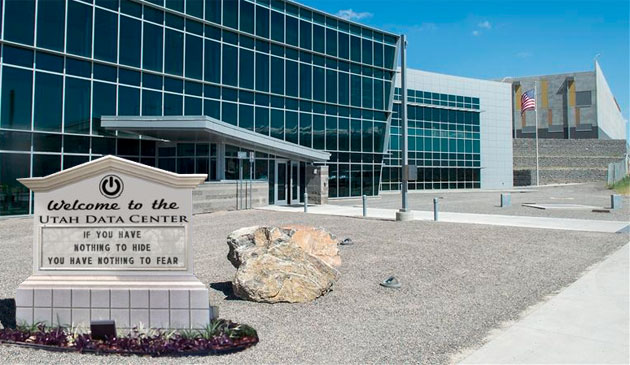
Reblog> Utah Data Center Nothing to Hide Nothing to Fear”¦

This is good. Via dmf.
Reblog> Presentation video – Abstract machines of urbanization: political economy, ethics, and aesthetics
Via My Desiring-Machines.
Interesting talk from Keith Harris
Reblog> Job opening: 2-year postdoc position in philosophy and ethics of technology and design

Looks like an interesting opportunity…
From Peter-Paul Verbeek:
Technologies are increasingly designed to influence people’s behavior in directions that are seen as desirable, as approaches like ‘nudging’ and ‘persuasive technology’ show. At the same time, this development raises ethical concerns. The postdoc project ‘Designing Moral Mediation’ will develop both a philosophical and an ethical approach to behavior-influencing technologies.
The postdoc will become a member of the research team of the 5-year research project ‘Theorizing Technological Mediation’, which investigates human-technology relations in the domains of science, ethics, and religion. Within this context, the postdoc project focuses on ‘moral mediation’: the ways in which technologies mediate moral actions and decisions, and help to shape moral frameworks. We are looking for someone with expertise in philosophy of technology, human-technology relations, and /or ethics of technology.
More information: https://www.utwente.nl/en/organization/careers/vacancies/!/vacature/1049731