Reblog> Martin Dodge and Rob Kitchin, Mapping Cyberspace (free book download)

Via Stuart Elden.

Mapping Cyberspace was a formative introduction to ‘geography’ for me as an undergraduate digital arts student. It certainly influenced my (all-too-naive) BSc dissertation ideas… It’s great this is available, it documents so many things that seemed so vital at the time and that now appear almost like peculiar mirages.

Martin Dodge and Rob Kitchin, Mapping Cyberspace (free book download)

Mapping Cyberspace – Martin Dodge & Rob KitchinMartin Dodge and Rob Kitchin’s 2001 book Mapping Cyberspace is now available as a free download. There is also a website about the book here.

Mapping Cyberspace is a ground-breaking geographic exploration and critical reading of cyberspace, and information and communication technologies. The book:

  • * provides an understanding of what cyberspace looks like and the social interactions that occur there
  • * explores the impacts of cyberspace, and information and communication technologies, on cultural, political and economic relations
  • * charts the spatial forms of virtual spaces
  • * details empirical research and examines a wide variety of maps and spatialisations of cyberspace and the information society

has a related website at http://www.MappingCyberspace.com.

This book will be a valuable addition to the growing body of literature on cyberspace and what it means for the future.

Reblog> Three new OHP books from: Brian Massumi; Steven Connor; and Érik Bordeleau, Toni Pape, Ronald Rose-Antoinette and Adam Szymanski

open access spelled out with books

Via Gary Hall. All of the books are available for free download. Follow links below.

We are pleased to announce the release this month of two new titles in Open Humanities Press’ Immediations series:***

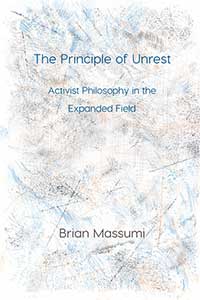
Brian Massumi’s The Principle of Unrest explores the contemporary implications of an activist philosophy, pivoting on the issue of movement. Movement is understood not simply in spatial terms but as qualitative transformation: becoming, emergence, event.

Available for free download at:

http://www.openhumanitiespress.org/books/titles/the-principle-of-unrest/


***

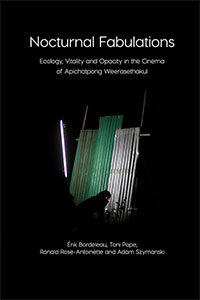
Nocturnal Fabulations/Fabulations nocturnes by Érik Bordeleau, Toni Pape, Ronald Rose-Antoinette and Adam Szymanski with an Introduction by Erin Manning.

This collective, bi-lingual project is animated by a shared curiosity in the pragmatics of fabulation and its speculative gesture of bringing forth a people to come. In an encounter with Apichatpong’s cinematic dreamscape, the concepts of ecology, vitality and opacity emerge to articulate an ethos of fabulation that deframes experience, recomposes subjectivity and unfixes time.Available for free download at:

English: http://www.openhumanitiespress.org/books/titles/nocturnal-fabulations/

French: http://www.openhumanitiespress.org/books/titles/fabulations-nocturnes/

***

We are also pleased to announce the latest book in the Technographies series:

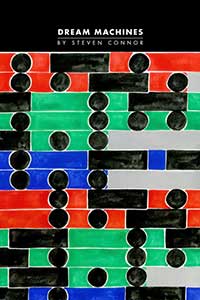
Steven Connor’s Dream Machines

Dream Machines is a history of imaginary machines and the ways in which machines come to be imagined. It considers seven different kinds of speculative, projected or impossible machines: machines for teleportation, dream-production, sexual pleasure and medical treatment and cure, along with ‘influencing machines’, invisibility machines and perpetual motion machines.

“This is an engaging and imaginative exploration of various forms of writing, thinking, and fantasizing about dream machines, an endlessly fertile topic probed here from just about every possible angle “¦ a major intervention into current understandings of technology, literature, and identity.”

Matthew Rubery – Queen Mary University of London

“”¦ a deeply original contribution to the history and philosophy of technology and the cultural history of the imagination “¦”Laura Salisbury – University of Exeter

Available for free download at:

http://www.openhumanitiespress.org/books/titles/dream-machines/

With our best wishes,

Sigi, David, Gary

A ‘new realism’ and post-truth

A glitched image of a typewriter

In a recording of a very lively double-header presentation by Maurizio Ferraris and Martin Scherzinger which has been podcast by Data & Society there’s some interesting discussion of Ferraris’ formulation of a ‘new realism‘ (which is sort of sympathetic to but perhaps distinct from speculative realisms) in relation to how we might understand ‘truth’ and truth claims and so how we might understand how ‘understanding’ works in relation digitally mediation.

Both Ferraris and Scherzinger are entertaining speakers but Scherzinger in particular offers some very incisive comments around how we can understand the sorts of manoeuvres different people are making around the constitutions and discussion of ‘theory’ (taken in its most general understanding).

Anyway… it’s an interesting listen:

Post-Truth and New Realities: Algorithms, Alternative Facts, and Digital Ethics

Radical Philosophy 2.0

via Stuart Elden.

An encouraging announcement on the Radical Philosophy website that the journal will return. I’ve copied a bit below but read the whole statement here.

With its 2017 re-launch, Radical Philosophy will remain, as it has always been, a collectively edited, self-published and self-produced journal – but one with, we hope, a renewed editorial energy and a more radical, collaborative openness (if with no less philosophical rigour or critical bite). Among the things that our readers can look forward to, starting with issue 2.01, is a redesigned website, built by our new in-house engineering collective, through which we will be publishing all our content in a freely available form, as well as a redesigned print version of the journal. At the same time, from January 2018 the archive of the last forty-five years of Radical Philosophy will be made fully open with downloadable pdfs of everything that we have published since 1972.

A Universe Explodes. A Blockchain book/novel

Blockchain visualisation

Thanks to Max Dovey for the tip on this…

This seems interesting as a sort of provocation about what Blockchain says/asks about ownership perhaps, although I’m not overly convinced by the gimmick of changing words such that the readers unravel, or “explode” the book… I wonder whether The Raw Shark Texts  or These Pages Fall Like Ash might be a deeper or maybe I mean more nuanced take on such things… however, I haven’t explored this enough yet and it’s good to see Google doing something like this (I think?!)

Here’s a snip from googler tea uglow’s medium post about this…

It’s a book. On your phone. Well, on the internet. Anyone can read it. It’s 20 pages long. Each page has 128 words, and there are 100 of the ‘books’ that can be ‘owned’ . And no way to see a book that isn’t one of those 100. Each book is unique, with personal dedications, and an accumulation of owners, (not to mention a decreasing number of words) as it is passed on. So it is both a book and an cumulative expression of the erosion of the self and of being rewritten and misunderstood. That is echoed in the narrative: the story is fluid, the transition confusing, the purpose unclear. The book gradually falls apart in more ways than one. It is also kinda geeky.

Media Theory Journal

Here: http://mediatheoryjournal.org/about/

Media Theory is an online, open access journal of peer-reviewed, theoretical interventions into all aspects of media and communications. Resolutely international and interdisciplinary in scope, the editors encourage submissions that critically engage with the theoretical frameworks and concepts that tend to be taken for granted in national or disciplinary perspectives.Although the journal privileges an emphasis on theory, the editors are not only concerned with theory for theory’s sake. Rather, we are interested in how theoretically-informed and -engaged interventions can contribute to the interpretation of empirical research and critique, as well as to the deprovincialization of theoretical debate – helping us understand, rather than dismiss or describe, objects of critique, and making us reconsider the validity, efficacy and legitimacy of our own particular methodological approaches.

With that in mind, we are keen to stretch the definition of ‘media’, and to receive articles that critically debate the necessity of an emphasis on ‘theory’, or which prefer to emphasise ‘theories’ or ‘philosophy’ instead. As an open access journal, we would also like to provide a forum for debates on open access, peer-review and the future of academic publishing.

The journal is online only and open access. No fees are charged to either readers or authors. All articles are published under a Creative Commons (CC-BY) licence.

Reblog> Gary Kasparov on fake news

Via John Naughton.

From an interesting interview:

Q: Does the term “fake news” have a Russian equivalent, and if so, what is it, who uses it and, in your experience, why?

Kasparov: My honest reply to this is that the word for “fake news” in Putin’s Russia is simply “news.” There isn’t a syllable uttered or printed in Russia without its author being very much aware of what the regime thinks of it and what would happen to him if he crosses a certain line–except perhaps the weather! Often those lines are explicit, sent out in memos about new topics and how to promote or spin them. But by now, after 17 years of Putin, everyone knows where the lines are. Under those conditions, what can news be except fake? Even if nearly everything that is published is, in and of itself, true, there is an ocean of falsity in what isn’t said, what isn’t asked, and how basic facts are presented. This is the story of the media in a modern dictatorship. It’s not like Pravda, with one official storyline that everyone knows is probably BS. There are hundreds of layers of carefully calibrated propaganda and censorship in Putin’s Russia, creating the illusion of freedom. One outlet says Putin is great 100 percent of the time about everything. Another only 80 percent, about, say, the economy or security. One writer can complain a little about education, while another is allowed to criticize the regime on one or two specific things, etc. It’s like the Matrix, a complex illusion. And since almost all Russians still depend on television news, it’s very effective.

Academia.edu as an instrument of analytical discipline

Saw a paper, shared (perhaps ironically) on ResearchGate, concerning Academia.edu and the ways it can be seen as a means of self-discipline around ‘impact’, self-promotion and how these may relate reward and recognition. May be of interest to some…

“Facebook for Academics”: The Convergence of Self-Branding and Social Media Logic on Academia.edu

Brooke Erin Duffy and Jefferson D. Pooley.

Given widespread labor market precarity, contemporary workers–especially those in the media and creative industries–are increasingly called upon to brand themselves. Academics, we contend, are experiencing a parallel pressure to engage in self-promotional practices, particularly as universities become progressively more market-driven. Academia.edu, a paper-sharing social network that has been informally dubbed “Facebook for academics,” has grown rapidly by adopting many of the conventions of popular social media sites. This article argues that the astonishing uptake of Academia.edu both reflects and amplifies the self-branding imperatives that many academics experience. Drawing on Academia.edu’s corporate history, design decisions, and marketing communications, we analyze two overlapping facets of Academia.edu: (1) the site’s business model and (2) its social affordances. We contend that the company, like mainstream social networks, harnesses the content and immaterial labor of users under the guise of “sharing.” In addition, the site’s fixation on analytics reinforces a culture of incessant self-monitoring–one already encouraged by university policies to measure quantifiable impact. We conclude by identifying the stakes for academic life, when entrepreneurial and self-promotional demands brush up against the university’s knowledge-making ideals.

Public scholarship, or: profs should edit wikipedia

Over on Savage Minds Rex Golub has written a compelling provocation about the places of ‘public anthropology’ (which I think could probably be broadened to ‘public scholarship). He points out that it’s all very well writing letters to venerable broad sheet newspapers but that doesn’t necessarily achieve much. Instead, Professors (or academics more broadly) might better spend their time editing wikipedia pages because that is the prime site of the public sourcing, and contestation, of knowledge. I think its quite a compelling argument… not least when thinking about the current trend and push for demonstrating “impact”. Isn’t it quite “impactful” to be the person who attempts to ensure that the most widely used source of knowledge on a given topic is rigorously written/edited? There’s no academic brownie points in that though… no promotions or awards/rewards are going to be given on that basis!

What do you think?

…my issue is that anthropologists are doing public anthropology in the wrong places and in the wrong way because they don’t understand how social media works today and are seduced by an out-moded model of cultural capital that makes them feels heroic, but it isn’t actually efficacious.

The new public anthropology, on the other hand, is not glamorous, will not make you famous, can be emotionally uncomfortable, involves working in new and unfamiliar genres, and can change the world. A good example of this sort of public anthropology is editing Wikipedia

Wikipedia is ground zero for knowledge in the world today. Everyone uses it to look stuff up quickly. Everyone. Some people may take it more seriously than others, but because its content can be reused on other sites, what wikipedia says spreads everywhere. For better or for worse – I’d say for better – it’s the public record of the state of human knowledge at the moment. Unlike letters to the New York Times, Wikipedia gets read. Constantly. When you contribute to Wikipedia, you are concretely and immediately altering what the world knows about your topic of expertise.

Institute of Network Cultures podcast

This looks interesting… I confess I’ve not listened yet.

The INC has a new publication format: the Zero Infinite podcast!

In May 2016, we invited two podcast hosts to our symposium on art criticism: Stephanie Afrifa (of Nation of Overthinkers podcast network) and Botte Jellema (host of De Eeuw van de Amateur (The Century of the Amateur) podcast). They spoke about the medium with such enthusiasm, that one of our affiliated researchers, Nadine Roestenburg, decided to start her own podcast on post-digital art and we soon felt it was time for the INC to try our hand at it as well! Botte came back to teach us some more skills and to let us experience the delight that is a good microphone. We tested and experimented for some time, and are now very happy to be able to present the very first episode of Zero Infinite to you!

LISTEN TO THE FIRST EPISODE HERE.

The podcast is hosted by Miriam Rasch, and cover topics like digital publishing, economic alternatives, revenue models in the arts and online culture. The first episode features interviews with Alex Foti, Baruch Gottlieb and Henry Warwick, and a discussion on precarity and anti-austerity measures. The latter half of the episode is a homage to the work of the late Mark Fisher. We discuss his ideas on neoliberalism and its influence on individual wellbeing though clips from his talk at MyCreativity in 2014.

Subscribe to our Soundcloud channel, or find the newest episode on our publications page.