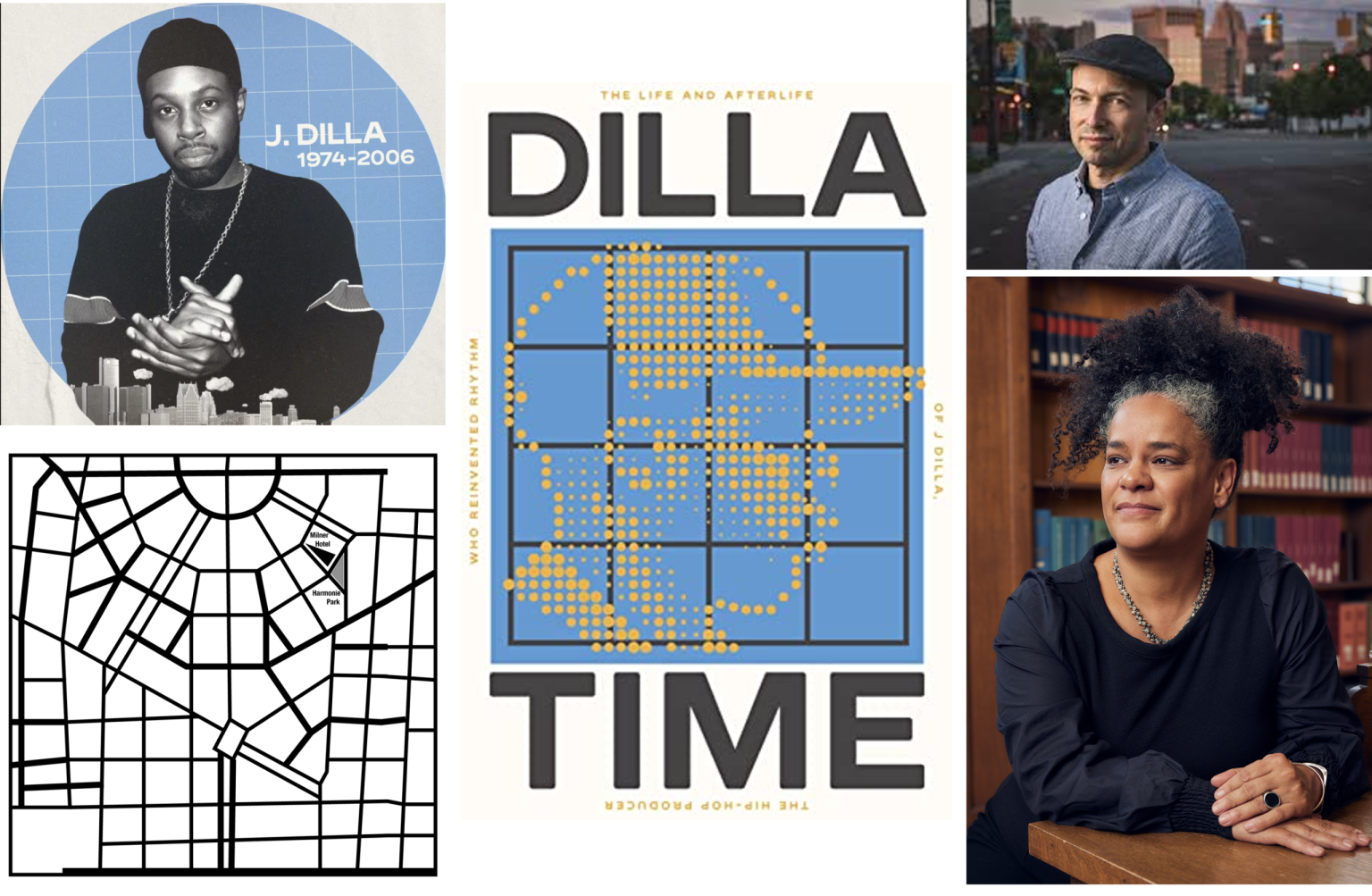

Katherine McKittrick, Canada Research Chair in Black Studies, Queen’s University This conversation took place on March 28th at the 2025 AAG annual …
Author Interview—“Experimenting with Error: A Conversation with Dan Charnas”
Absolutely worth reading. Dilla Time is a fantastic and important book and Charnas’ previous work on the histories of hip hop is great. McKittrick does wonderful, evocative work outlining the importance of Dilla Time and why geography is integral to the narrative:
There are many geographies underpinning Dilla Time: basements, homes, studios, hospitals, churches, daycares, or airports, Canada, Europe, USA, gentrification, Philadelphia, Los Angeles, and of course Detroit. There are also street names and even musician names—like Slum Village. The book begins with maps of Detroit, land ordinances, grids, spokes, 8 Mile, and more. Later in the book you write of the mourning of Dilla’s friend and colleague, Shoes, how his grief was tied to the city; Shoes describes his work as an ambassador of the city of Detroit, and his commitment to Dilla is animated by his creative labor, which, as I read it, is a labor for the city. It is creative labor in service Detroit. And perhaps Shoes is asking us to acknowledge the labor of Dilla’s Detroit.
Read the interview!