Reblog> digital | visual | cultural

Nvidia's Metropolis platform

Gillian Rose has a new project, which she’s blogged about. It sounds interesting. I was sort of wondering if the analysis of a “specific way of seeing the world through digital visualising technologies emerging” might crossover with Matt Jones’ ‘sensor vernacular‘ and James Bridle‘s, and others’, conceptualisation of a ‘new aesthetic‘…

Lovely that such work is supported by an institution (Oxford). I am sure it will create all sorts of interesting linkages and conversations.

digital | visual | cultural

I’m very excited to announce a new project: Digital | Visual | Cultural.   D|V|C is a series of events which will explore how the extensive use of digital visualising technologies creates new ways of seeing the world.

About Banner

The first event will be on June 28, when Shannon Mattern will give a public lecture in Oxford. Shannon is the author of the brilliant Code and Clay, Data and Dirt as well as lots of great essays for Places Journal. ‘Fifty Eyes on a Scene’ will replay a single urban scene from the perspective of several sets of machinic and creaturely eyes. That lecture will be free to attend but you’ll need to book. Booking opens via the D|V|C website on 23 April. It will also be livestreamed.

I’m working on this with Sterling Mackinnon, and funding is coming from the School of Geography and the Environment, Oxford University, and St John’s College Oxford.

The website has more info at dvcultural.org, and you can follow D|V|C on Twitter @dvcultural and on Instagram at dvcultural. There’ll be a couple more events in 2019 so follow us to stay in touch.

So that’s the practicalities. What’s the logic?

The key questions D|V|C will be asking are: Is a specific way of seeing the world through digital visualising technologies emerging? If so, what are its conditions and consequences?

Read more.

Digital work and automation link dump

Charlie Chaplin in Modern Times

Ok. Whilst I was not blogging I kept finding things through twitter and reading blogs that I find interesting. I kept thinking “oh, I ought to write something about that”… the thing is, I haven’t had the time and I don’t have the time now. So… I’m going to do a sort of annotated link thingamajig so that I don’t lose these things (I have over 45 tabs open in Chrome on my phone, this is unworkable) and also to share and to maybe invite other people to comment on this stuff..?!

The future of work, a history by Kevin Baker – A relatively long piece of writing that charts a history of American worrying about the replacement of the human worker with machines. Some interesting historical details that help contextualise some of the alarmism today. What I like about this is that the piece ends by reminding us all that there are choices to be made, which are political, but it also highlights how inescapable forms of determinism are (as Sally Wyatt so expertly tells us).

Tech culture, unions and the blind spot of meritocracy by Wendy Liu in Technology and The Worker (#2) –an interesting piece by Wendy Liu that documents a conversation with Xavier Denis a former engineer at Shopify about what working in the US tech. market is like – the sorts of working conditions, norms and management practices.

Automation, skills use and training by Ljubica Nedelkoska and Glenda Quintin (OECD) — A report that builds upon and that authors claim improves assessments of the potential for the automation of particular kinds of work. “Beyond the share of jobs likely to be significantly disrupted by automation of production and services, the accent is put on characteristics of these jobs and the characteristics of the workers who hold them.” This contributes to the ongoing arguments around the likelihood or not of job/role/work automation.

What can machine learning do? Workforce implications by Erik Brynjolfsson (MIT) and Tom Mitchell (Carnegie Mellon) in Science – A short-ish “Insights” article that makes some fairly grandiose and sweeping claims about the ‘impacts’ of automation on the workforce (with an American focus). Some references are made but if you follow them up it seems to me that the statements they are used to support make fairly big leaps. This, in contrast to the OECD report, is a stoking of the now brightly burning fire of the imaginings of automation.

The Guardian view on automation: put human needs first – A Grauniad editorial that passes comment on the above OECD report. It’s interesting to see the reception, interpretation and sometimes misrepresentation (I don’t think that’s what the Graun are doing here) of these academic economic reports. This plays into the general, normative, discussions and senses of the risks and/or realities of automation (this is a part of what I want write a book about).


BBC Click offer a Twitter-length version of ‘what it’s like to work with robots’.

Dr Easy.

Shynola re-imagine/visualise the opening section of Matthew De Abaitua’s novel Red Men – a PKD-like imaginative exploration of the emergence of AI.

The Incomplete Vision of John Perry Barlow by April Glaser (Slate) – Reflecting upon Barlow’s “Declaration of the independence of cyberspace” and the rise of EFF following his death earlier this year. Fits nicely with Fred Turner’s work examining the hippy-libertarian nexus of Silicon Valley moguls. In many ways this gets at some of the ideological foundations and/or misgivings of automation talk.

Face Recognition Glasses Augment China’s Railway Cops by Bibek Bhandari (SixthTone) – An article about the alleged deployment of facial recognition through AR glasses for Chinese police. Predictable comparisons to “Black Mirror” and other forms of dystopianism.

The Ethics Advisory Group of the European Data Protection Supervisor Report on Data Ethics (2018) [PDF] – On the back of the GDPR and contemporary debates around privacy in light of perennial controversies with Facebook and others the Ethics Advisory Group published a report claiming that: “The objective of this report is thus not to generate definitive answers, nor to articulate new norms for present and future digital societies but to identify and describe the most crucial questions for the urgent conversation to come.” The report is written by J. Peter Burgess, Luciano Floridi, Aurélie Pols and Jeroen van de Hoven.

The network Uber drivers built by Alex Rosenblat – an article that addresses some of the ways that Uber drivers have collectively organised in order to manage working with a quasi-automated system in which the policies are not necessaerily in the best interests of the worker.

Artificial Intelligence Technology Strategy (Report of Strategic Council for AI Technology) ( a Japanese government report) [PDF] – A 25 page report written for the Japanese government. It’s fairly dry and dense and has some crazy Powerpoint-style diagrams but it is sort of interesting as a documenting of an apparently strategic governmental approach to “AI”.

Why the Luddites matter : Librarian Shipwreck – A good blogpost on who the Luddites really were and framing them as an interesting means of getting at how popular understandings of technology might be found wanting.

Sci-Fi doesn’t have to be depressing: welcome to Solar Punk by Tom Cassauwers – What if we don’t write dystopian science fiction but build imaginary worlds based on positive and affirmative uses of technology? That is the premise of what is called ‘Solar Punk’, as outlined here by Tom Cassauwers – who charts the movement with Sarena Ulibarri, an editor who is a key proponent of the sub-genre.

Our driverless future on CNN Money – a video feature on driverless cars with four episodes and a couple of additional videos. There’s some interesting interviews and it’s not all boosterism. It’s sort of emblematic of the current discourse on automation. If nothing else this is probably useful for teaching purposes as there are some clips that nicely sum up some of the key questions being asked.

Reblog> Good Data: Call for Proposals for Theory on Demand edited book

My Cayla Doll

From the Institute of Network Cultures:

Good Data: Call for Proposals for an INC Theory on Demand edited book

Editors: Angela Daly (Queensland University of Technology), Kate Devitt (Queensland University of Technology) & Monique Mann (Queensland University of Technology).

In recent years, there has been an exponential increase in the collection, aggregation and automated analysis of information by government and private actors, and in response to this there has been a significant critique regarding what could be termed ‘bad’ data practices in the globalised digital economy. These include the mass gathering of data about individuals, in opaque, unethical and at times illegal ways, and the increased use of that data in unaccountable and potentially discriminatory forms of algorithmic decision-making by both state agencies and private companies. Issues of data ethics and data justice are only likely to increase in importance given the totalizing datafication of society and the introduction of new technologies such as artificial intelligence and automation.

In order to paint an alternative, more optimistic but still pragmatic picture of the datafied future, this open access edited collection will examine and propose what could be termed ‘good’ and ‘ethical’ data practices, underpinned by values and principles such as (but not limited to):

  • privacy/regulation/information security by design
  • due process rights
  • procedural legitimacy
  • the protection of individual and collective autonomy
  • digital sovereignty
  • digital anti-discrimination
  • data and intersectionality
  • ethical labour practices
  • environmental sustainability.

Chapters should be short contributions (2500-5000 words) which can take differing forms, for example:

  • Manifestos for Good Data
  • Position papers
  • Traditional academic chapters

Chapters can be theoretical takes or provocations on what Good Data is or should be, or can be case studies of particular Good Data projects and initiatives e.g. Indigenous data sovereignty initiatives, data cooperatives etc. Chapters can also be critiques of initiatives/movements which claim to be ethical but in fact fall short. All chapters, including academic ones, should be written in an accessible way and avoid the excessive use of jargon, etc. Academic chapters will be peer-reviewed. Other contributions will be editor-reviewed.

We encourage contributions from throughout the world and from different disciplinary perspectives: philosophy, media and communications, cultural studies, STS, law, criminology, information systems, computer science etc.

Proposals for chapters (up to 250 words) should be sent to Kayleigh Hodgkinson Murphy (kayleigh.murphy@qut.edu.au) by Friday 15 December 2017. Please include a brief biography (academic/practitioner) and signal what kind of chapter you are proposing (manifesto/academic chapter, etc).

If you have an idea for a chapter and want to discuss it before submitting a proposal, please contact Angela Daly (angela.daly@qut.edu.au) as soon as possible. We may be able to pair, for example, practitioners with academic authors on request.

Decisions on proposals will be made by mid-January 2017, with a first full draft of chapters to be submitted by 31 March 2018. We anticipate the book will be finalized and launched in late 2018, as part of the Institute of Network Cultures’ Theory on Demand series.

Great opportunity > Internship with the Social Media Collective (Microsoft)

Twitter

Via Nancy Baym:

Call for applications! 2018 summer internship, MSR Social Media Collective

APPLICATION DEADLINE: JANUARY 19, 2018

Microsoft Research New England (MSRNE) is looking for advanced PhD students to join the Social Media Collective (SMC) for its 12-week Internship program. The Social Media Collective (in New England, we are Nancy Baym, Tarleton Gillespie, and Mary Gray, with current postdocs Dan Greene and Dylan Mulvin) bring together empirical and critical perspectives to understand the political and cultural dynamics that underpin social media technologies. Learn more about us here.

MSRNE internships are 12-week paid stays in our lab in Cambridge, Massachusetts. During their stay, SMC interns are expected to devise and execute their own research project, distinct from the focus of their dissertation (see the project requirements below). The expected outcome is a draft of a publishable scholarly paper for an academic journal or conference of the intern’s choosing. Our goal is to help the intern advance their own career; interns are strongly encouraged to work towards a creative outcome that will help them on the academic job market.

The ideal candidate may be trained in any number of disciplines (including anthropology, communication, information studies, media studies, sociology, science and technology studies, or a related field), but should have a strong social scientific or humanistic methodological, analytical, and theoretical foundation, be interested in questions related to media or communication technologies and society or culture, and be interested in working in a highly interdisciplinary environment that includes computer scientists, mathematicians, and economists.

Primary mentors for this year will be Nancy Baym and Tarleton Gillespie, with additional guidance offered by other members of the SMC. We are looking for applicants working in one or more of the following areas:

  1. Personal relationships and digital media
  2. Audiences and the shifting landscapes of producer/consumer relations
  3. Affective, immaterial, and other frameworks for understanding digital labor
  4. How platforms, through their design and policies, shape public discourse
  5. The politics of algorithms, metrics, and big data for a computational culture
  6. The interactional dynamics, cultural understanding, or public impact of AI chatbots or intelligent agents

Interns are also expected to give short presentations on their project, contribute to the SMC blog, attend the weekly lab colloquia, and contribute to the life of the community through weekly lunches with fellow PhD interns and the broader lab community. There are also natural opportunities for collaboration with SMC researchers and visitors, and with others currently working at MSRNE, including computer scientists, economists, and mathematicians. PhD interns are expected to be on-site for the duration of their internship.

Applicants must have advanced to candidacy in their PhD program by the time they start their internship. (Unfortunately, there are no opportunities for Master’s students or early PhD students at this time). Applicants from historically marginalized communities, underrepresented in higher education, and students from universities outside of the United States are encouraged to apply.

PEOPLE AT MSRNE SOCIAL MEDIA COLLECTIVE

The Social Media Collective is comprised of full-time researchers, postdocs, visiting faculty, Ph.D. interns, and research assistants. Current projects in New England include:

  • How does the use of social media affect relationships between artists and audiences in creative industries, and what does that tell us about the future of work? (Nancy Baym)
  • How are social media platforms, through their algorithmic design and user policies, taking up the role of custodians of public discourse? (Tarleton Gillespie)
  • What are the cultural, political, and economic implications of crowdsourcing as a new form of semi-automated, globally-distributed digital labor? (Mary L. Gray)
  • How do public institutions like schools and libraries prepare workers for the information economy, and how are they changed in the process? (Dan Greene)
  • How are media standards made, and what do their histories tell us about the kinds of things we can represent? (Dylan Mulvin)

SMC PhD interns may also have the opportunity to connect with our sister Social Media Collective members in New York City. Related projects in New York City include:

  • What are the politics, ethics, and policy implications of artificial intelligence and data science? (Kate Crawford, MSR-NYC)
  • What are the social and cultural issues arising from data-centric technological development? (danah boyd, Data & Society Research Institute)

For more information about the Social Media Collective, and a list of past interns, visit the About page of our blog. For a complete list of all permanent researchers and current postdocs based at the New England lab, see: http://research.microsoft.com/en-us/labs/newengland/people/bios.aspx

Read more.

‘Pax Technica’ Talking Politics, Naughton & Howard

Nest - artwork by Jakub Geltner

This episode of the ‘Talking Politics‘ podcast is a conversation between LRB journalist John Naughton and the Oxford Internet Institute’s Professor Phillip Howard ranging over a number of issues but largely circling around the political issues that may emerge from ‘Internets of Things’ (the plural is important in the argument) that are discussed in Howard’s book ‘Pax Technica‘. Worth a listen if you have time…

One of the slightly throw away bits of the conversation, which didn’t concern the tech, that interested me was when Howard comments on the kind of book Pax Technica is – a ‘popular’ rather than ‘scholarly’ book and how that had led to a sense of dismissal by some. It seems nuts (to me, anyway) when we’re all supposed to be engaging in ‘impact’, ‘knowledge exchange’ and so on that opting to write a £17 paperback that opens out debate, instead of a £80+ ‘scholarly’ hardback, is frowned upon. I mean I understand some of the reasons why but still…

AI Now report

My Cayla Doll

The AI Now Institute have published their second annual report with plenty of interesting things in it. I won’t try and summarise it or offer any analysis (yet). It’s worth a read:

The AI Now Institute, an interdisciplinary research center based at New York University, announced today the publication of its second annual research report. In advance of AI Now’s official launch in November, the 2017 report surveys the current use of AI across core domains, along with the challenges that the rapid introduction of these technologies are presenting. It also provides a set of ten core recommendations to guide future research and accountability mechanisms. The report focuses on key impact areas, including labor and automation, bias and inclusion, rights and liberties, and ethics and governance.

“The field of artificial intelligence is developing rapidly, and promises to help address some of the biggest challenges we face as a society,” said Kate Crawford, cofounder of AI Now and one of the lead authors of the report. “But the reason we founded the AI Now Institute is that we urgently need more research into the real-world implications of the adoption of AI and related technologies in our most sensitive social institutions. People are already being affected by these systems, be it while at school, looking for a job, reading news online, or interacting with the courts. With this report, we’re taking stock of the progress so far and the biggest emerging challenges that can guide our future research on the social implications of AI.”

There’s also a sort of Exec. Summary, a list of “10 Top Recommendations for the AI Field in 2017” on Medium too. Here’s the short version of that:

  1. 1. Core public agencies, such as those responsible for criminal justice, healthcare, welfare, and education (e.g “high stakes” domains) should no longer use ‘black box’ AI and algorithmic systems.
  2. 2. Before releasing an AI system, companies should run rigorous pre-release trials to ensure that they will not amplify biases and errors due to any issues with the training data, algorithms, or other elements of system design.
  3. 3. After releasing an AI system, companies should continue to monitor its use across different contexts and communities.
  4. 4. More research and policy making is needed on the use of AI systems in workplace management and monitoring, including hiring and HR.
  5. 5. Develop standards to track the provenance, development, and use of training datasets throughout their life cycle.
  6. 6. Expand AI bias research and mitigation strategies beyond a narrowly technical approach.
  7. 7. Strong standards for auditing and understanding the use of AI systems “in the wild” are urgently needed.
  8. 8. Companies, universities, conferences and other stakeholders in the AI field should release data on the participation of women, minorities and other marginalized groups within AI research and development.
  9. 9. The AI industry should hire experts from disciplines beyond computer science and engineering and ensure they have decision making power.
  10. 10. Ethical codes meant to steer the AI field should be accompanied by strong oversight and accountability mechanisms.

Which sort of reads, to me, as: “There should be more social scientists involved” 🙂

Paul Dourish at Oxford – Exploring the Materialities of Digital Information

A huge array of overhead wires on a street

If you happen to be vaguely near Oxford and interested in digital-type things, then Paul Dourish’s lecture at the OII may be of interest. I’m guessing it’s related to his latest book… It’d be interesting to see if he cites any geographers.

Bellwether Lecture: Exploring the Materialities of Digital Information

Speakers: Paul Dourish

    • 26 October 2017 17:15 – 18:45

Location: Faculty of Classics, Ioannou Centre for Classical & Byzantine Studies, 66 St Giles, Oxford, OX1 3LY


The Oxford Internet Institute is excited to welcome Paul Dourish from the University of California, Irvine for the Bellwether talk ‘Exploring the Materialities of Digital Information’.

The talk will be followed by a short drinks reception.

Abstract

Social theorists of various stripes have countered the rhetoric of immateriality in the domain of the digital by pointing to the material foundations of digital systems, including their infrastructures and the material resources necessary to produce them. I will present a materialist account of digital forms and representations themselves, and show how practices around digital information are shaped and constrained by representational considerations. These digital materialities interpose themselves into processes of encoding and acting with information. I will illustrate the approach using examples from organizational decision-making and internet protocols.

Reblog> Digital Neuroland

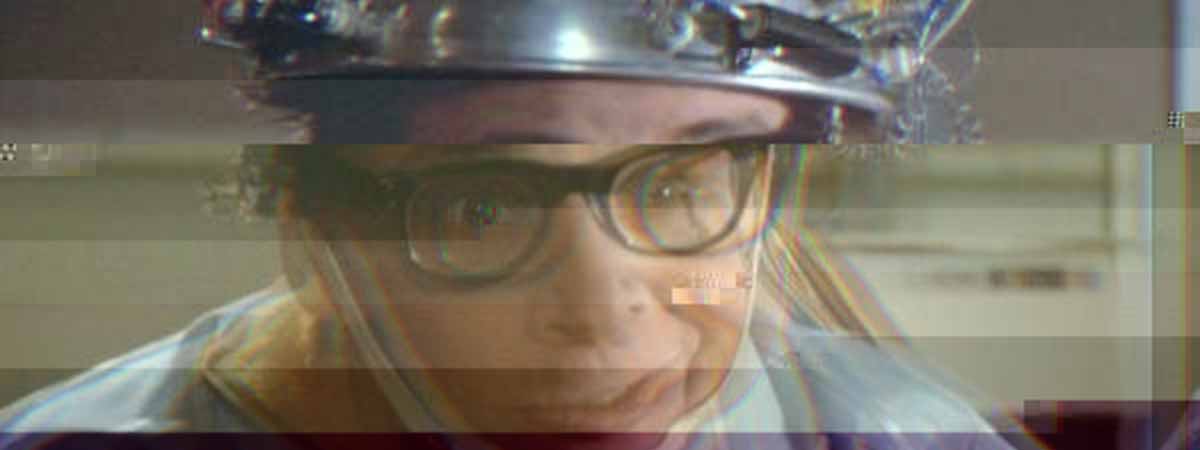
Rick Moranis in Ghostbusters with a brain scanner on his head

Via Tony Sampson. Freely available digital publication, follow the link…

Digital Neuroland by Rizosfera

Very pleased to be part of this great series…

cover

Contents

Introduction by Rizosfera
Digital Neuroland. An interview with Tony D. Sampson  by Rizosfera
Contagion Theory Beyond the Microbe
‘Tarde as Media Theorist’: an interview with Tony D. Sampson by Jussi Parikka
Crowd, Power and Post-democracy in 21st Century by Obsolete Capitalism
Crowds vs publics, Ukraine vs Russia, the Gaza crisis, the contagion theory and netica – a dialogue with Tony D. Sampson by Rares Iordache

Reblog> Addiction, excess and artists: strategies of resistance

A still from the Black Mirror episode "the entire history of you"

Via Tony Sampson. Looks like a great event from Furtherfield >>

Addiction, excess and artists: strategies of resistance

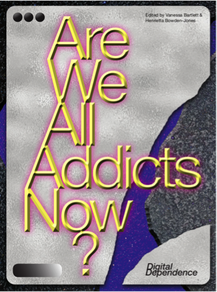
Are We All Addicts Now? Symposium and Book Launch.

Are we all addicts now?Date: Tuesday 7th November, 6.30 – 9pm

Venue: Central St Martins, University of the Arts London, 1 Granary Square, London, N1C 4AA

Tickets for the event are now available so please feel free to share this info.

http://www.furtherfield.org/programmes/event/are-we-all-addicts-now-symposium-and-book-launch

Here’s the blurb for the panel I’ll be talking on

Addiction, excess and artists: strategies of resistance

Techniques such as neuro-marketing are used online to keep users on device, driving endless circulation and drawing profits from every click. While many artists have celebrated overstimulation and digital excess, others incorporate strategies of resistance into their practice. In a hyper digital world, what are the possibilities for defying techniques such as neuro-marketing, nudging and gamification and what role can artists play in these acts of resistance? 

Reader in Digital Culture Tony D. Sampson explores neuro-marketing and digital addiction 

Artists Katriona Beales and Fiona MacDonald : Feral Practice discuss strategies of resistance from the AWAAN exhibition

Artist and writer Emily Rosamond on reputation addiction and how to resist it