Reblog> CFP An Informational Right to the City? Rethinking the Production, Consumption, and Governance of Digital Geographic Information

Over on the OII blog for the ‘Connectivity, Inclusion and Inequality Group’, Jo Shaw has posted an interesting CFP for the AAG in San Francisco next year. Andy Merrifield will make an awesome discussant!

CfP at AAG 2016: An Informational Right to the City? Rethinking the Production, Consumption, and Governance of Digital Geographic Information

After presenting our paper on the same theme at ICCG 2015 in Palestine, myself and Mark Grahamare planning a session for the Association of American Geographers’ annual meeting in San Francisco during Spring 2016. The session aims to provide a space for discussion and research that seeks to ask what a ‘right to the city’ looks like in our increasingly digital world. Interested contributors should read the call for papers below and drop myself or Mark an email to express interest.


An Informational Right to the City? Rethinking the Production, Consumption, and Governance of Digital Geographic Information

Organisers: Joe Shaw and Mark Graham (University of Oxford)
Discussant: Andy Merrifield

Henri Lefebvre (2003:251) once talked of the right to information as a complement to the right to the city. Since then, information communication technologies have become integrally embedded into much of everyday life. The speed of these developments has also obfuscated many changes and processes that now envelop and define the urban experience. This includes changes in systems of abstract spatial representation through geographic information, and the economies surrounding this information as a commodity. The representations which are produced and mediated through this digital information are now contributing to an urban space that is densely digitally layered (Graham, M., M. Zook, and A. Boulton. 2013). These digital ‘abstract’ spaces are essential to the production and re-production of our socio-economic world (Lefebvre, 1991). From Wikipedia to Google Maps and TripAdvisor, the code and content that relates to a building is now potentially as important as its bricks and mortar. These processes raise new questions of spatial justice and the urbanization of information: Which spaces are seen, and which are hidden? How is information produced, for whom, and who consumes it? How does information change material places? Who are the powerful actors in these events, and who are powerless? And finally, is the broader concept of an ‘informational right to the city’ now required? If so, how should it be envisioned and put into practice? This session invites submissions concerned with the production, consumption, and governance of urban geographic information, and it encourages research and reflections that seek to rethink what informational rights we have in our hybrid material/digital cities.


Lefebvre, H. (1991). The production of space. (D. Nicholson-Smith & D. N.- Smith, Eds.). Oxford: Oxford : Blackwell.
Lefebvre, H. (2003). Henri Lefebvre: key writings. (S. Elden, E. Lebas, & E. Kofman, Eds.). New York: New York.
Graham, M., Zook, M., & Boulton, A. (2013). Augmented reality in urban places: contested content and the duplicity of code. Transactions of the Institute of British Geographers, 38(3), 464–479.

Please email abstracts of no more than 300 words to Mark Graham (mark.graham@oii.ox.ac.uk) or Joe Shaw (joe.shaw@oii.ox.ac.uk) by Friday 2nd October 2015. Successful submissions will be contacted by 9th October 2015 and will be expected to pay the registration fee and submit their abstracts online at the AAG website by October 29th 2015.
For these companies you, walking down the street, are a data point

I’ve been collecting the promotional videos of various companies that surveil ‘public’ spaces to garner information that, using the logics applied to web analytics, they see as valuable commercial intelligence.

The rationale that is common throughout is that the aggregate crowd on the street, in a shopping centre, or in any form of apparently ‘public’ space are fair game for surveillance measurement and in turn address (albeit by their commercial partners – retailers etc. etc.). In fact, this is merely a technical or perhaps social problem – not a political one. It’s a technical problem for them because as the chap from Placemeter says “it’s all data” and its ‘waiting’ to be harvested. It’s a social problem for them only insofar as it’s about improving ‘services’ for us as consumers (not as citizens, as families or any other part of our skein of identity). It is NOT a political problem for them – it’s not an issue of who has the right to the city, who has a right to privacy or what might constitute reasonable expectations of any of those things. It certainly is never couched in terms of there needing to be governance of these activities – at least in these kinds of videos.

So, the videos are interesting artefacts of the formulation of what pervasive media/ubiquitous computing and smart cities look like and how they are performed…

A reasonable article about Placemeter is in/on the Guardian Cities section.

Reblog> Data and the City Workshop (31/08-01/09)

The Programmable City project team are running a(nother!) interesting workshop/event at the end of the month, just before the RGS annual conference. See the details below:

Data and the City Workshop

The Programmable City Project is hosting a two day workshop on the relations between data and the city.  The Data and the City Workshop will take place on August 31st and September 1st 2015 and will bring together 20 invited experts in the field and the ProgCity team.  A description of the workshop and the agenda are below with links to some of the papers to be presented that are already available online…

Read more in the original post – including the schedule.

Reblog> Data and the City

Mike Batty blogs about the ‘Data and the City’ event that is being convened by Rob Kitchin and the Programmable City team.

Data and the City

data-city
The Programmable City Project is holding a meeting on Data and the City in Maynooth from August 31- September 1st. You can get Rob Kitchin’s and Mike Batty’s papers from this blog but the programme is diverse and the Project web site contains details of the various contributions. I argue in my paper that we need to redefine big data in terms of the tools we use to interpret it and that size is not the main criterion as quite modest data sets in cities, particularly those dealing with transport and flows, are too large for most of current tools which involve statistical manipulation and visualisation. Here are two of the papers to be presented:

Michael Batty: Data About Cities: Redefining Big, Recasting Small

Rob Kitchin: Data-Driven, Networked Urbanism

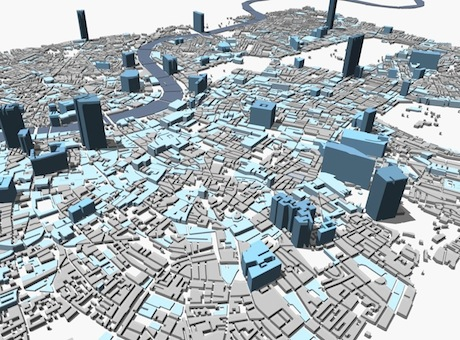
The image above was produced by Stephan Hugel and Flora Roumpani from their animation of tweets in London Using City Engine. Click here for the movie.

Reblog> New paper: Data-driven, networked urbanism

This looks good –– added to my ‘to read’ pile 🙂

New paper: Data-driven, networked urbanism

A new paper, ‘Data-driven, networked urbanism’, has been published by Rob Kitchin as Programmable City Working Paper 14.  The paper has been prepared for the Data and the City workshop to be held at Maynooth University Aug 31th-Sept 1st.

Abstract
For as long as data have been generated about cities various kinds of data-informed urbanism have been occurring.  In this paper, I argue that a new era is presently unfolding wherein data-informed urbanism is increasingly being complemented and replaced by data-driven, networked urbanism.  Cities are becoming ever more instrumented and networked, their systems interlinked and integrated, and vast troves of big urban data are being generated and used to manage and control urban life in real-time. Data-driven, networked urbanism, I contend, is the key mode of production for what have widely been termed smart cities.  In this paper I provide a critical overview of data-driven, networked urbanism and smart cities focusing in particular on the relationship between data and the city (rather than network infrastructure or computational or urban issues), and critically examine a number of urban data issues including: the politics of urban data; data ownership, data control, data coverage and access; data security and data integrity; data protection and privacy, dataveillance, and data uses such as social sorting and anticipatory governance; and technical data issues such as data quality, veracity of data models and data analytics, and data integration and interoperability.  I conclude that whilst data-driven, networked urbanism purports to produce a commonsensical, pragmatic, neutral, apolitical, evidence-based form of responsive urban governance, it is nonetheless selective, crafted, flawed, normative and politically-inflected.  Consequently, whilst data-driven, networked urbanism provides a set of solutions for urban problems, it does so within limitations and in the service of particular interests.

Key words: big data, data analytics, governance, smart cities, urban data, urban informatics, urban science

Download PDF

Interesting job: 5 year(!) RF in Urban Processes, Resilient Infrastructures and Sustainable Environments

Saw this job advertised at the University of Salford, it looks like a fantastic opportunity for someone – and of interest to geographers I’m sure:

5-year Research Fellowship within School of the Built Environment/UPRISE, University of Salford

The School of the Built Environment is seeking to appoint an exceptional candidate for a 5 year Research Fellowship within the newly formed UPRISE Research Centre. UPRISE brings together the expertise and research strengths of three existing groupings: the Centre for Sustainable Urban and Regional Futures (SURF), the Centre for Disaster Resilience (CDR) and SURFACE – Inclusive Design. UPRISE develops critical and engaged research and practice around the themes of Urban Processes, Resilient Infrastructures and Sustainable Environments.  The distinctiveness of the Centre is in exploring and excavating the boundaries and inter-relationships between these issues, with an emphasis on championing inclusive, resilient and sustainable spaces and places and a commitment to people and communities.

For more information and to apply, please see http://www.jobs.ac.uk/job/ALT619/research-fellow-uprise/

Workshop> Exploring Virtual Control, UCL (olympic park)

UCL urban lab are hosting an interesting workshop called ‘exploring virtual control’ at the London olympic park.

“The UCL Urban Laboratory is hosting a workshop on Tuesday 18 August in the Queen Elizabeth Olympic Park to interrogate the mechanics of control within privatised public spaces. If you have any interest in the privatisation of cities, security design, city governance policy or the post-Olympic legacy”

It’s something of a coup to have it at the olympic park – and got me thinking of Francisco Klauser’s excellent work on these forms of control.

Here’s some more details:

This workshop held at the Queen Elizabeth Olympic Park in Stratford serves as an introduction to the mechanics of control within privatised public spaces. Participants will learn about the way in which privatised public spaces are planned, built and monitored, before devising their own ways of mapping and documenting private public spaces. The workshop is organised by UCL Urban Laboratory, and led by the artists and built environment researchers Max Colson and Ollie Palmer, as part of a current exhibition hosted by RIBA. Book here.

The workshop consists of a series of structured group exercises and conversations, during which participants will choose to work on a photographic or mapping project. Please state your preference when applying.

Ollie Palmer is an award-winning artist, freelance designer and brand consultant based in London. He has worked commercially with BBC Worldwide, UCL and the V&A Museum, as well as leading projects for a number of other UK-based companies. As an artist, he has exhibited work at the V&A Museum and The Science Museum’s Museum of Science and Industry in Manchester, as well as being selected as artist-in-residence at the Palais de Tokyo in Paris.

Max Colson is an artist based in London using photography, video and animation. He was the artist-in-residence at UCL Urban Laboratory between September 2014 and June 2015, funded by a grant from the Leverhulme Trust. Virtual Control: Security and the Urban Imagination, his first UK solo exhibition, is at RIBA 6 July – 21 September in London this summer. He was selected as one of the UK winners of the 2013 Flash Forward Emerging Photographer competition, and was shortlisted in the OPEN14 at Brighton Photo Fringe. He has exhibited in C/O Berlin, London, and this summer as part of ‘Data Rush’ at the Noorderlicht Photo Festival.

Limited places are available for this workshop. Tickets cost £20 or £15 for concessions (students/disabled/unemployed/over 65). Please book on the UCL Online Store. Contact Jordan Rowe for more details.

Reblog> The Urban Politics and Governance of Social Innovation in Austerity

Over on his blog CityFragment, Colin McFarlane recently posted about an interesting new project:

The Urban Politics and Governance of Social Innovation in Austerity

I’m excited to be part of a new project investigating the connections between austerity, social innovation and urban politics in Europe. The project is led by Joe Painter as Principal Investigator, and the co-investigators are Paul Langley, Sue Lewis, Antonis Vradis, and myself (all based in Geography at Durham). It is funded through the Economic and Social Research Council’s (ESRC) Urban Transformations programme (coordinated by the University of Oxford).

2008_0803Berlin0063 copy

In the project, we will compare whether and how austerity impacts social innovation across three
European cities that are experiencing quite different forms of austerity – Athens, Berlin and Newcastle – and will examine the implications for urban politics. We will do so by investigating alternative finance, grassroots mobilisation and community provisioning in the three cities.

Although I live near Newcastle and know one of the other two cities – Berlin – very well, this is the first time that I’ll be involved in a research project on European cities. It’s also the first sustained opportunity I’ve had to be part of a team examining the geographical impacts of austerity on cities. So being part of this is an exciting and challenging prospect!

More information is available here.

VIDEO> TOWN (planning & rural/urban life)

TOWN from Orla Murphy on Vimeo.

Over on Ireland after NAMA,  Gavin Daly points to this lovely short film by Orla Murphy and Orla McHardy about the ways in which the development of Irish rural towns has shifted what constitutes everyday life, how this relates to ‘town planning’ (or lack thereof) and what might form alternatives.

I think this would make a lovely resource for teaching too, a sort of partner and update to the (rather old, but interesting) UK Central Office for Information animated film “Charley in New Town” (1948).

“Love where you live” and other lies of gentrification, by Oli Mould

Over on Open Democracy, Oli Mould has a very forthright piece concerning the ethics (or lack thereof) of gentrification.

‘Love where you live’, and other lies of gentrification 

Let’s admit that gentrification is an immoral urban process. It is a deliberate policy of social engineering and needs to be tackled at its source.

Gentrify this! Flickr/Spacebahr. Some rights reserved.Gentrify this! Flickr/Spacebahr. Some rights reserved.

The marketing mantra of “love where you live” courses through the ongoing ‘redevelopment’ of the Heygate Estate in London’s Elephant and Castle into Trafalgar Place. The City Quays project in Greenwich offers “a private island in London to call your own”. Lillie Square, which will be built on the Earls Court site hawks “modern garden square living” where you can “dwell in luxury”. All these (and many more) are symptomatic of a language of disavowal. It denigrates existing residents and paints them as unworthy of their homes as they were. And it is, in essence, inhumane.

But it is just a small part of a sweeping narrative of cities needing to be developed and regenerated, into ever more profitable, consumerist and homogenous centres of middle-class spending. And in all of this, the incumbent residents and their communities are of no consequence. It is a narrative that stretches all the way from advertising-speak to broadsheet journalism.

Read the full article.