CFP: “The mediatization of time: New perspectives on media, data and temporality”

the character Doc Brown in the film Back to the Future

Via Tim Markham.

This looks interesting… hopefully a bit of Derrida, Kittler, Stiegler and such will feature…

“THE MEDIATIZATION OF TIME: NEW PERSPECTIVES ON MEDIA, DATA AND TEMPORALITY”

December 7-8, 2017, Bremen

Recent innovations in the digitalization and datafication of communication fundamentally affect how people conceptualize, perceive and evaluate time to create the kind of world they live in. The conference invites participants to think through the interplay of media and data in respect of the way social time is constructed, modulated, and experienced. This allows to appreciate how new technologies and representations deeply affect the temporal organization of today’s media suffused societies, and it also sheds light on transformations in mediating time. We assume that mediatization as a fundamental societal change that interweaves with the development and spread of communication and information technologies leaves its mark on the ways we process and order the pace, sequence, rhythms and of social reality.

This conference invites to think through the role of media and data people have or had at hand to time their interactions, relations, and states of being. It encourages submissions related to the mediation of time and the timing of media(ization), and includes, but is not restricted to, the following themes:

  • Transformativity of mediatization processes: How can we grasp the historically changing mediation of time and the relation to diachronic processes of mediatization? What are the dynamics between the transforming construction of time and the ongoing formation of mediatization?
  • Temporality and mediation of time: Are there temporal affordances of media and how do they influence the experience of mediated time? What time principles characterize today’s media-saturated life? How do media technologies relate to the various temporalities of media practices?
  • Memory and the rearrangement of the tenses: What temporal meanings are generated by the media? How are media used in order to knit together past, present and future?

Please send a 300-word abstract, along with your name, e-mail address, academic affiliation, and short bio to: mediatizedtime[at]uni-bremen.de

Abstract submission deadline: September 1, 2017
Acknowledgment of acceptance:
 September 15, 2017
Conference dates: December 7-8, 2017

Confirmed speakers include: Staffan Ericson (Södertörn University): Mediatization in Time; Andreas Hepp (University of Bremen): Datafication and Temporal Media Practices; Johan Fornäs (Södertörn University): Media as Third-Time Tools; Helge Jordheim (University of Oslo): Modes of Synchronization; Emily Keightley (Loughborough University): Zones of Intermediacy; Irene Neverla (University of Hamburg): Media/Time Rhythms; Elizabeth Prommer (University of Rostock): Work, Time, Media; Espen Ytreberg (University of Oslo): Networked Simultaneities.

The conference is organized by Christian Pentzold and Christine Lohmeier from the ZeMKI, Centre for Media, Communication and Information Research, University of Bremen in cooperation with Anne Kaun, School of Culture and Education, Södertörn University, Stockholm.

For more information, please contact christian.pentzold[at]uni-bremen.de

Download the Call for Papers

Reblog> CFP – Online Vitriol: Advocacy, Violence, and the Transforming Power of Social Media

Call for Papers

Online Vitriol: Advocacy, Violence, and the Transforming Power of Social Media

A Joint Conference of the International Graduate Centre for the Study of Culture & the Zentrum für Medien und Interaktivität, Giessen, Germany
Wednesday June 29th – Saturday July 1st, 2017 (optional opening lecture by dr. Sarah Kendzior on the evening of June 28th)
For whom:
Researchers in the fields of culture and (digital) media, and related fields

Professionals dealing with online advocacy and social media presence of their organization

Journalists and others dealing with social media and (violent) online discourse

PhD and MA students in culture and media studies

Conference aim:
To employ our collective knowledge, experience, research and intelligence to arrive at a conceptual and practical understanding of the medial and cultural dynamics of online vitriol.

To work towards “A Rough Guide to Online Vitriol: Dealing with Violence and Activism on Social Media in Theory and Practice” (working title). To be published later.

Social media have become inescapable, and they have an overwhelming impact on sociality and public life. Platforms such as Facebook, YouTube, and Instagram give rise to a diverse range of discourses and communication styles. This conference wants to understand the power of social media, not only – as it has often been perceived – as democratizing, but also as powerful vehicles for politically driven bullying and violence. Relevant to people, organizations, and other agents across twenty-first-century society, this topic is increasingly studied from a range of disciplines and perspectives. Virtually everyone has to deal with social media and the discourses it enables and produces. But while the technology exists and seems at first sight intuitively accessible, the agency, dynamics and ethics of social media platforms are not yet well-understood.
‘Trolls for Trump’, online virus ‘scares’, fake news – social media discourse has become a formidable, yet elusive, political force. This conference wants to begin to address some of the issues around the power of online vitriol, by studying discourses, metaphors, media dynamics, and framing on social media. What is it? How does it work? What does it do? And how can it be addressed or countered?
To fruitfully question the political impact of contemporary communication structures and discourses, the conference goes beyond the traditional presenter/audience dichotomy. Instead, it works towards producing a book for academics and professionals confronted with social media violence, provisionally titled “A Rough Guide to Online Vitriol: Dealing with Violence and Advocacy on Social Media in Theory and Practice”. The conference combines academic theorizing with perspectives from professionals active in media, communication, the public sector and journalism, so as to arrive at conceptually rigorous and useful conclusions to guide our own and our organizations’ use of social media.
Possible topics
Bringing together media and communication specialists from various professions (e.g. public sector, press, NGOs) and cultural and media studies students and scholars, the aim is to create crosspollination between theoretical approaches from cultural and media studies on the one hand, and practical challenges and experiences ‘from the field’ on the other.
Possible topics include, but are not limited to:
Privacy and surveillance through social media platforms

Liveness and online temporalities

Tweeting while female

Clickbait as political activism

Shares, likes, profile clicks and other platform-specific metrics

The impact of Facebook’s platform structure and changing algorithms on what can be expressed

‘Communicative capitalism’ and the dynamics of online virality

Politics of trolling and reporting

Representing social media in popular culture

How ‘new’ are online communication practices?

Framing narratives and ideals in a potentially hostile environment

Practical
The conference is free of charge. However, we ask that, during the conference, all participants agree to be offline, and try to be fully present and contemplative.
We welcome proposals of papers, case studies, ideas, and discussion topics from scholars and professionals in the listed fields, as well as related areas of specialization. Please submit a 300-word abstract and a short biography (100 words) to Sara Polak (s.a.polak@hum.leidenuniv.nl), Rahel Schmitz (rahel.schmitz@gcsc.uni-giessen.de), and Ann-Marie Riesner (ann.m.riesner@gcsc.uni-giessen.de) by May 15th, 2017.

Call for Papers: “Charting trans and posthumanist imaginaries in future-making”

Rachael in the film Blade Runner

via SERRC.

Call for Papers: “Charting trans and posthumanist imaginaries in future-making”
(see Panel 53: http://sipsheff17.group.shef.ac.uk/index.php?option=24)Science in Public Conference, University of Sheffield 10th-12th July, 2017
Emilie Whitaker, University of Salford, e.m.whitaker@salford.ac.ukThe call for papers closes April 18, 2017.

Posthumanism and transhumanism are two emerging cultural movements that use recent developments in science and technology to challenge, in rather different ways, conventional conceptions of the human condition. Originally seen as more aligned with science fiction than science fact, they now straddle the divide, helped along with increasing media attention and capital investment. Whilst posthumanism continues to be theoretically explored within the social sciences and humanities, transhumanism remains an outlier to the academy. This is despite developments in science and technology which decouple traditional understandings of human/non- human action, agency, labour and capital. In this respect, both trans and posthumanism come very well adapted to our ‘post-truth’ times. We welcome submissions on this general theme, including the following topics:

  • Post- vs trans- humanist projections of the future of humanity, both utopic and dystopic
  • The appeal to post- and trans- humanist ideas and images in the general culture
  • Scientific bases – or not – for post- and trans- humanist knowledge claims
  •  The influence – or not – of post- and trans- humanist views on public policy
  • The place of capitalism in post- and trans- humanist imaginaries
  • The place of post- and trans- humanism in the academy: Do they bridge the ‘Ëœtwo cultures’?
  • How trans and post humanism conceive of the place of democracy in guiding the future
  • Exploration of how science communication invokes, borrows or rejects trans and posthumanist tropes.

We welcome ‘alternative’ contributions – for example, short pieces of prose or extracts of speculative near-future fiction – as well as empirically-based findings papers. We are also particularly keen to support early career researchers.

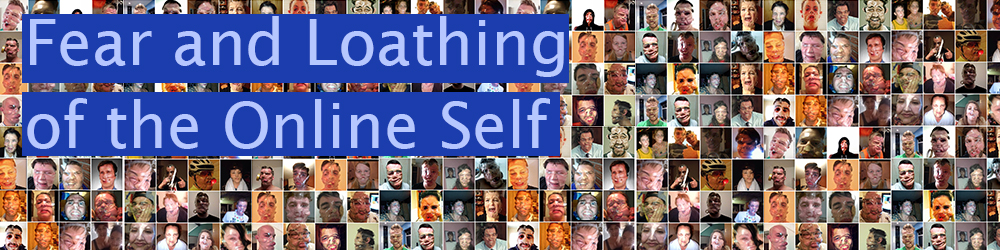
CFP> Fear and Loathing of the Online Self, Rome, May 22-23, 2017

Via Institute of Network Cultures… looks interesting… be good to see a wider variety of folks ‘participating’…

Fear and Loathing of the Online Self–A Savage Journey into the Heart of Digital Cultures

Call for Participation
Conference, Rome, May 22-23, 2017
http://networkcultures.org/online-self/

We would like to invite artists and researchers to submit proposals to join this event hosted by  John Cabot University and Universita degli Studi RomaTre in Rome, and organized in collaboration with the Institute of Network Cultures, Amsterdam.

The conference aims at exploring the state of the online self by raising questions about its status as a focal point of contemporary power/networks. Is the online self merely a product of software predictability and viral marketing? Is there any space left for self-determination? Or should we search elsewhere for new forms resistance by changing our political categories and perspectives? Which contradictions are at play? How and where can we locate the spaces of performativity of the online self?

Critical political-economic readings of platform capitalism do not explain nor grasp new forms of (visual) online subjectivity. There is a growing gap between the obsessive quest for measurability, big data and algorithmic regimes (such as AI/bots),and critical investigations of an emerging variety of compulsive forms taken by the online self. We need to fill this gap and bring them back together. If a humanities approach of Internet studies nurtured by artistic and activist practices aims to survive the ‘big data’ onslaught from the social sciences, then it is vital to ask what the citizen-as-user wants. To portray the population as (innocent or guilty) victims of the data monopolies is, politically speaking, a dead-end street.

The cynical condition rules: we know we’re under surveillance, yet we continue to click, like, love and share ourselves online as usual. We are told by concerned experts and libertarians that our privacy “matters” and we want to believe it; yet it silently confers a guilty stigma upon another vital need, to engage socially and culturally with others. While some preach the offline escape as a way out, most of us are so deeply invested in the everyday social media life that it is inconceivable for most of us to  leave Facebook and the like. And this not only out of desire but necessity: networking and self-sharing has become imperative for succesfully managing the double binds of the immaterial labour economy. Instead, we’d rather deal with peculiar pathologies, such as addiction, depression and solitude generated by hyper-connection and lack of connections.

Abstracts and proposals are welcome to contribute to the following sections:

1. ONLINE SUBJECTIVITY THEORY

How much free room do we have to design new identities? What aesthetic and philosophic paths and patterns does meme distribution hint at? What is the role of theory and criticism, if any, in the ever changing yet endless production of the latest user affordances, from dating sites, Tinder swipes and Snapchat lenses, to Pokemon-Go? Can we still attempt to design new modes of subjectivity, or has our role withdrawn to a mere Cassandra-like gloom and doom prediction of digital catastrophes, while start-ups (read: future monopolies) have all taken over the cool business of designing and shaping the online self?

2. BEHIND AND BEYOND SELFIES

It is easy to diagnose the selfie as a symptom of a growing narcissism of our daily digital obsessions. But how do we get beyond the predictable split between the politically correct assessment of empowerment (of young girls) against the nihilist reading of self-promotion and despair? Does criticism of today’s photography of the everyday life always have to end up giving medical prescriptions and recipes of wellbeing? What could a materialist reading of large databases and facial recognition techniques (including protection) that goes beyond media archaeology (the historical approach) and the ever-changing pop gestures involve and say? Can we still talk about the liberation of the self in the age of digital self-generation of the images?

3. ARTISTIC PRACTICES OF THE ONLINE SELF

Artists play an important role in the anticipation, and critique, of new modes of the self. What role does the artistic imagination play beyond the creative industries paradigm? How can artistic and creative avant garde practices help disrupt the trite quantitative approach and the dogma of the algorithm in defining modes and moods of the onlife self? What separates a (properly) artistic imagination and the aesthetic imagination of the online curators of selfie-constructed personas and are contemporary critical paradigms merely reproducing an understanding of online practices that are aligned with the requirements of corporation?

4. POLITICS AND AESTHETICS OF MASK DESIGN

Masks and selfies should not be seen as opposites as they both represent different modes (and moods) of being of the self. Masks create spaces of performance; they are playful and seductive (or scary) forms of self-representation that ultimately do not protect us against the computational repression of the security apparatus. What are the lessons learned from the Anonymous movement? We should come to a new social contract between the individuals, groups and the cybernetic machine. In the meanwhile, how can we make sure to protect us, and what premises are hidden in the numerous crypto-design projects that circulate?

Confirmed speakers: Wendy Chun, Ana Peraica, Jodi Dean, Marco Deseriis, Gabriella Coleman, Daniel de Zeeuw, Rebecca Stein, Vito Campanelli, Franco Berardi.

Editorial Team: Donatella Della Ratta (John Cabot University), Geert Lovink (Institute of Network Cultures/HvA), Teresa Numerico (Universita degli Studi RomaTre), Peter Sarram (John Cabot University).

Please send your proposal (max 500 words in word/pdf format), a short bio and any other material that could support your idea visually  (artwork, film links, etc) to selfieconference@johncabot.edu.  Deadline: March 1, 2017.

Anticipation 2017 (a conference)

This is interesting…

From 8th to 10th November 2017 the 2nd International Conference on Anticipation will provide an interdisciplinary meeting ground in which researchers, scholars and practitioners who are seeking to understand anticipation and anticipatory practices can come together to deepen their understanding and create productive new connections.

The overarching aim of the conference and of the emerging field of Anticipation Studies is to create new understandings of how individuals, groups, institutions, systems and cultures use ideas of the future to act in the present. This conference will build on the 1st Conference of Anticipation, held in Trento, Italy in 2015 which saw over 350 delegates gather to explore topics ranging from design futures, to anticipatory economics and the philosophy of the present.

This second conference aims to put into dialogue the empirical, practical and theoretical insights that are emerging in highly diverse fields ranging from biology to psychology, cultural geography to critical theory, physics to design, history to mathematics, urban theory to engineering.

The conference will be held at Senate House, School of Advanced Study in central London. This venue is right next to the British Museum and in the heart of Bloomsbury. The area offers a wide range of accommodation options, from budget to five star facilities and is easily accessible from Heathrow and other London airports.

If you would like to present at the conference further information is available on the Call for Papers page. Booking for other delegates opens in May 2017.

If you are interested in sponsoring an element of the conference or if you are able to assist with travel bursaries please contact us at info@anticipation2017.org.

Reblog> Landscape, Space, and Place Conference at IU – Bloomington

Via Nicholas Crane…

Landscape, Space, and Place Conference at IU – Bloomington

CFP> Creative propositions and provocations on the heritages of data-trade-place-value

Paula Crutchlow, with Ian Cook and I, invite submissions for the following session for this year’s RGS-IBG conference. Please do share this with anyone (doesn’t have to be geographers) who may be interested. As we say below, we welcome any kind of creative response to the theme. The session builds on Paula’s PhD project The Museum of Contemporary Commodities, which will be active before and throughout the conference in the RGS-IBG building.

Museum of Contemporary Commodities: creative propositions and provocations on the heritages of data-trade-place-value

How do we open out the messy digital geographies of trade, place and value to the world? How can we work with the digital beyond beyond archives, spectacle and techno-dystopian imaginations? How do we do so in a ways that are performative, collaborative and provocative of the digital?

This session builds on the planned hosting of the Museum of Contemporary Commodities (MoCC) in the RGS(IBG)’s Pavilion in the days leading up to the annual conference (and its partial installation in the RGS(IBG) building during the conference) where it will join the V&A, Science and Natural History Museums on London’s Exhibition Road. Developed as acts of valuing the things we buy today as the heritage of tomorrow, MoCC’s artworks take the form of dynamic, collaborative hacks and prototypes; socio-material processes, objects and events that aim to enrol publics in trade justice debates in light footed, life-affirming, surprising and contagious ways as part of their daily routines.

We invite prospective participants to offer propositions and provocations that stitch into or unpick the complex and sometime knotty patchwork quilt of data-trade-place-value. This is an invitation to contribute to and convene conversations that enliven geographical understandings of the governance, performance, placings and values/valuing of contemporary (digitally) mediated material culture. The resulting session is not conceived as a ‘conventional’ paper session. We invite submissions of ten-minute contributions that might take various forms, which might include essay, performance, video and many other creative responses to the theme.

This invitation should be understood in its broadest sense. We are interested in the commingling and mash-up of the theme(s) data-trade-place-value. We very much encourage submissions that push back against the normative authorities or discourses surrounding ‘the digital’ (however that might be conceived). So, we hope that all involved in the session will thereby be challenged and inspired by creative propositions and provocations that begin to get to the heart of how we open out the messy digital geographies of trade, place and value to the world.
Themes could include:

  • lively methods that work with and through participatory media
  • intimacy, humour, trust and the internet of things
  • mashups, subversions and hacks of big data from the bottom up
  • discourses and practises of future orientation and the spatial imaginations of ‘the digital’
  • an intersectional internet and the rise of ‘platforms’
  • alternative trade models, value systems and networked culture
  • DIWO (Do It With Others), scholar-activism & public pedagogy
  • the economic geographies of the battle for ‘open’
  • Please submit 250 word abstracts to us by email by 7 February and we will get back to you by 13 February.

CFP> Putting philosophies of geography into practice (RGS-IBG 2017)

Putting philosophies of geography into practice

RGS-IBG Annual Conference 2017

Convenor: Dr Sam Kinsley (Exeter)

This session is conceived as means to discuss the relations between the everyday practises of doing geography and the, sometimes-maligned, theoretical-methodological techniques we variously employ in geographical research and teaching. If we are ‘thinking always as geographers’, how do we represent that thought and the ways it becomes located in practice? Marking fifteen years since a session of the same title was convened at the annual conference in Belfast, the aim of this session, following Lorimer and Spedding (2002: 277), is to ‘explore new [established and forgotten] ways of thinking about the history and philosophy of geography’. How then do we re-‘present the stories that geography tells (of) itself’? (ibid.) How can and do we cut into the ‘dogmatic image of what counts as [geographical] thought[?]’ (Thrift, 2004: 81) and seek to contrast the practising of geography with ‘hegemonic geographic knowledge’ (Rose, 1994: 4)?. The invitation of this session is to discuss and reflect upon contemporary knowledge practices in geography (taken at its broadest definition), such as (but in no way limited to):

  • Cultures, traditions, politics and practices of teaching/learning the history and philosophy of geography;
  • The dis-/en-abling role of learned/professional institutions in the production and sharing of geographical knowledge;
  • Spaces of disagreement and debate (in-person, in-text, in-between);
  • The ‘field’ of theory and theory in ‘the field’;
  • Links and divisions between (sub)disciplinary discourses, the practices of departments and institutions and popular geographical knowledge;
  • The formal and informal communication of geographical knowledge and theory (peer-reviewed publications, blogs, social media);
  • Uses of space and time within/outside formal geography departments (labs, lecture theatres, cafes);
  • The ‘geographical canon’, authority, disciplinarity and space for others;
  • The role of activities such as the (UK) REF or QAA benchmarking on what ‘counts’ as geographical knowledge and theory.

Please email prospective contributions or any queries to me, Sam Kinsley, by the close of play on Friday the 10th February.

CFP> Science, Technology & the Politics of Knowledge in Global Affairs

via dmf.

CfP: Science, Technology, and the Politics of Knowledge in Global Affairs

CALL FOR PAPERS

Science, Technology, and the Politics of Knowledge in Global Affairs

An Interdisciplinary Graduate Conference at the Buffett Institute for Global Studies

Northwestern University, Evanston IL 

March 30-31, 2017

Keynote: Sheila Jasanoff, Harvard Kennedy School

Organizing Committee: Kevin Baker, Savina Balasubramanian, and Omri Tubi

Scientists, state actors, international institutions, and lay activists vie for credibility and legitimacy to both frame and control global issues. Science and technology are routinely cast into a supporting role to bolster their claims. From nuclear energy in the battle against climate change to the politicization of “big data;” from new information technologies in emerging regimes of global surveillance to the use of randomized controlled trials in international development research – scientific and technological expertise operate as instruments of power and authority, which can serve to legitimate or contest new forms of global governance and intervention.

The Buffett Institute’s second annual graduate student conference will investigate expert knowledge in contemporary global affairs, looking at the ways this knowledge is created, invoked, circulated, and contested in the international political arena. We invite graduate students to present work that explores questions such as: How do various international actors attempt to position themselves as credible participants in global politics? Under what conditions does expert knowledge come to be seen as legitimate on the global stage? How and why do global issues become understood as primarily technical, rather than political? In what ways do international actors frame these issues and what must be done about them? How is scientific and technological expertise marshaled or ignored in processes of claims making and action to structure interventions into global “problems?” And, finally, how do these practices organize, sustain, or challenge structures of global inequality and power?


Possible topics include but are not limited to:

  • The politics of climate change, climate science, and environmental security
  • The rise of actuarial and genetic approaches to global crime
  • Biosecurity, global health, and the regulation of infectious disease
  • Globalized technologies of risk and quantification
  • The technologization of global finance and economic markets
  • The politicization of social and computational science in an age of “big data”
  • New regimes of information and global surveillance
  • The changing nature of international development interventions
  • The constitution of transnational lay expertise in global social movements

We invite graduate students across the humanities and social sciences to submit abstracts of no more than 250 words by December 15, 2016using the submission link on the conference webpage: http://buffett.northwestern.edu/programs/grad-conference/. There will be no deadline extensions. Accepted presenters will be notified by January 5 and papers are due to faculty discussants by March 7. The Buffett Institute will provide hotel accommodations and will subsidize travel costs (fully for US-based graduate students and partially for international students). Please direct all queries to the Graduate Organizing Committee at: buffettgradconference@northwestern.edu.

CFP> “Countercultures of Data” – Special Issue of Philosophy & Technology

Another interesting CFP and goodness knows this needs doing(!) I look forward to seeing what comes of this, should be great!

CFP: “COUNTERCULTURES OF DATA” – SPECIAL ISSUE OF PHILOSOPHY & TECHNOLOGY

Call for Papers for Philosophy and Technology’s special issue on Countercultures of Data

Guest Editor – Anna Lauren Hoffmann, School of Information – University of California, Berkeley

Journal cover featuring white text on blue backgroundAbout the Issue
25 years ago, Sandra Harding–in her influential book Whose Science? Whose Knowledge? Thinking from Women’s Lives–detailed and extended critical debates surrounding knowledge production and practices in science and technology. Collectively, these “countercultures of science” confronted the “problematics, agendas, ethics, and consequences” of scientific and technological production head on. Today, these same perspectives offer insight into the realm of data science, as philosophers, scholars, and practitioners alike grapple with ethical questions in a world where discourse, design, and governance increasingly revolve around “big” data and quantifiable knowledge.

This special issue will bring together rigorous conceptual and theoretical perspectives on what might best be called–following Harding–emerging “countercultures of data.” In particular, this issue will further critical and philosophical thinking about the theories, methods, institutions, and technological arrangements that underwrite or support data science in various industries and forms. Combined, contributions to the special issue will put forward a more realistic assessment of possible futures for a data driven world.

We invite submissions related (but not limited) to:

– Race and Data Science
– Theories of Property, Labor, and Data
– Political Economies of Data
– Data and Imperialism
– Feminist Perspectives on Data Science
– Data, Bodies, and Disability
– Data, Infrastructure, and the Environment
– Data, Philosophy, and the Law
– Communities and Data
– Data and Queer Subjects
– Data and/as Human Subjects in Research
– Data Science and Epistemic Justice

Timetable for Submissions
October 24, 2016: Deadline for paper submissions
December 21, 2016: Deadline reviews papers
February 6, 2017: Deadline revised papers
2017: Publication of the special issue

Submission Details
To submit a paper for this special issue, authors should go to the journal’s Editorial Manager http://www.editorialmanager.com/phte/
The author (or a corresponding author for each submission in case of co- authored papers) must register into EM.

The author must then select the special article type: “COUNTERCULTURES OF DATA” from the selection provided in the submission process. This is needed in order to assign the submissions to the Guest Editor.

Submissions will then be assessed according to the following procedure:
New Submission => Journal Editorial Office => Guest Editor(s) => Reviewers => Reviewers’ Recommendations => Guest Editor(s)’ Recommendation => Editor-in-Chief’s Final Decision => Author Notification of the Decision. (The process will be reiterated in case of requests for revisions.)

About the Journal
The journal addresses the expanding scope and unprecedented impact of technologies, in order to improve the critical understanding of the conceptual nature and practical consequences, and hence provide the conceptual foundations for their fruitful and sustainable developments. The journal welcomes high-quality submissions, regardless of the tradition, school of thought or disciplinary background from which they derive. The journal’s Editor-in-Chief is Luciano Floridi (Oxford).

Contact
For any further information please contact: Anna Lauren Hoffmann – annalauren [at] berkeley [dot] edu