“Control, Resistance, and the ‘Data University’: Towards a Third Wave Critique”

A group of academics at Newcastle, collectivised under the moniker “the Analogue University” offer an Alex Galloway-like critique of “The Data University” over on the Antipode blog. An interesting read…

In this short intervention, we want to explore the possibilities for a third wave of critique related to the changing nature of academia. More specifically, we argue that we are now witnessing the emergence of the “Data University” where the initial emphasis on the primacy of data collection for auditing and measuring academic work has shifted to data coding itself as the new exchange value at work and productive of new subjectivities and freedoms. This third wave critique requires drawing a schematic line that now takes us beyond the intensification of neo-liberalisation, the internalisation of market values and associated affective structures of feeling to understanding our new digital and big data world. Influenced by Deleuze’s (1992) work on new societies of control, we argue that the genesis of the “Data University” lies in our active desire for data and its potential to mediate human relations and modulate our freedoms. This is absolutely central to our schematic for a third wave of critique: compared to older disciplinary societies like the school or prison institution (see below), today individuals both desire and are controlled through the active generation of proliferating data streams.

Read the full article.

Reblog> digital geographies event

May be of interest… via Gillian Rose.

The Digital Geographies Working Group of the Royal Geographical Society with the Institute of British Geographers is holding its first event. It’s got lots of various kinds of short presentations, opportunities to engage and interact so it should be fun and productive.RevolutionEvolutionImpostion_2903.jpg

The event will be at the Royal Geographical Society in London on 30 June and if you have any kind of interest in studying or doing geography digitally, you’re very welcome to attend. You can book now, here, and the panel sessions will also be livestreamed on the day.

Interesting papers: “The Taking Economy” & “The Myth of the Sharing Economy”

Deliveroo cyclists

These look interesting…

Via Frank Pasquale:

The Taking Economy: Uber, Information, and Power

Ryan Calo
University of Washington – School of Law; Stanford University – Law School; Yale Law School

Alex Rosenblat
Data & Society Research Institute

Abstract
Sharing economy firms such as Uber and Airbnb facilitate trusted transactions between strangers on digital platforms. This creates economic and other value and raises a set of concerns around racial bias, safety, and fairness to competitors and workers that legal scholarship has begun to address. Missing from the literature, however, is a fundamental critique of the sharing economy grounded in asymmetries of information and power. This Article, coauthored by a law professor and a technology ethnographer who studies the ride-hailing community, furnishes such a critique and indicates a path toward a meaningful response.

Via Tom Slee:

The Myth of the Sharing Economy and Its Implications for Regulating Innovation

Abbey Stemler
Indiana University – Kelley School of Business – Department of Business Law

Abstract
A deflated air mattress rests in the corner of Airbnb’s world headquarters. It symbolizes how Airbnb allows regular, local people to earn extra income by renting out space in their homes. Yet, this symbolism fails to represent what the company has become–a unicorn receiving most of its revenue from professionals with full-time listings. That poorly folded wad of plastic exemplifies the Myth of the Sharing Economy, which has been consistently used to subvert regulation.
The Myth convinces people that the sharing economy is comprised of self-regulating platforms, which allow microentrepreneurs to utilize their excess capacity in an altruistic manner. However, the sharing economy is actually comprised of companies driven as much by market forces and failures as any taxicab company or hotel chain. The Myth possesses a simple and seductive appeal. It uses the familiar idea of sharing to make the claim that platforms are unique and should be subject to new and different regulation or no regulation at all. This Myth not only harms platform users, the environment, and the culture and diversity of communities, it has helped sharing economy platforms become powerful influencers in Silicon Valley, state legislatures, and beyond. 
While much has been written the benefits of the sharing economy and how to regulate it, this Article is the first to critique the sharing economy by exploring the intersection between narrative and regulation. It also distills lessons for regulating future innovations and demonstrates the importance of questioning rhetoric and reality in order to achieve public policy goals.

Farmers hacking tractors

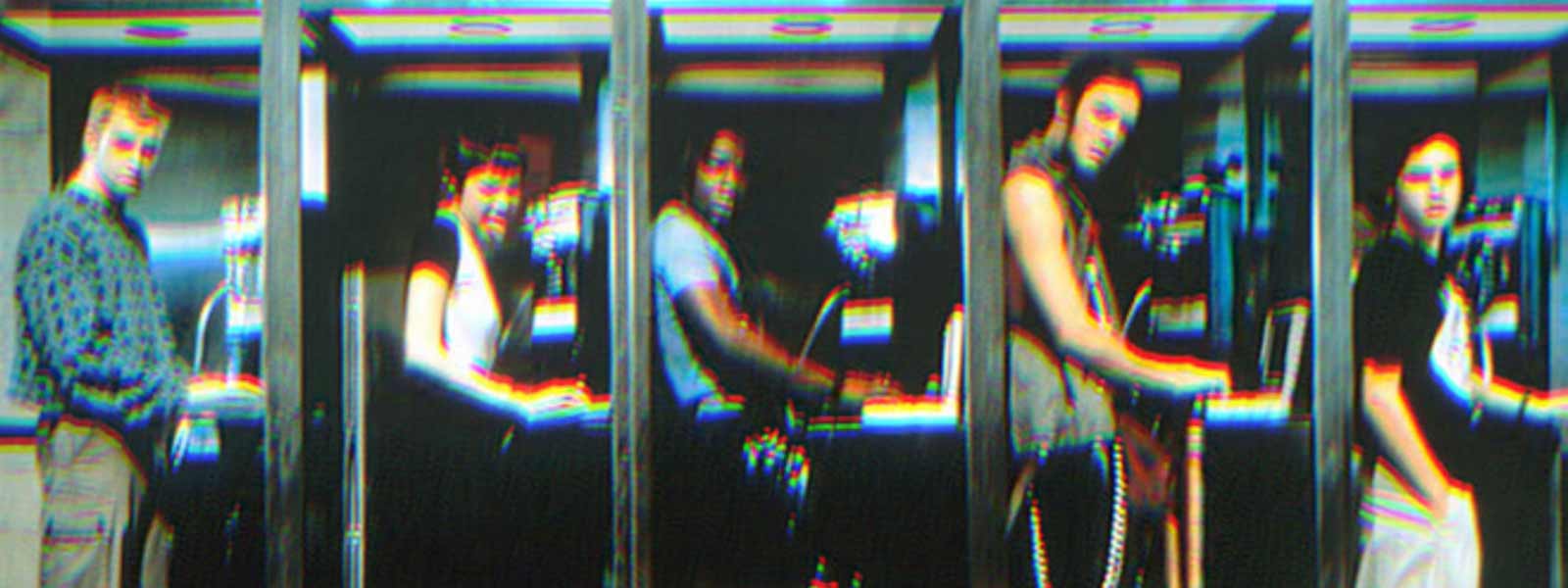
Promotional image for the 1995 film Hackers

To avoid the draconian locks that John Deere puts on the tractors they buy, farmers throughout America’s heartland have started hacking their equipment with firmware that’s cracked in Eastern Europe and traded on invite-only, paid online forums.

Tractor hacking is growing increasingly popular because John Deere and other manufacturers have made it impossible to perform “unauthorized” repair on farm equipment, which farmers see as an attack on their sovereignty and quite possibly an existential threat to their livelihood if their tractor breaks at an inopportune time.

“When crunch time comes and we break down, chances are we don’t have time to wait for a dealership employee to show up and fix it,” Danny Kluthe, a hog farmer in Nebraska, told his state legislature earlier this month. “Most all the new equipment [requires] a download [to fix].”

Why American Farmers Are Hacking Their Tractors With Ukrainian Firmware

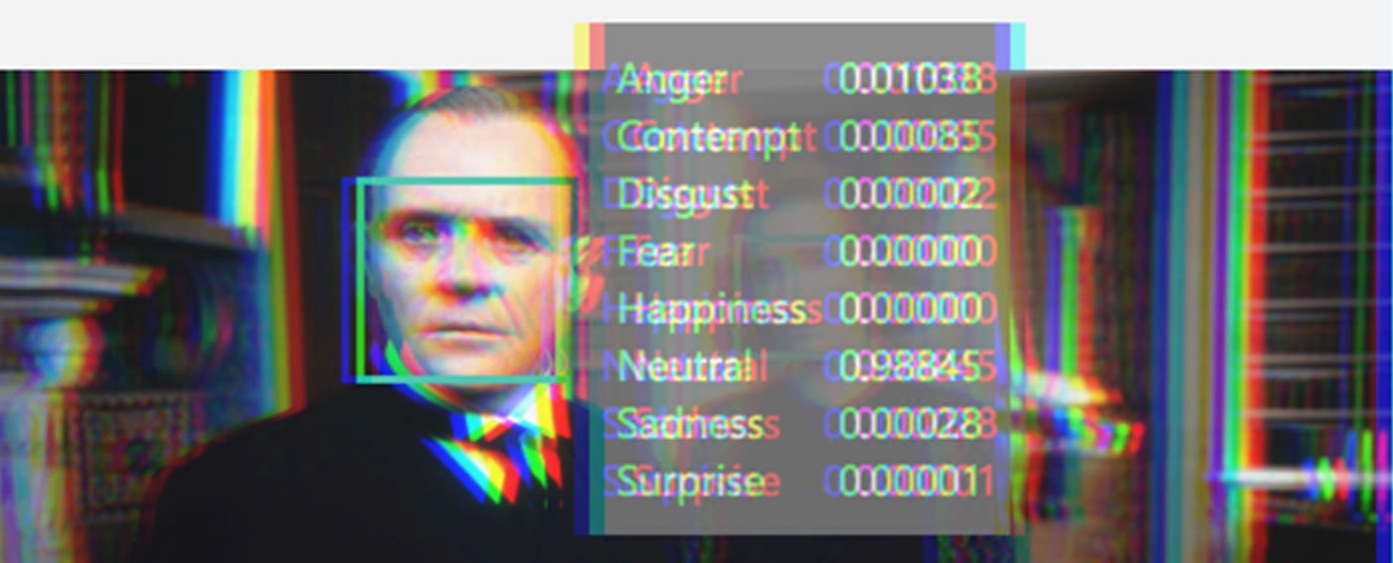
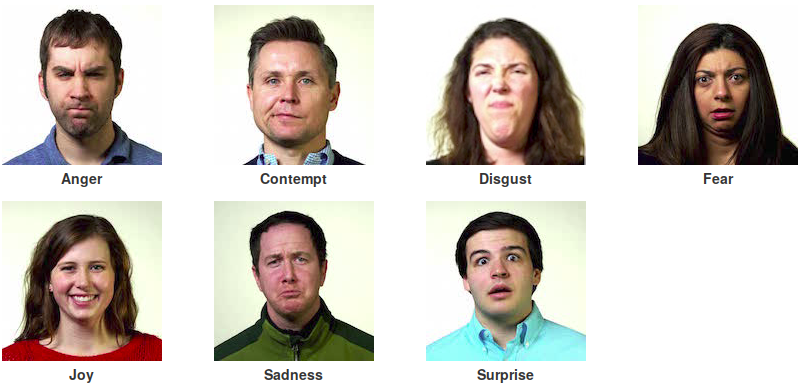
Choose how you feel, you have seven options

A great piece by Ruben Van de Ven stemming from his artwork of the same name, published on the Institute of Network Culture site. Van de Ven, in a similar vein to Will Davies, deconstructs the logic of ‘affective’ computing, sentiment analysis and their application to what has been termed the ‘attention economy’. The article does a really go job of demonstrating how the knowledge claims, and the epistemologies (perhaps ontologies too), that are at work behind these technologies are (of course) deeply political in their application. Very much worth reading! (snippet below).

 ‘Weeks ago I saw an older woman crying outside my office building as I was walking in. She was alone, and I worried she needed help. I was afraid to ask, but I set my fears aside and walked up to her. She appreciated my gesture, but said she would be fine and her husband would be along soon. With emotion enabled (Augmented Reality), I could have had far more details to help me through the situation. It would have helped me know if I should approach her. It would have also let me know how she truly felt about my talking to her.’

FOREST HANDFORD

This is how Forest Handford, a software developer, outlines his ideal future for a technology that has emerged over the past years. It is known as emotion analysis software, emotion detection, emotion recognition or emotion analytics. One day, Hartford hopes, the software will aid in understanding the other’s genuine, sincere, yet unspoken feelings (‘how she truly felt’). Technology will guide us through a landscape of emotions, like satellite navigation technologies guide us to destinations unknown to us: we blindly trust the route that is plotted out for us. But in a world of digitized emotions, what does it mean to feel 63% surprised and 54% joyful?

Please take the time to read the whole article.

Reblog> Accident tourist – driverless cars and ethics

Automated taxi figure in the 1990 film Total Recall

An interesting and well-written piece over on Cyborgology by Maya from Tactical Tech Collective (amongst many other things!)

I particularly like these bits copied below, but please read the whole post.

Accident Tourist: Driverless car crashes, ethics, machine learning

…I imagine what it may be like to arrive on the scene of  a driverless car crash, and the kinds of maps I’d draw to understand what happened. Scenario planning is one way in which ‘unthinkable futures’ may be planned for.

The ‘scenario’ is a phenomenon that became prominent during the Korean War, and through the following decades of the Cold War, to allow the US army to plan its strategy in the event of nuclear disaster. Peter Galison describes scenarios as a “literature of future war” “located somewhere between a story outline and ever more sophisticated role-playing war games”, “a staple of the new futurism”. Since then scenario-planning has been adopted by a range of organisations, and features in the modelling of risk and to identify errors. Galison cites the Boston Group as having written a scenario – their very first one-  in which feminist epistemologists, historians, and philosophers of science running amok might present a threat to the release of radioactive waste from the Cold War (“A Feminist World, 2091″).

The applications of the Trolley Problem to driverless car crashes are a sort of scenario planning exercise. Now familiar to most readers of mainstream technology reporting, the Trolley problem is presented as a series of hypothetical situations with different outcomes derived from a pitting of consequentialism against deontological ethics. Trolley Problems are constructed as either/or scenarios where a single choice must be made.

[…]

What the Trolley Problem scenario and the applications of machine learning in driving suggest is that we’re seeing a shift in how ethics is being constructed: from accounting for crashes after the fact, to pre-empting them (though, the automotive industry has been using computer simulated crash modeling for over twenty years); from ethics that is about values, or reasoning, to ethics as based on datasets of correct responses, and, crucially, of ethics as the outcome of software engineering. Specifically in the context of driverless cars, there is the shift from ethics as a framework of “values for living well and dying well”, as Gregoire Chamayou puts it, to a framework for “killing well”, or ‘necroethics’.

Perhaps the unthinkable scenario to confront is that  ethics is not a machine-learned response, nor an end-point, but as a series of socio-technical, technical, human, and post-human relationships, ontologies, and exchanges. These challenging and intriguing scenarios are yet to be mapped.

Coincidentally, in the latest Machine Ethics podcast (which I participated in a while ago), Joanna Bryson discusses these issues about the bases for deriving ethics in relation to AI, which is quite interesting.

Reblog> We need to tell better stories about our surveilled future[s]

Via Cyborgology.

“We need to tell more diverse and realistic stories about AI,” Sara Watson writes, “if we want to understand how these technologies fit into our society today, and in the future.”

Watson’s point that popular narratives inform our understandings of and responses to AI feels timely and timeless. As the same handful of AI narratives circulate, repeating themselves like a befuddled Siri, their utopian and dystopian plots prejudice seemingly every discussion about AI. And like the Terminator itself, these paranoid, fatalistic stories now feel inevitable and unstoppable. As Watson warns, “If we continue to rely on these sci-fi extremes, we miss the realities of the current state of AI, and distract our attention from real and present concerns.”

Watson’s criticism is focused on AI narratives, but the argument lends itself to society’s narratives about other contemporary worries, from global warming to selfies and surveillance. On surveillance, Zeynep Tufekçi made a similar point in 2014 about our continued reliance on outdated Orwellian analogies (hi 1984) and panoptic metaphors.

Resistance and surveillance: The design of today’s digital tools makes the two inseparable. And how to think about this is a real challenge. It’s said that generals always fight the last war. If so, we’re like those generals. Our understanding of the dangers of surveillance is filtered by our thinking about previous threats to our freedoms. But today’s war is different. We’re in a new kind of environment, one that requires a new kind of understanding. [“¦]

To make sense of the surveillance states that we live in, we need to do better than allegories [1984] and thought experiments [the Panopticon], especially those that derive from a very different system of control. We need to consider how the power of surveillance is being imagined and used, right now, by governments and corporations.

We need to update our nightmares.

Read the whole post.